

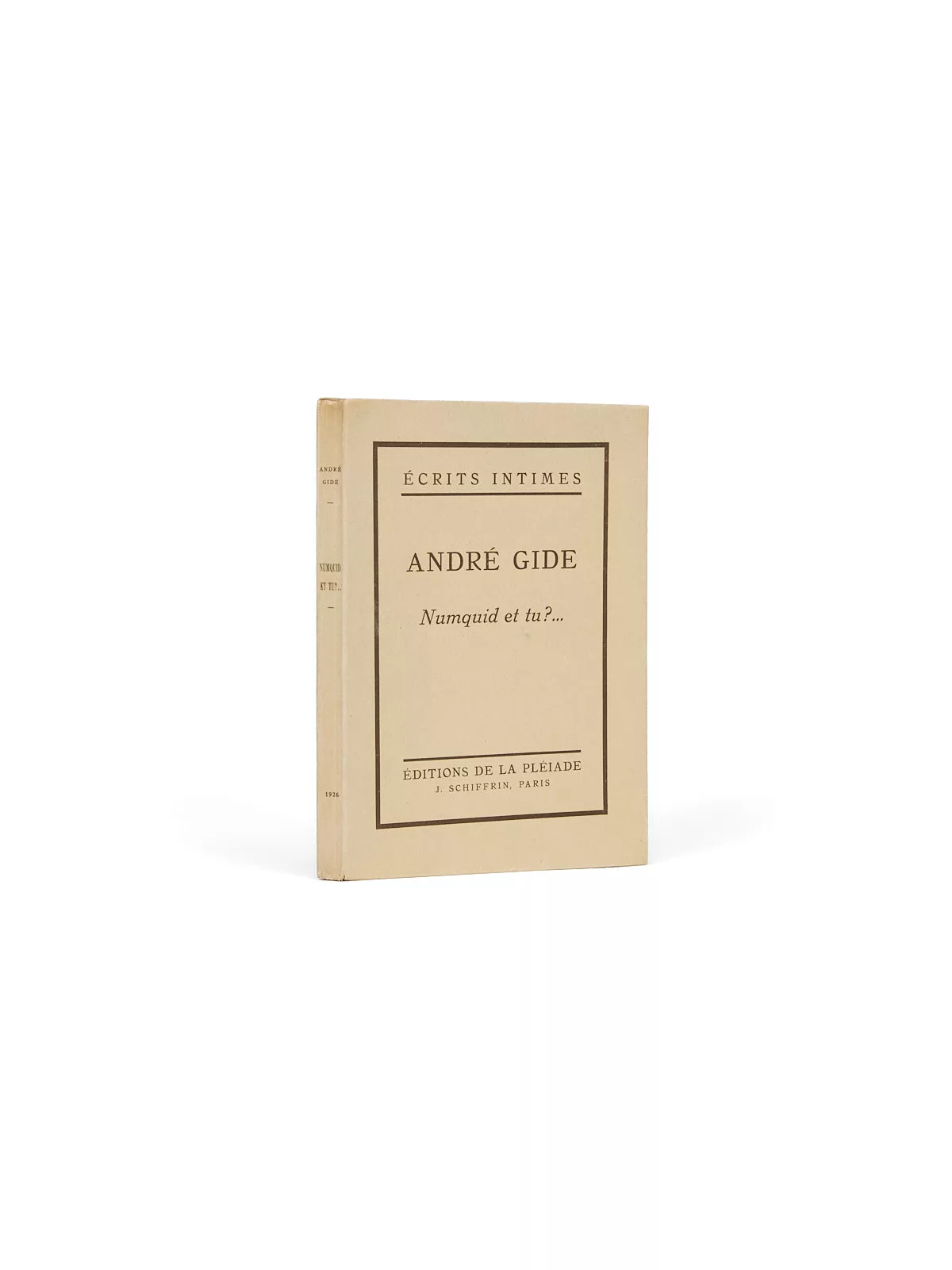
Numquid et tu…
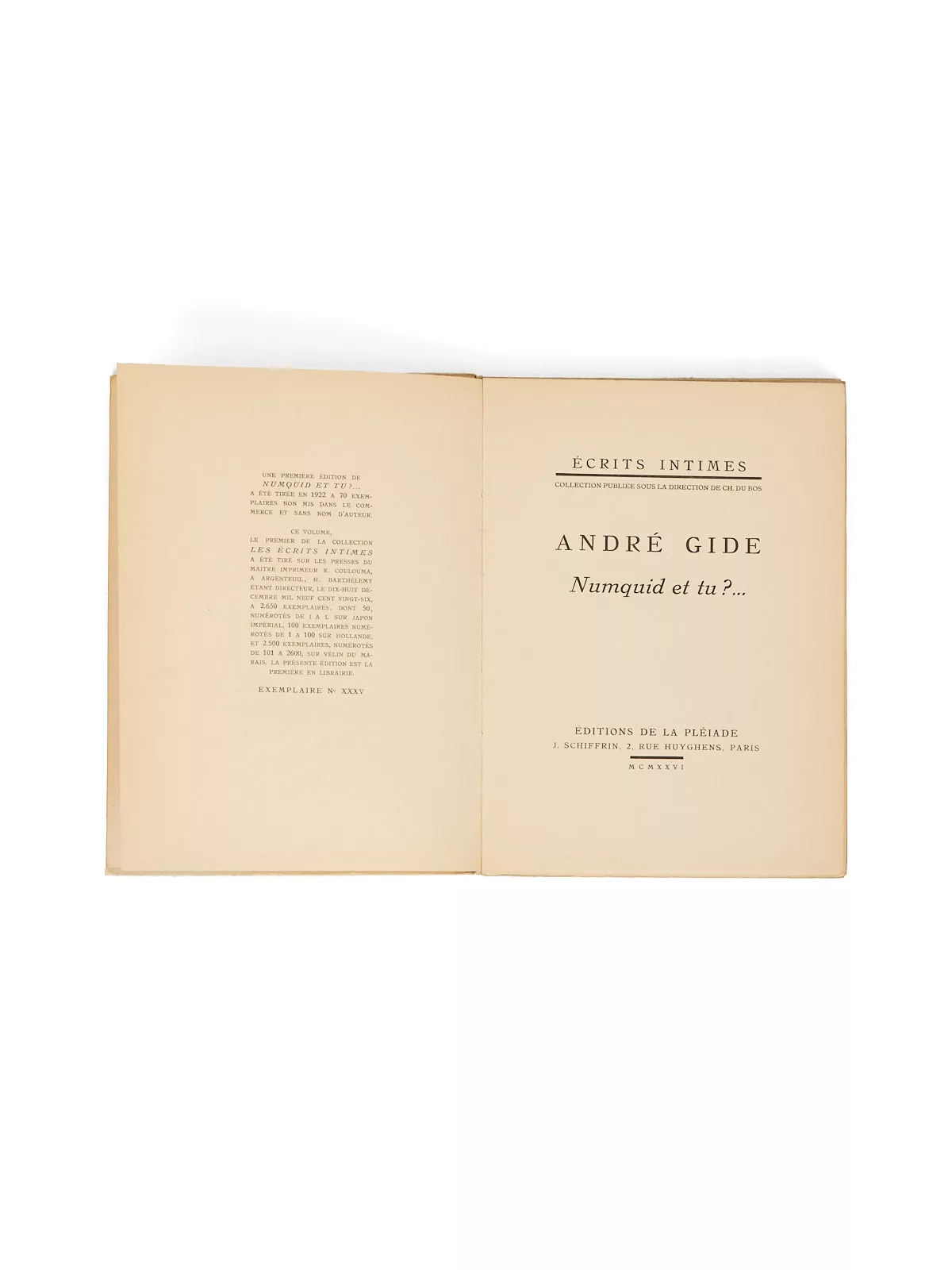
One of the first 50 copies on Imperial Japan paper (no. XXXV).
Numquid et tu?… occupies a singular place in the work of André Gide. The text emerged from his readings of the Gospels, recorded mainly in 1916 and 1917, during a period of spiritual and moral crisis. Its title is borrowed from Saint John: Numquid et tu…?, “And you too?…”
Gide returns here to Christ, to the Gospels, and to a religious questioning that, far from being alien to his work, had accompanied him since youth. Yet this is neither a conversion nor a docile return to orthodoxy. What interests Gide is precisely the personal confrontation with the Gospel text, touching on one of the fundamental tensions of his work: how to reconcile spiritual demands with individual freedom.
The first edition had appeared in 1922 under almost secret conditions: only 70 copies, not offered for sale and without the author’s name. When Jacques Schiffrin finally issued the first public edition in 1926, in the “Écrits intimes” series directed by Charles Du Bos, the context had changed profoundly. In the interim, Gide had published Corydon, Si le grain ne meurt and Les Faux-Monnayeurs. He had become, in the eyes of part of the critical establishment, the writer of scandal, of moral and sexual emancipation, even of provocation.
Paul Souday delighted in this in Le Temps in January 1927. After warning readers drawn by the previous scandals that they risked disappointment this time, he ironically summarized the book’s program: “Open your Bible and think of your soul!” concluding, “Christ is risen!”
Gide himself seems to have felt some embarrassment at the new publicity given to these pages. In the foreword written specially for the 1926 edition, he explains to Charles Du Bos that he agrees to its republication only within a limited-edition series of “intimate writings” — a reservation that retrospectively explains the almost clandestine character of the 1922 edition and gives full meaning to this, the text’s true first appearance in bookshops.
A fine copy.