

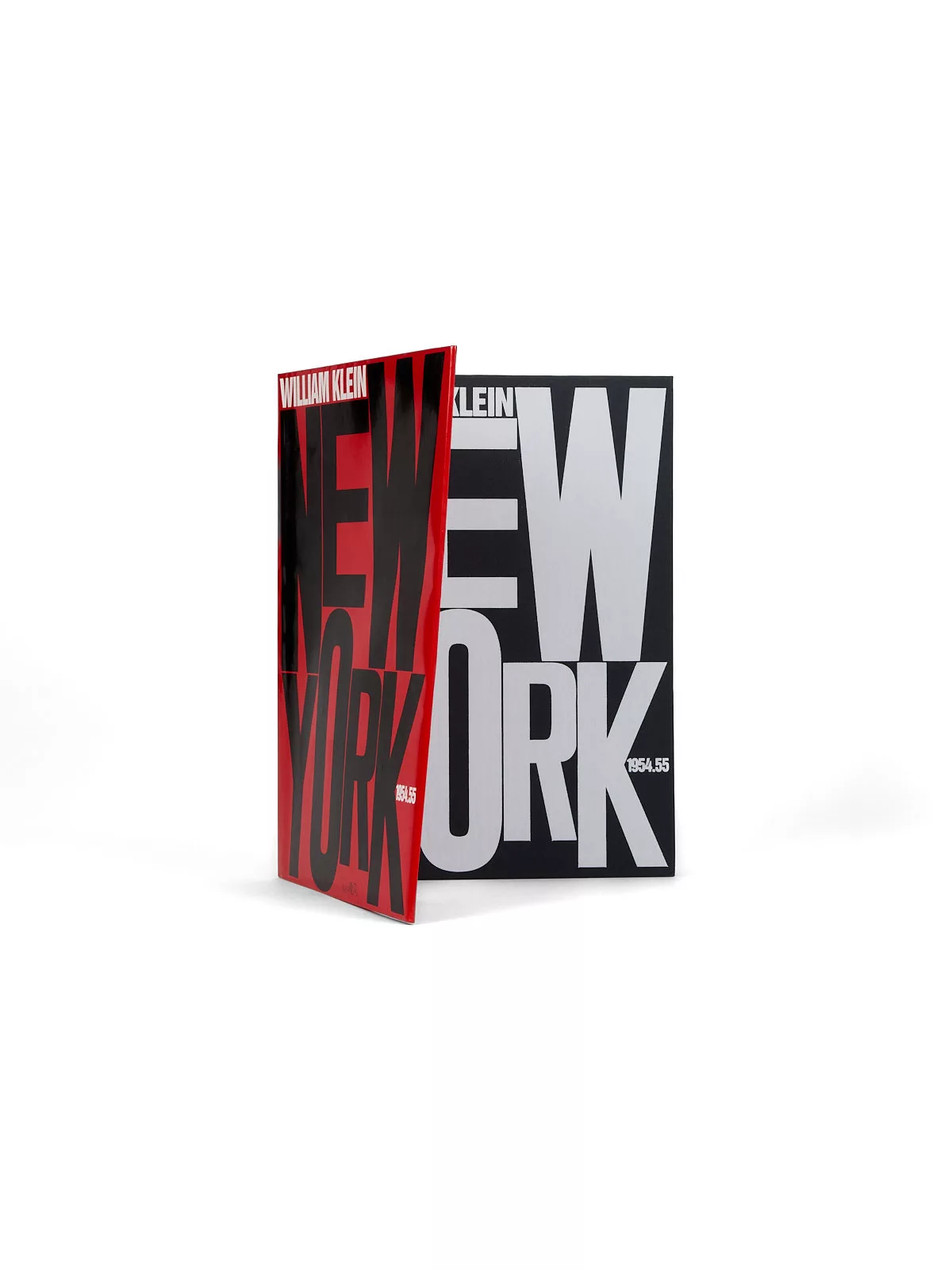
New York
Illustrated with 188 photographs.
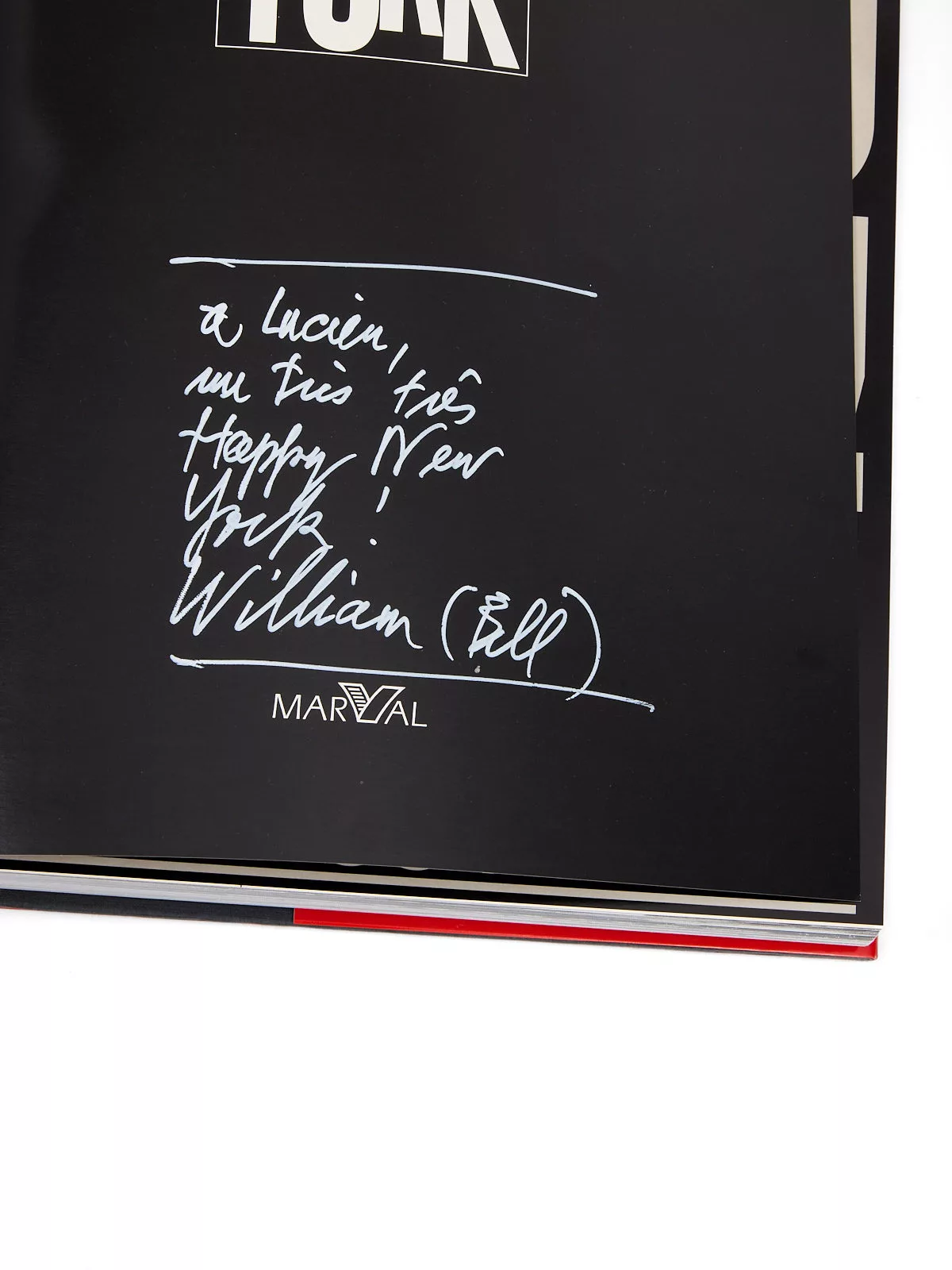
Inscribed : "To Lucien Clergue, a very, very Happy New York! William (Bill)."
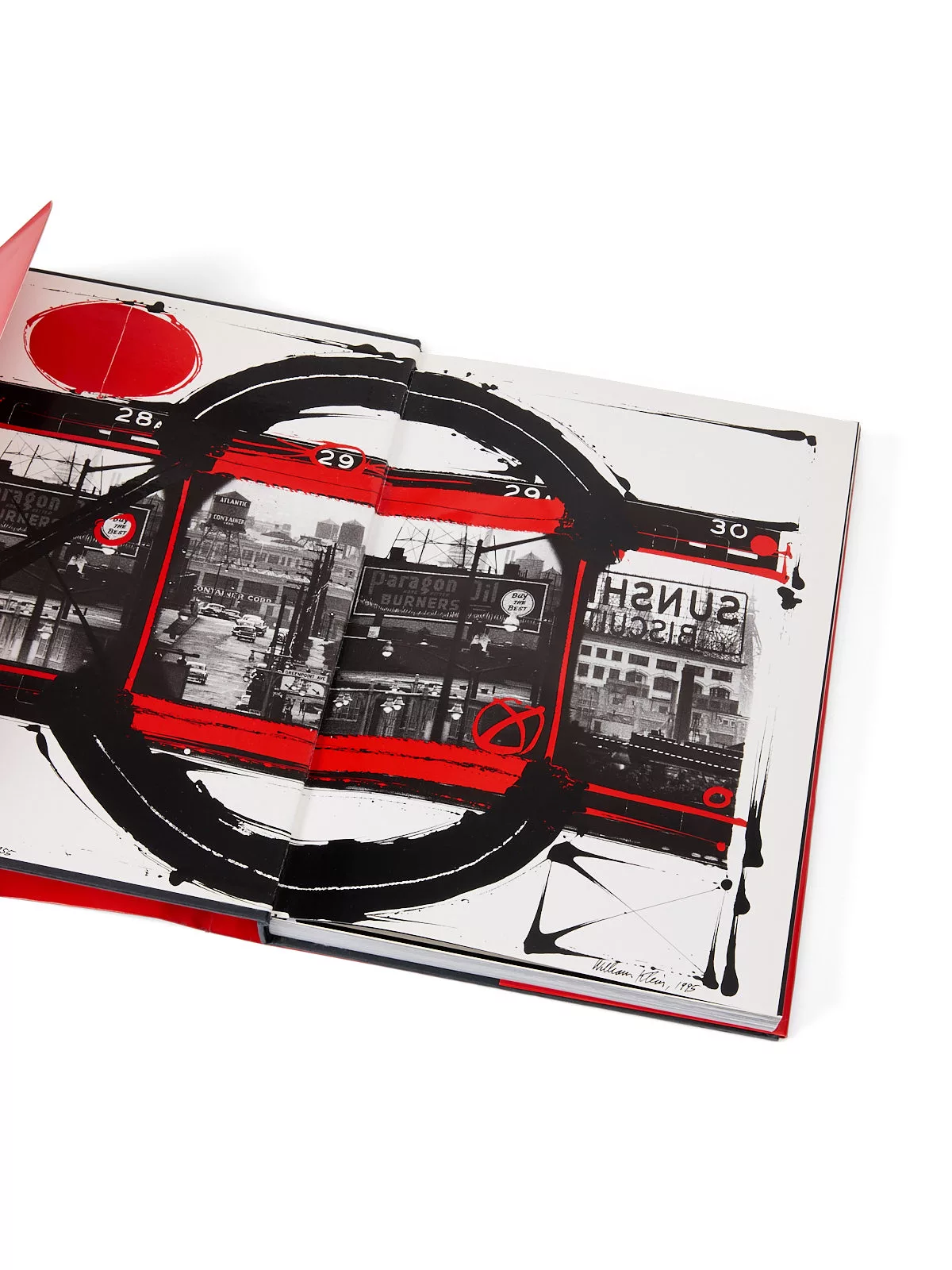
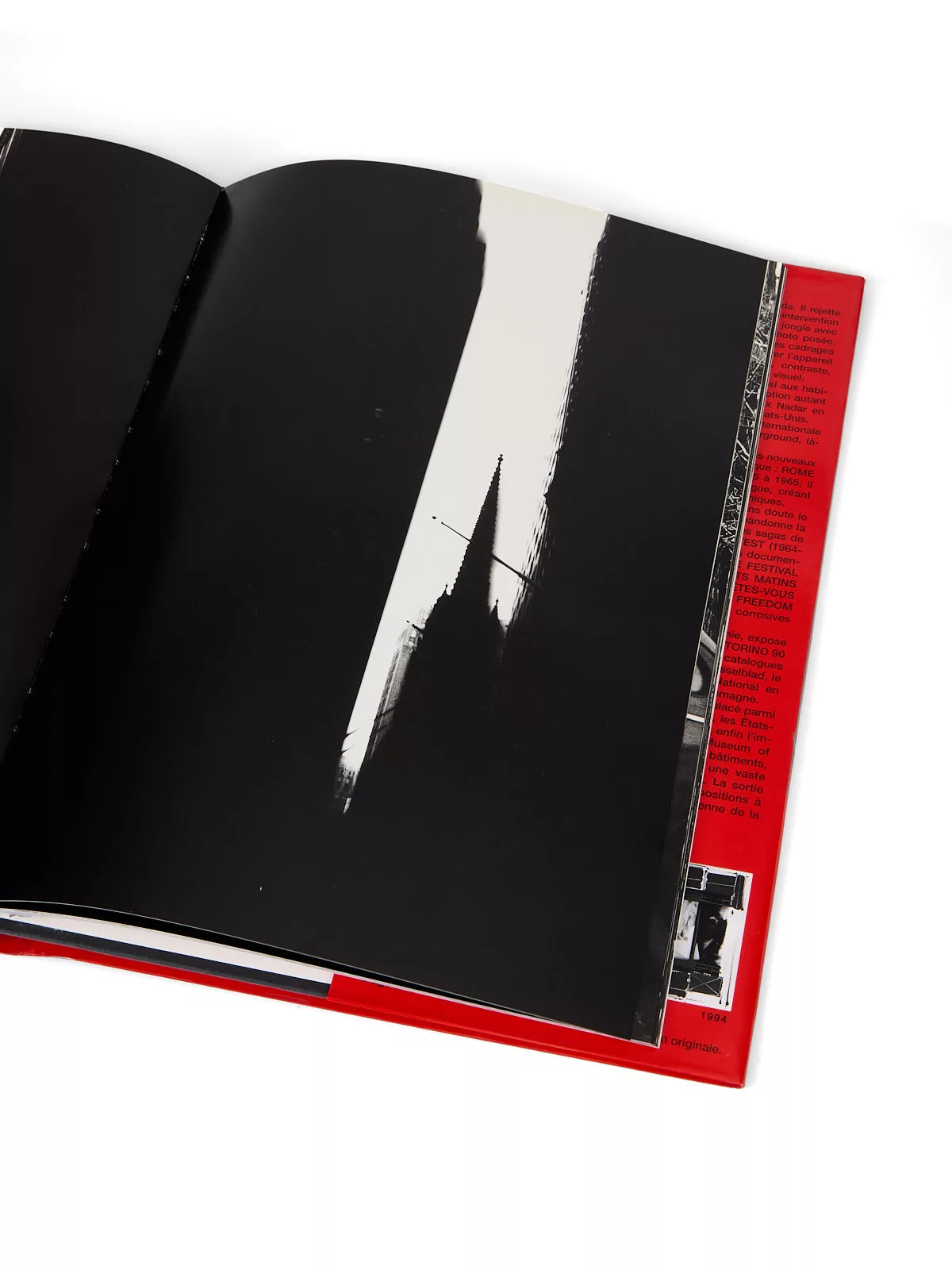
First published in 1956, New York remains William Klein’s defining work, a book that radically overturned the conventions of photography. Tilted perspectives, high and low angles, blur, harsh contrasts and apparently accidental framing: everything previously regarded as a photographic “mistake” became part of Klein’s visual language, serving a brutal yet poetic vision of the city.
Having left New York for Paris, Klein returned to photograph his native city and produced a chaotic, ironic and dazzling portrait of street children, anonymous crowds, graffiti, advertising and faces seen at close range. Described by critics as an “atomic” book, New York marked a decisive break in twentieth-century photography and influenced generations of photographers. This edition includes numerous previously unpublished images.
It was after seeing New York that Federico Fellini asked Klein to work with him on Nights of Cabiria. Camera in hand, Klein explored every corner of Rome, an experience that eventually resulted in Roma. Fellini would famously praise the result: “Rome is a movie, and Klein has made it.”
An exceptional association copy inscribed to Lucien Clergue (1934–2014), founder of the Rencontres d’Arles, bringing together two major explorers of the photographic image: Klein, who revolutionized urban photography, and Clergue, whose work explored the body, sand, ruins and the myths of the Mediterranean.
Auer, p. 365; The Book of 101 Books, pp. 140–142; Hasselblad Center, pp. 164–165; Parr & Badger, I, p. 243.