

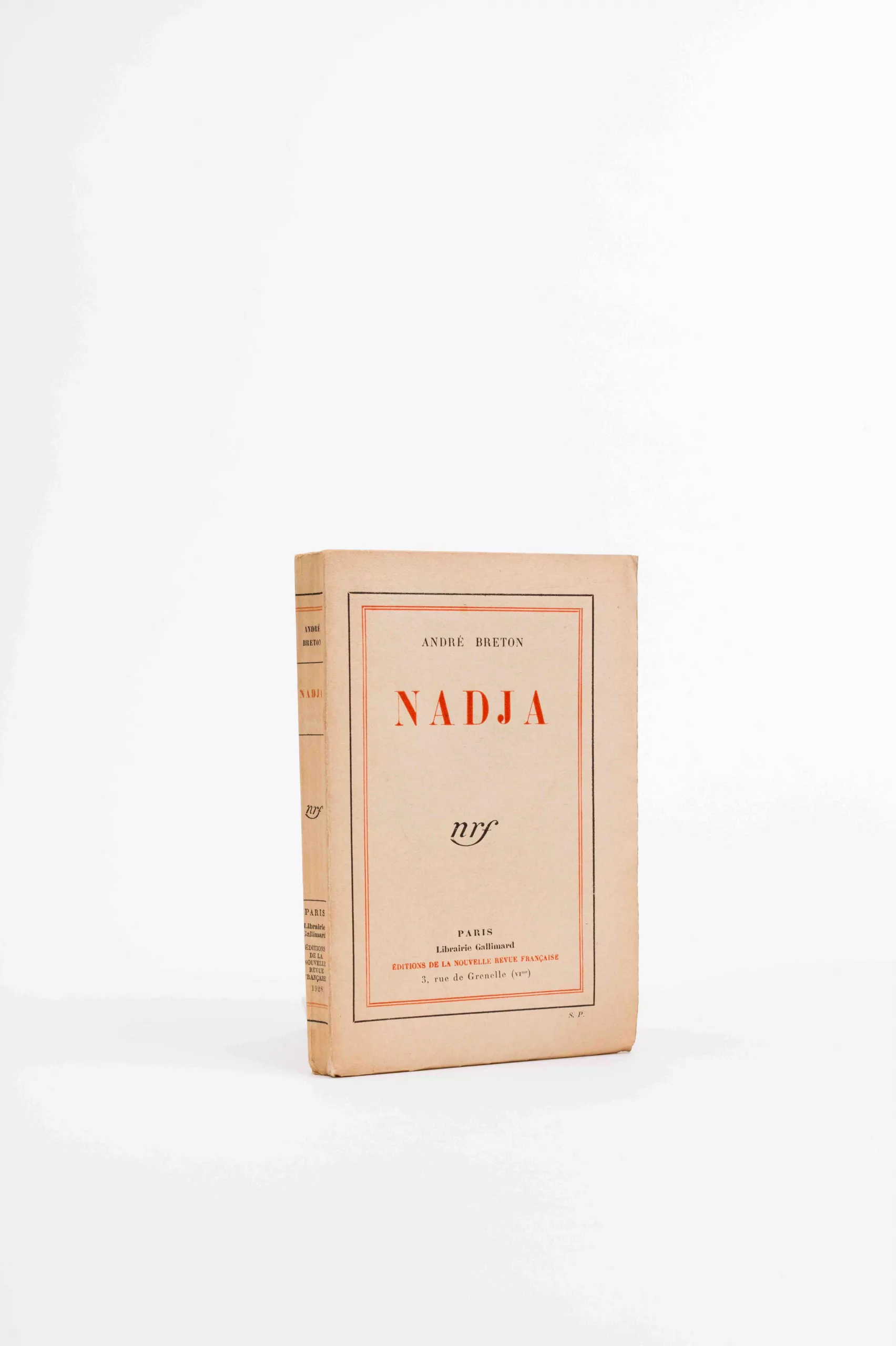
Nadja
Review copy, printed as such.
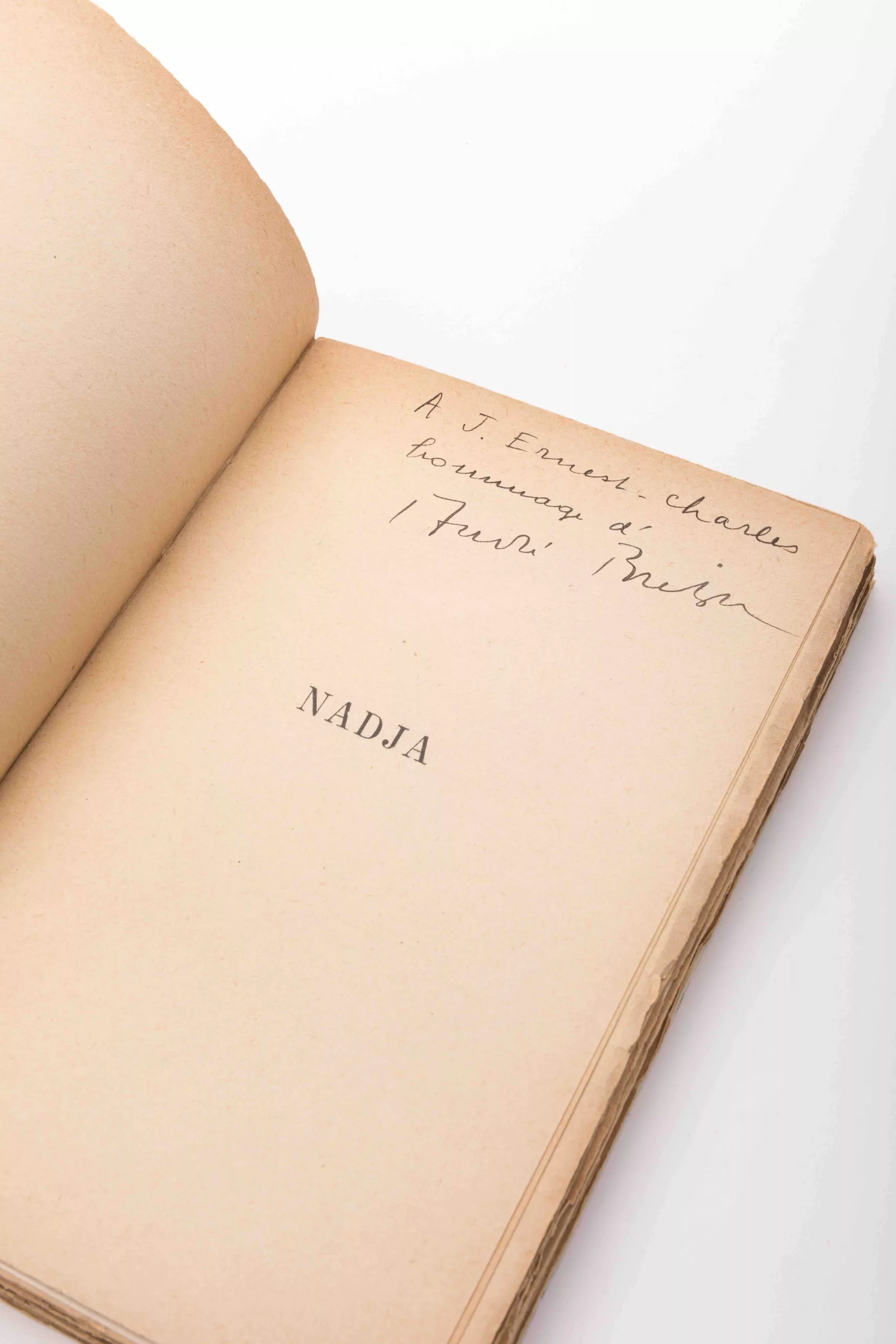
Signed presentation inscription: “À J. Ernest-Charles, hommage d'André Breton.”
In this celebrated autobiographical narrative, Breton gives a clinical account of the nine days he spent, from Monday 4 to Wednesday 13 October 1926, with Léona Delcourt, known by the name she gave herself, Nadja — “because in Russian it is the beginning of the word hope, and because it is only the beginning.” The young woman (1902–1941), described by Breton as “something like one of those spirits of the air that certain magical practices allow one to attach to oneself for a moment, but which one could never truly submit to,” was committed to an asylum in February of the following year.
The text pursues truth to an extreme degree, at the risk of a certain coldness.
Jean Ernest-Charles, pseudonym of Paul Renaison (1875–1953), was a journalist who served from 1918 to 1919 as the first president of the Syndicat national des journalistes, succeeded by Lucien Descaves. A doctor of law and a lawyer specializing in literary trials, he was also a drama critic and the author of Les Samedis littéraires (1903–1907), published in five volumes by Perrin and then Sansot. Paul Léautaud mentions him in his Journal, in the entry for 12 May 1908, regarding an assault he suffered as critic for Gil Blas, at the hands of René Émery, at the second performance of Gustave Grillet’s La Conquête des fleurs. Author of Le Théâtre des poètes, 1850–1910 and Essais critiques, both published by Ollendorff in 1910 and 1914, he published La Passion criminelle with Flammarion in 1923.