

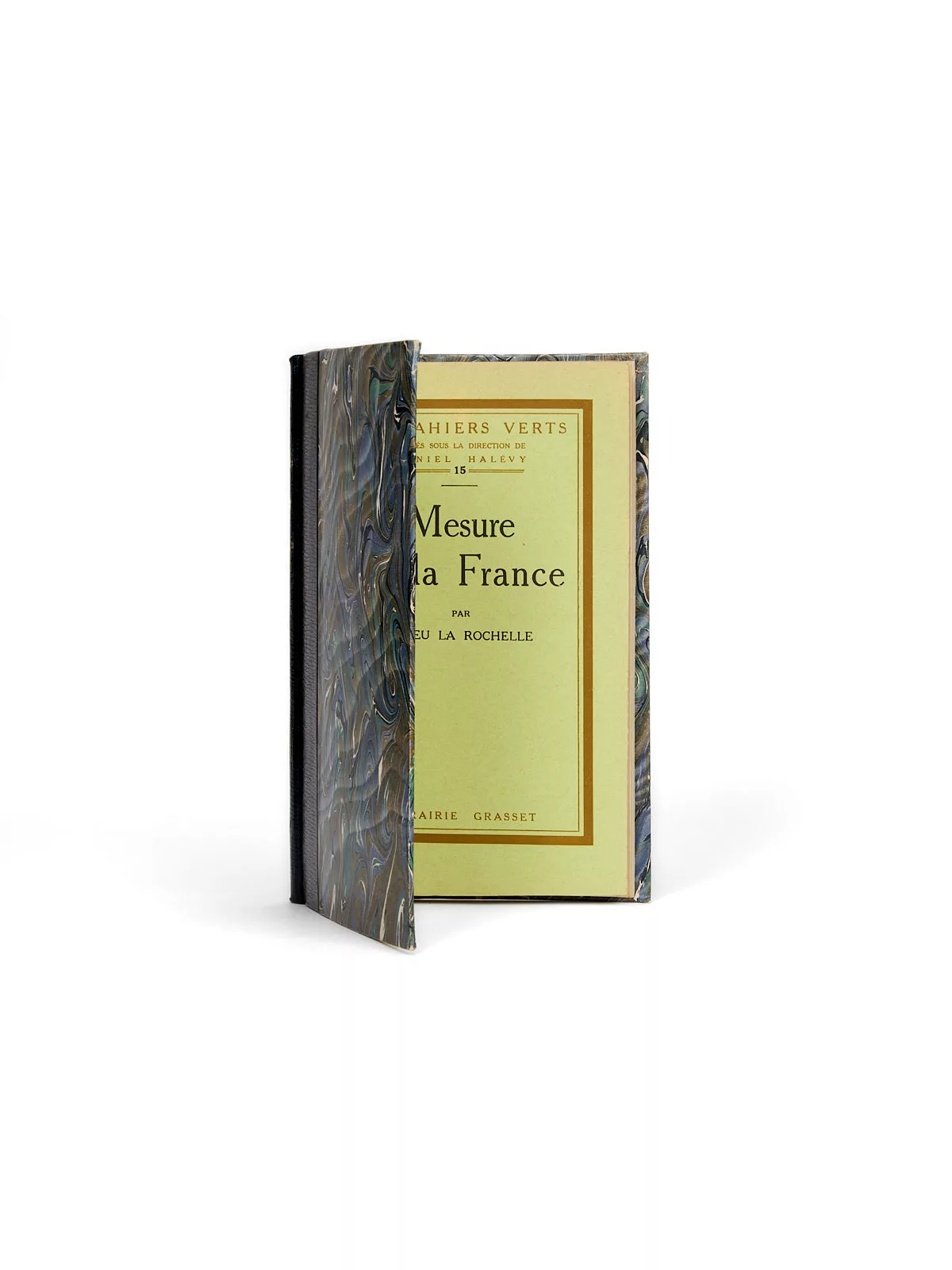
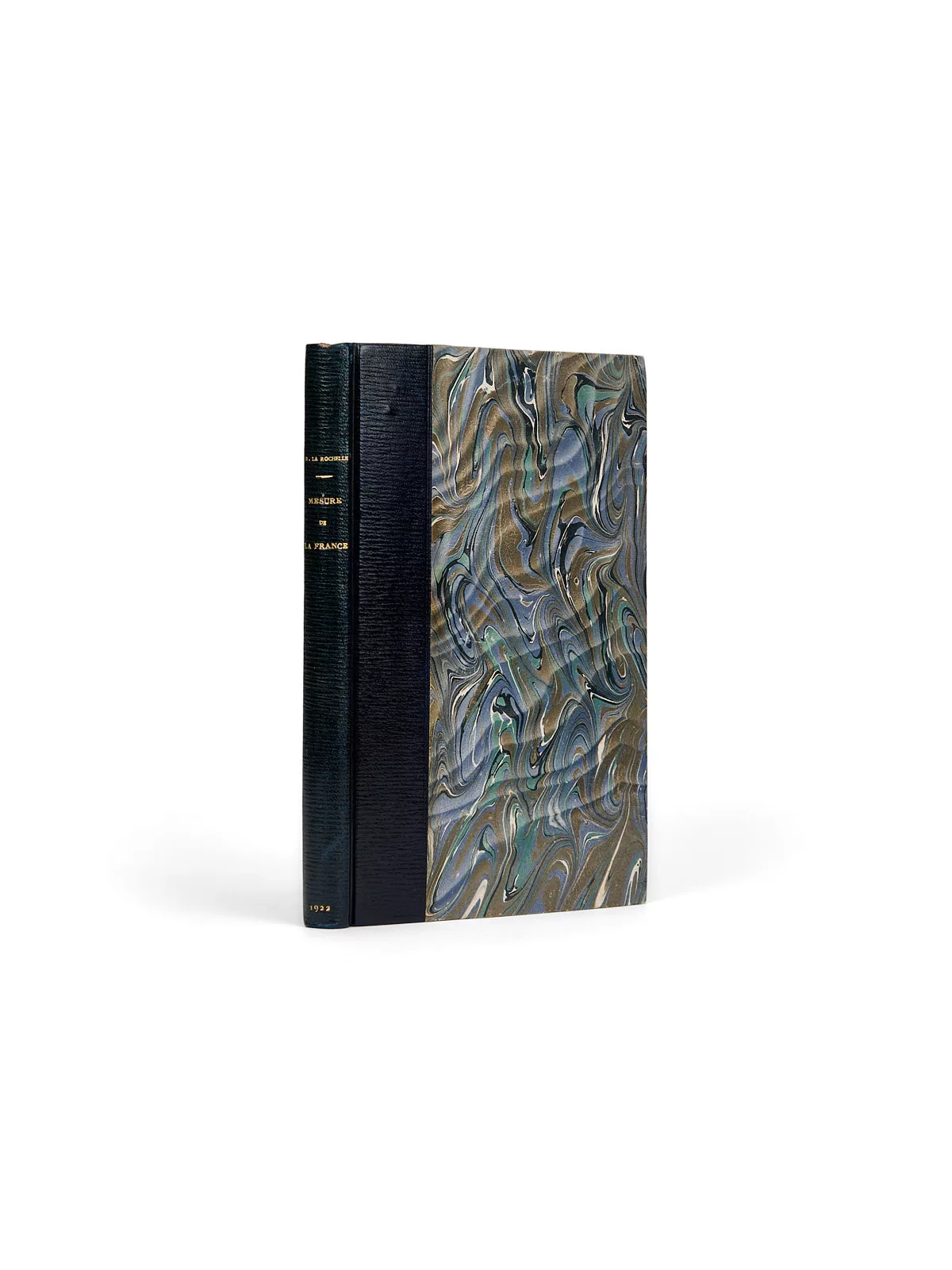
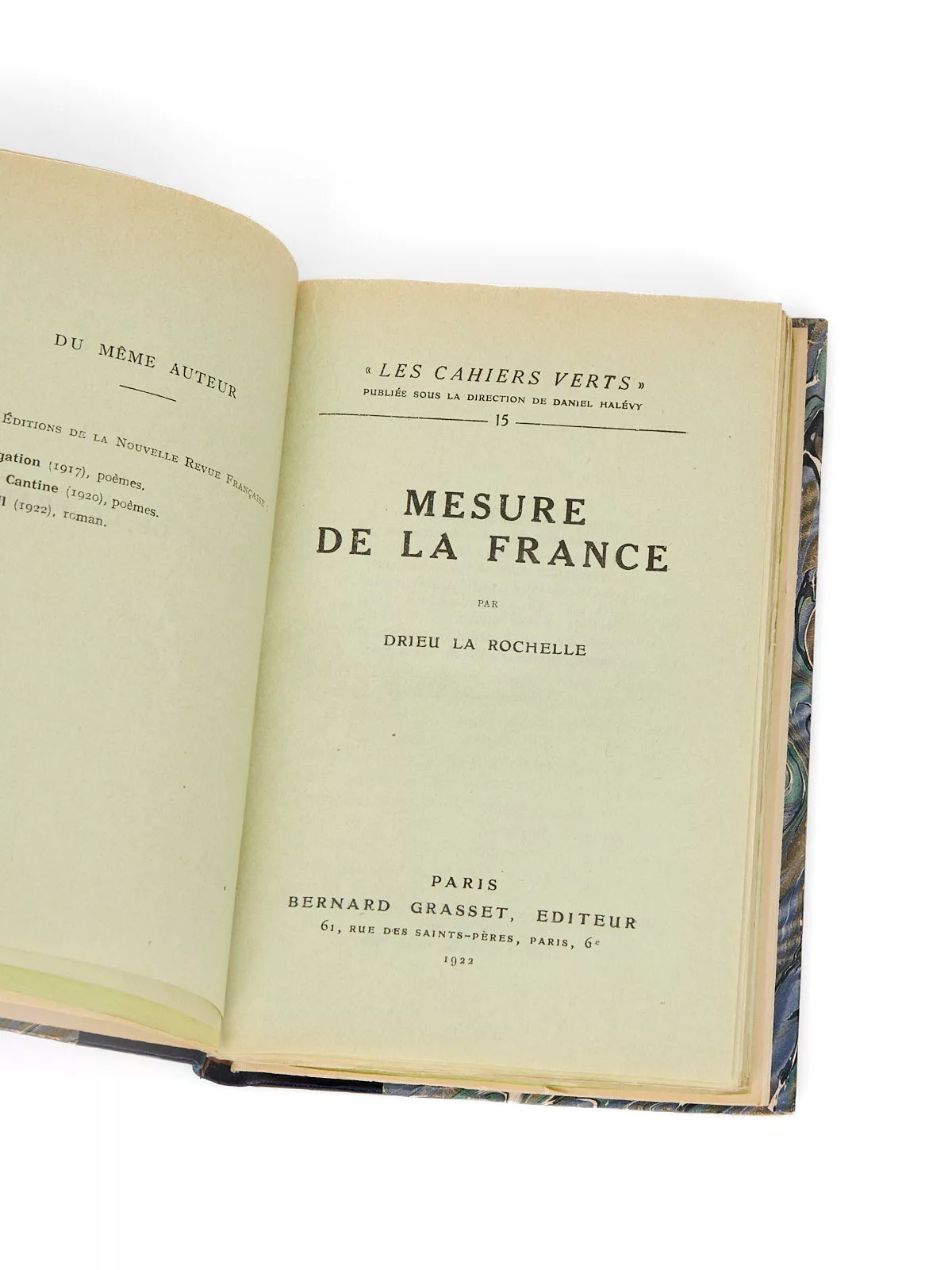
Mesure de la France
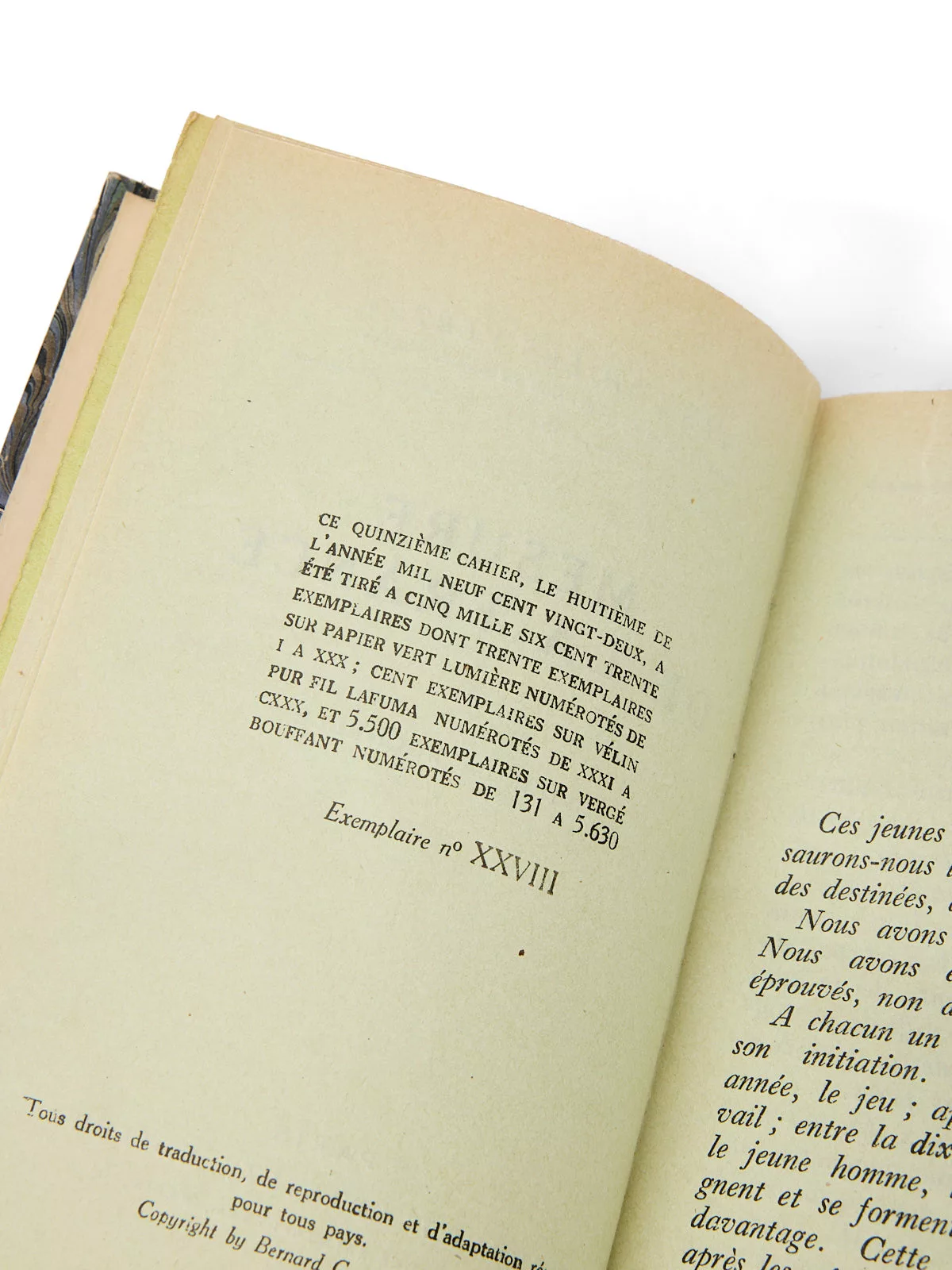
One of 30 copies from the deluxe issue on papier vert lumière, this copy no. XXVIII.
An infantry officer wounded three times during the Great War, Pierre Drieu la Rochelle attempts in this 1922 essay to give political and moral shape to the traumatic experience that would mark his entire body of work.
The title already states the project: to “measure” France means confronting the power the country believed it had retained against the new reality revealed by the war. The 1918 victory did not reassure Drieu; on the contrary, it revealed to him the demographic exhaustion of the country, the fragility of its power, and the shifting balance of Europe: victory, certainly, but it is the illusions underlying that victory that are foregrounded. The book thus occupies a decisive place in Drieu’s trajectory: after the poems of Interrogation and Fond de cantine, drawn directly from his experience at the front, Mesure de la France marked his entry into political essay writing. The writer’s ideological positions would evolve profoundly — and tragically — over the following two decades, but several of the questions that would nourish them are already present in this early text.
Ten years later, when asked in the Enquête mondiale sur les écrivains “Which work made you best known?” and “Which do you consider a masterpiece?”, Drieu answered “Mesure de la France” to the first, and “I have written no masterpiece and do not intend to” to the second…
A rare and genuine deluxe printing, preceding the 100 copies on pur fil paper.