

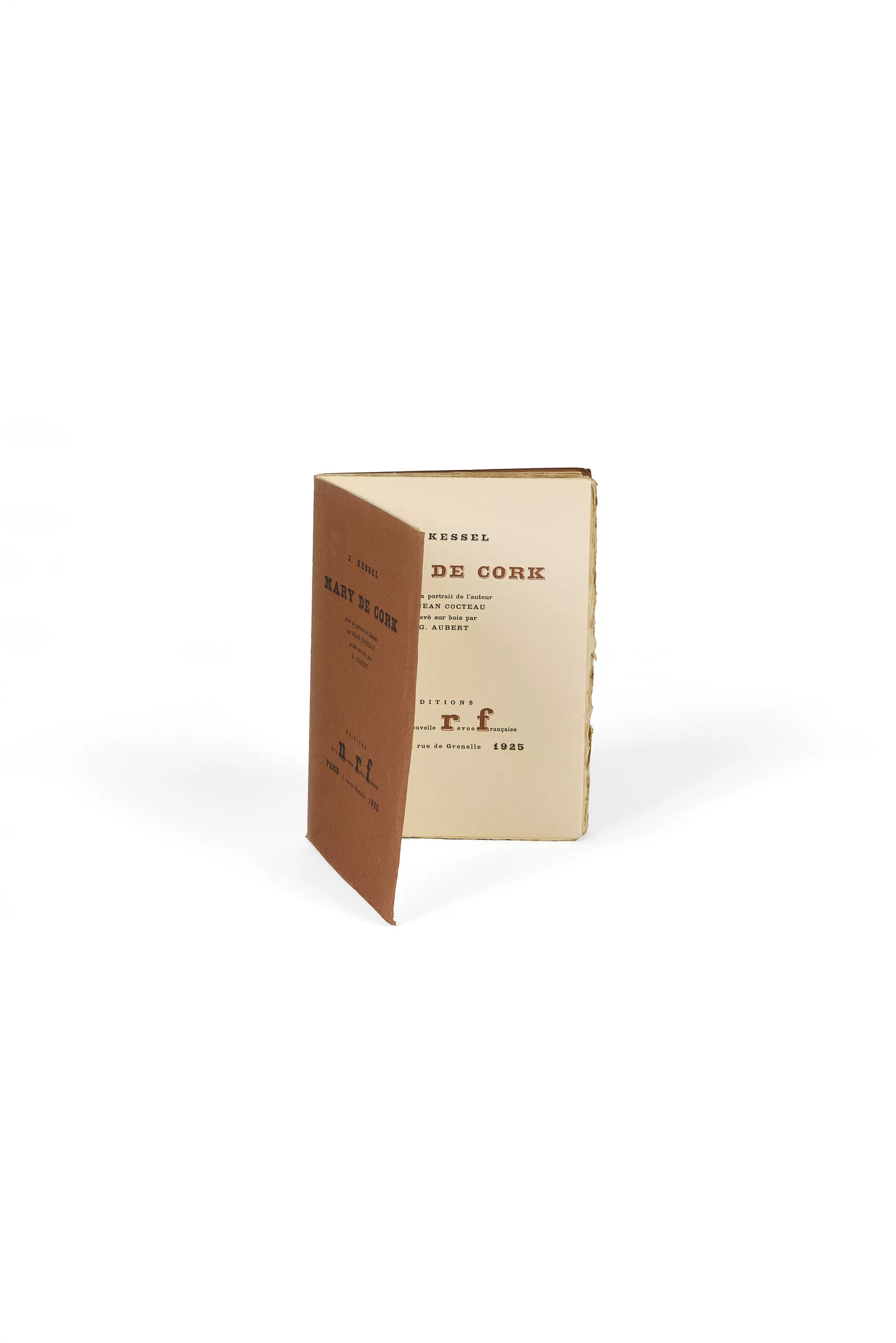
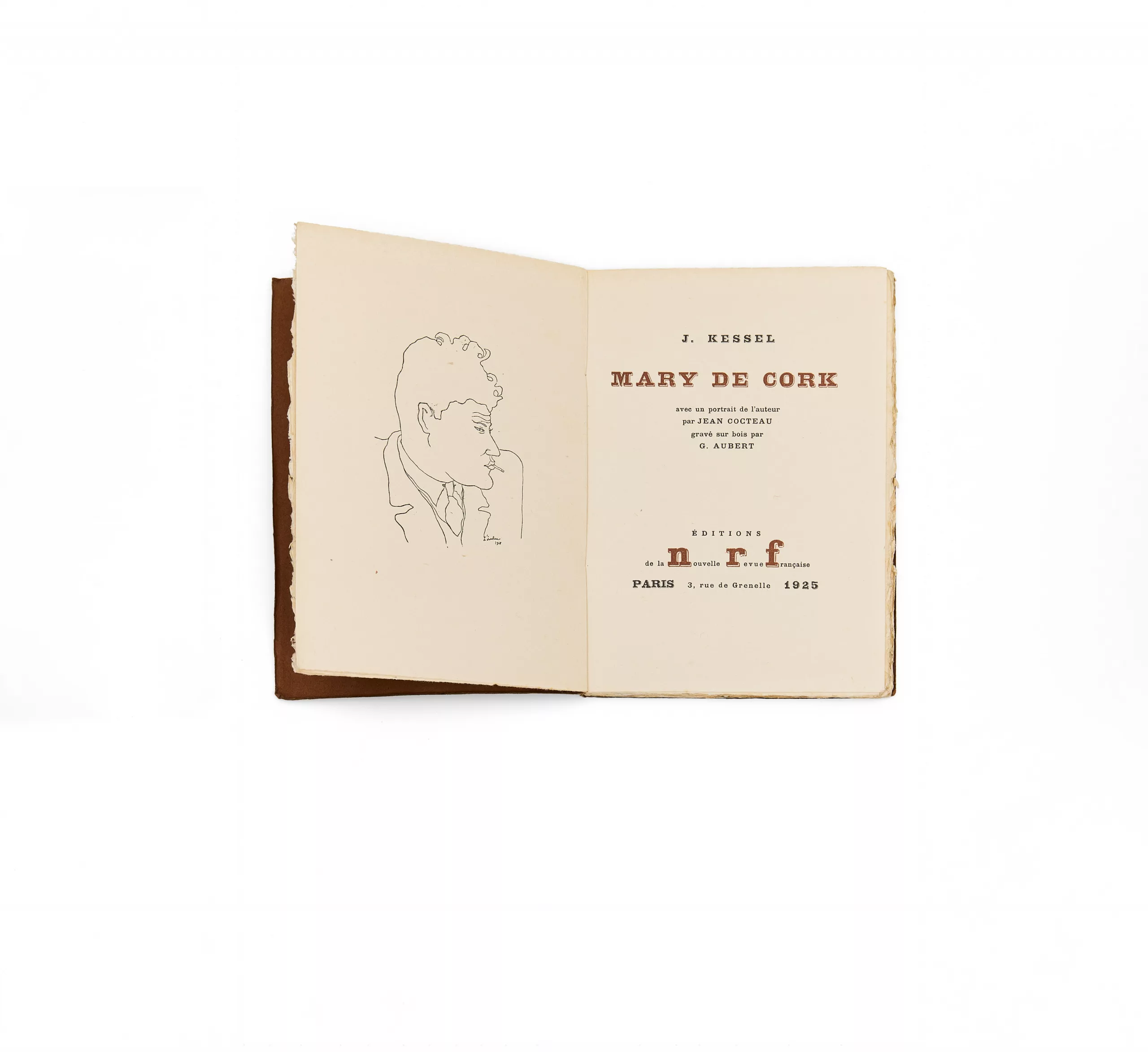
Mary de Cork
One of 26 copies from the deluxe issue on tinted Japanese paper (copy B — the second copy, after copy A, the author's copy, to which was joined a full-margined proof of the portrait).
1920. Devastated by the death of his brother, Lazare Kessel, the young reporter was despondent. Salvation came from Mazereau, an old friend from Le Journal des débats, who introduced Kessel to Camille Aymard, editor-in-chief of La Liberté: “I am told you have talent, and I am inclined to believe it. I trust you. Here is ten thousand francs. You leave for Ireland immediately.”
The insurrection there was then a bloody one — a subject and a scoop of pure gold for Kessel, who landed at Parkgate, in central Dublin, on 14 September 1920. It was his first assignment, and a masterstroke. In all, Kessel sent back ten dispatches, moving about the country under a false passport and forged papers, and was noticed by critics, fellow journalists and the public alike. Four years later, Kessel had become a celebrated young writer, following the publication by Gallimard of La Steppe rouge and L’Équipage (in 1922 and 1923). For the “une œuvre, un portrait” series, Mary de Cork rekindles the flame of the Irish cause, this time from a more novelistic angle. But the lived experience and sincerity behind the text leave no doubt.
Very good condition.