

[Mao zhu xi yu lu]
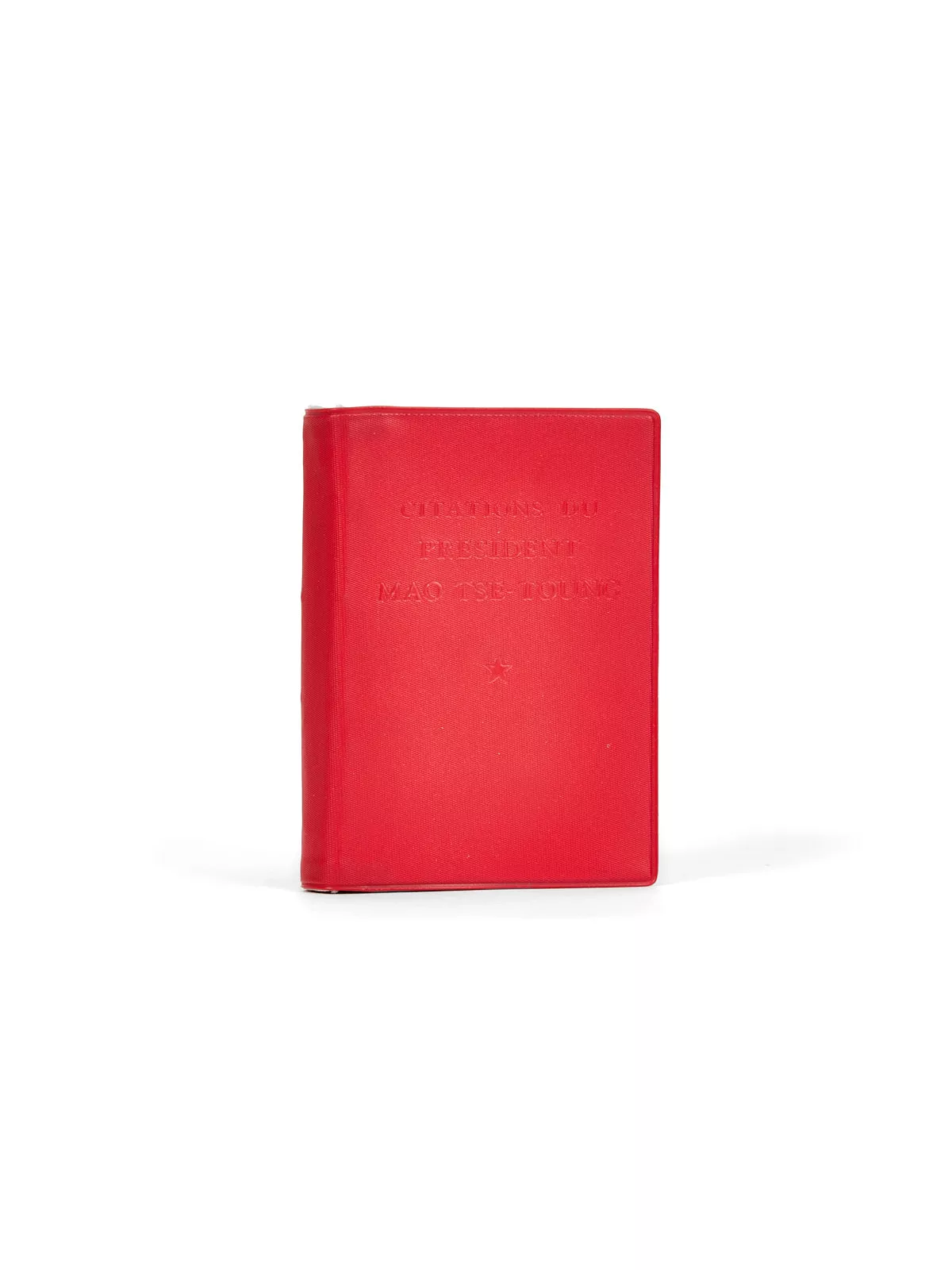
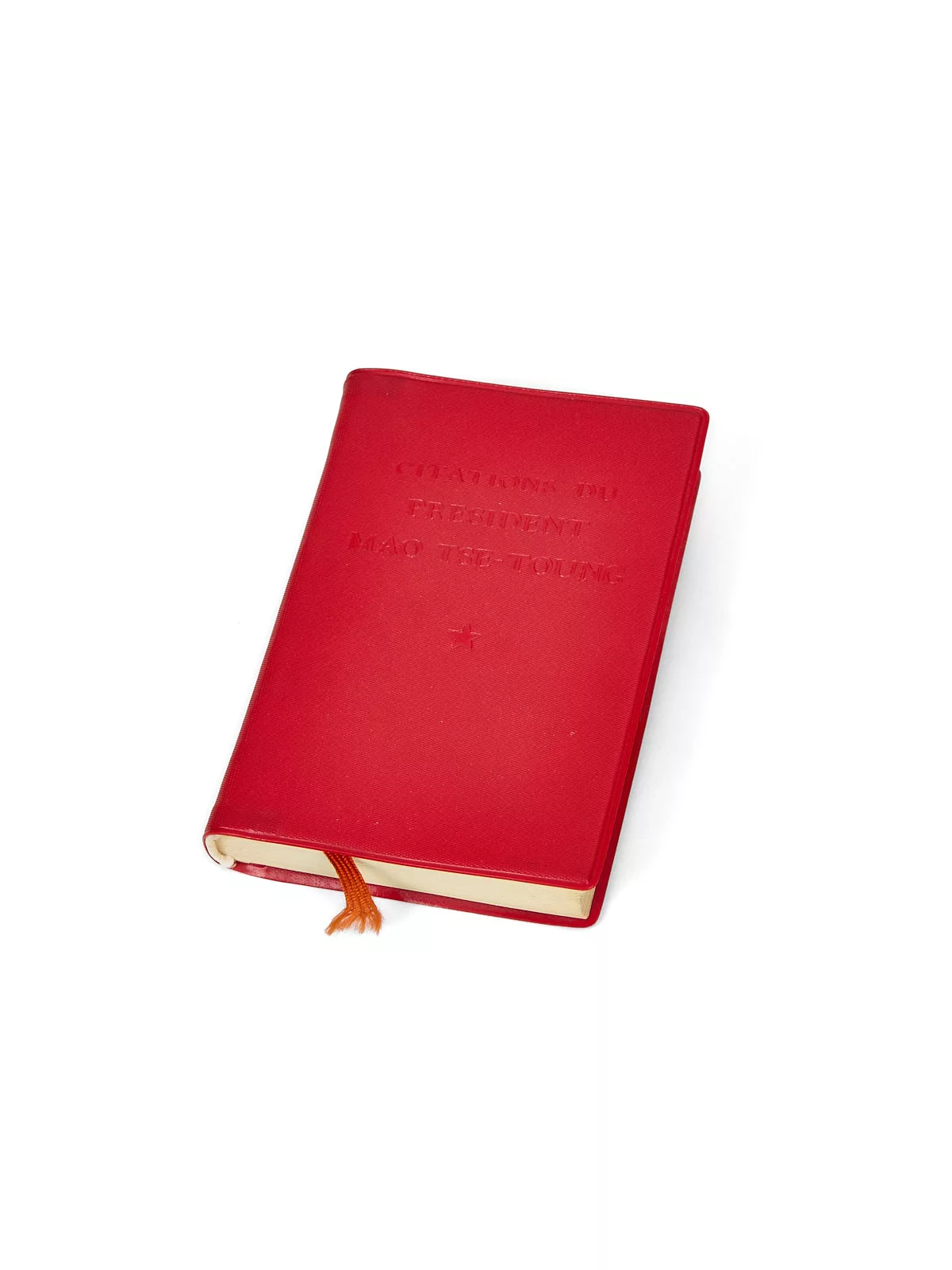
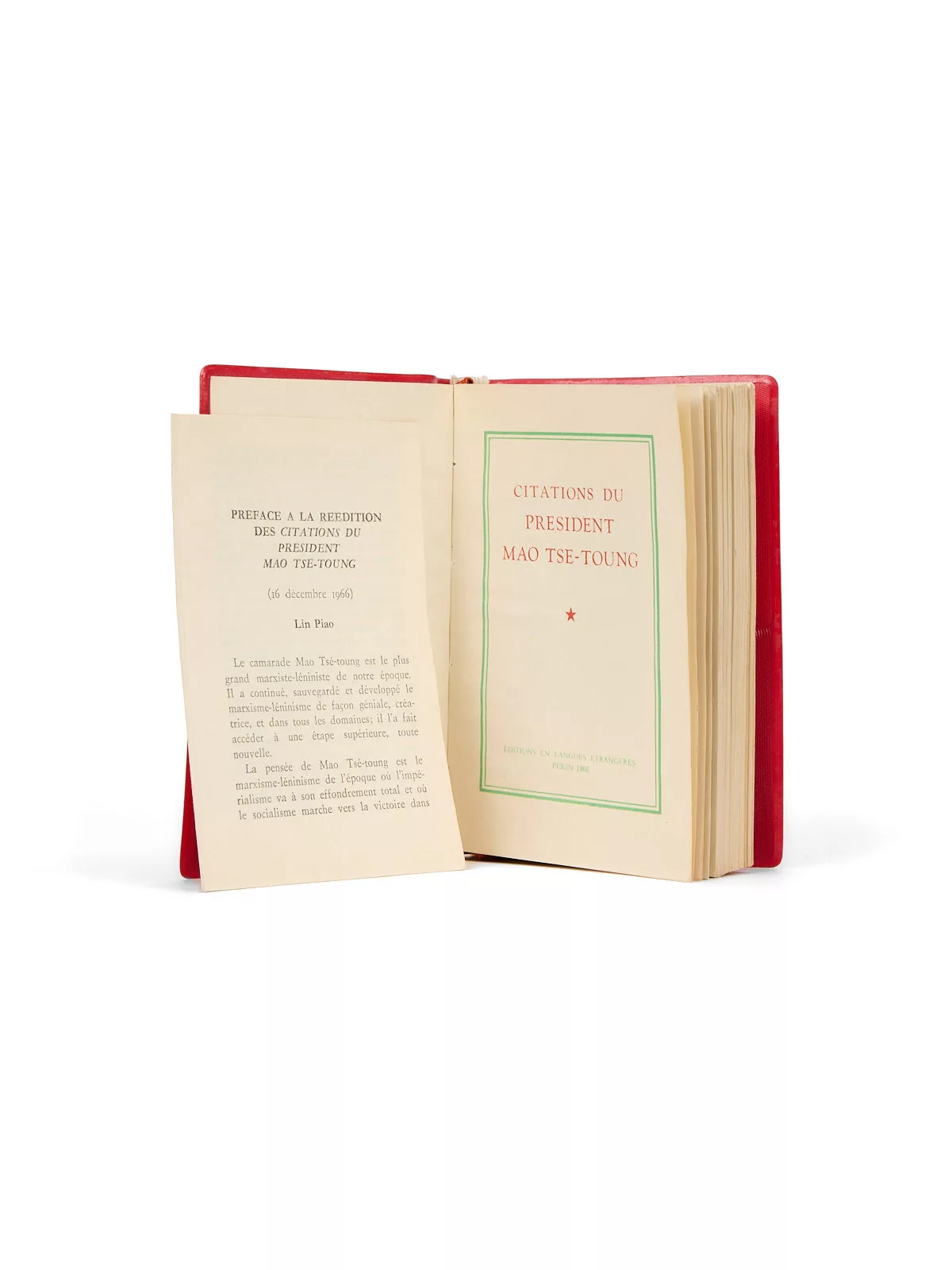
First printing, first state.
Originally conceived as a tool for political training within the People’s Liberation Army, the collection of Quotations from Chairman Mao soon became one of the most widely distributed and instantly recognizable books of the twentieth century. Its pocket format, red vinyl cover, and mass distribution during the Cultural Revolution earned it the Western name “Little Red Book.”
The idea for the collection emerged from the military and ideological context of the early 1960s. Lin Piao, Minister of Defense and head of the People’s Liberation Army, encouraged the systematic study of Mao’s thought among the troops. The aim was to provide soldiers with a portable, simple, easy-to-handle manual composed of extracts from Chairman Mao’s writings and speeches, arranged by theme. Initially reserved for cadres and military units, the book quickly moved beyond this framework to become a political emblem, brandished at rallies, memorized, quoted, and displayed as a sign of revolutionary allegiance.
The 1966 French edition took part directly in this international dissemination. Published in Peking by the Foreign Languages Press, it gave French-speaking readers one of the central objects of the Maoist imaginary. At once a propaganda book, political manual, militant object, and graphic icon, the Quotations circulated far beyond China, in communist, Marxist-Leninist, student, and Third-Worldist circles. The presence of the facsimile by Lin Piao adds a strong historical dimension: long presented as Mao’s closest comrade-in-arms and designated successor, Lin Piao was abruptly erased from official memory after his fall from grace and death in 1971, and editions published after that date no longer retain these elements.