

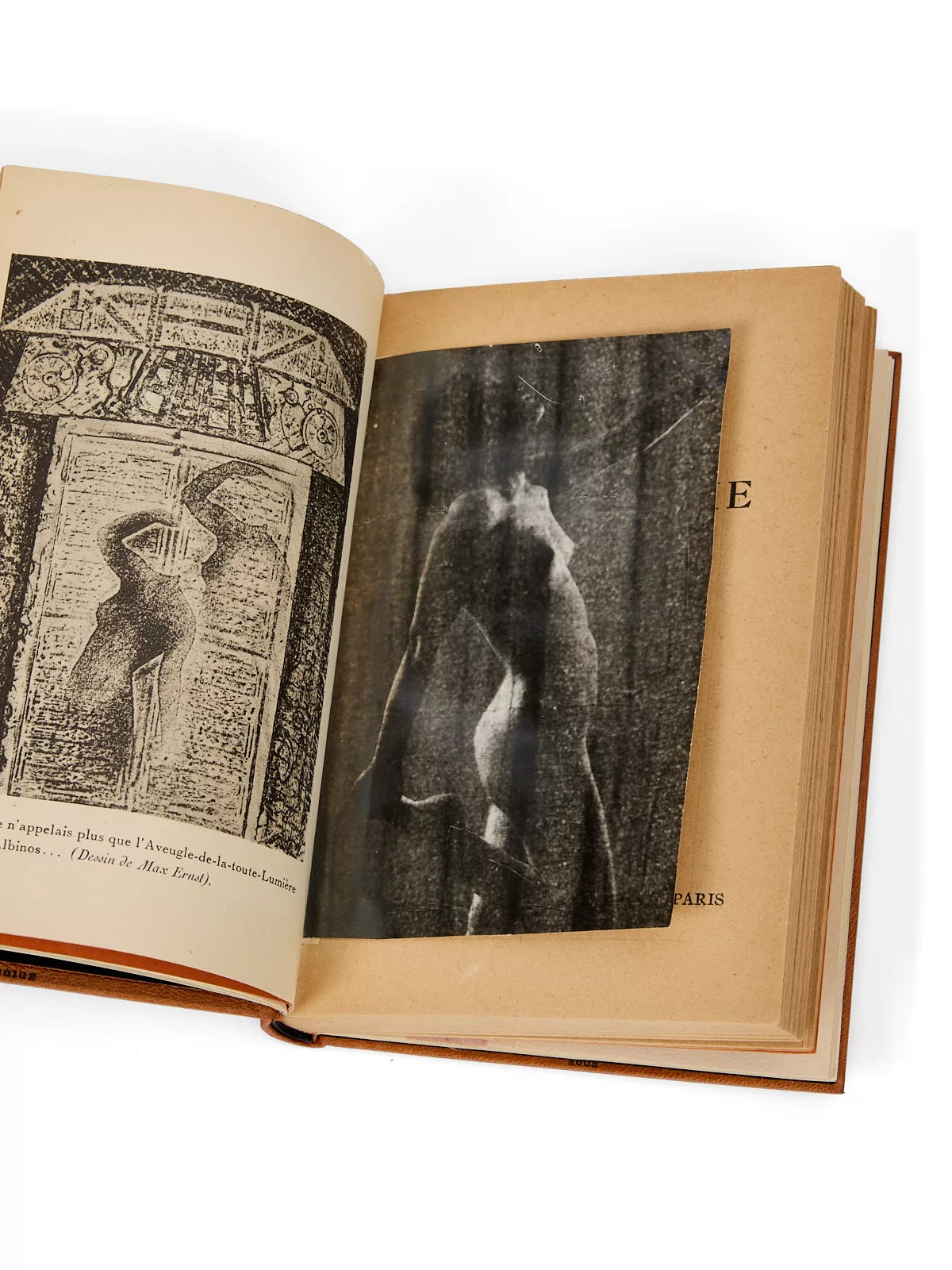
Frontispiece by Max Ernst.
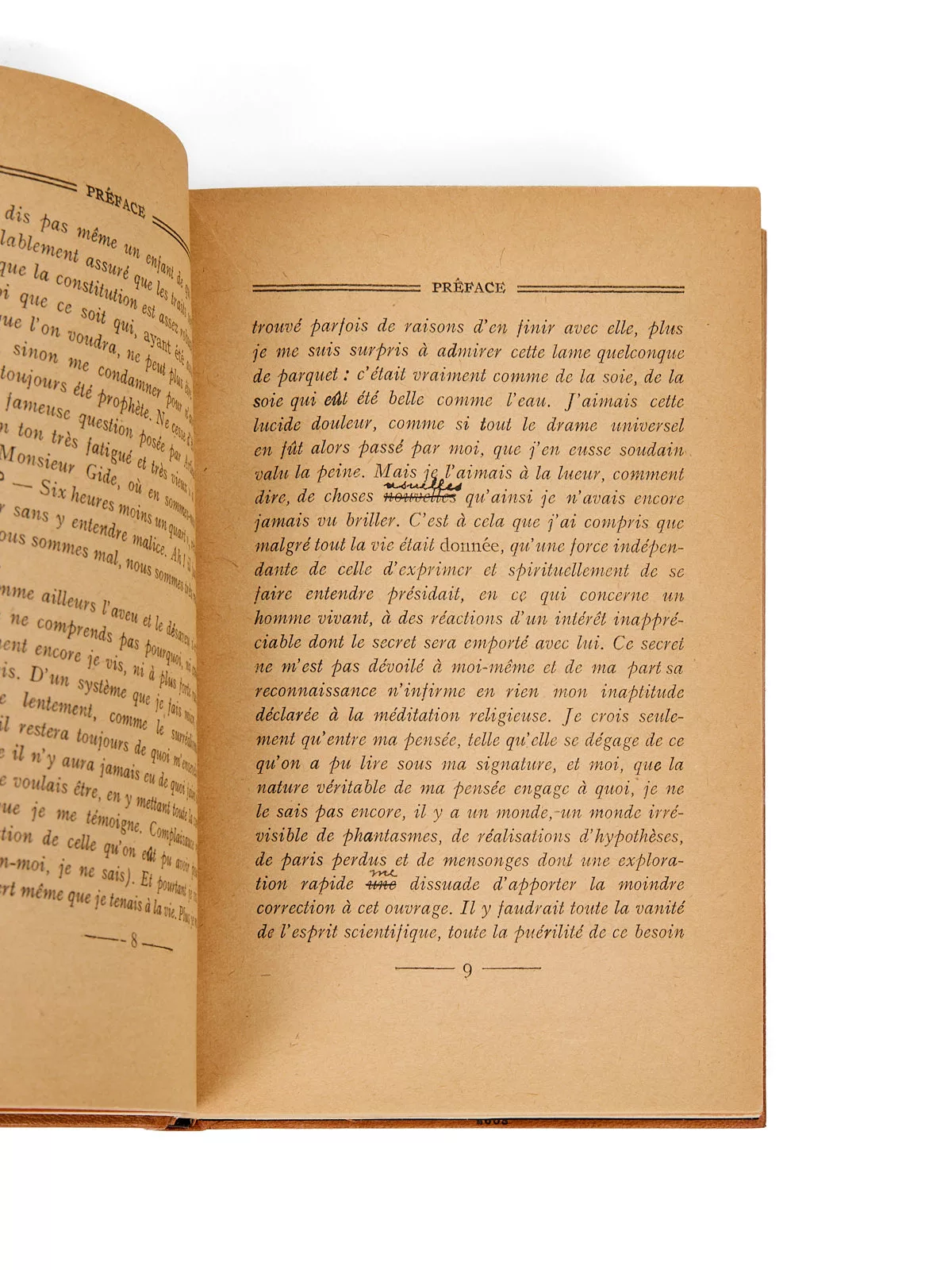
Press copy, with three autograph corrections by André Breton in the preface.
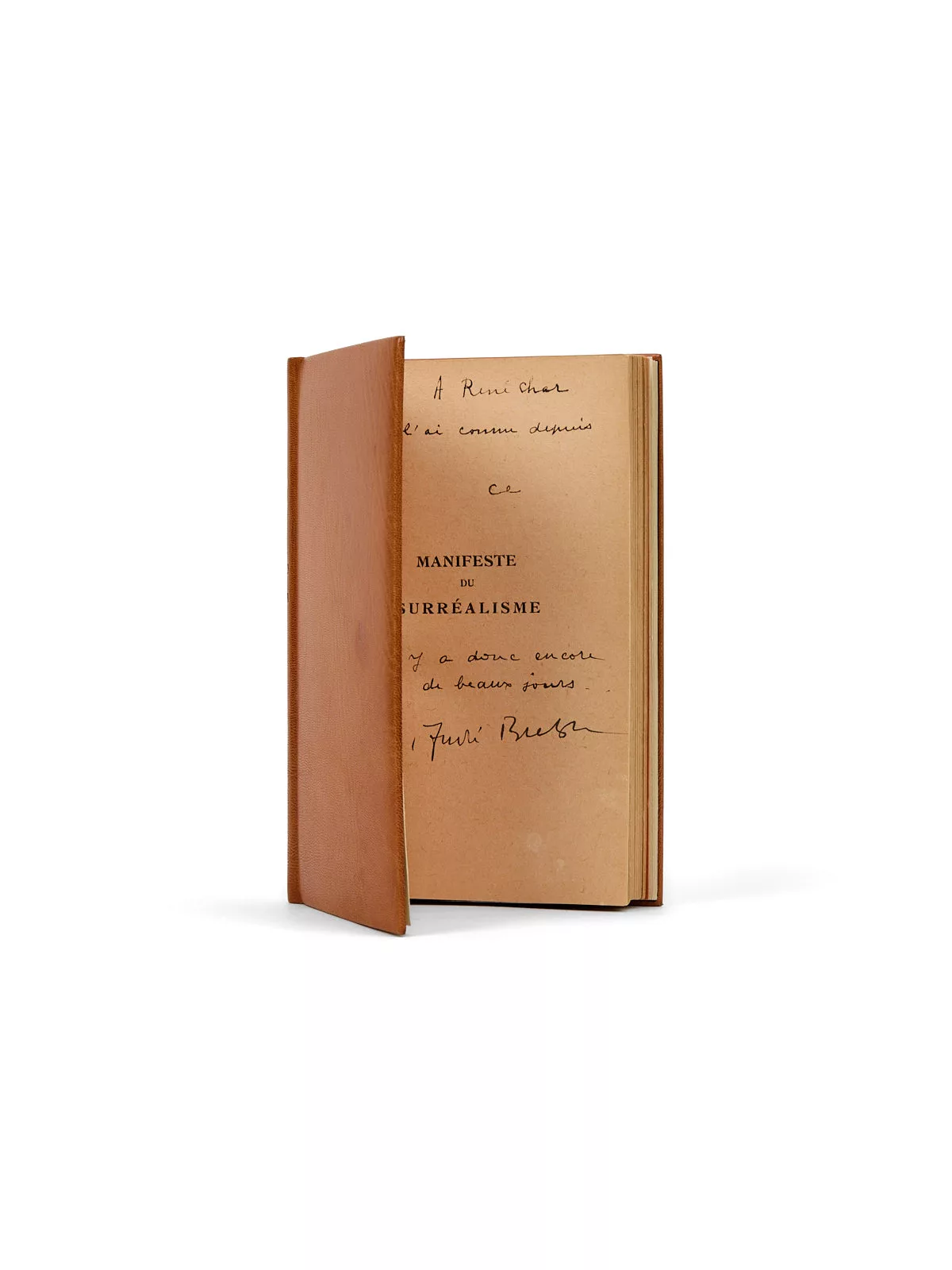
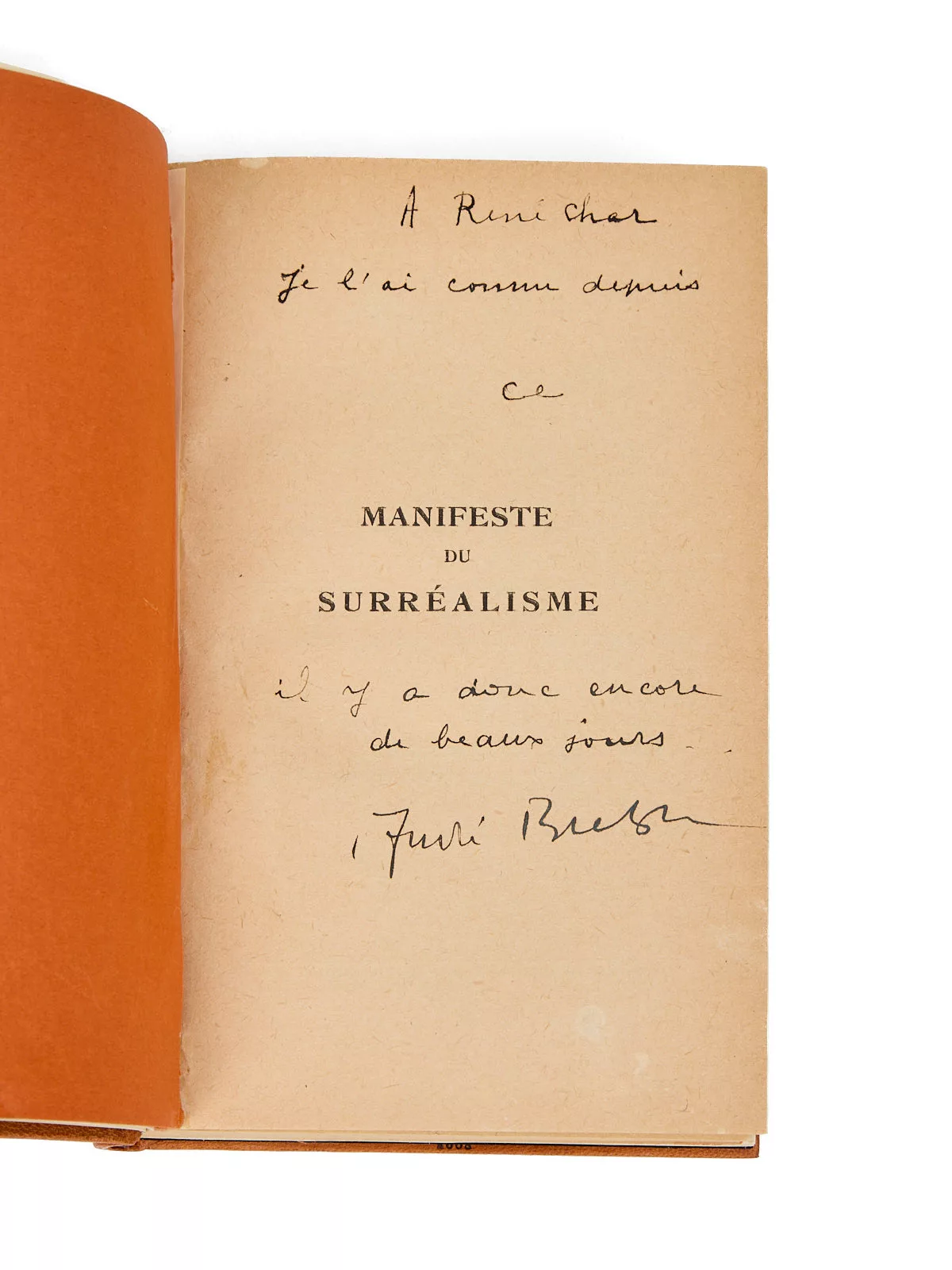
Exceptional autograph presentation inscription signed by André Breton to René Char, arranged around the printed title on the half-title:
“À René Char
Je l'ai connu depuis ce
MANIFESTE DU SURRÉALISME
il y a donc encore
de beaux jours.
André Breton”
A major copy for the history of the relationship between André Breton and René Char.
The two poets met in Paris at the end of November 1929, through Paul Éluard. Char immediately joined the Surrealist movement and contributed, from December onward, to the last issue of La Révolution surréaliste, in which the Second manifeste appeared. In March 1930, he composed Ralentir travaux together with Breton and Éluard, published that same year.
The present inscription almost certainly dates from the earliest days of this friendship. Two other copies of the Manifestes inscribed by Breton to René Char are known: the first is a deluxe copy of the 1924 first edition, bound by Paul Bonet for Char (Christie’s, collection Pierre Brossette, no. 102), with an inscription evoking, among other things, “the curvature (which keeps increasing) of the earth.” The second is a copy of the Second manifeste (1930), bearing a long inscription dated 21 September 1930, in which Breton recalls the incident at the Bar Maldoror and the knife wound Char received a few months earlier (Christie’s, 2024, no. 83). The present copy stands between the two.
Unlike the first, whose inscription necessarily postdates the 1924 edition and is more of a retrospective, indulgent gesture, this one was written at the very outset of their relationship. The preface bears three autograph corrections in Breton’s hand. This variant is known in only one other copy, the one inscribed to Jeannette Tanguy, which contains only two.
René Char also enriched the copy with an old photograph of a female nude, by Henri Manuel, placed facing Max Ernst’s frontispiece, with which it forms a striking visual correspondence, though we are unable to identify the model. As the copy has always remained in René Char’s own possession, there can be no doubt that he is indeed the one who added this print.