

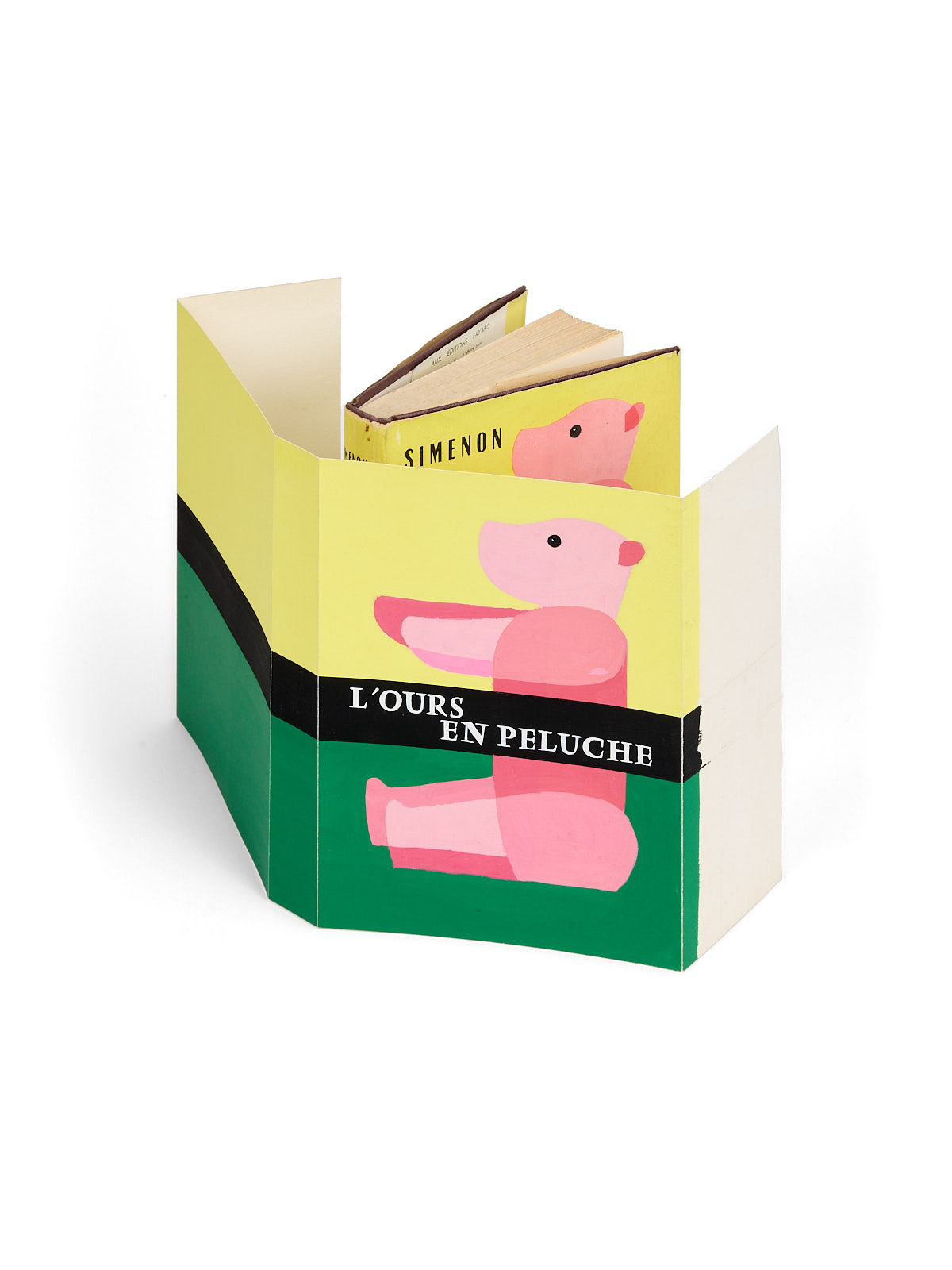
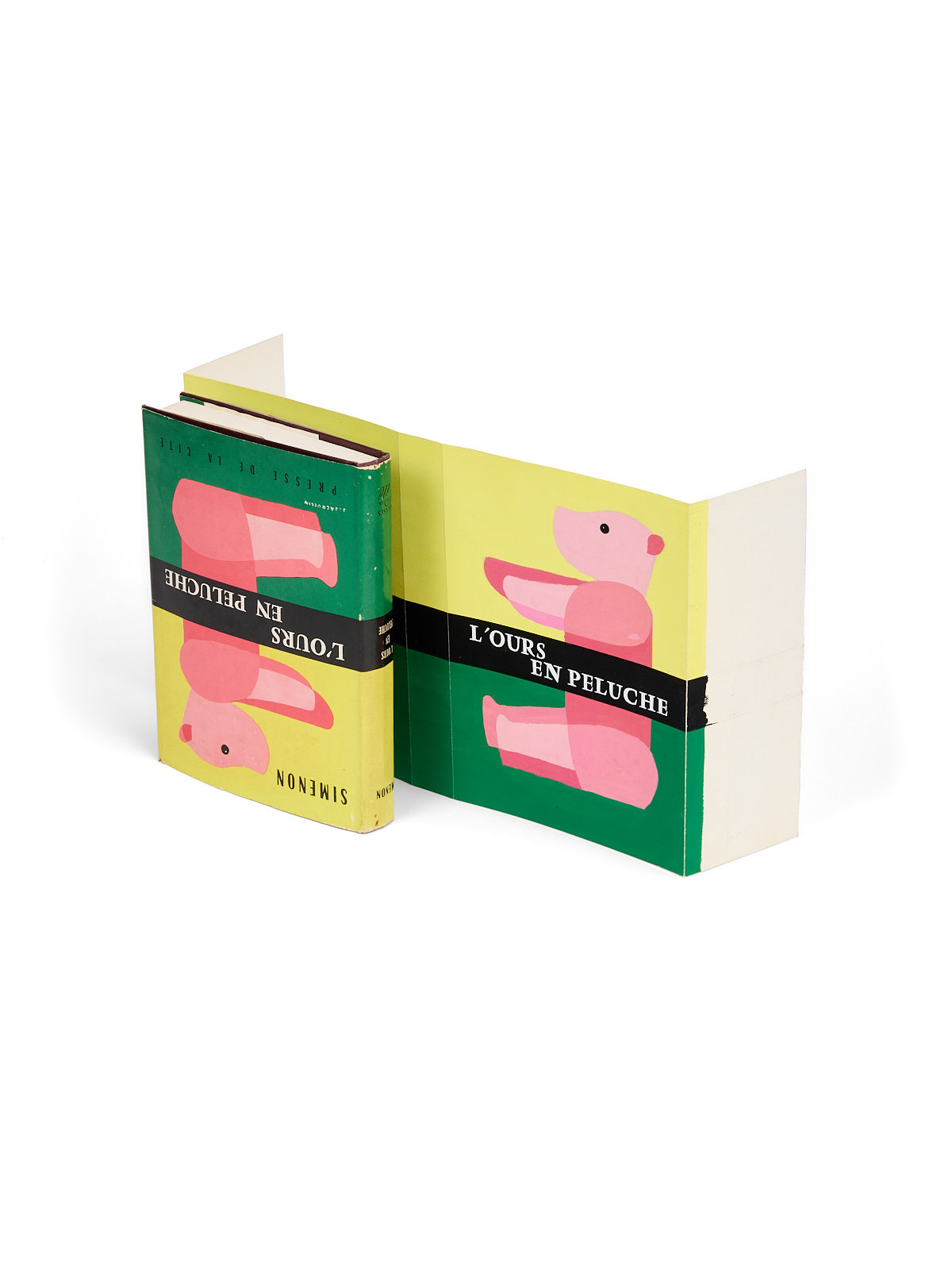
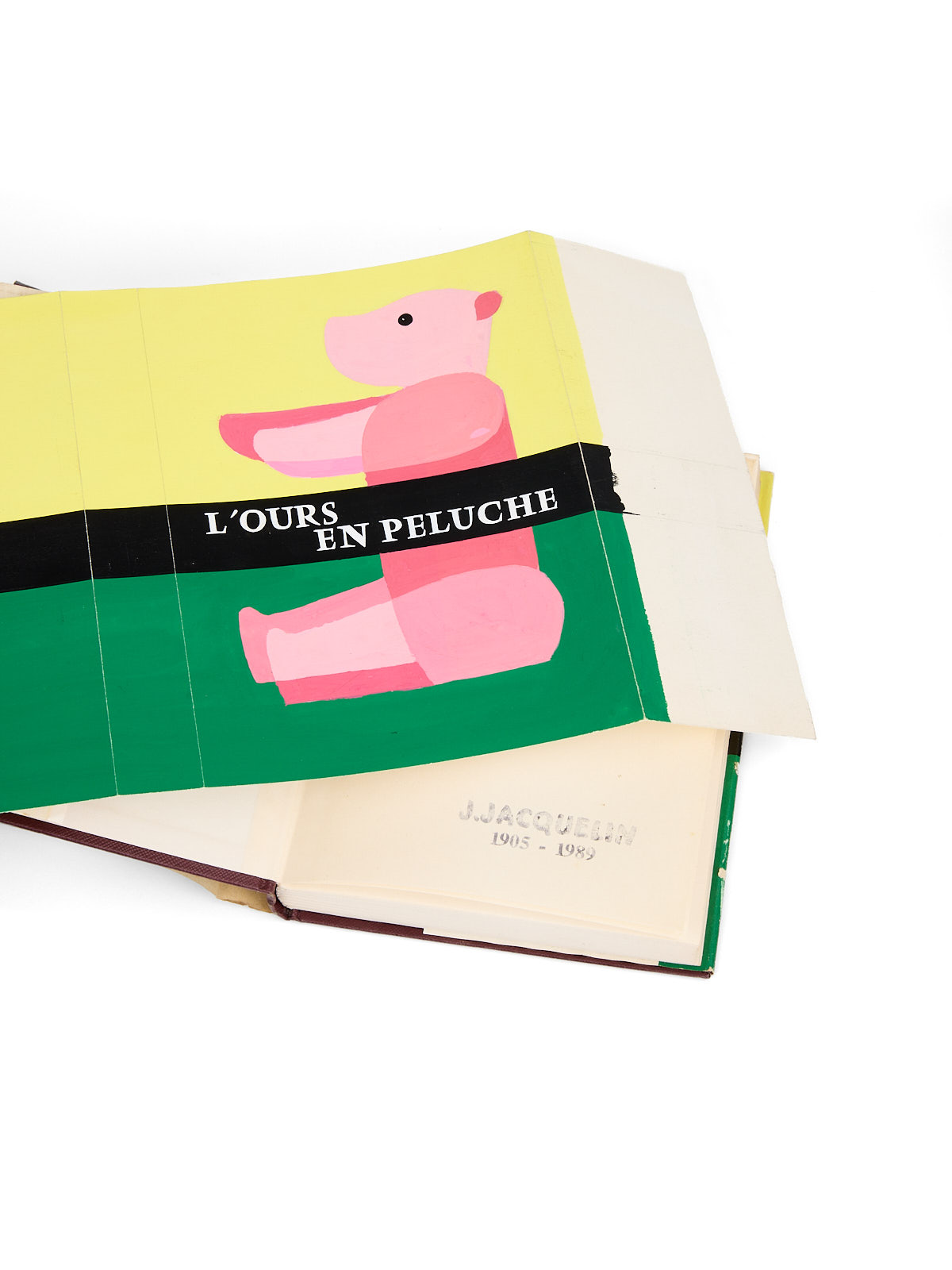
« L’Ours en peluche »
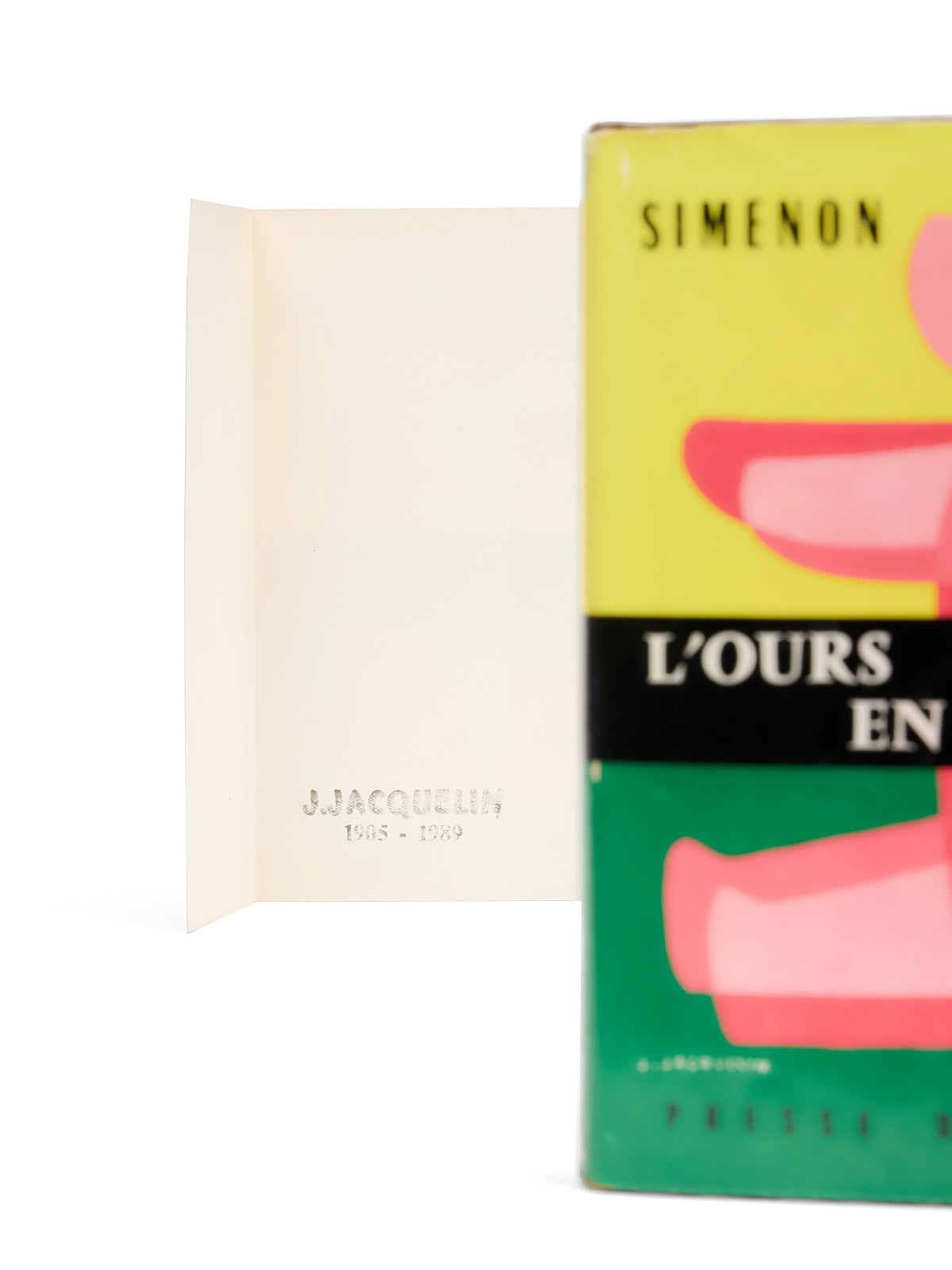
Accompanied by the book edition, with its dust jacket. A completely different version was ultimately not used for this title, but was later used to illustrate the reissue of Le Temps d’Anaïs. This copy comes from the personal archives of the illustrator, Jean Jacquelin, with the estate stamp.
Jean Jacquelin worked on 27 of Simenon’s novels for Presses de la Cité between 1957 and 1962, following an initial attempt in 1946, when he designed the first jacket for the reissue of Trois chambres à Manhattan. It was not until ten years later, however, that Sven Nielsen, head of Presses de la Cité, entrusted him with the new cover illustrations, at a moment when cover design was shifting away from photographic covers toward illustrated ones.
By this time, Jacquelin was already a well-established poster artist. Artistic director of the Step agency from 1929, he produced numerous film posters from 1940 onward while continuing his work as a commercial illustrator across many sectors: automobiles (Peugeot, Delage, Simca, Buick, Fiat), energy (Antar, Esso, Shell), the press (Paris-Soir, L’Intransigeant, Éditions Froissart, Presses de la Cité), fashion (Scandale, Magasin Le Printemps), tourism and travel (SNCF, Air France, Aéropostale, Cie Transatlantique), and numerous brands and events (Crédit Foncier, the 24 Hours of Le Mans, Coop, Vittel, the Casino d’Enghien, Brandt, Champagne Mercier, Semaine du cinéma, the châteaux of the Loire).
His two most famous posters are undoubtedly those for Jacques Tati’s Jour de fête and Jacques Becker’s Casque d’or, with Simone Signoret and Serge Reggiani. A major exhibition was devoted to him in 1993 at the Bibliothèque Forney, accompanied by a richly illustrated catalogue (Jean Jacquelin affichiste et dessinateur publicitaire; Exposition Bibliothèque Forney, April 29–May 28, 1993).
Jacquelin’s work for Presses de la Cité resulted from close collaboration with Georges Simenon, to whom he submitted his original designs: the author would approve them, or not, sometimes suggesting ideas of his own. Several of the designs, like this one, bear Simenon’s annotations.