

L’Odyssée d’un transport torpillé
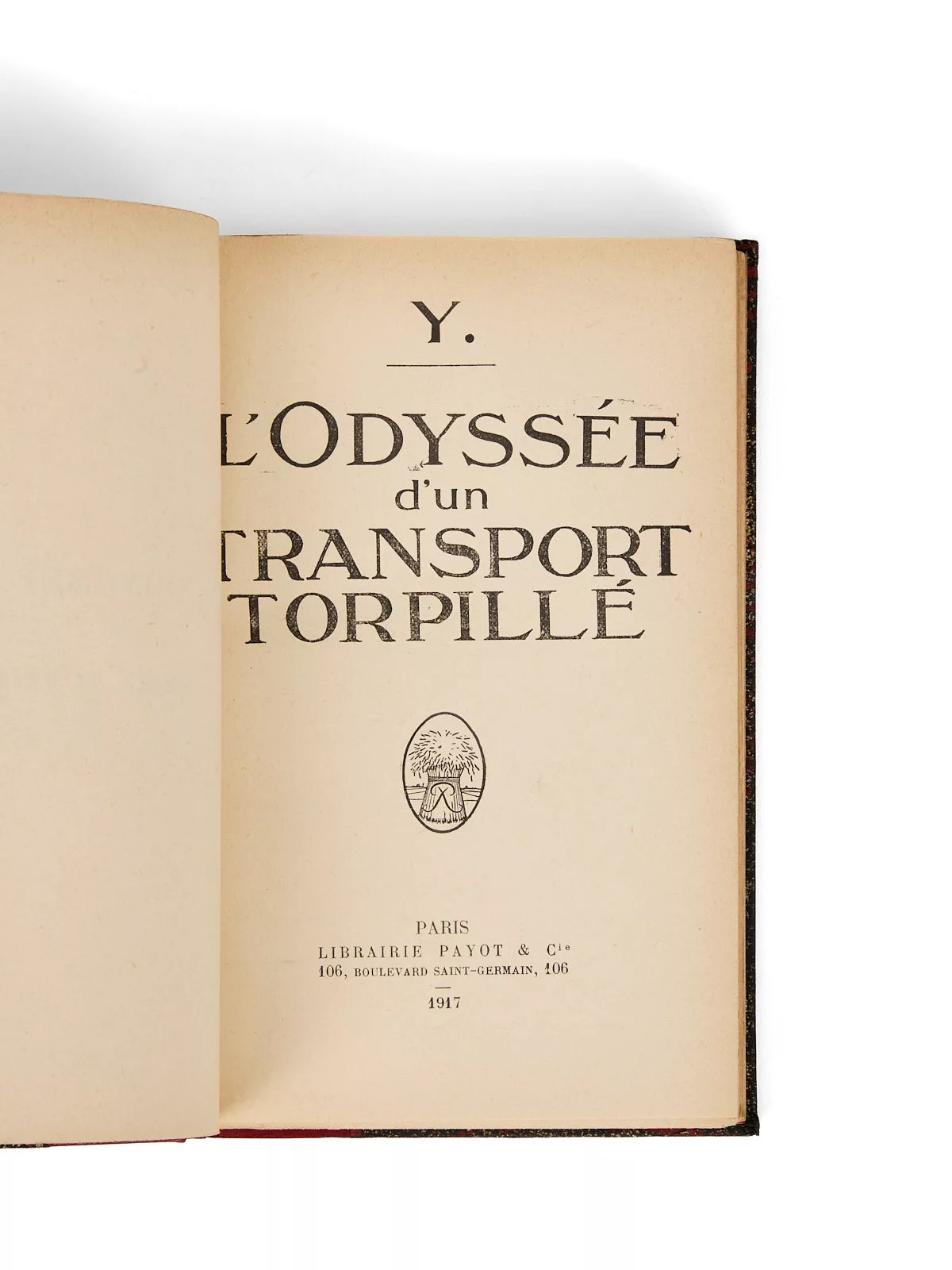
Published anonymously under the simple letter “Y.,” L’Odyssée d’un transport torpillé won the 1917 Prix Femina. Suspended during the first three years of the war, the prize made its return that year by honoring a maritime novel — a striking departure from the trench narratives then dominating the field. Two years later, the same prize would go to Dorgelès for Les Croix de bois.
Written as a series of fictional letters from the first officer of the cargo ship Pamir to a friend serving aboard a battleship, the text first appeared as a serial in La Revue de Paris in 1917 before being published in book form by Payot. Its success was immediate. Maurice Larrouy, writing as Y., revealed in a sober, technical style the violence of the naval front, a subject too often overlooked. This was firsthand testimony: the author, a graduate of the École navale, a frigate captain decorated with the Légion d’honneur and the Croix de guerre, knew from experience the reality he described.
The narrative, quickly judged too precise, was censored from its second part onward, while the third part was banned outright for breaching military secrecy: Larrouy had described in great detail the operations of a supply ship in the Atlantic at the height of the submarine war.
Norton Cru did not include the work in Témoins, but justified its absence as follows: “All accounts of combatants, except those concerning the war at sea, which I am not qualified to verify, accept or reject, comment on, judge, quote, or classify. Their inclusion would introduce into a precise work an element of doubt, approximation and even outright error. Someone, one hopes, will fill this gap.” (Témoins, General Introduction)
L’Odyssée d’un transport torpillé would nonetheless deserve a place among the finest accounts of the war. Maurice Larrouy left the Navy in 1919 to devote himself to literature, publishing some twenty books, often under the pseudonym René Milan.
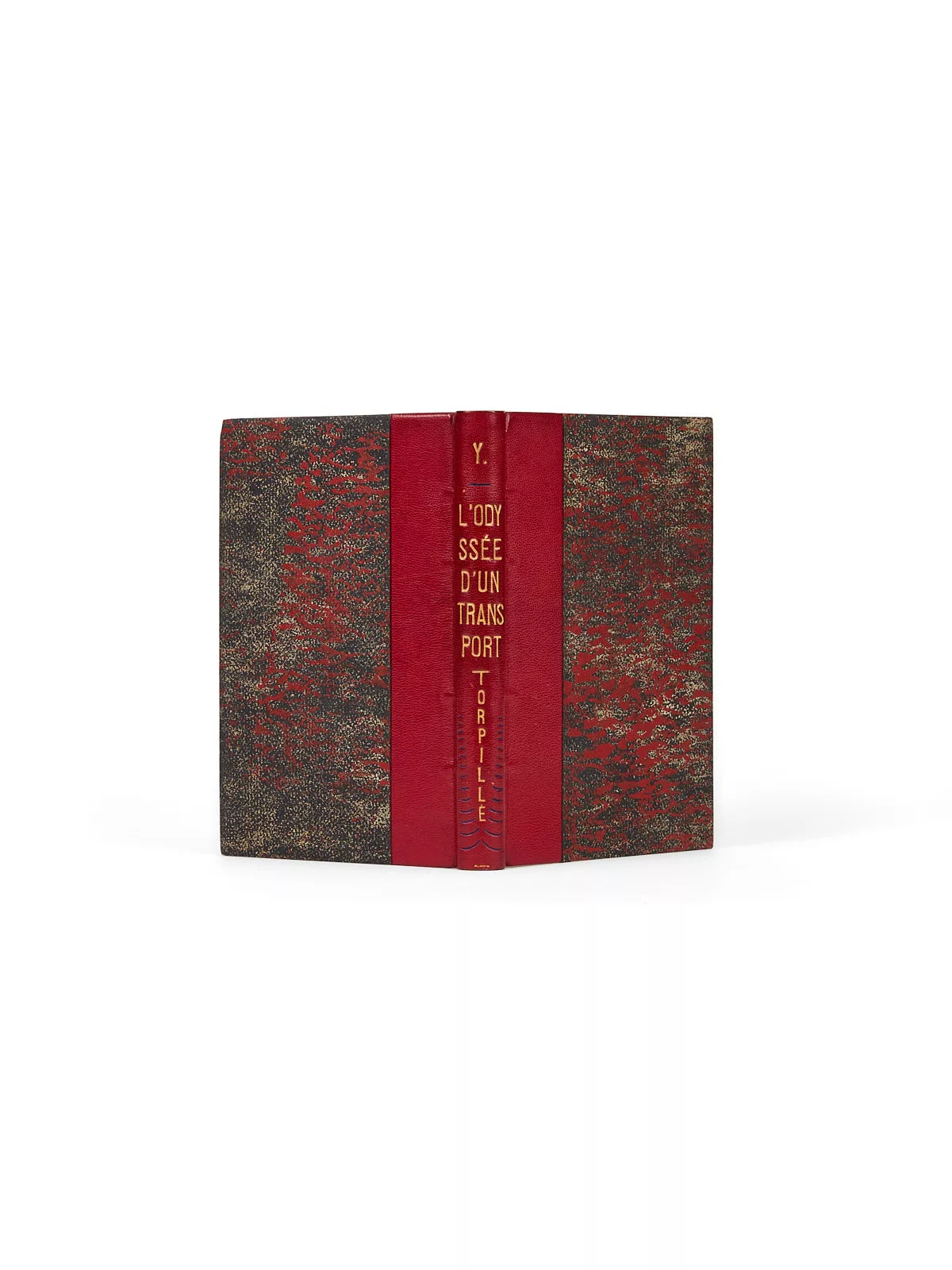
A magnificent copy, admirably bound by Pierre-Lucien Martin: a half-binding decorated with a titling characteristic of his early work.