


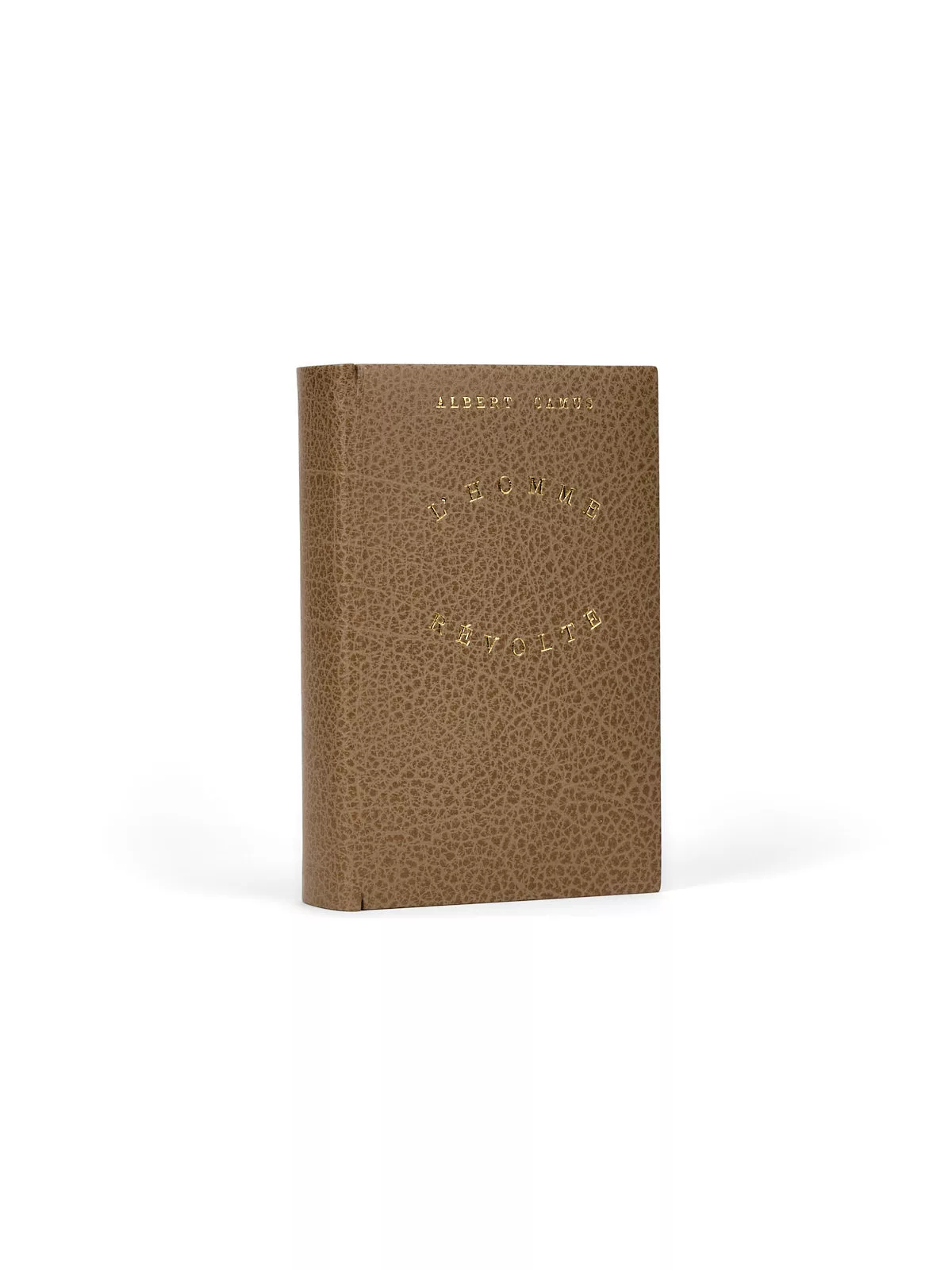
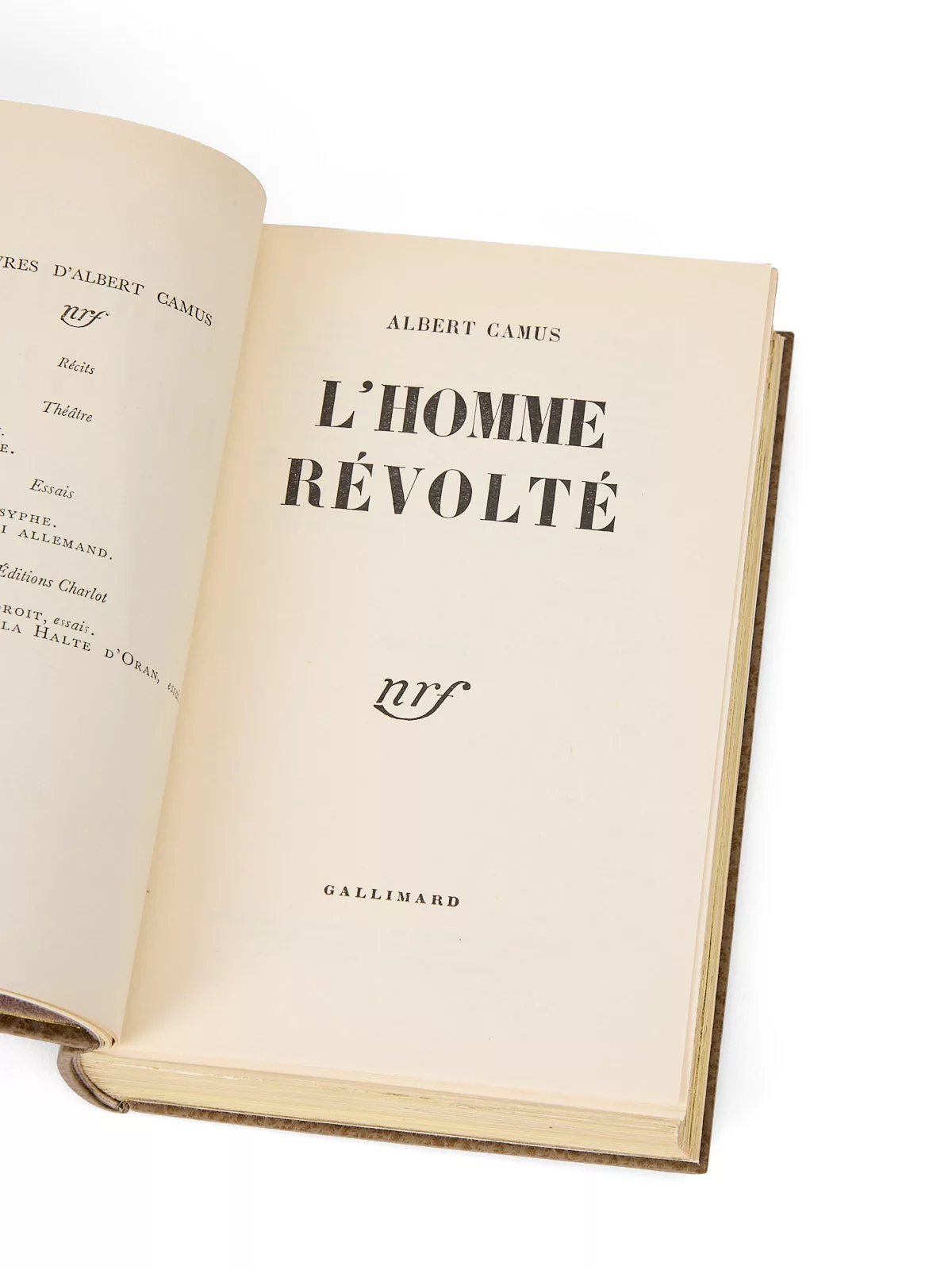
L’Homme révolté
Paris, Gallimard, (October 18) 1951.
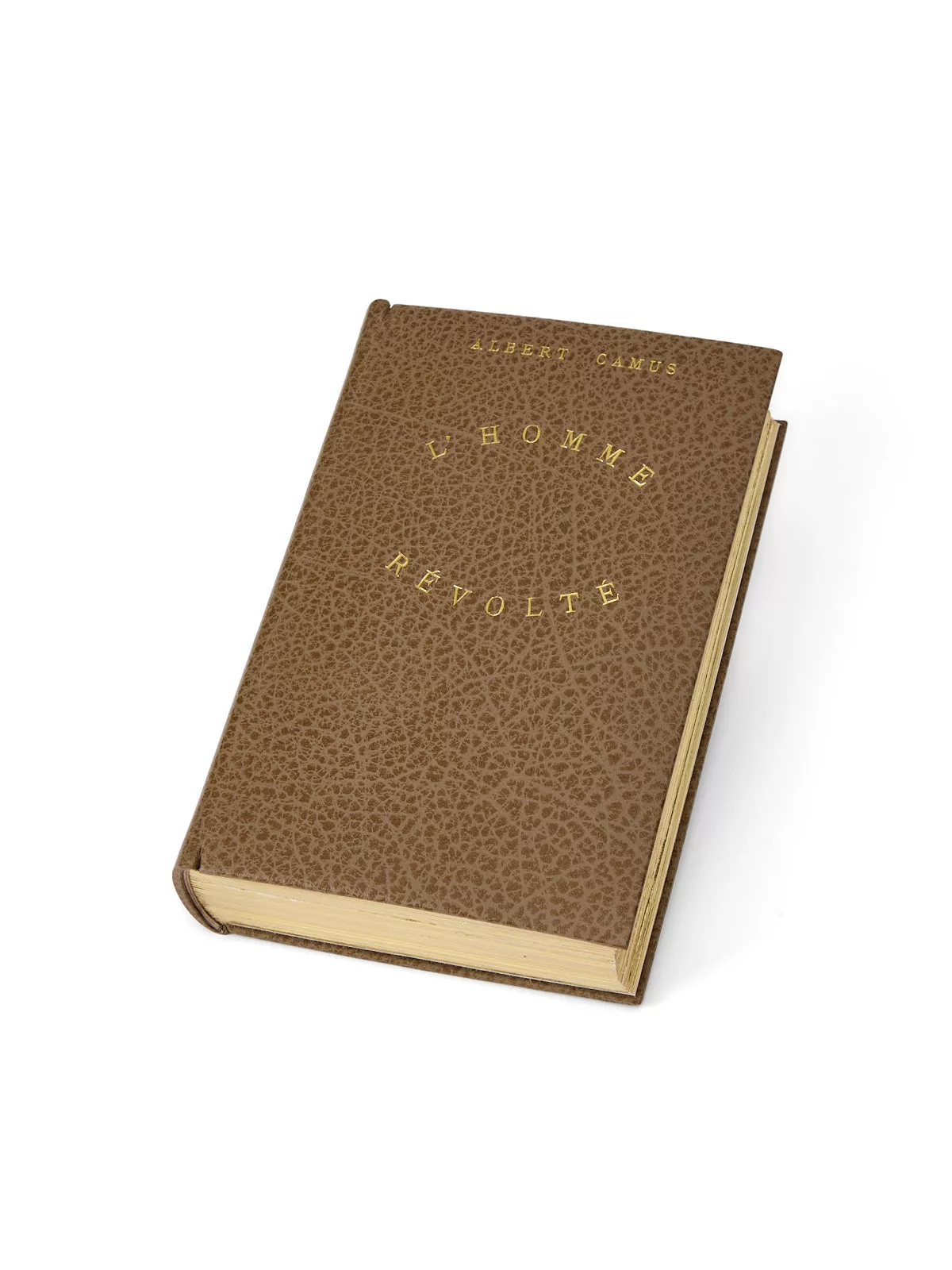
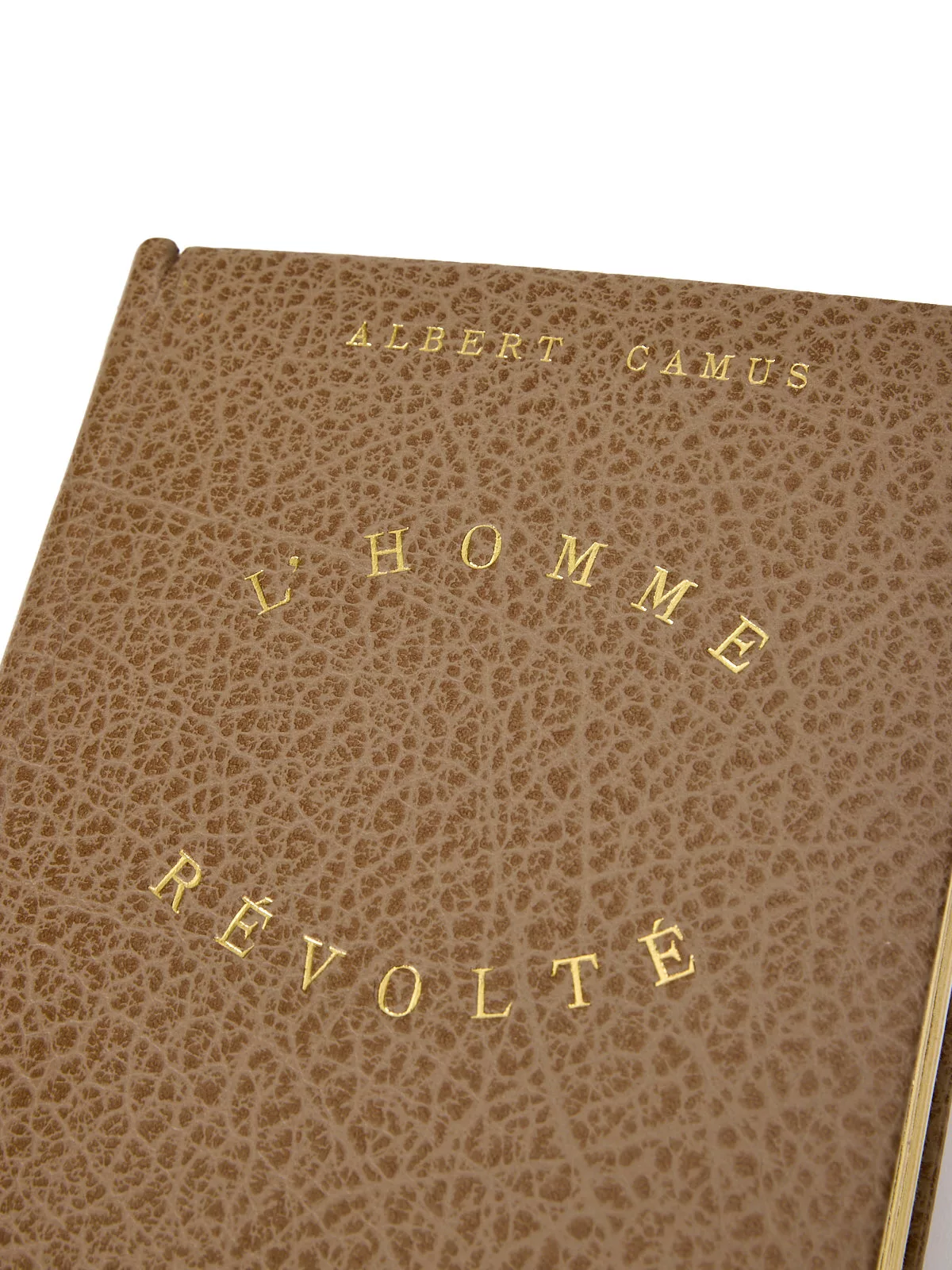
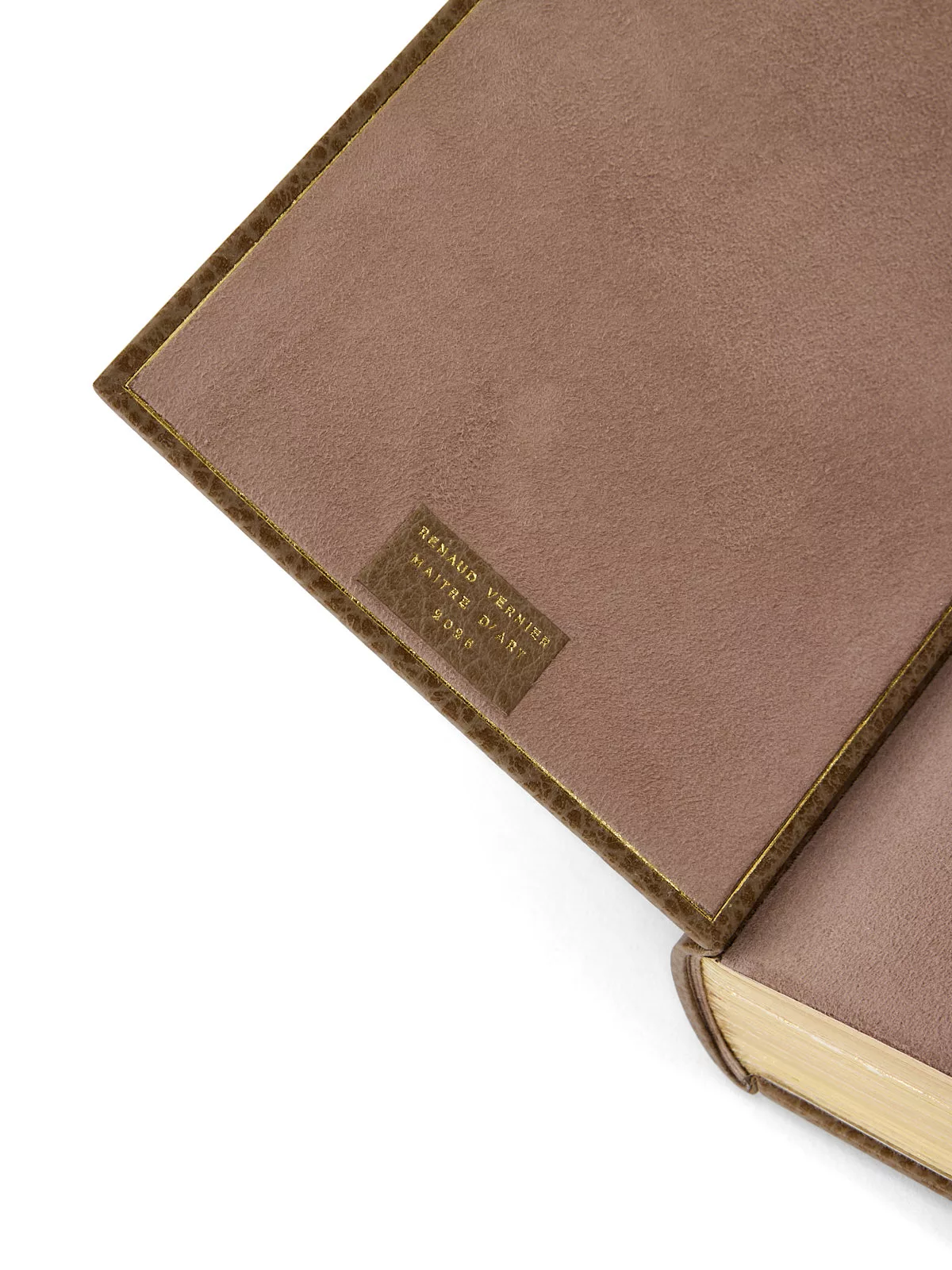
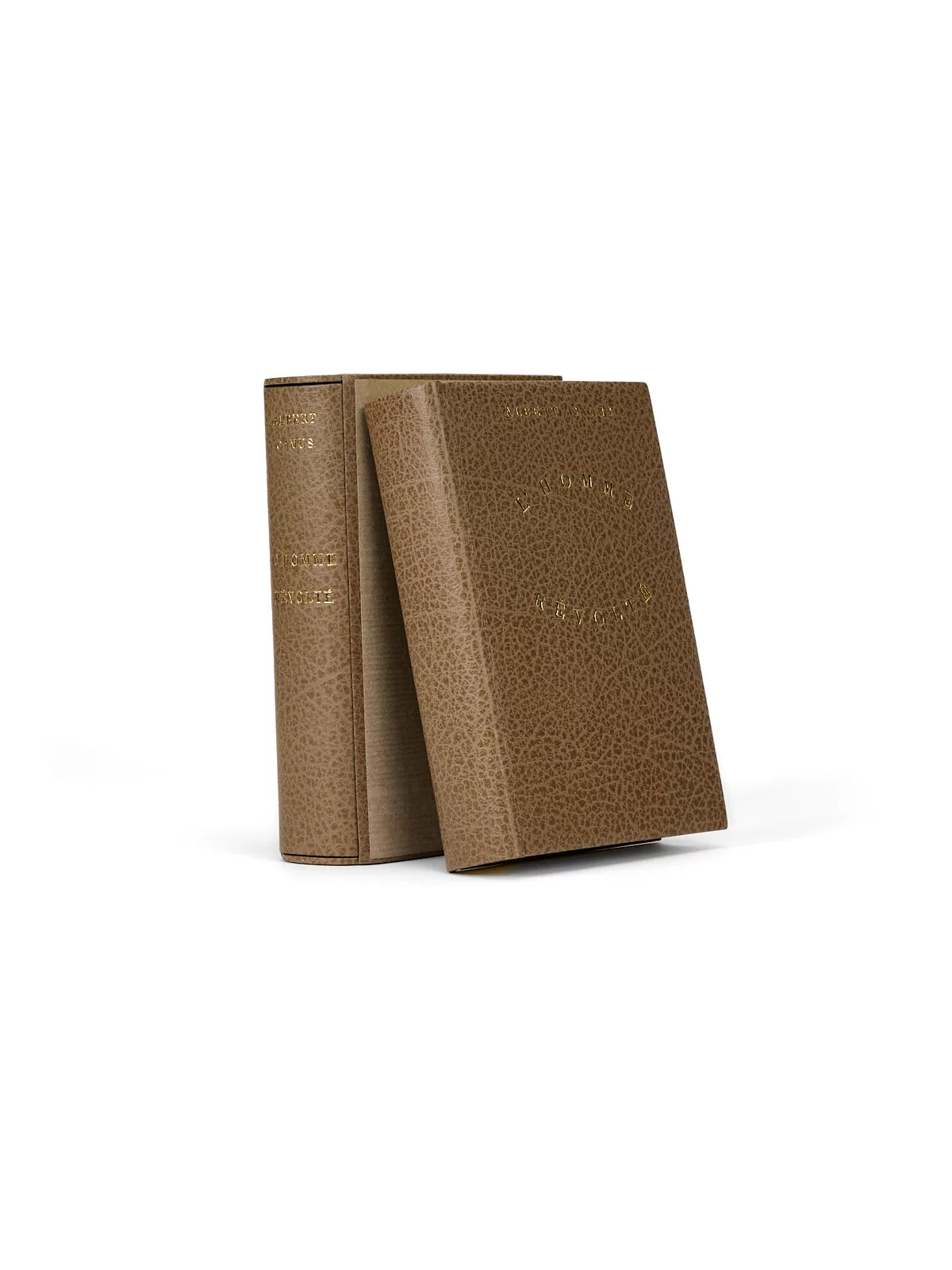
1 vol. (120 x 185 mm) of 382 p. and [1] f. Greige buffalo hide, gilt title arranged on the front cover in an arc forming an oval surmounted by the author's name, doublures and endleaves of matching velvet goatskin, edges gilt on the rough, original wrappers and spine preserved, matching chemise and slipcase (binding signed Renaud Vernier — titling by Claude Ribal, 2026).
First edition.
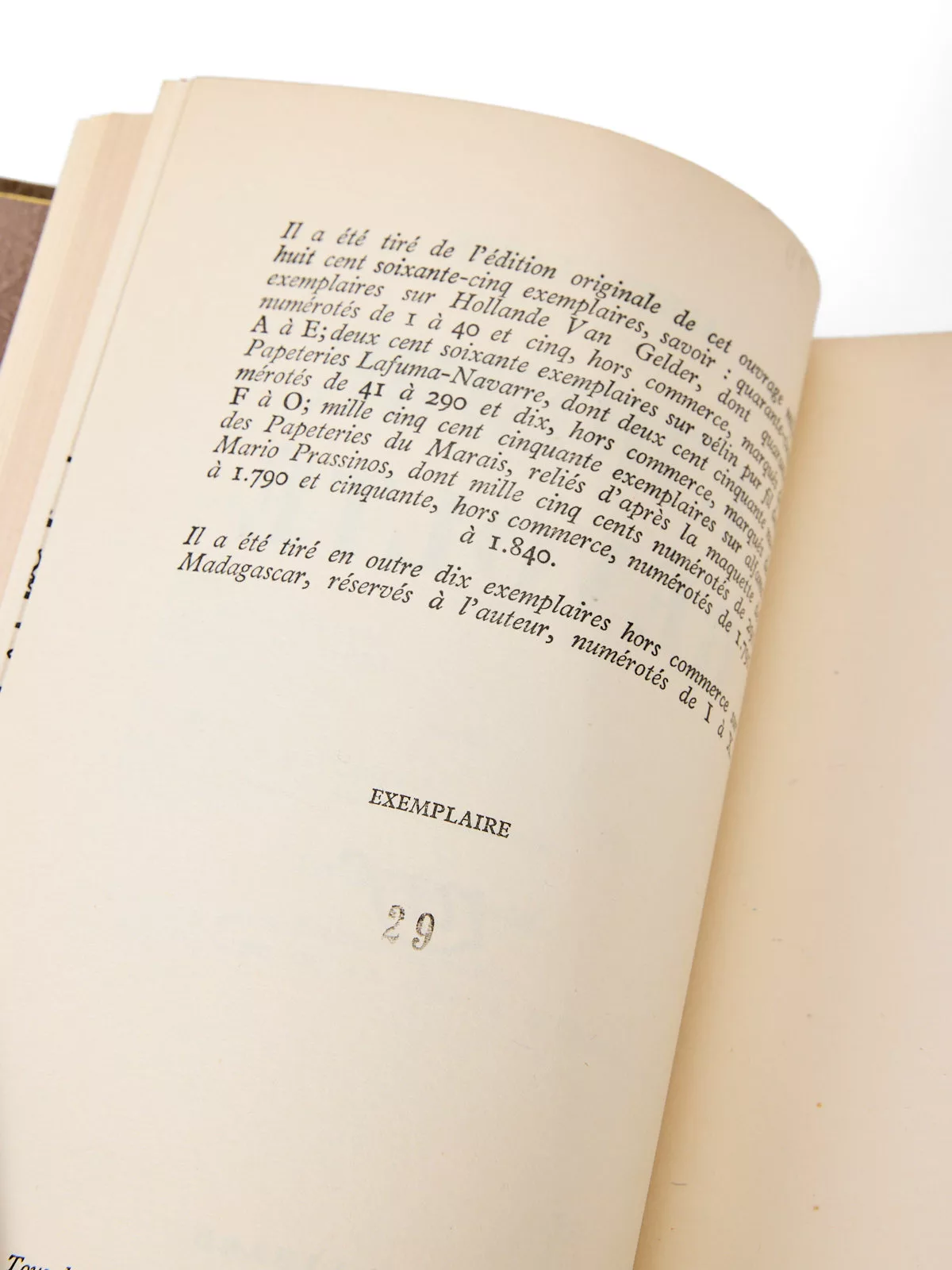
One of 45 copies on Hollande paper (no. 29).
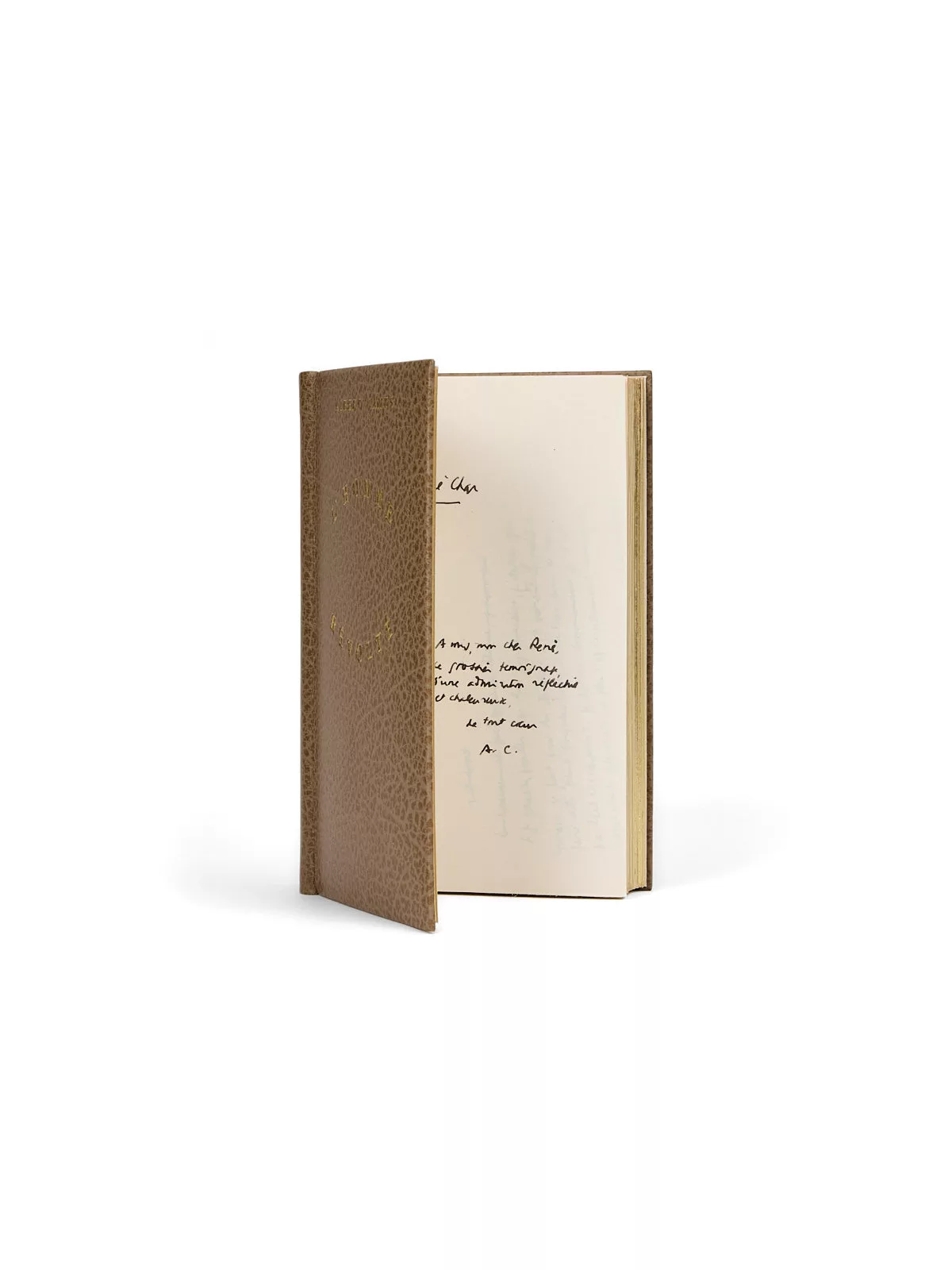
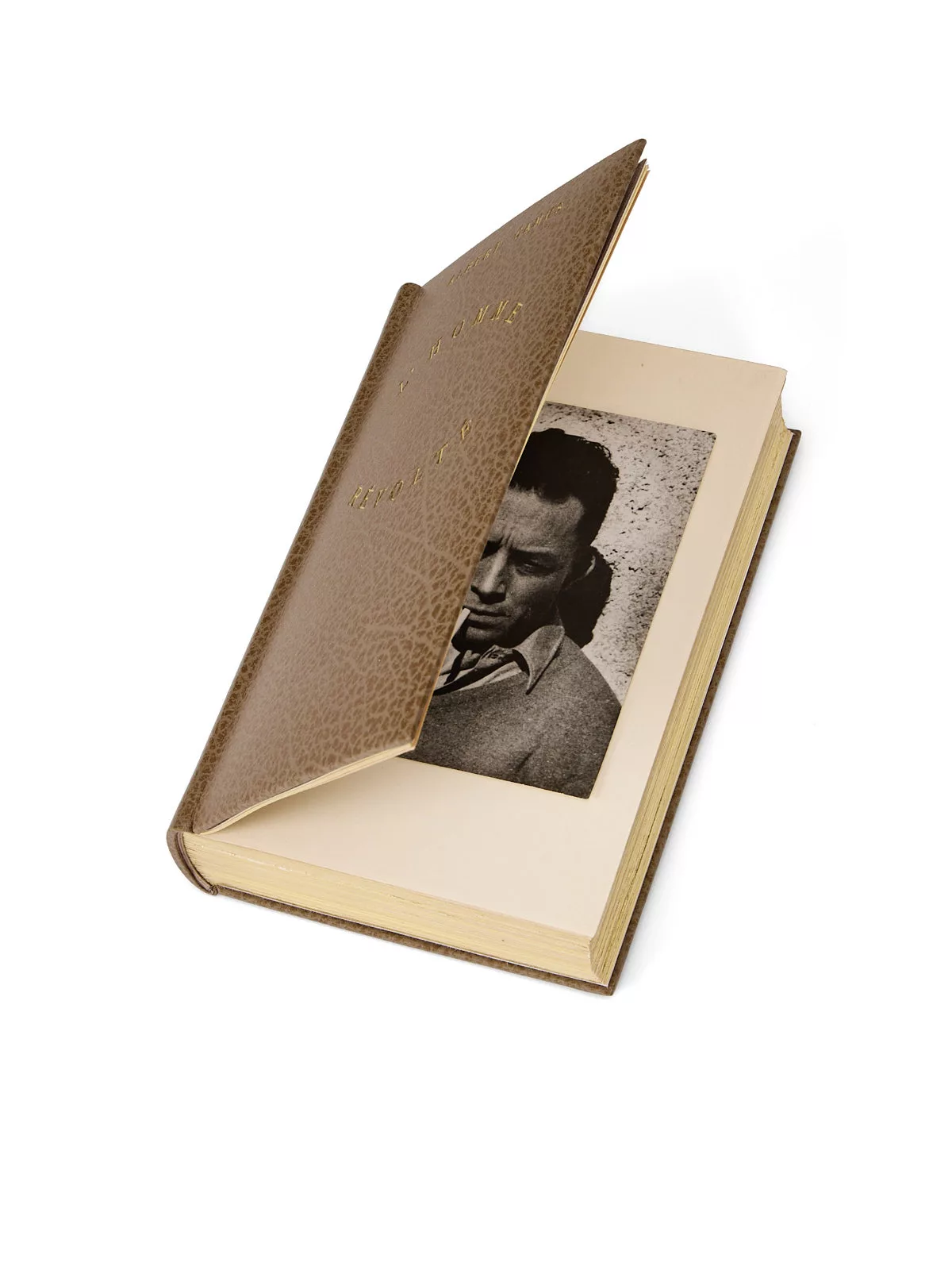
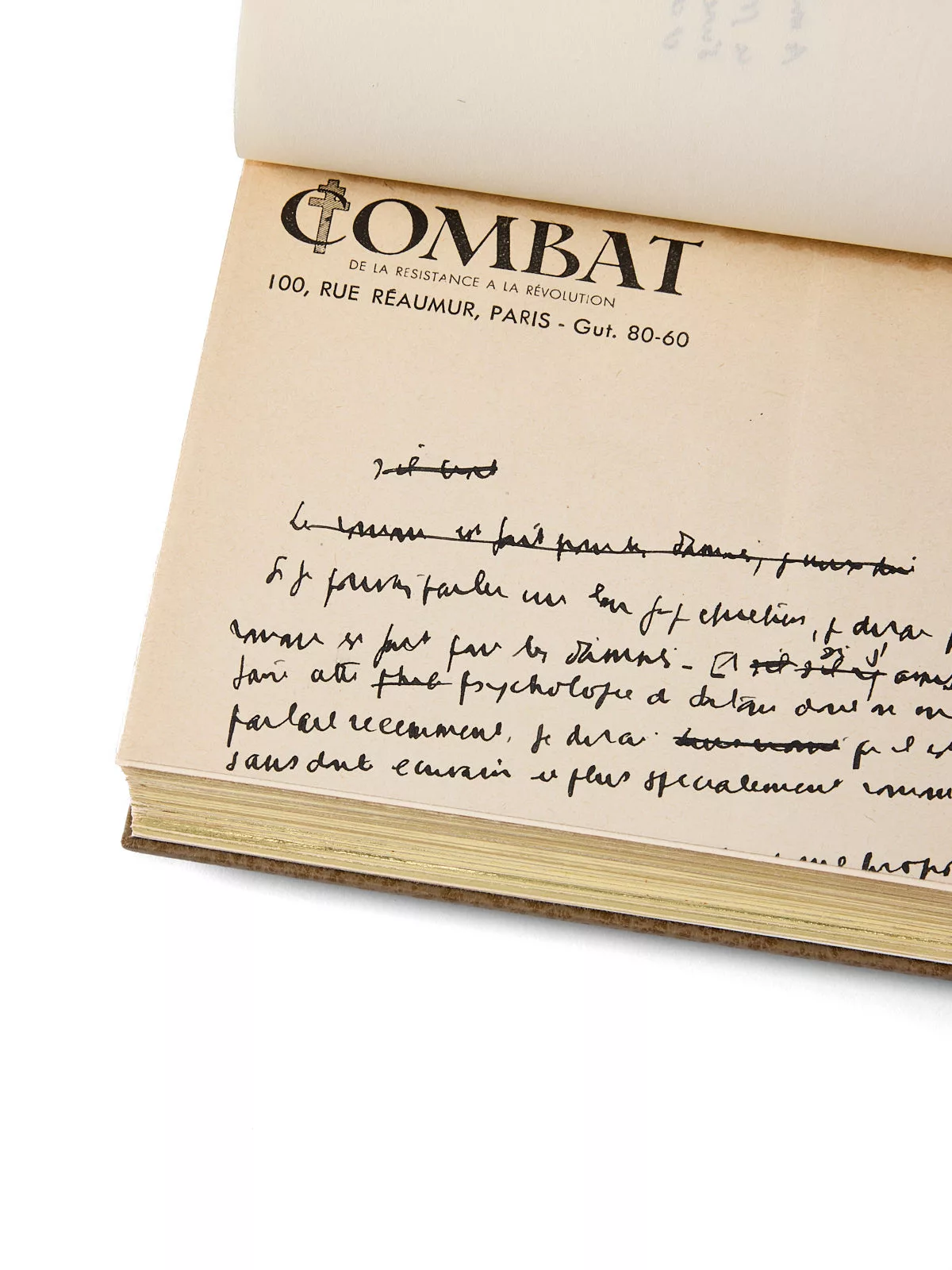
Mounted at front:
A print of the photographic portrait of the author, known as the “portrait de Leysin,” captioned by René Char;
Autograph note signed: “À vous, mon cher René, ce grossier témoignage d'une admiration réfléchie et chaleureuse, de tout cœur, A.C.”;
One autograph page from the draft of L'Homme révolté, on letterhead of the newspaper Combat.
One of 45 copies on Hollande paper (no. 29).
Mounted at front:
A print of the photographic portrait of the author, known as the “portrait de Leysin,” captioned by René Char;
Autograph note signed: “À vous, mon cher René, ce grossier témoignage d'une admiration réfléchie et chaleureuse, de tout cœur, A.C.”;
One autograph page from the draft of L'Homme révolté, on letterhead of the newspaper Combat.
Published in 1951, four years after La Peste, the book earned Camus considerable hostility and sparked violent controversy within French intellectual circles, notably among the Surrealists led by André Breton. It also marked the definitive and public ideological break between Sartre and Camus.
René Char read the manuscript, then the proofs: “Having read and reread it… I asked myself who, and what work of this order — the most essential — could approach you and it at this time? No one, and no work. I say this to you with considered enthusiasm… You have won the principal battle, the one warriors never win. How magnificent it is to sink into truth…” (Correspondance, p. 101).
An exceptional copy with the most fitting provenance imaginable.
#31938
Back