

L’Homme pressé
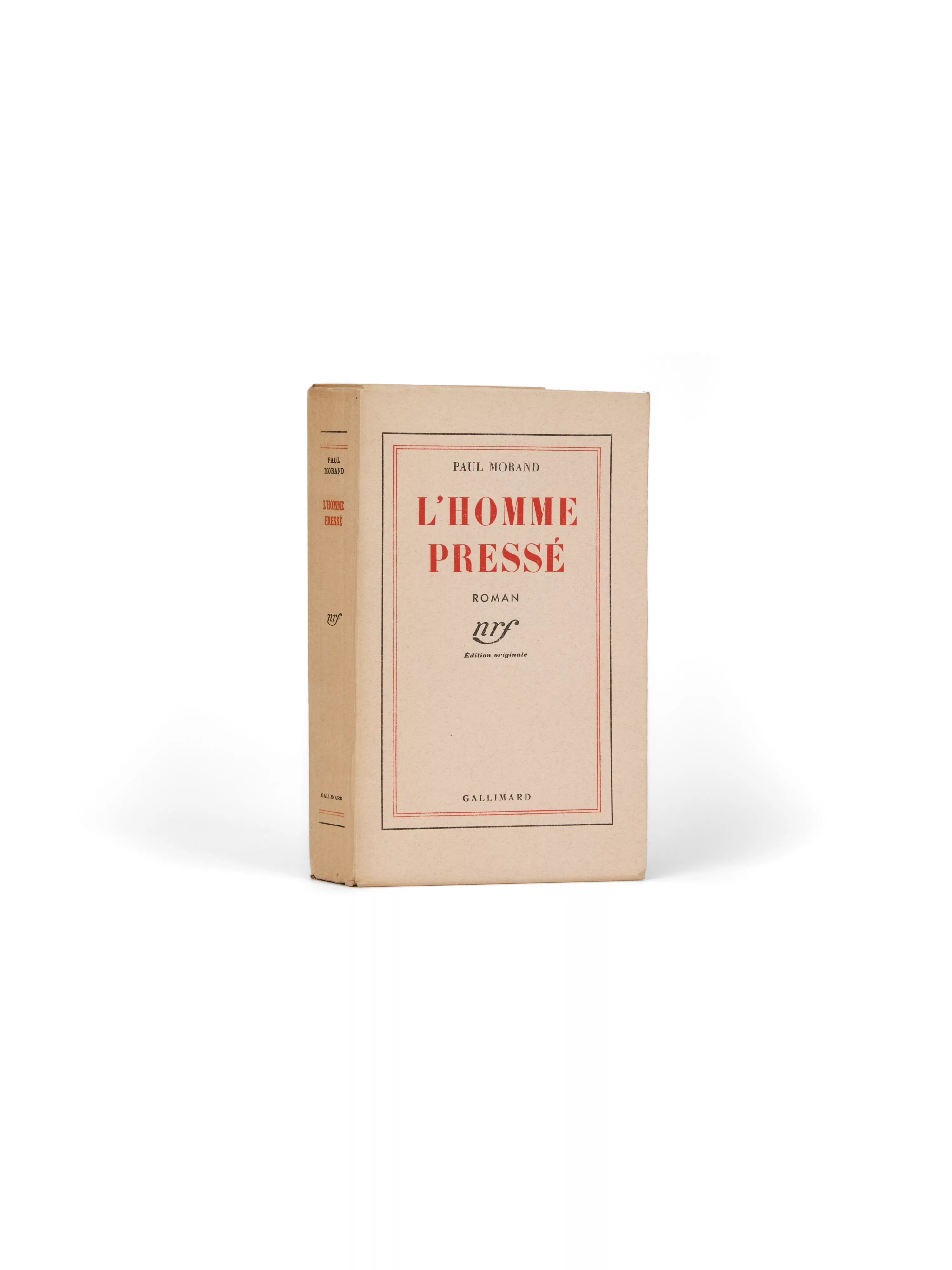
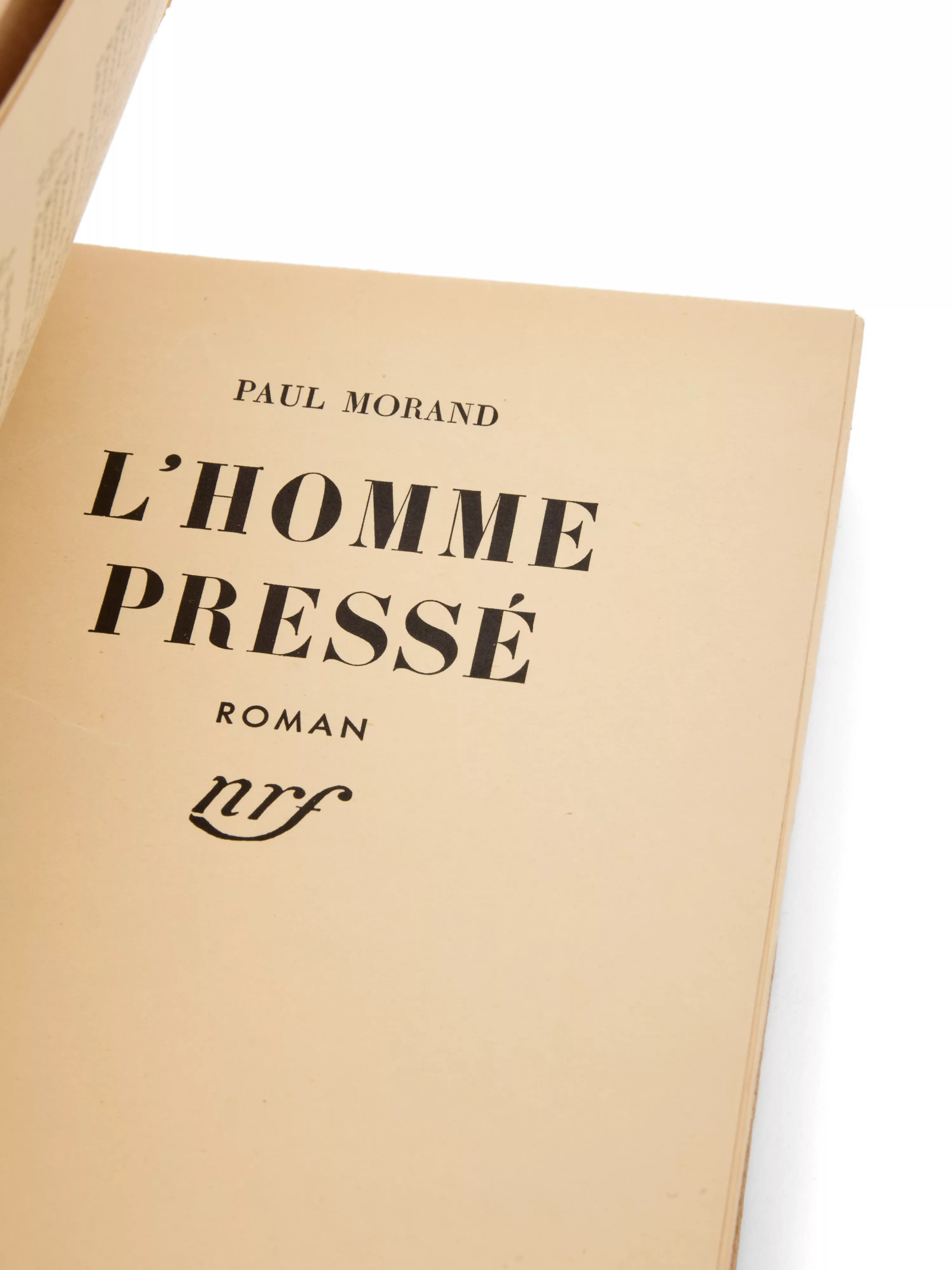
One of 8 copies on japon (A), the first copies printed.
Signed presentation inscription by Michel Déon, who notes on the dedication leaf to Hélène Morand that he “would have liked to have thought of this exquisite dedication” himself.
Published in 1941, L’Homme pressé is one of Paul Morand’s major novels, and probably the one whose title has become most lastingly identified with his legend. Pierre Niox, a collector and art lover incapable of standing still, moves through the world as he moves through his own life: too fast, always too late, driven by a feverish need for speed that eventually becomes a kind of fate — the impossibility of slowing down, one of the great modern afflictions.
A novel of impatience, possession and romantic failure, L’Homme pressé gave Morand one of his finest literary alter egos.
A magnificent deluxe copy, the very first of the series, lettered A: it comes from the library of Michel Déon, who had it from Claude Gallimard.
It was as a teenager, among the books inherited from his father, that Michel Déon discovered Paul Morand and became passionate about the writer, whom he met in 1947 in Lausanne. A friendship then grew between them that never wavered until Morand’s death in 1976, and of which there is ample evidence in the Correspondance Morand-Chardonne, published by Gallimard in 2014.
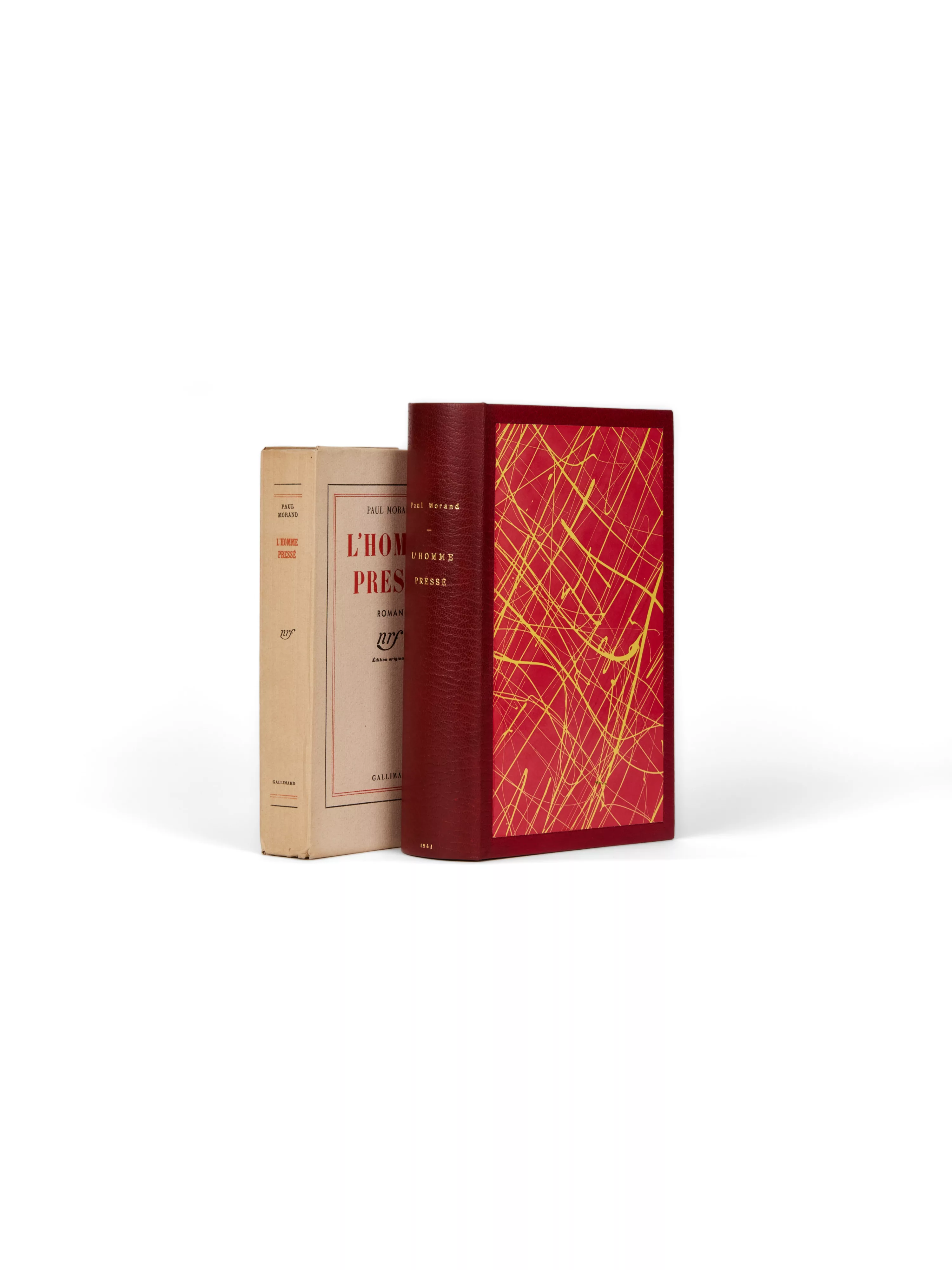
To this literary and personal closeness, Déon added a genuine bibliophilic passion. For nearly half a century, he worked to assemble Morand’s books and texts, from first editions and deluxe printings to periodical publications, having his copies bound or cased by some of the finest book artisans — here by Jacqueline Liekens. Michel Déon eventually entrusted our Toulouse colleague Éric Castéran with compiling the catalogue raisonné of this collection and dispersing it. The present copy appeared there at the time, without an inscription.
Acquired by someone close to Déon, the book later returned to the hands of the man who had kept it for so long, who then added this inscription. A curious return to sender, adding one final chapter to the remarkable history of this copy: Claude Gallimard, Michel Déon, his Morand library, and then, after its dispersal, Déon once again.
Also known on this paper are the copies from the library of the Château de Tournay (Christie’s, June 2026, no. 182) and from that of Gabriel Bounoure (Artcurial, December 2009, no. 437).
Extremely rare.