


Leurs enfants après eux
Prix Goncourt 2018.
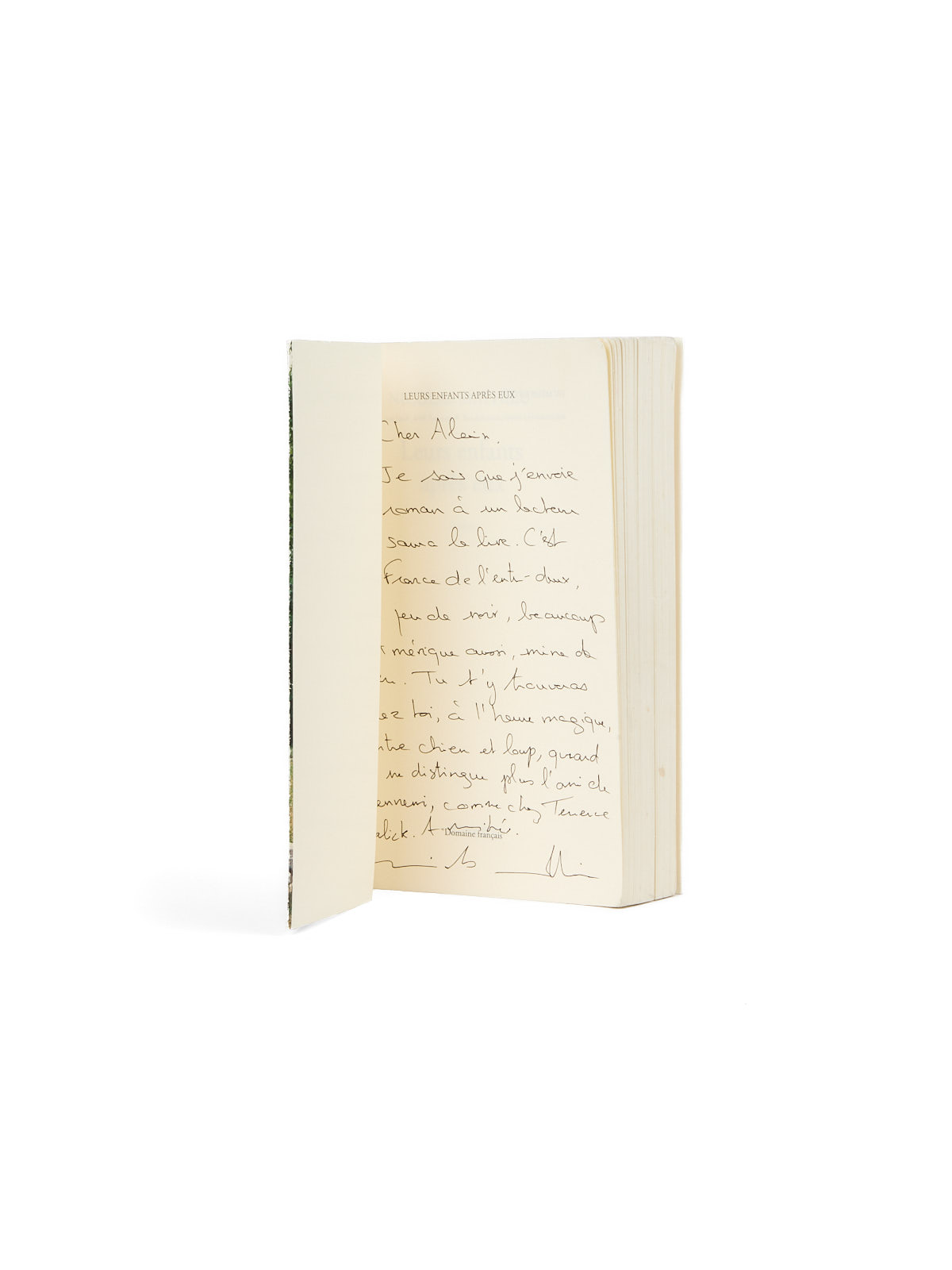
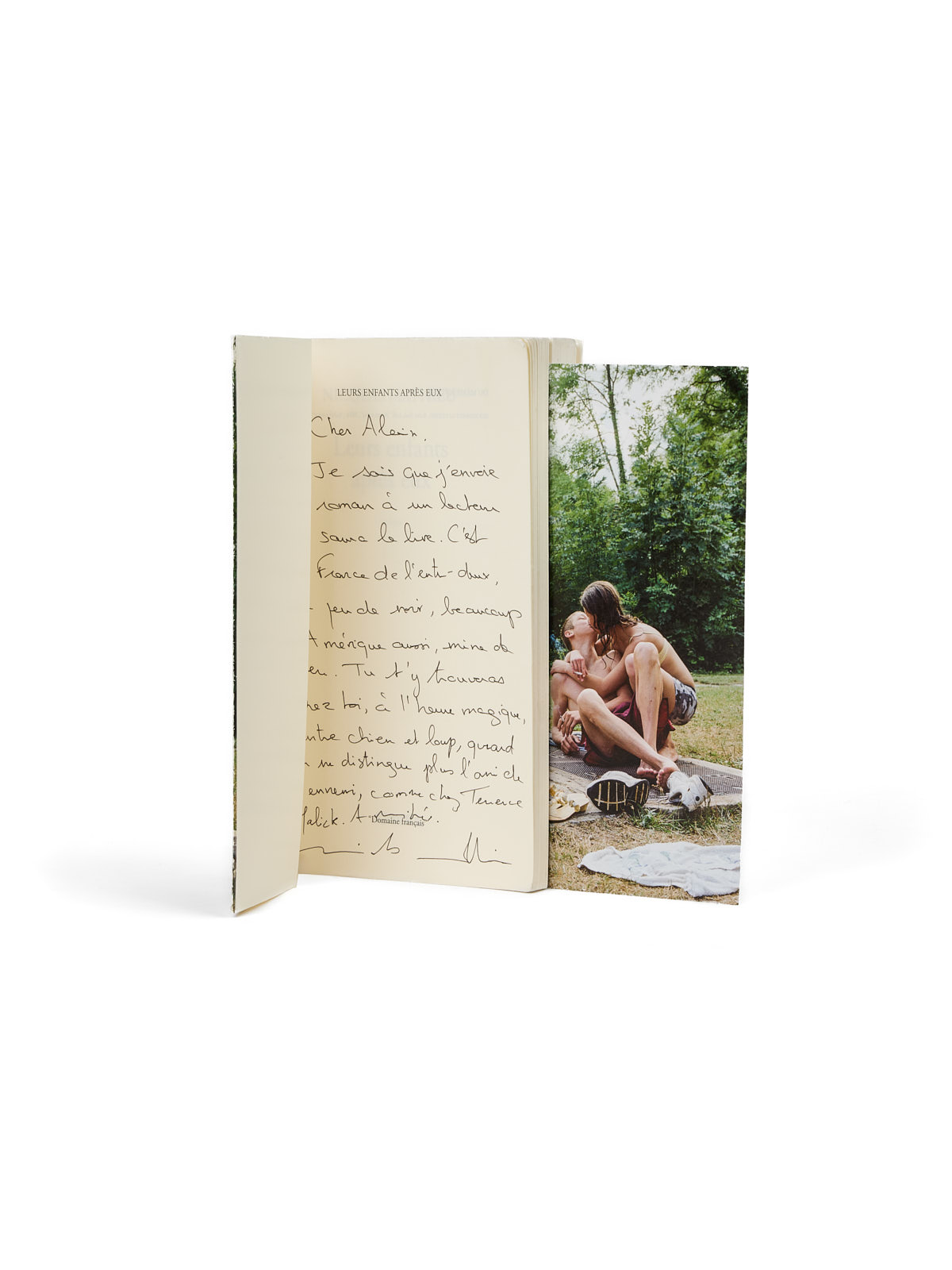
Signed presentation inscription: “Cher Alain, je sais que j’envoie ce roman à un lecteur qui saura le lire. C’est la France de l’entre-deux, un peu de noir, beaucoup d’Amérique aussi, mine de rien. Tu t’y trouveras chez toi, à l’heure magique, entre chien et loup, quand on ne distingue plus l’ami de l’ennemi, comme chez Terrence Malick. Amitiés, Nicolas Mathieu.”
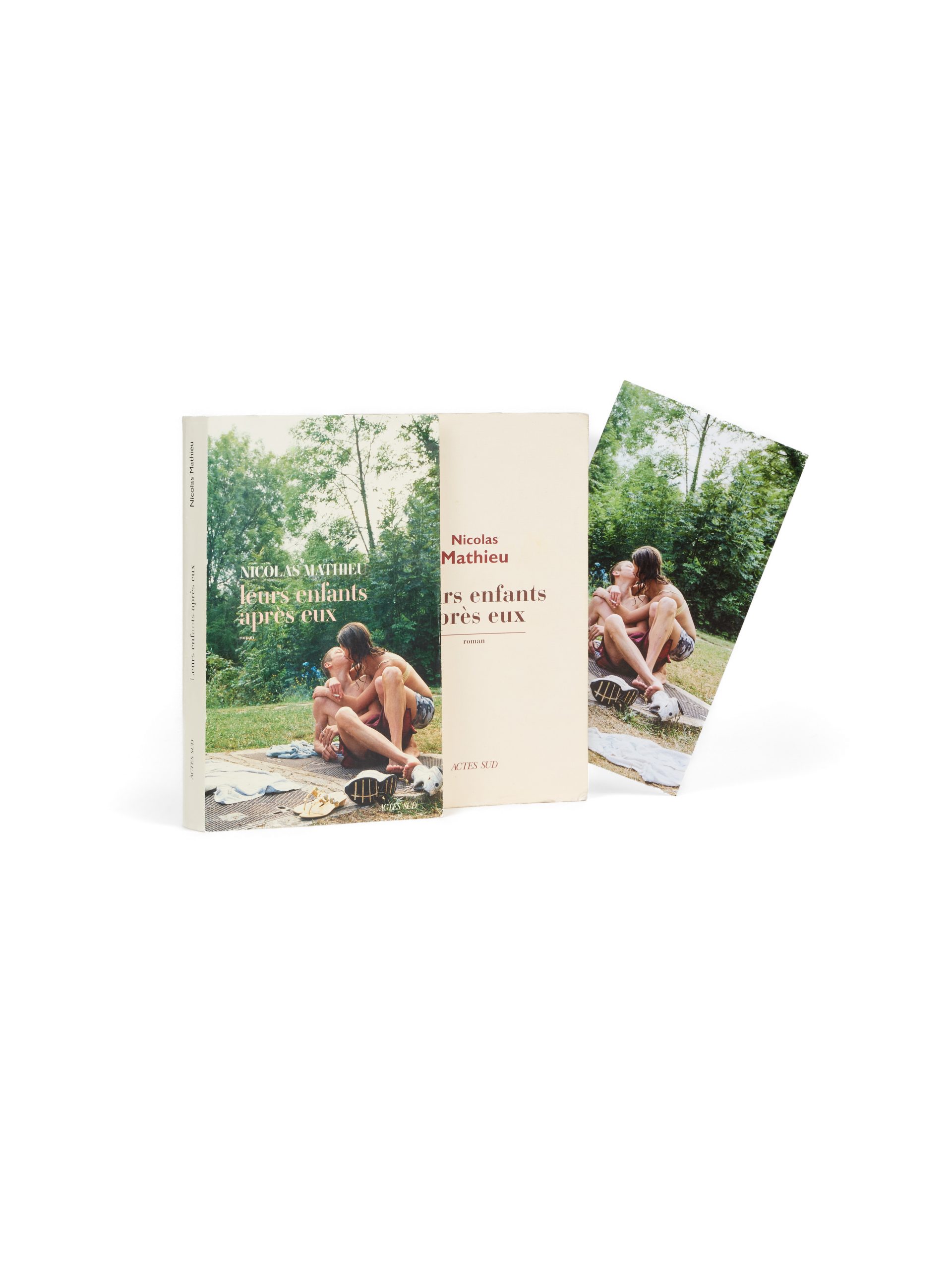
The copy is accompanied by proof no. 2 of the original print of Alexa Brunet's photograph, which was used for the dust jacket, and later the cover, of the book. It is numbered and signed on the verso by the photographer, with a certificate of authenticity enclosed.
The title of his previous — and first — novel, Aux animaux la guerre, was borrowed from a fable by La Fontaine. The title of this one comes from Ecclesiasticus, chapter 44, verse 9: “And some there be, which have no memorial; who are perished, as though they had never been; and are become as though they had never been born; and their children after them.”
A title that resonates as a curse — that of a blighted valley in the Vosges. The novel unfolds over four summers. It began with a vision: “Some characters are born from a kind of visual flash. Anthony was first that little guy with a low forehead, straddling a motorbike, bare-chested, without a helmet, riding as fast as he could down a country road, stubborn, explosive, and achingly young. I could see him. And that image struck me hard. It’s one of those sparks that light the powder of the narrative.” In the manner of a roman noir — socially, above all — Leurs enfants après eux is a novel of crisis as much as a privileged instrument for probing social reality and pressing a finger into the wound. Nicolas Mathieu experienced it from the inside: “I’ve done all those poorly paid little jobs — trainee on welfare, fixed-term contracts, freelance work, self-employment, permanent employment. I know the working world from the inside. Especially since, writing up minutes for works councils — not only about layoffs — I went into all kinds of companies, large and small, service and industrial, with very tense or very paternalistic labor relations. Some places where unions and workers called the shots, others where everyone toed the line… It gave me an intimate knowledge of the balance of power, of what the world of work really is. These populations — working and urban middle classes, as well as peri-urban and rural ones — feel cheated. They have a deep sense of unfairness and of economic constraints they consider unacceptable and unsustainable. The fuel issue was the trigger; it could have been something else. It’s the ‘blood’ that runs through these places and these lives: taking the children to school, going to the supermarket, going to work — that’s the reality. There is no alternative.”
A rare first printing from May, in wrappers with dust jacket: only this original May printing was issued in this form; copies from later printings, including those from summer (the legal deposit is dated August 2018), were printed without dust jackets and with the photograph printed directly on the cover.