

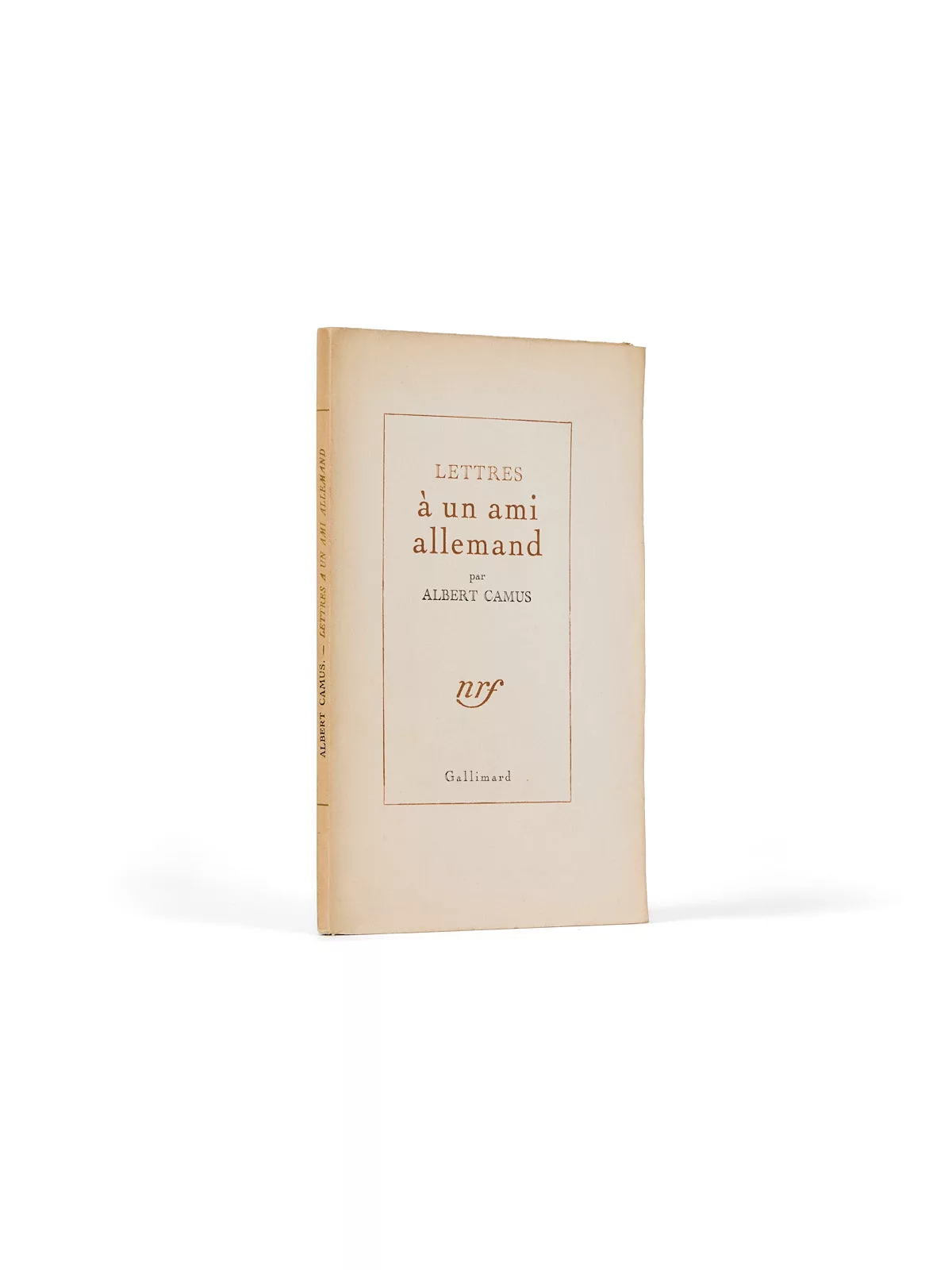
Lettres à un ami allemand
One of the copies on alfa paper, this one hors commerce (H.C. no. 2186).
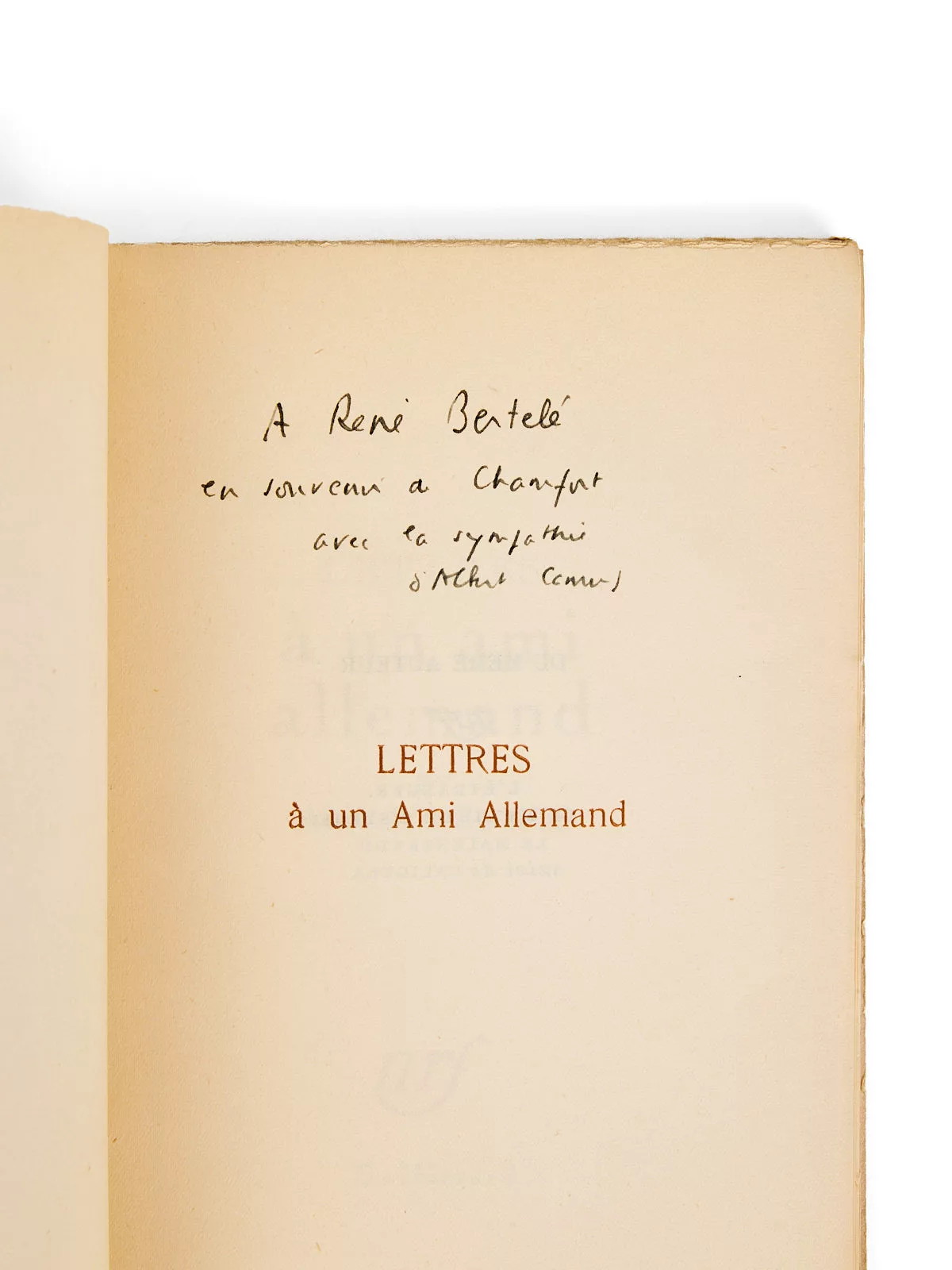
Inscribed and signed: “À René Bertelé, en souvenir de Chamfort, avec la sympathie d'Albert Camus.”
This collection, published by Gallimard, brings together four letters, three of which had previously appeared in periodicals: in La Revue libre in 1943, in the third issue of Cahiers de la Libération in 1944, and in Libertés in 1945. Written for the occasion, they form both an exercise in political reflection and an act of engagement in the struggle: from 1943, Camus, who had met Francis Ponge and René Leynaud, took part in the Resistance by joining the Combat team, first in Lyon, then in Paris.
For the fourth letter, Camus chose as epigraph a line from Senancour’s novel Obermann: “Man is perishable. That may be; but let us perish resisting, and if nothingness awaits us, let us not make of it a justice.”
A good copy, presented to René Bertelé, whom Camus had met in Lyon during the war through Pauvert: Bertelé was then editor-in-chief of the Lyon review Confluences. In 1944 he founded the “Incidences” series, in which Camus’s Chamfort appeared in the spring of 1944 (as the second title in the series) — the very work to which the inscription refers. Camus placed Chamfort at the head of the moralists he admired, for his “truth of life (…). It is out of coherence that Chamfort threw himself entirely into the revolution and, no longer able to speak, acted instead, replacing the novel with the libel and the pamphlet.” Camus would return several times to this forgotten figure of revolt.
A choice copy, combining revolt and resistance, the two major themes of Camus’s postwar thought.