

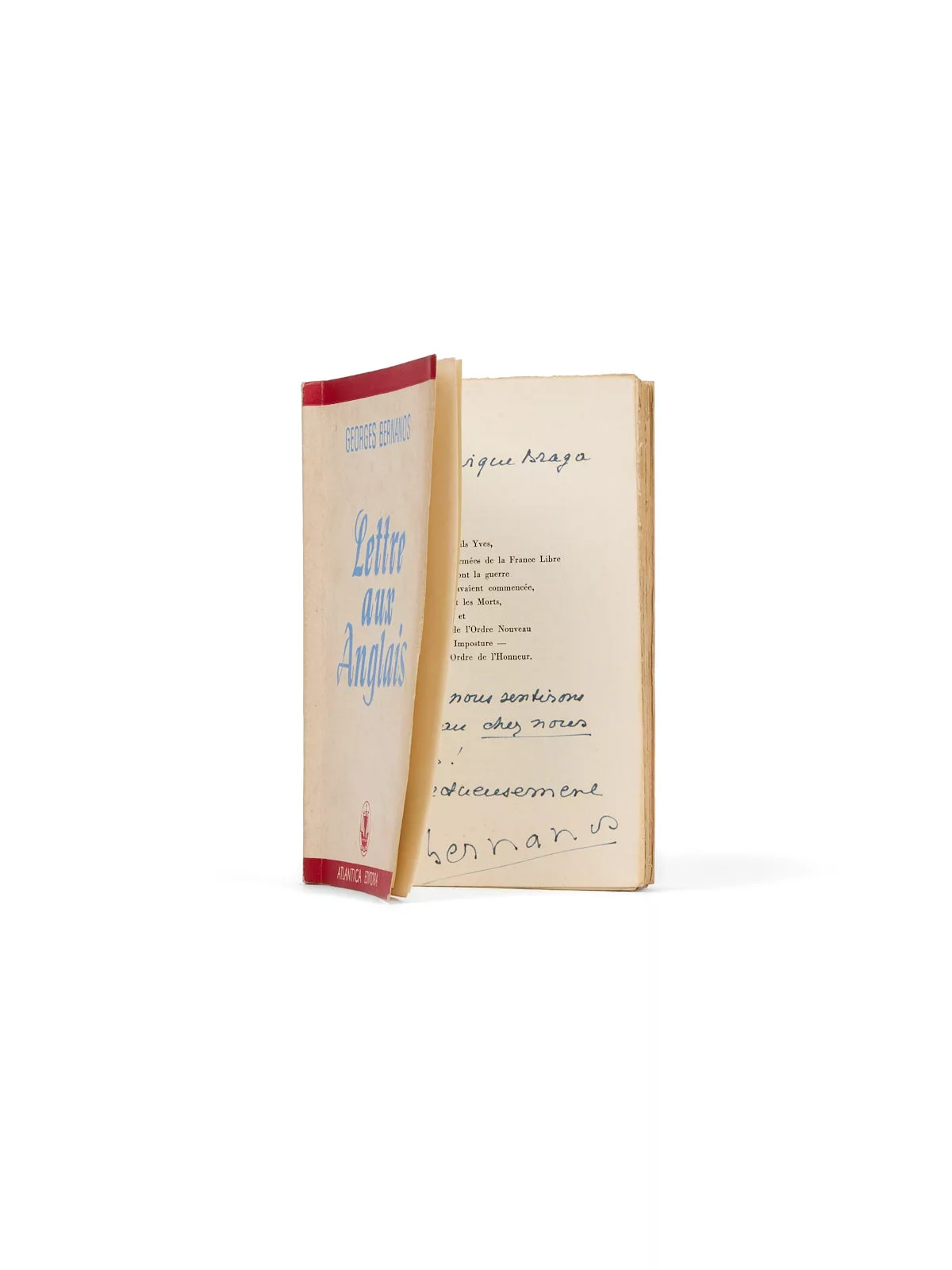
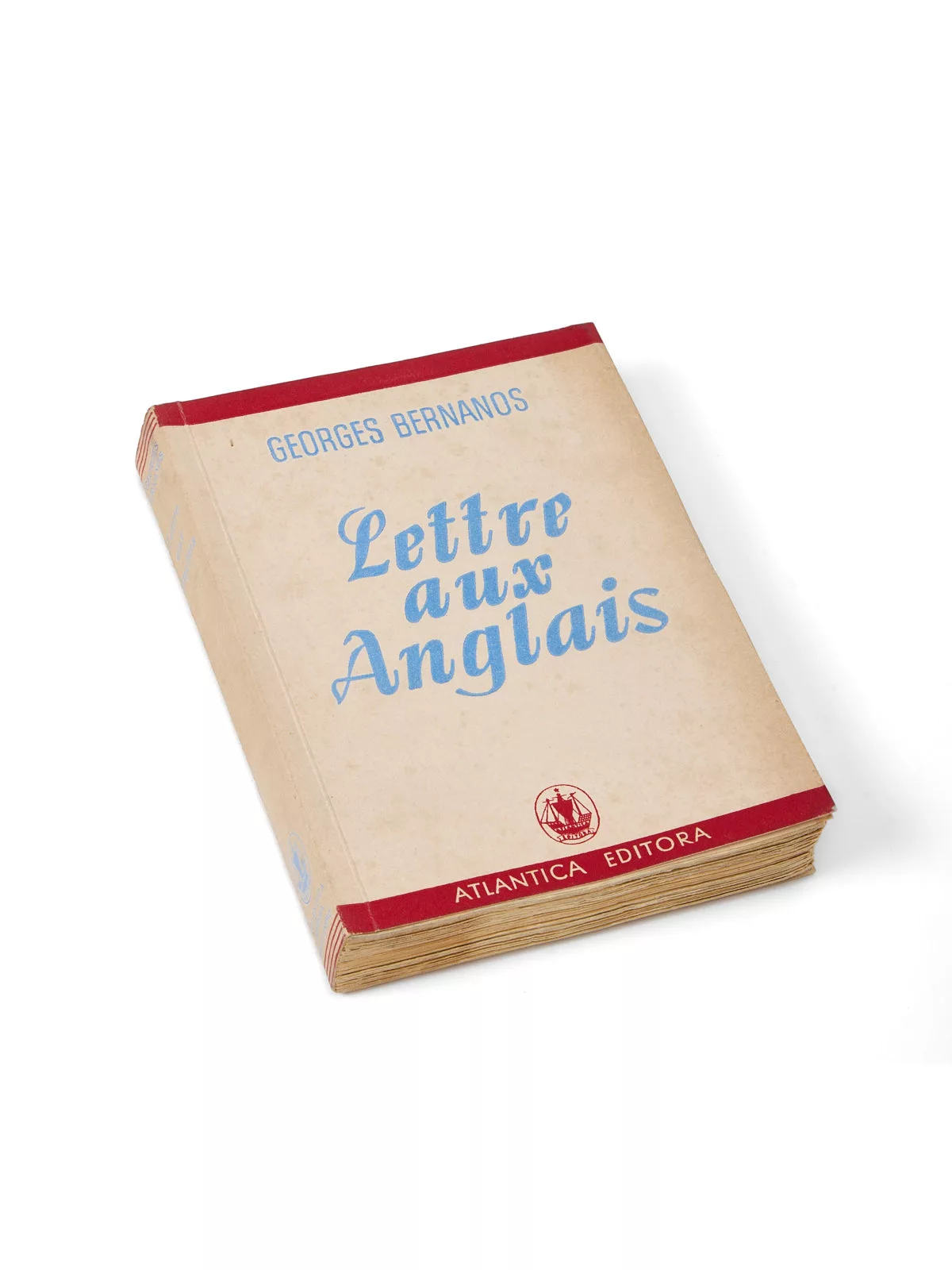
Lettre aux Anglais
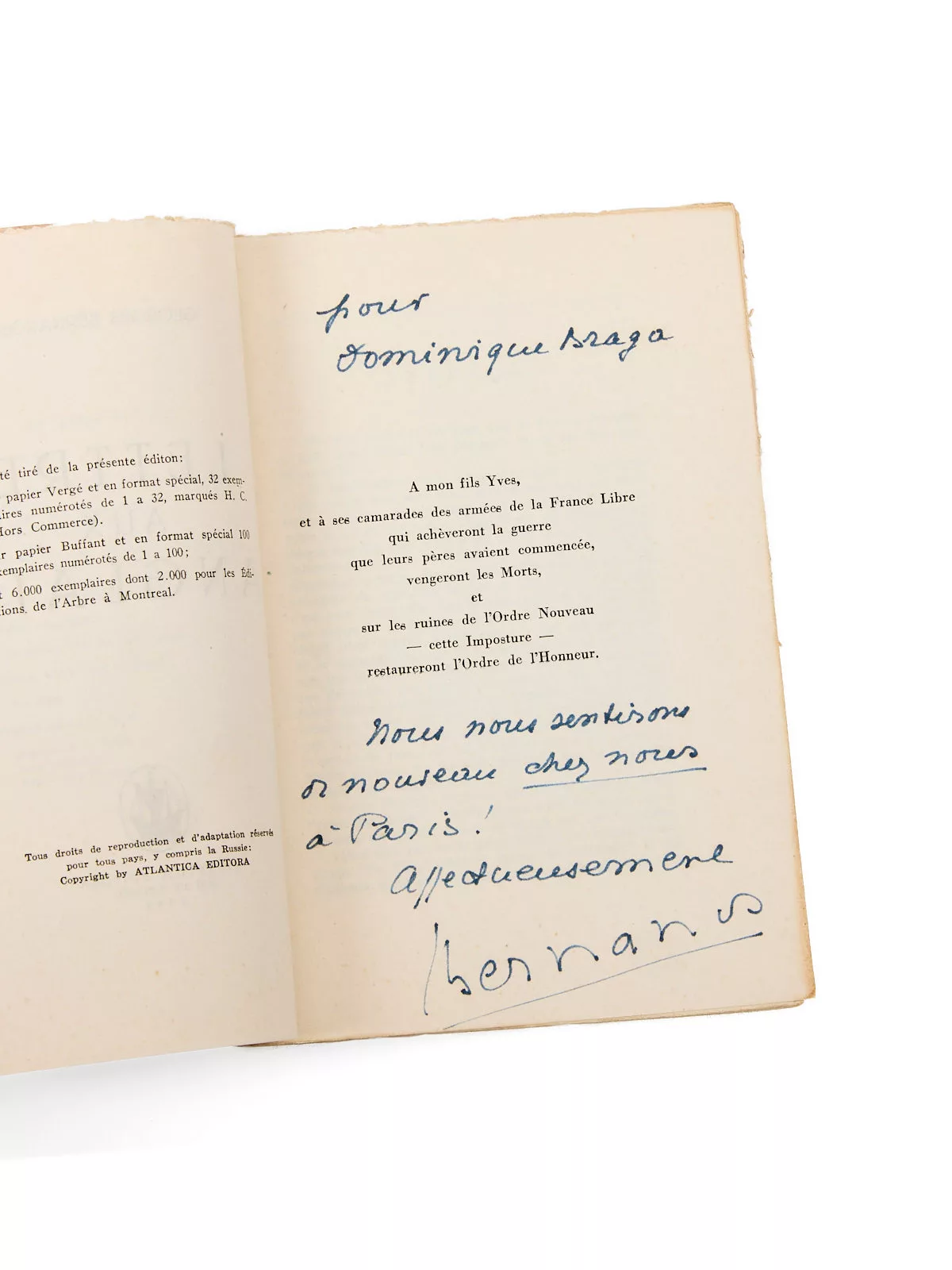
Presentation copy inscribed by Bernanos to Dominique Braga: “Pour Dominique Braga, nous nous sentirons à nouveau chez nous à Paris. Affectueusement, Bernanos.”
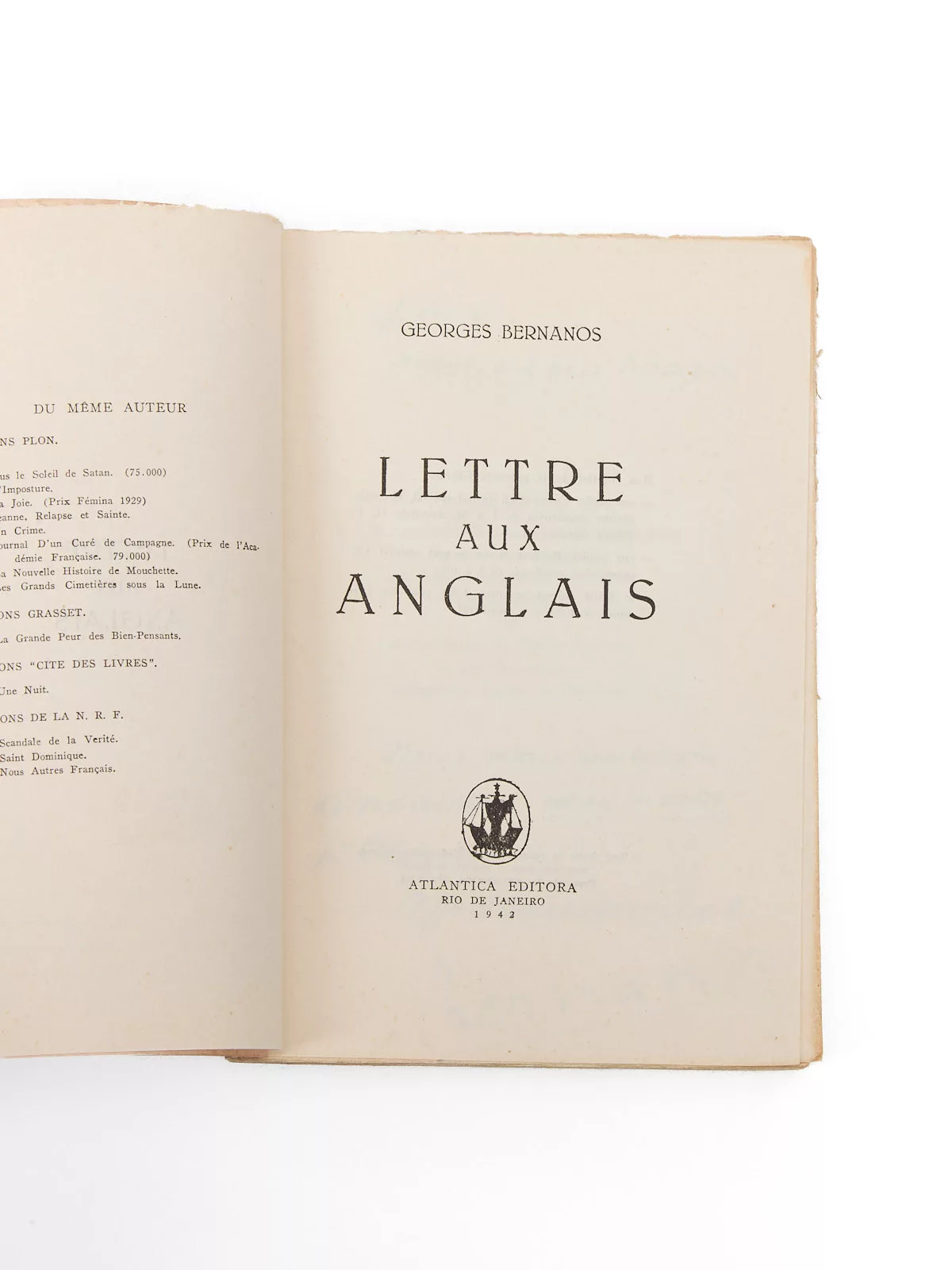
The first book published by Bernanos in Brazil, preceding Le Chemin de la Croix-des-âmes and Monsieur Ouine (both 1943), Lettre aux Anglais was published by Charles Ofaire, a Swiss exile who ran the powerful Atlantica Editora and whom Bernanos had met at one of his lectures in Rio.
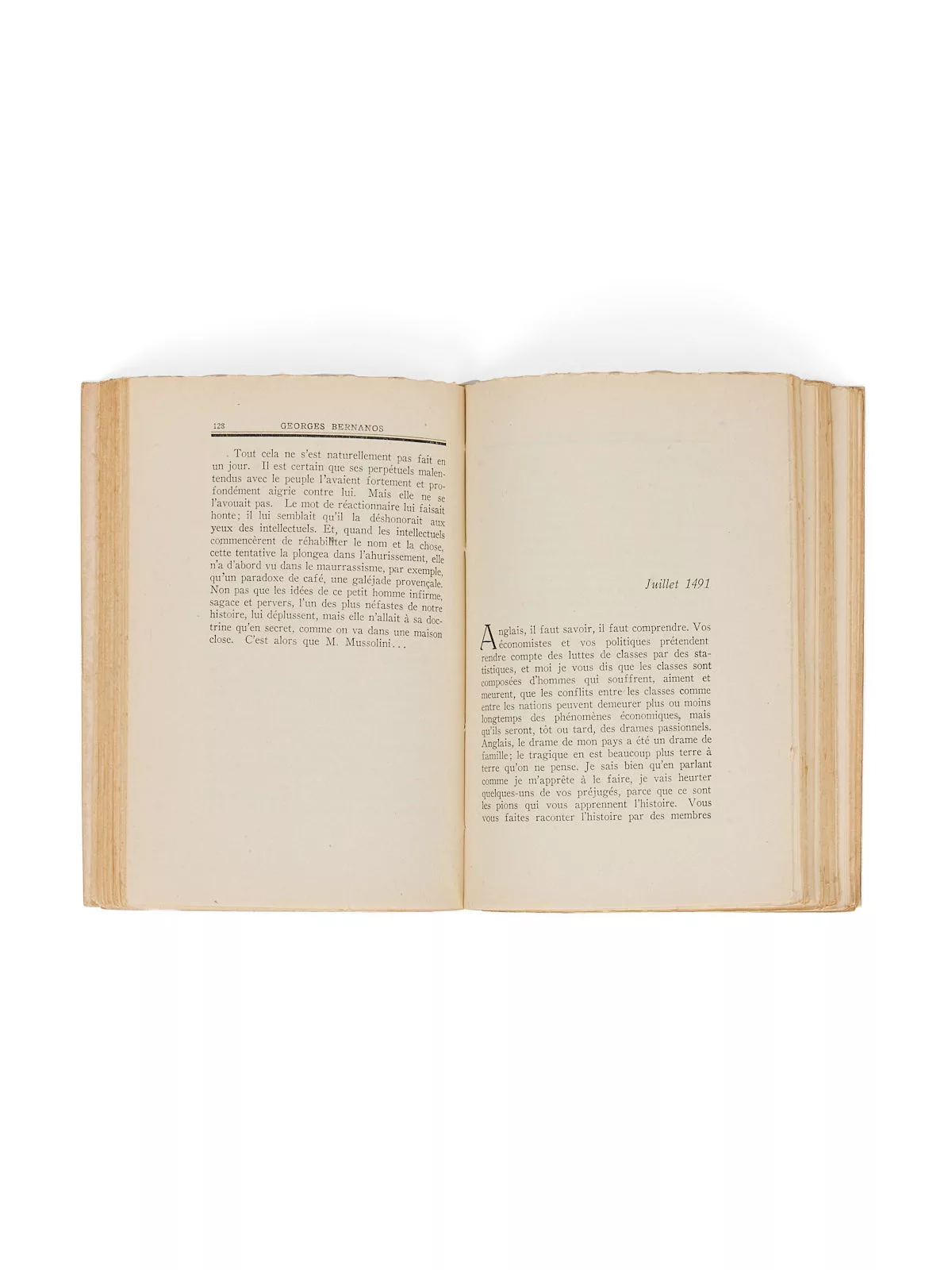
Bernanos undertook this “open-road” book, as the Pléiade editors call it, while gathering his notes for Le Chemin de la Croix-des-âmes: “Bernanos gives himself room and ease here: he speaks of the future of the world to the citizens of the world, and his apocalypse has not yet finished exhausting its revelations. For beyond the conflict of 1939–1945, he foresaw the universal war in which we now find ourselves, a fight to the death between man — or what remains of him — and the inhuman powers of man and ideology.”
The book is dedicated to his son Yves, who would join the Free French Forces in London in 1942 and take part in the Allied landings in Normandy.
The dedicatee of this copy, Dominique Braga (Domingos de Figueiredo Braga), was a writer of Brazilian descent through his parents. Born in Paris in 1892, he spent his entire career there: literary critic and director at L’Europe Nouvelle, music critic for Le Monde nouveau, editor-in-chief of the review Europe, literary director at Éditions Rieder, and finally director of the “La Grande Fable” series at Librairie Plon, where he met Bernanos. Appointed in 1929 head of the literary section of the International Institute of Intellectual Cooperation of the League of Nations, he held this position until going into exile in 1940 in the Brazil of his ancestors, where he was reunited with Bernanos. A pioneer of sports literature, he achieved success with 5 000, published in 1925, the interior monologue of a 5,000-meter runner during a race at the 1924 Paris Olympics — a work that later inspired the film Chariots of Fire.