

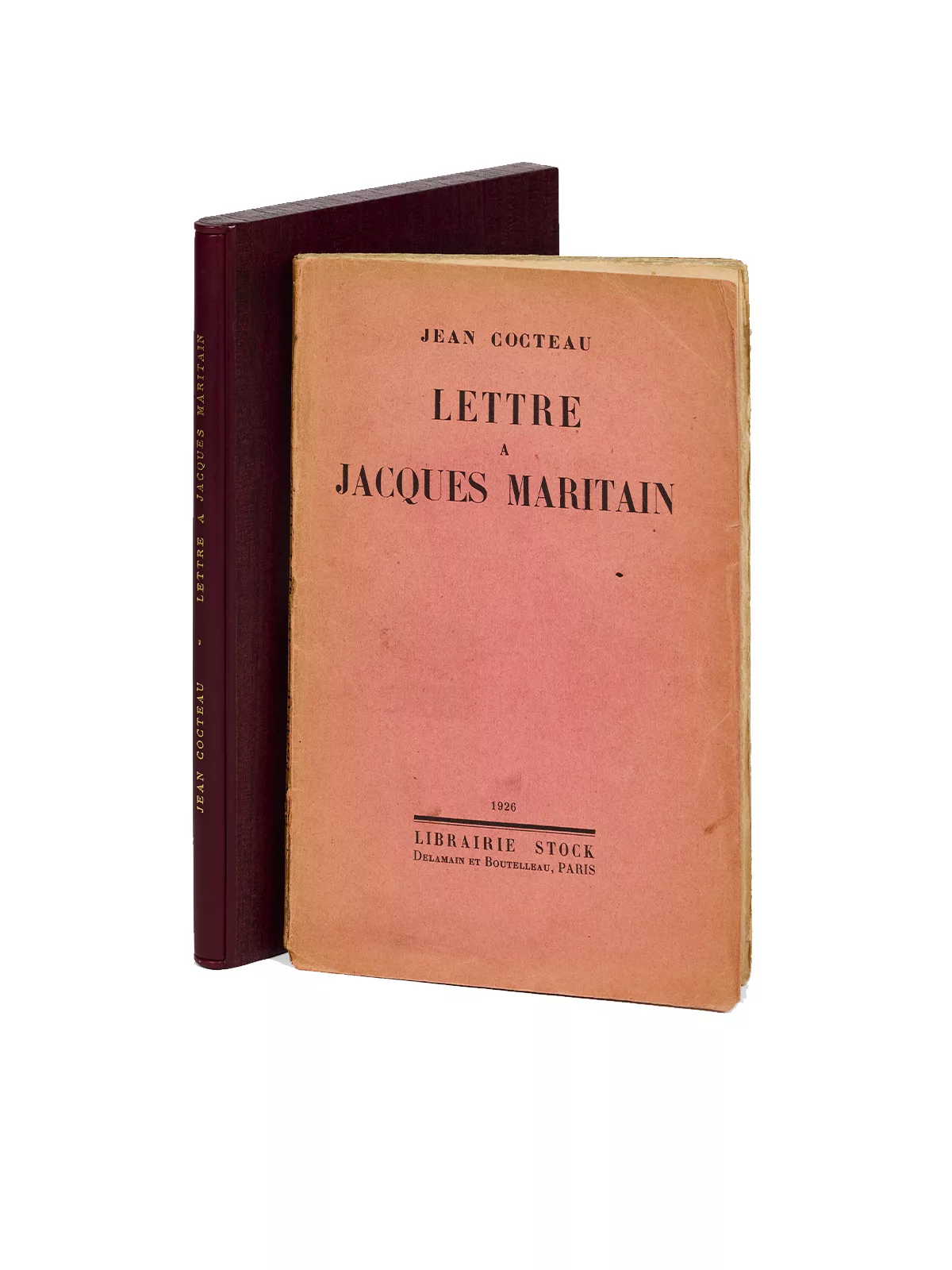
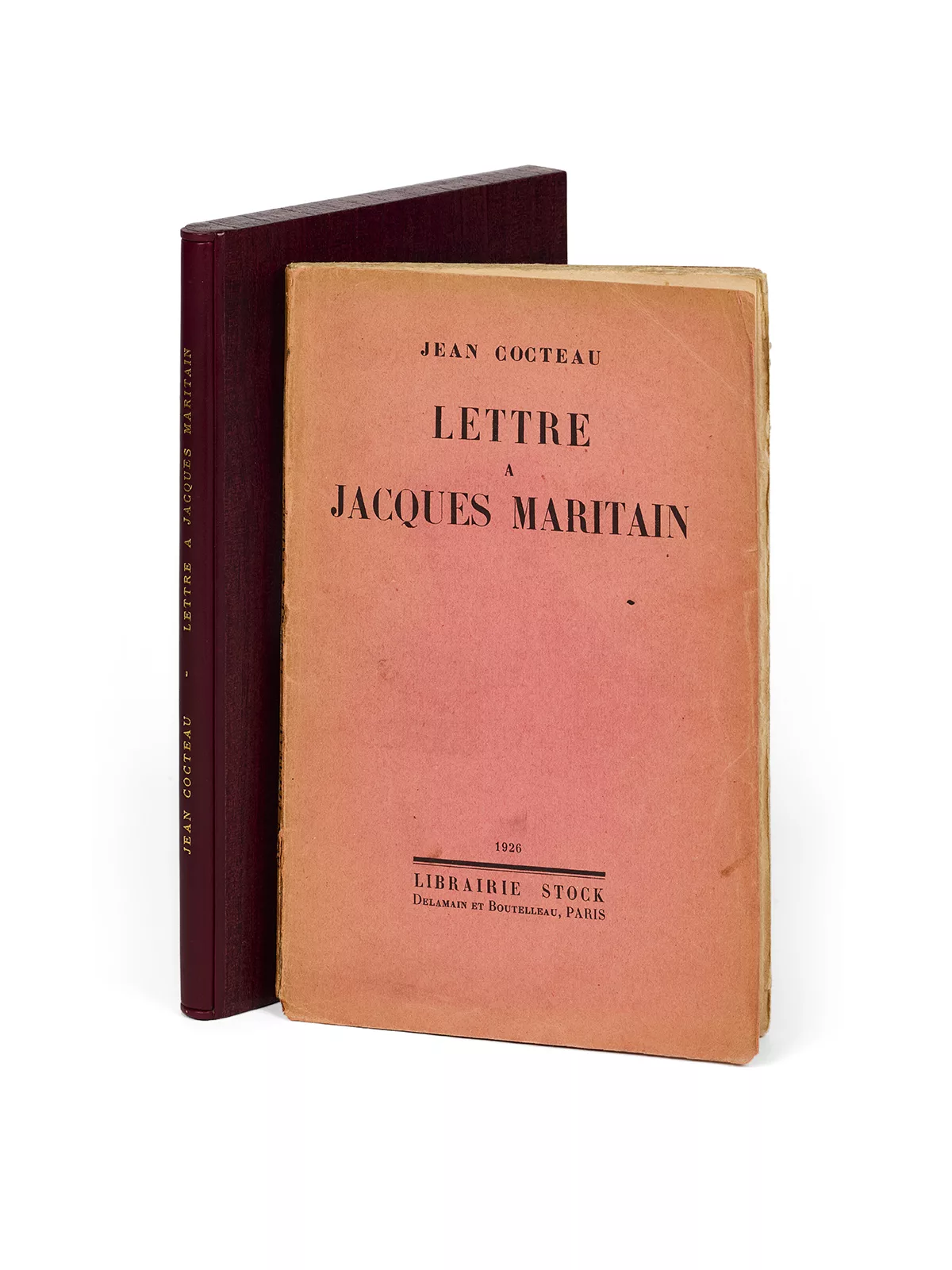
Lettre à Jacques Maritain
Presentation copy inscribed by Cocteau to his mother: “à maman, cet essai d'amour et d'amélioration, Jean [coeur dessiné].”
Surrealism in 1926 is also the story of its opponents, or at least of those who did not — or no longer — adhered to it. Jean Cocteau was one of these. Without being reviled by the group, he kept his distance from it. On 14 October 1923, three years before this correspondence, Jean Cocteau wrote to Jacques Maritain: “Vous êtes parmi les 5 ou 6 hommes que je souhaite atteindre.”
Maritain, the Thomist philosopher whose living faith guided his thought and life, met the sophisticated poet with his “unnatural” ways. The result was a sympathy strong enough to be misunderstood. In May 1926, Cocteau made public, in a letter to his friend, the spiritual path he was following alongside him. Maritain replied. A curious diptych: recognizing themselves as “exiles of the same kind,” they dared this provocative association. Of all the reactions, that of the Surrealist group was among the most vicious and forceful. Breton and Aragon ransacked the offices of the Nouvelles littéraires, which had supported Cocteau, notably through Frédéric Lefèvre. Was this not the least one could expect, given the anticlericalism and homophobia of the pope of Surrealism?
A wonderful and touching provenance for a text of such importance to Cocteau.