

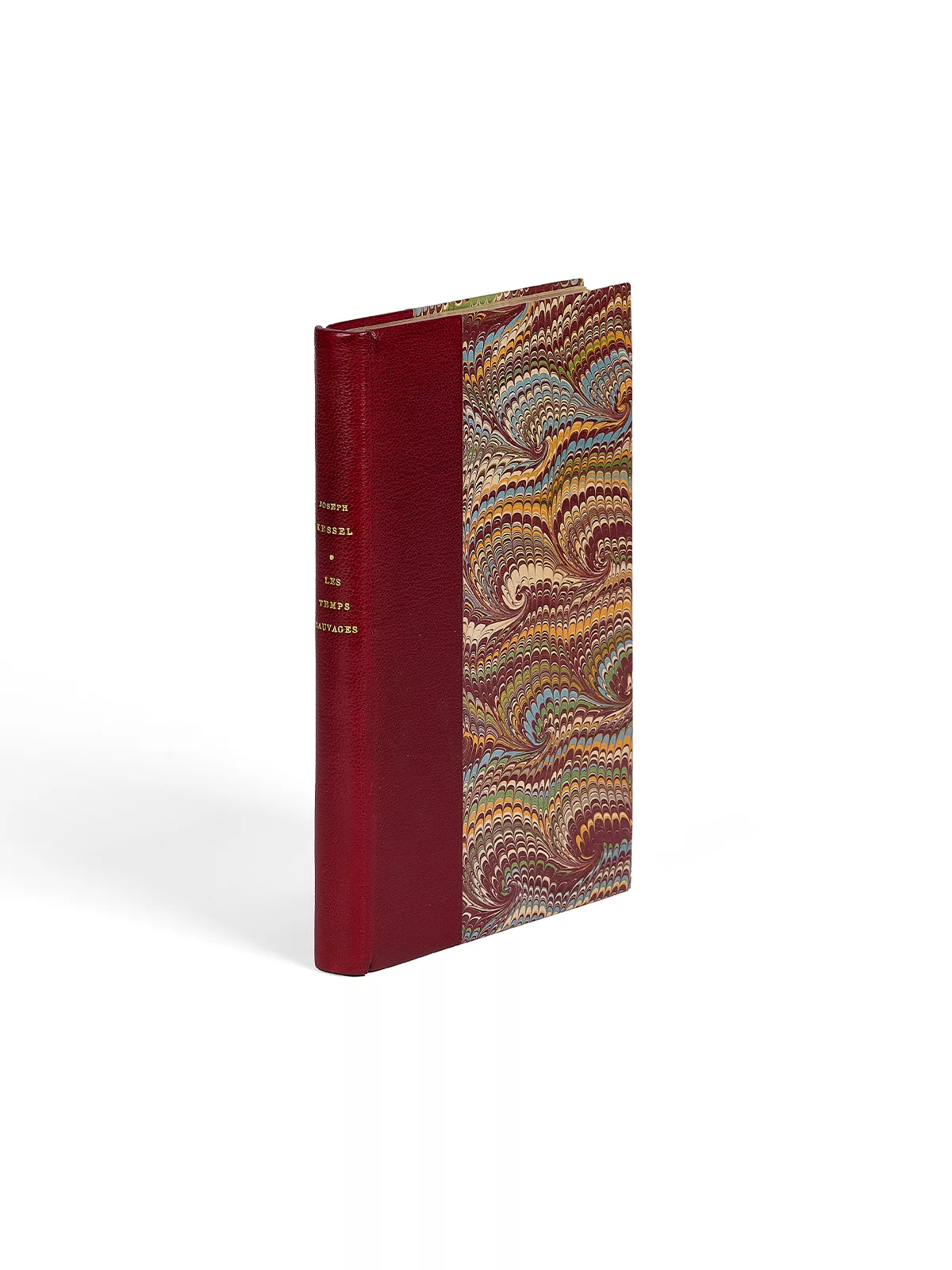
Les Temps sauvages
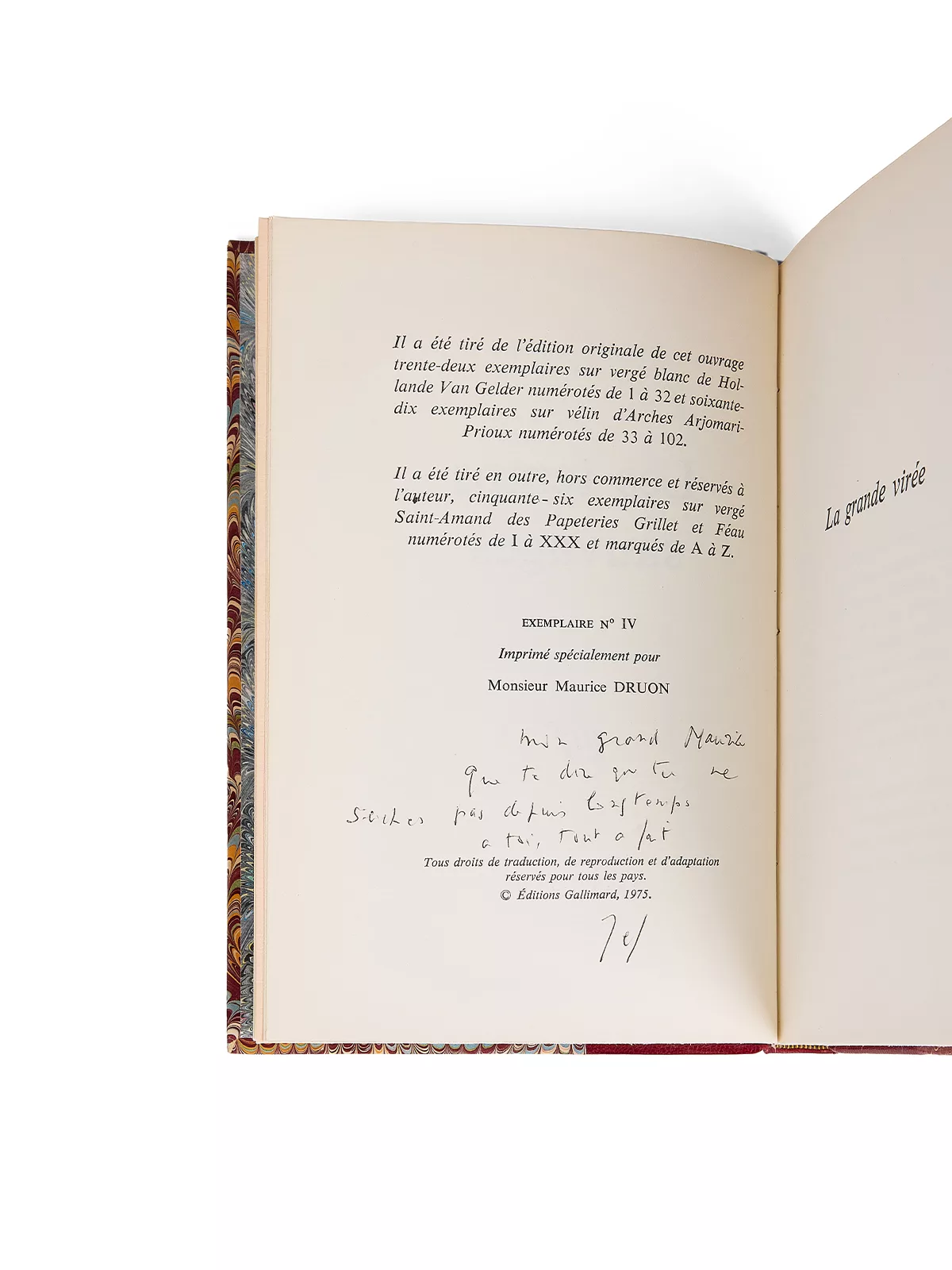
One of 56 copies on vergé Saint-Amand paper, hors commerce and reserved for the author.
A precious copy — no. IV, printed specially for "Monsieur Maurice Druon," his nephew and future executor of the moral rights to his works.
Signed presentation inscription: "Mon grand Maurice, que te dire que tu ne saches pas depuis longtemps. À toi, tout à fait. Jef."
It was at Avernes, a small village some fifty kilometers northwest of Paris, in a long building poetically named “le Four à chaux de Marie Godard,” that the traveler-writer would often retire to compose first Les Cavaliers, then Les Temps sauvages. He began writing it upon returning from a trip to Afghanistan with his wife. For Kessel, the book was an occasion to revisit his early years: in October 1918, a unit of volunteer airmen was formed for Siberia. Kessel, a second lieutenant barely twenty years old, did not hesitate. He embarked at Brest, bound for Vladivostok. What he found there was not war. He missed the fighting; but he discovered the madness of a world upended by revolution, a city held by Cossacks, nightly apocalypse at the L’Aquarium cabaret, a former barracks housing six thousand prostitutes, a hysterical universe accelerating ever faster toward disintegration, which Kessel narrates as though it were a war story.
A magnificent provenance and copy.
From the library of Maurice Druon, with bookplate.