

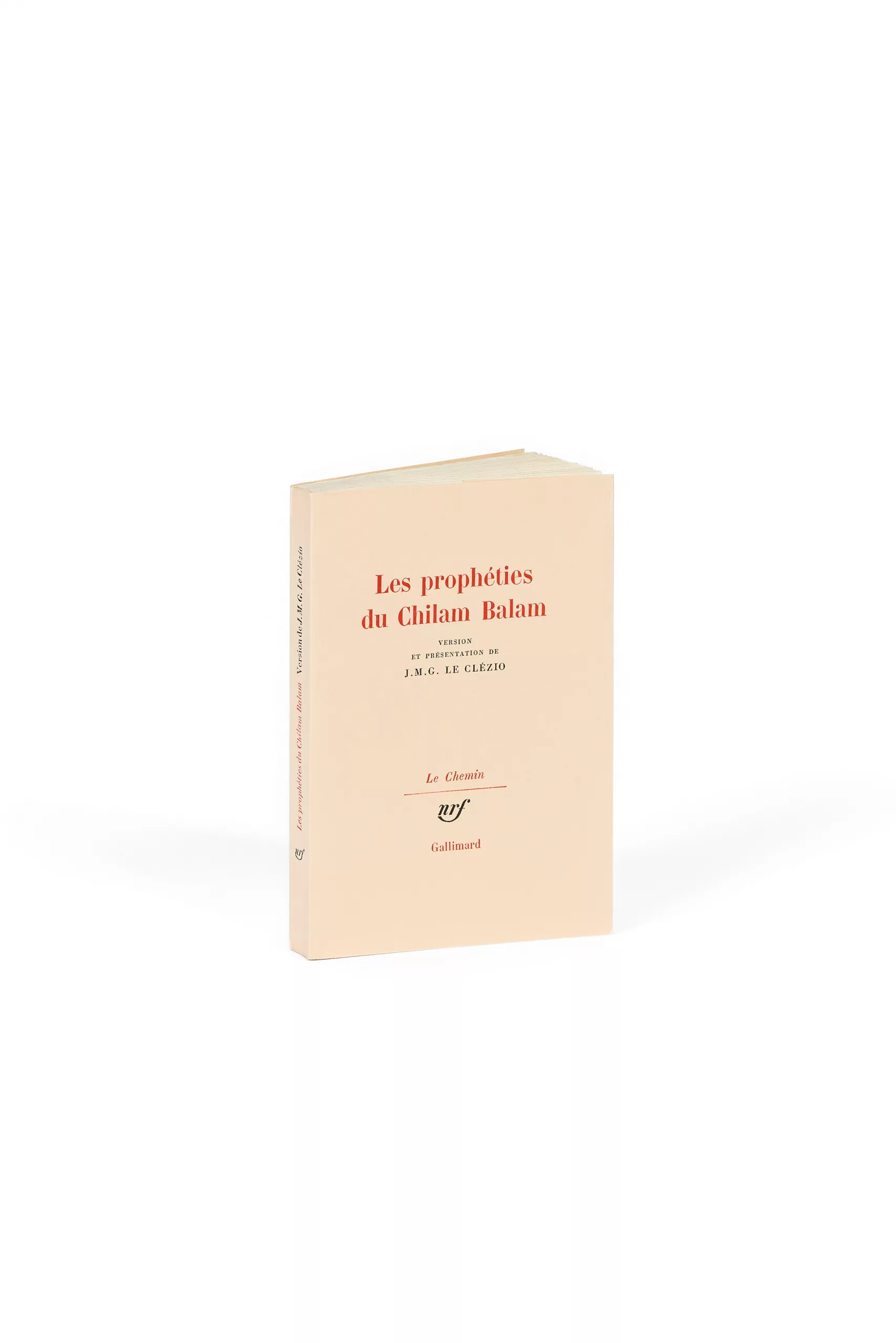
Les Prophéties du Chilam Balam
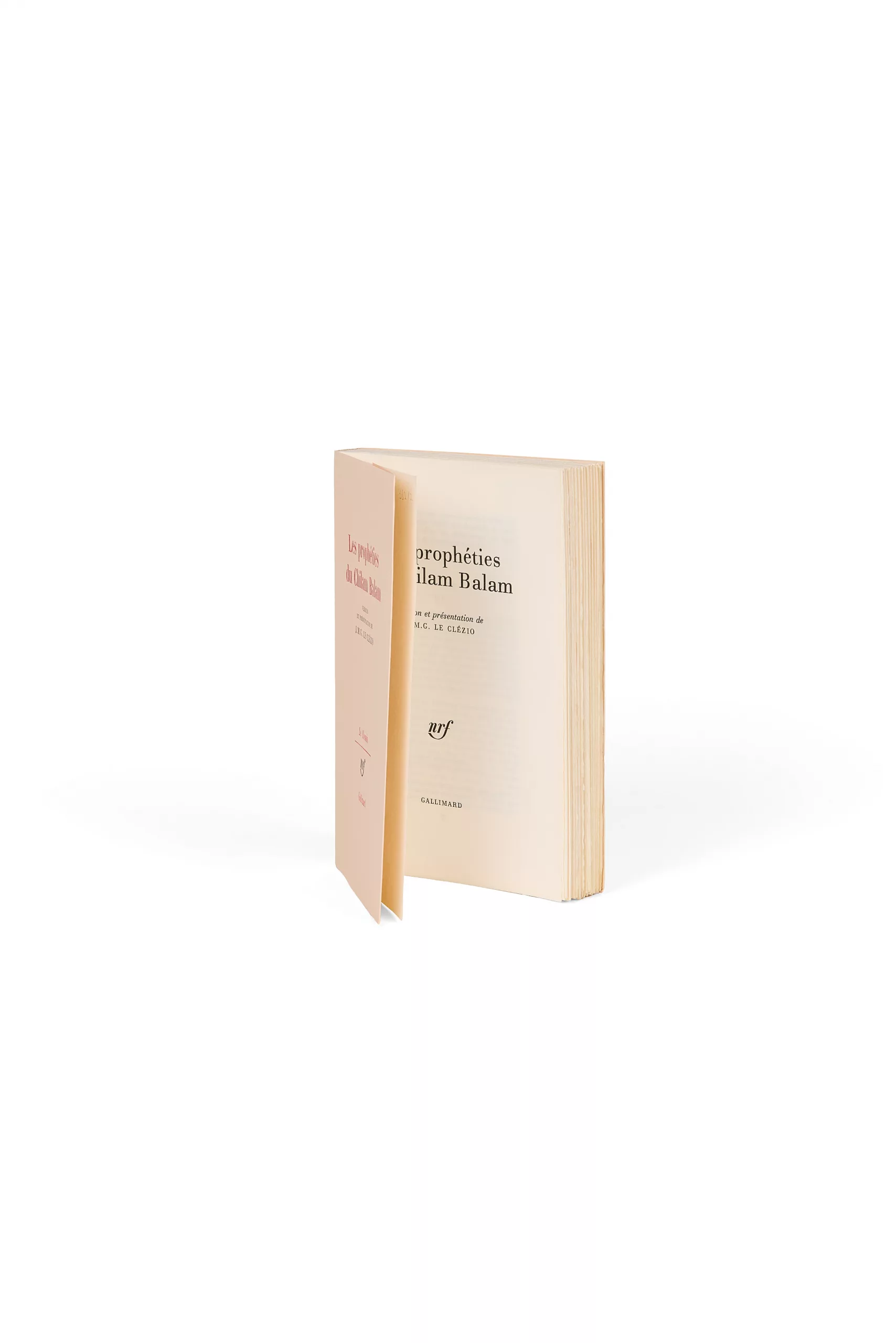
One of 16 deluxe copies on vélin de Hollande, this copy no. 10.
Between 1970 and 1974, J.M.G. Le Clézio lived among the Emberá and Wounaan Indians in the Darién province of Panama, an experience that transformed his worldview and drew his attention to the destiny of the ancient peoples and civilizations of Mesoamerica and the Zuni of New Mexico. He read extensively on the Incas, Mayas and Aztecs, notably Spanish-language translations of sacred books, chronicles and accounts that had escaped the autos-da-fé and bonfires of the conquista. Among these testimonies is Les Prophéties du Chilam Balam, which he translated and introduced, published by Georges Lambrichs in his “Le Chemin” collection at Gallimard.
Chilam Balam — from the Maya chi, mouth, and balam, jaguar — was originally the name given to a probable deity and the religious title of the chief priest of the sun. According to the text of the Prophéties, the Chilam Balam is said to have lived in Mani during Katun 2 Ahau (circa 1500–1520), serving as an oracle. “For a people living so close to the sun, on such an exposed land, the great urgency was to understand time. […] They had to understand the laws of the sky, for it was in the sky that the explanation of the mystery lay, the key to the future.” (Le Clézio, 1976, p. 10).
Following the destruction of these sacred books, successive retranscriptions, punctuated with additions, turned the Prophéties du Chilam Balam into “a strange utterance in which the verb seems to hesitate between past, present and future, as though every event that occurred over the ages necessarily had its echo in time to come.” (Sophie Normandin, “Le Popol Vuh et les Prophéties du Chilám Balám: l’obsession du passage du temps dans les textes fondateurs mayas,” Postures, “Voix de femmes de la francophonie,” no. 5, pp. 146–158).