

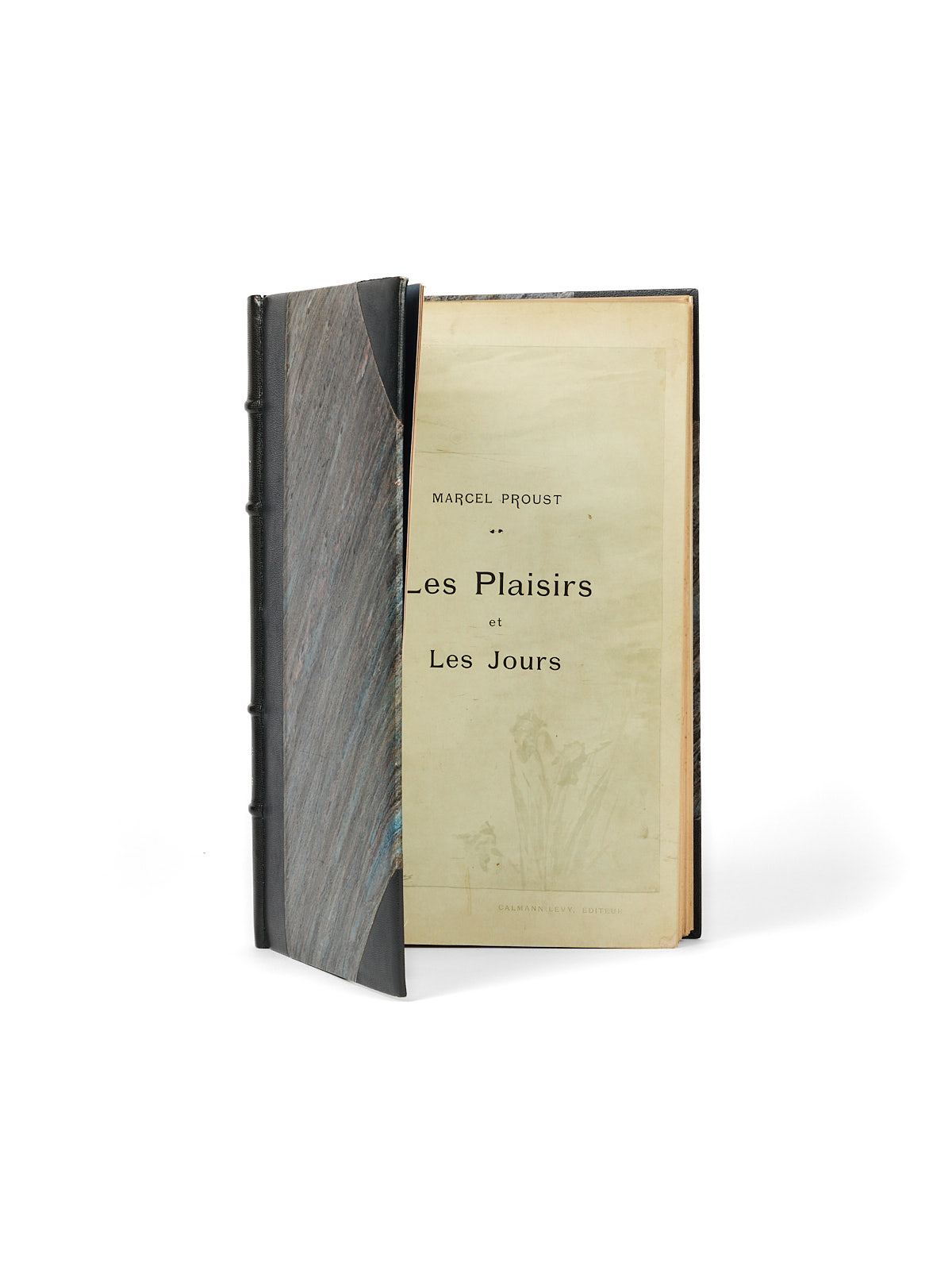
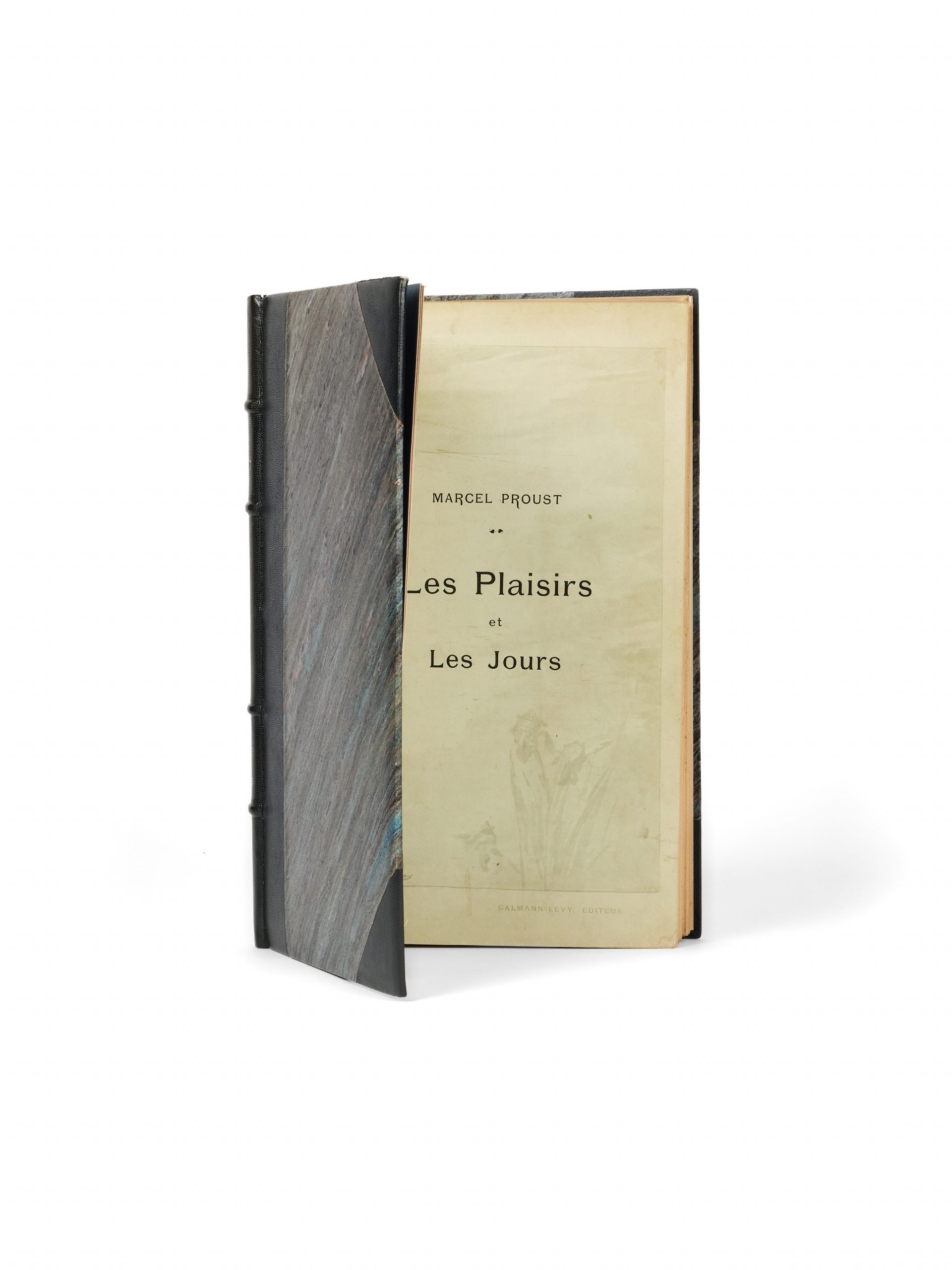
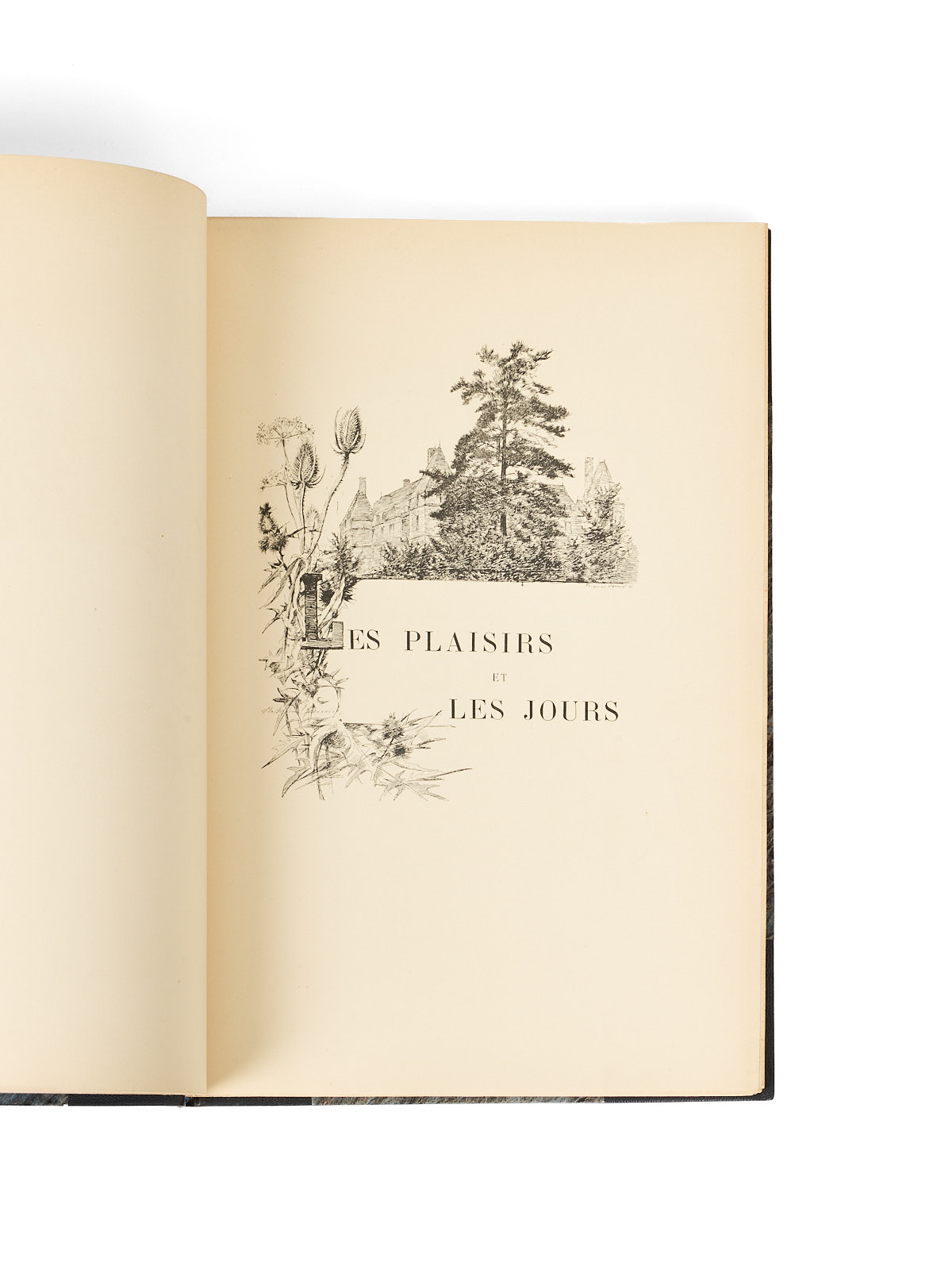
Les Plaisirs et les Jours
This collection of prose poems and short stories — Proust’s first published book — draws heavily on the decadent movement, and in particular on the work of Robert de Montesquiou. It is illustrated with fine compositions by Madeleine Lemaire, at whose Dieppe residence Proust had spent three weeks in the summer of 1895, a house also frequented by Reynaldo Hahn.
In his correspondence, Proust repeatedly claimed to have written some of these pieces while still a schoolboy. After some difficulty, Calmann-Lévy agreed to publish the volume, which appeared on 12 June 1896. Critical response was muted or nearly silent, though Léon Blum, writing in La Revue blanche, observed with foresight: “I await his next book with great impatience and calm.” Another critic, Paul Duval — better known by his pen name Jean Lorrain — published a venomous article in Le Journal calling it an “overrated work,” which so wounded Proust that he challenged Lorrain to a duel, fought on 6 February 1897 in the Bois de Meudon. Proust chose the painter Jean Béraud and Gustave de Borda as his seconds, while Lorrain chose Paul Adam and Octave Uzanne; fortunately, the two shots exchanged struck neither man.
Meanwhile, Les Plaisirs et les Jours sold poorly, and the book was not reprinted until 1924, although Gaston Gallimard — to whom Proust had ceded the rights “without royalties” — had considered doing so during the author’s lifetime. It is worth noting that the illustrious author of the preface, Anatole France, reportedly murmured to his secretary, Jean-Jacques Brousson, as he set about the task, that Proust wrote “endless sentences enough to give you consumption.” Nonetheless, these pages contain the first traces of a style and a vision that would come to fruition in the Recherche, which Proust would later sum up in these words: “Real life, life finally discovered and clarified, the only life therefore fully lived, is literature.”
Fragments of the spine preserved, with numerous losses, mounted on a plain backing.