

Created by Louis Forton in 1908 in L’Épatant, Croquignol, Filochard and Ribouldingue established one of the earliest great popular myths of French comic strip art. Likeable swindlers and sworn enemies of work and authority, the three rogues move with extraordinary freedom across social classes and borders, forever pursued by the police and forever ready for a new scheme.
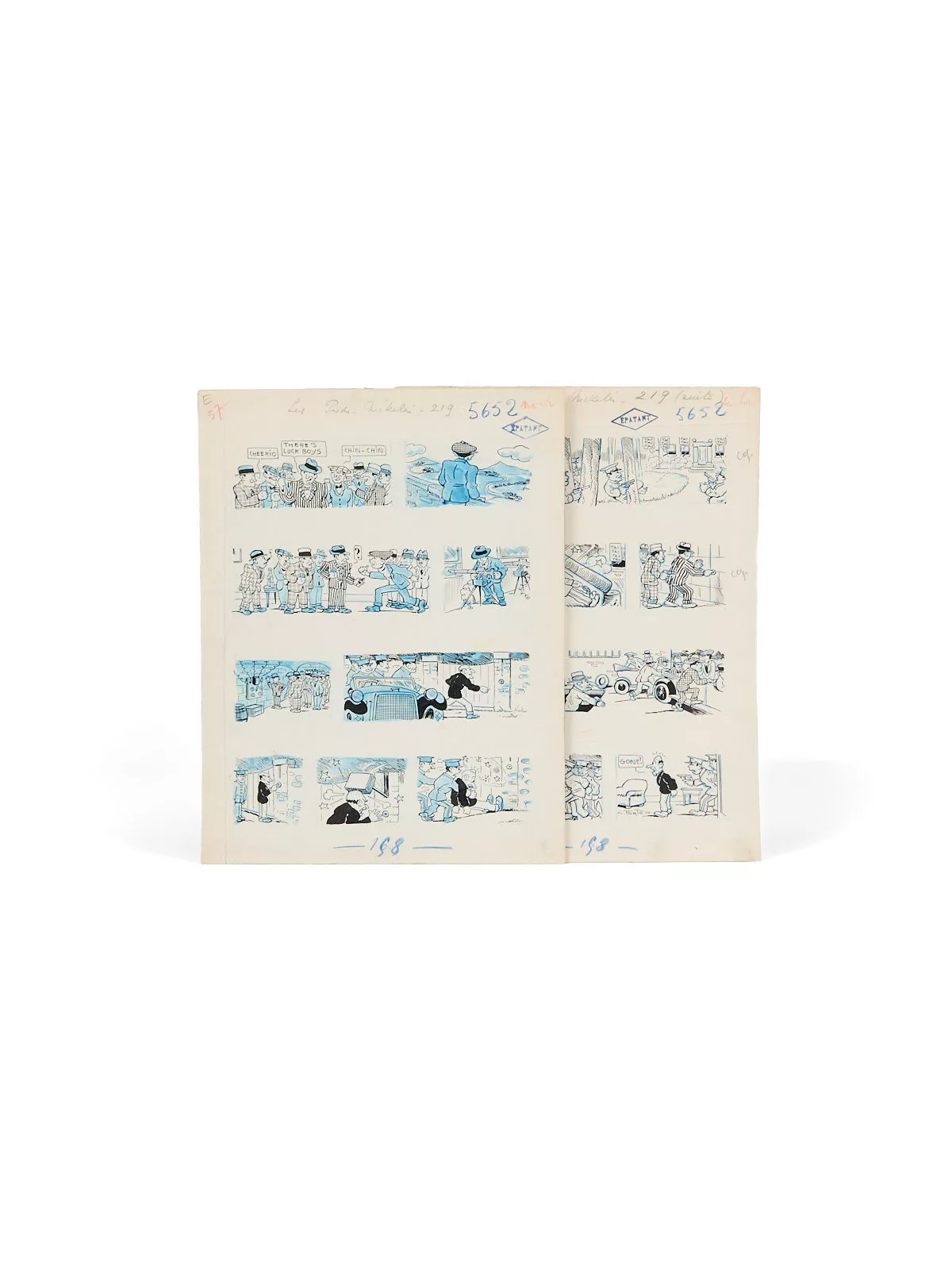
These two plates belong to their long American adventure, published in L’Épatant between September 1930 and April 1931. Serialized in the weekly under the generic title Les Nouvelles Aventures des Pieds-Nickelés, it was collected two years later by the Société parisienne d’édition under the title Les Pieds Nickelés en Amérique.
The joint preservation of the two sheets is particularly remarkable: they constitute the entire installment of April 2, 1931, exactly as it was published on the two pages devoted that week to the Pieds Nickelés. Comparing them with the copy of L’Épatant makes it possible to trace, panel by panel, the original layout and the captions added during typesetting.
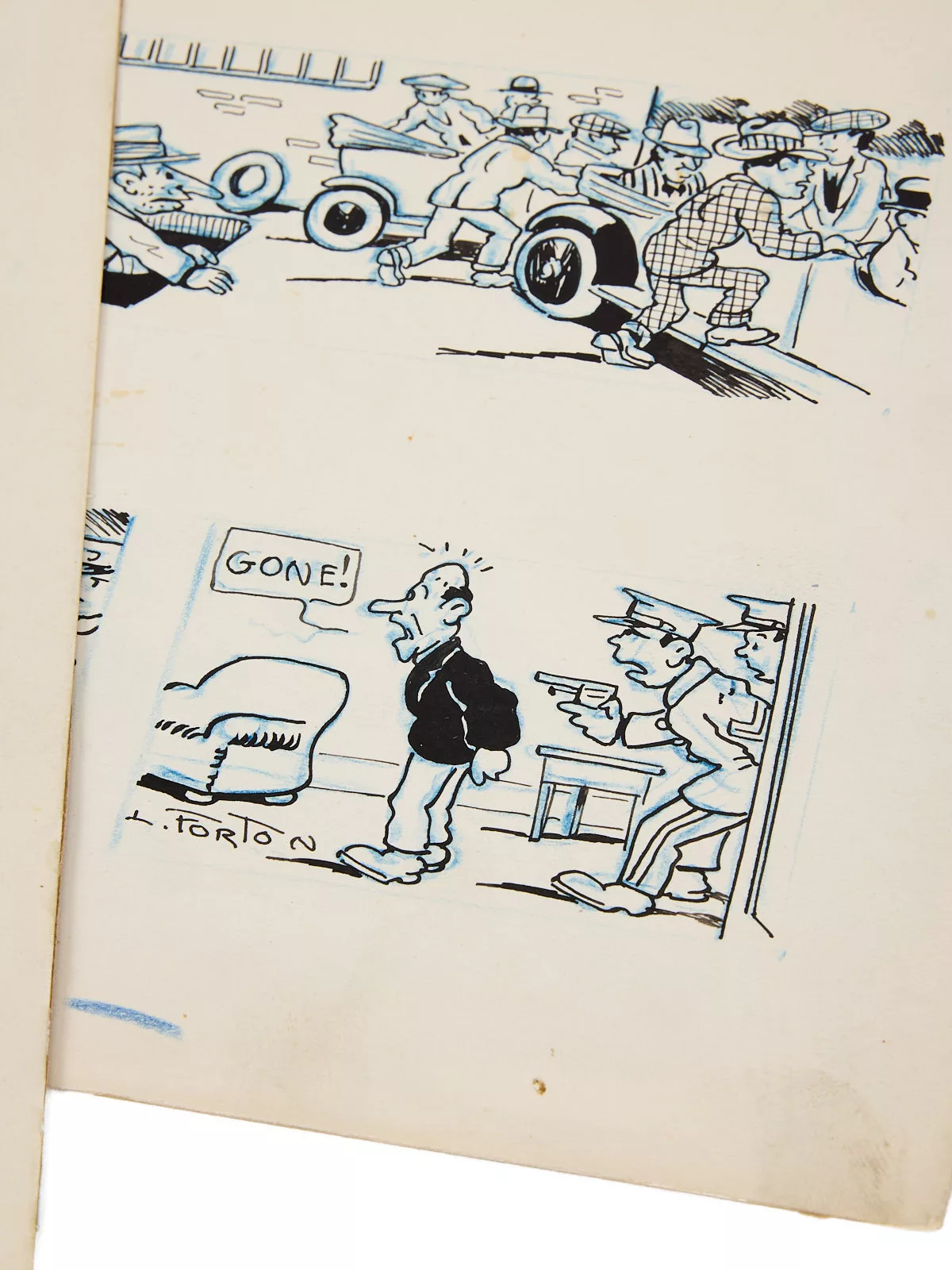
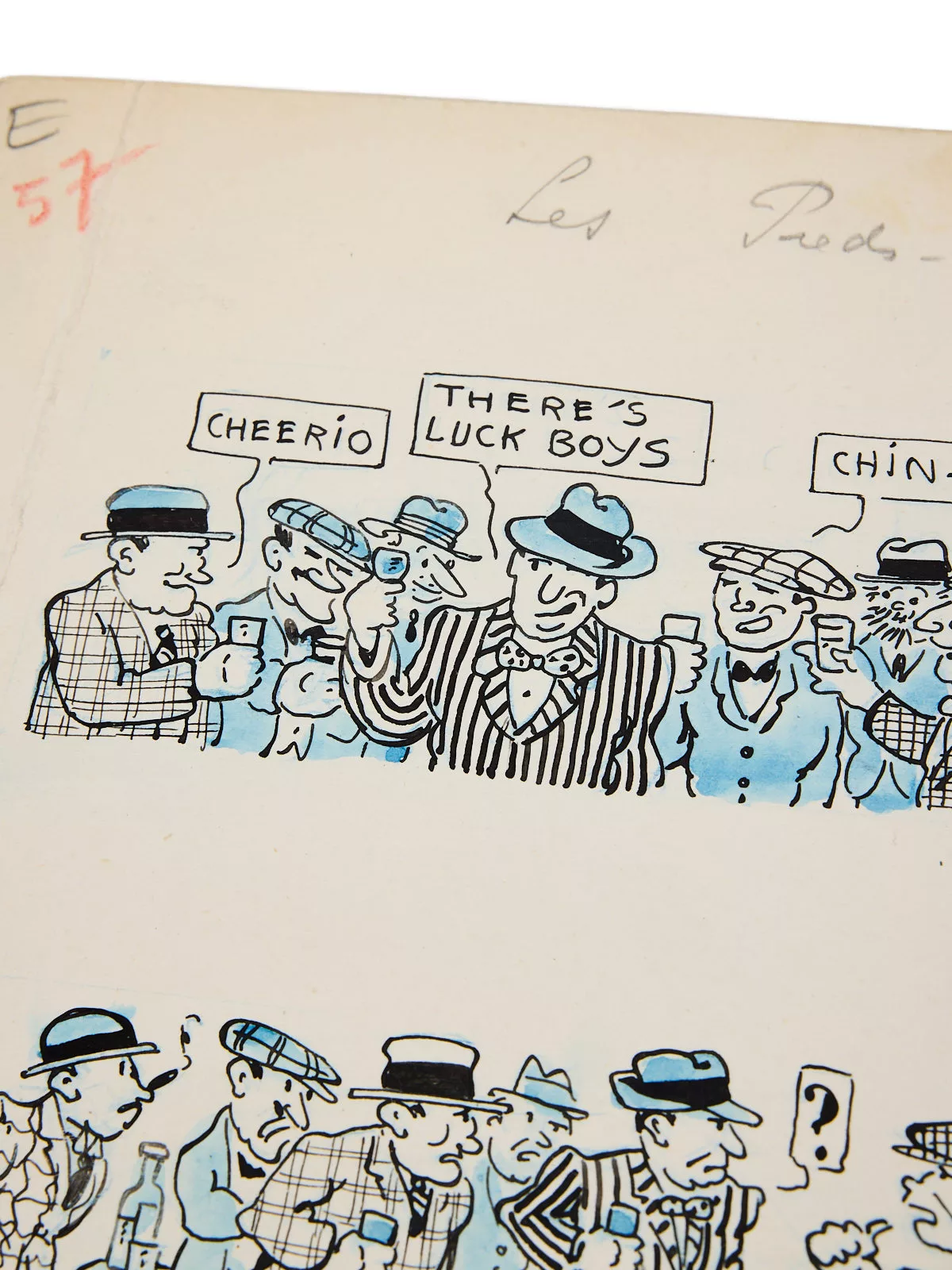
The set also offers valuable evidence of Forton’s graphic grammar and of a pivotal moment in the history of French comic strip art. A pioneer in France in the use of the speech balloon from the earliest years of the Pieds Nickelés, Forton here still combines two modes of narration: the development of the action remains entrusted to the captions printed beneath the images, while certain words appear directly within the drawing. The delightful “CHEERIO,” “THERE’S LUCK BOYS,” “CHIN-CHIN,” and finally the definitive “GONE!” of the last panel are thus drawn by Forton’s own hand on the originals.
This coexistence is especially evident in the drawings themselves: stripped of the typographic captions that accompany them in L’Épatant, the images reveal the vivacity of Forton’s line, his abundant use of hatching, his instantly recognizable silhouettes, and the skill with which he carries the action from one panel to the next.