

Les Mots
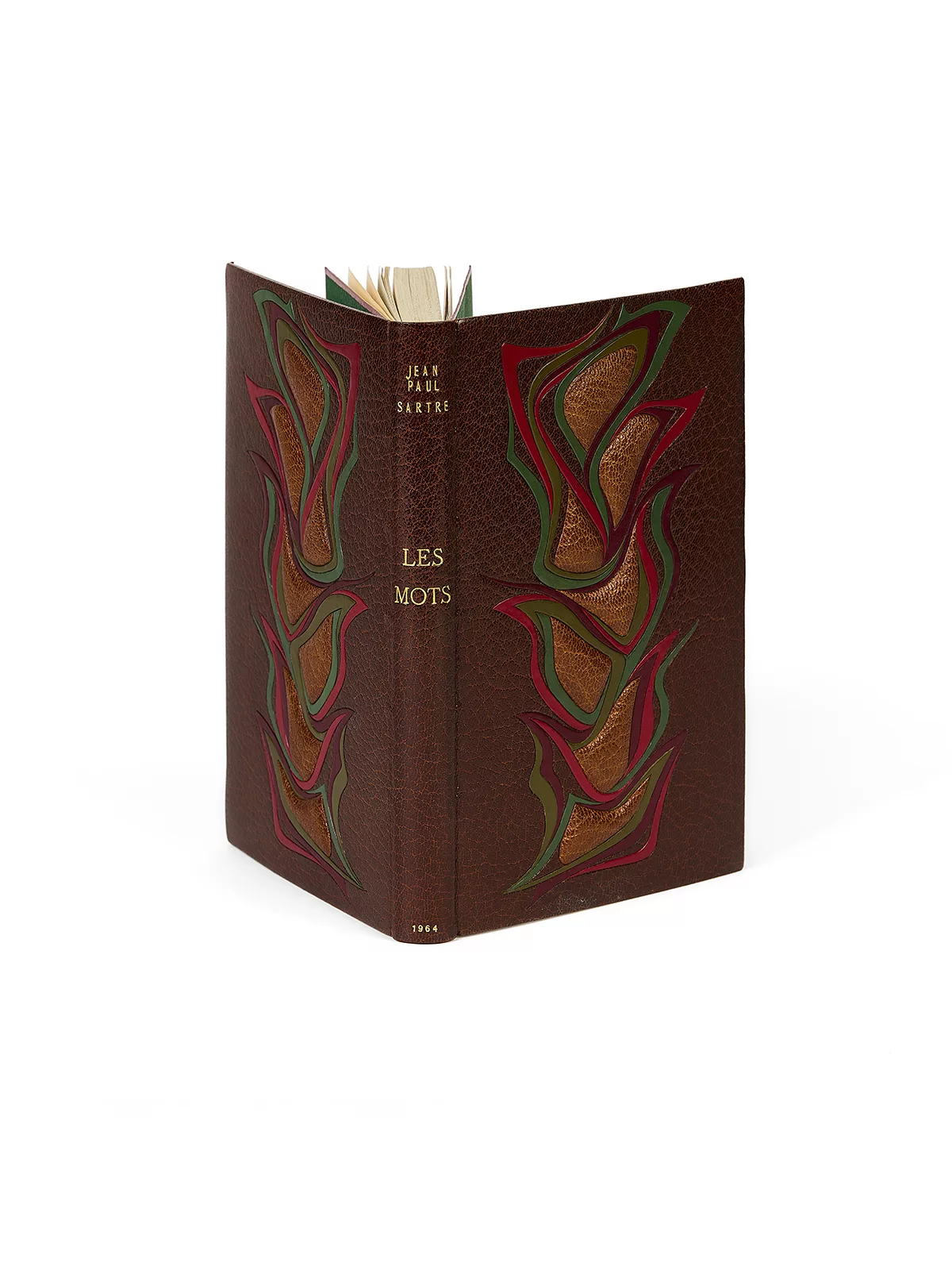
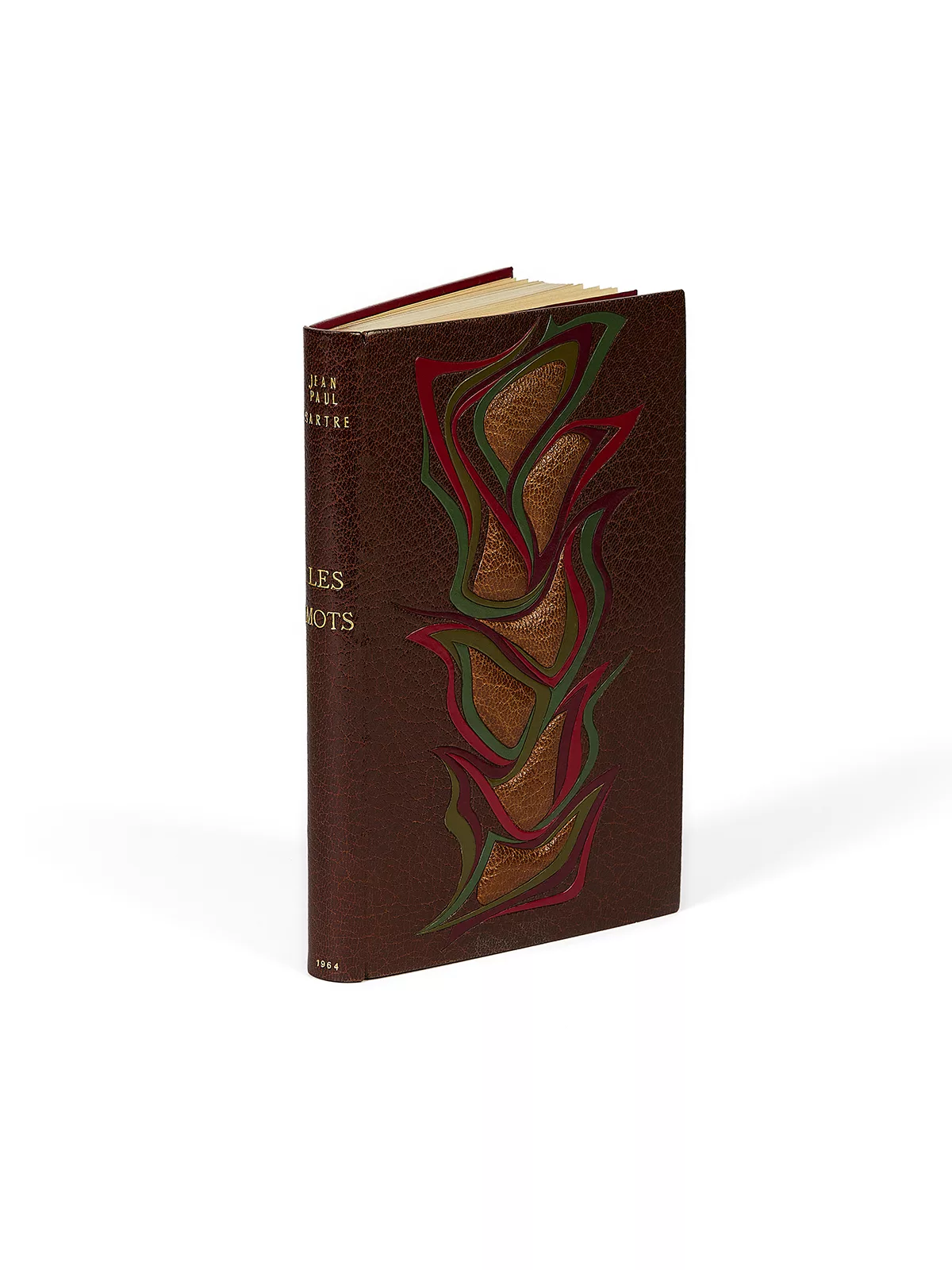
A superb copy in a strictly contemporary binding by Paul Bonet, completed by René Desmules in 1964. This is the only copy on Imperial Japan paper bound by Bonet, and the first of only two bindings he designed for Les Mots.
For Sartre, writing had long been a means of giving meaning to existence, of “wresting my life from chance.” In The Words, his great autobiographical work, he looks back with irony and lucidity at the literary vocation that shaped his childhood and at the illusions on which it was built.
The text first appeared in two issues of Les Temps modernes in October and November 1963. Its reception was remarkable. Despite the controversies then surrounding Sartre in France, critics responded almost unanimously to the intimacy of this portrait of his childhood among the Schweitzer family, his maternal grandparents, books and the discovery of literature.
At the center stands his grandfather Karl Schweitzer, whom Sartre credits, paradoxically, with having driven him toward literature: “My grandfather threw me into literature by the very care he took to keep me away from it.” The book is both a family reckoning and an examination of the origins of a writer who had spent much of his life attempting to reinvent himself.
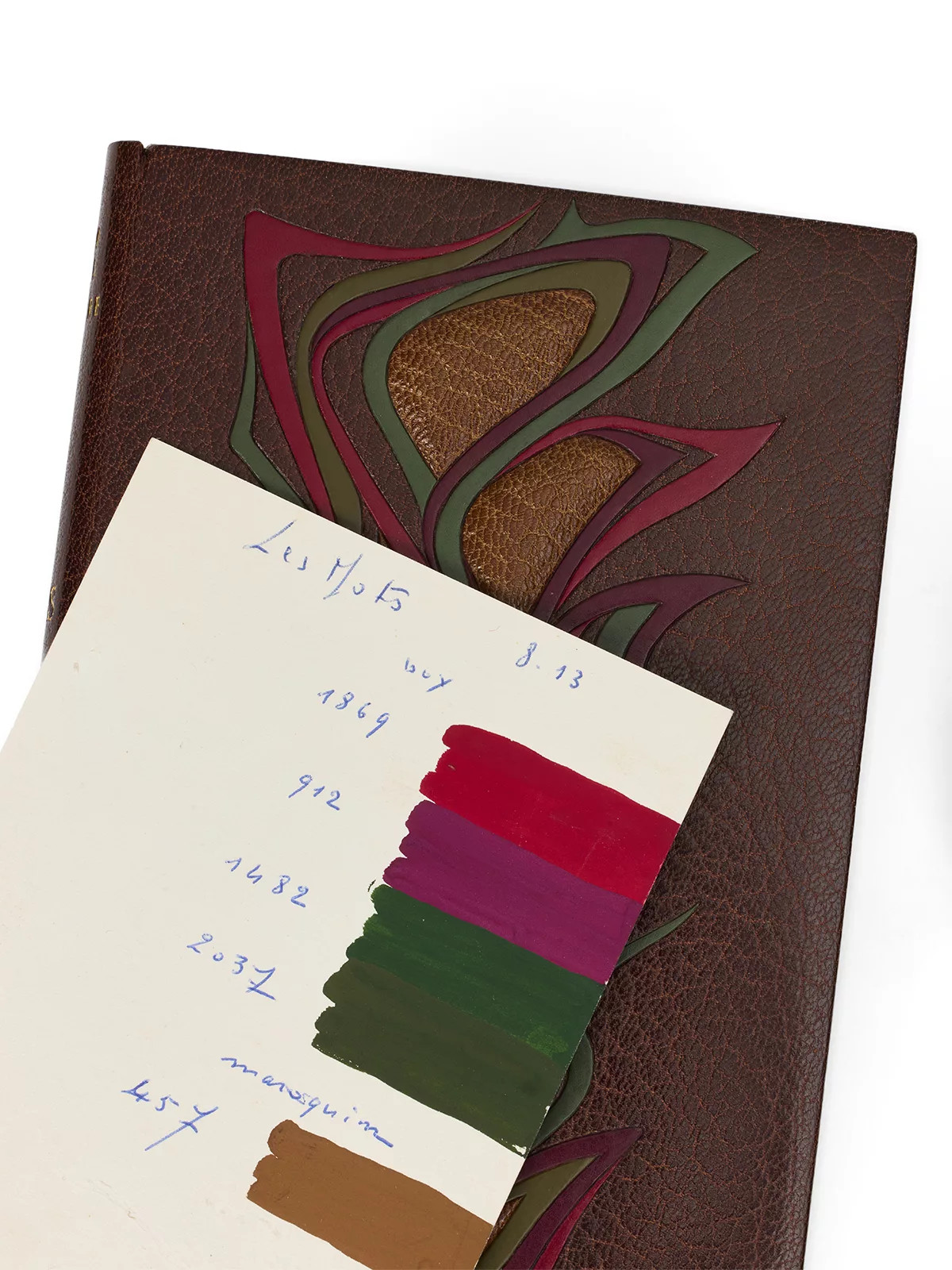
A perfect copy in a strictly contemporary binding by Paul Bonet, the first of only two bindings he designed for The Words, and the only one on Imperial Japan paper. Bonet entrusted its execution to René Desmules, who worked on it from June to December 1964. The binding is recorded in Bonet’s Carnets under no. 1479.
The association is particularly significant: in October 1964, only months after the book’s publication, Sartre was awarded the Nobel Prize in Literature, which he famously declined.
An exceptional copy of Sartre’s autobiographical masterpiece: one of 15 on Imperial Japan paper, in the only Paul Bonet binding executed on the deluxe issue, accompanied by Bonet’s original working color chart.
Contat & Rybalka, Les Écrits de Sartre, 63/383; Carnets de Paul Bonet, no. 1479.