

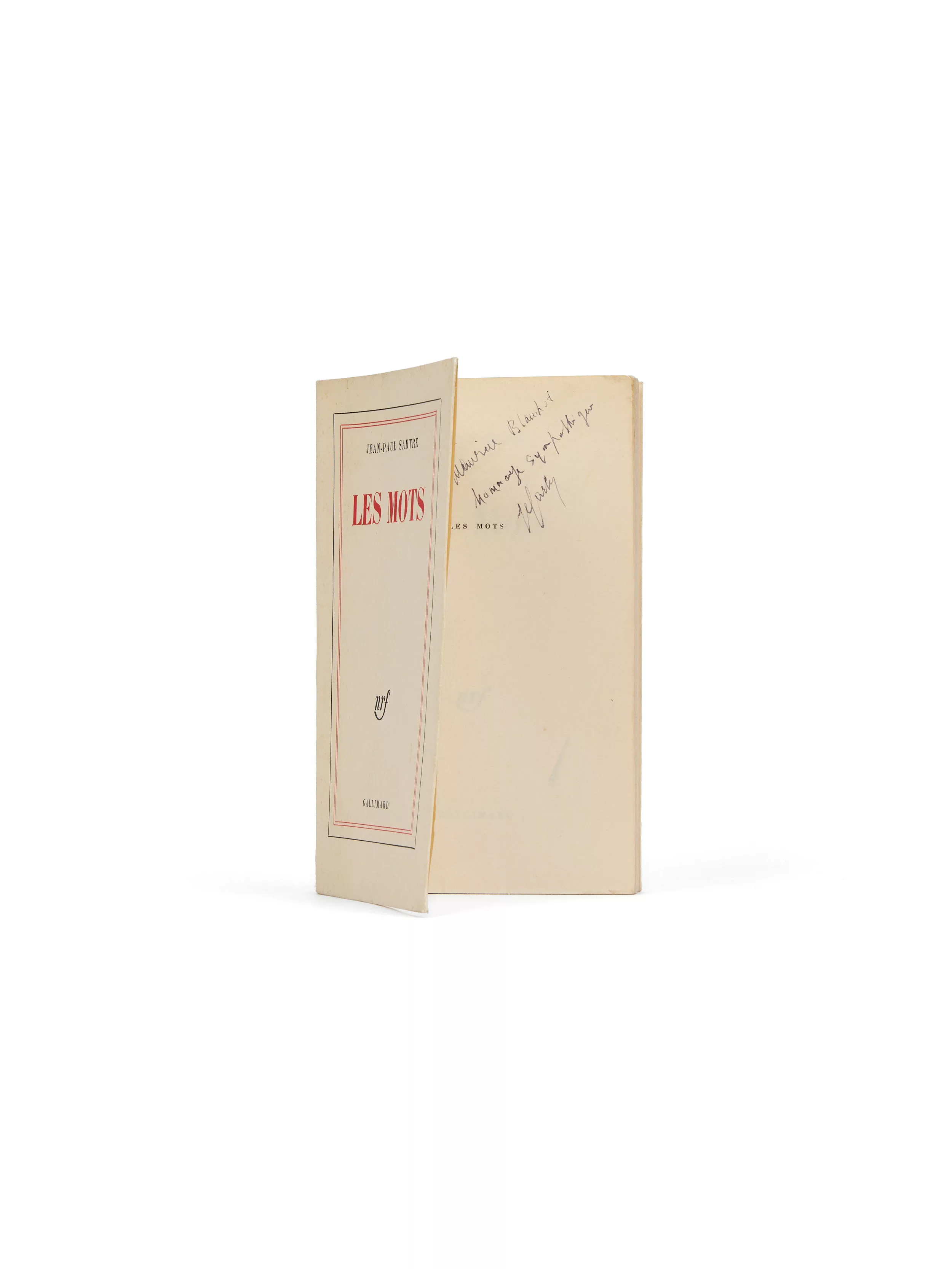
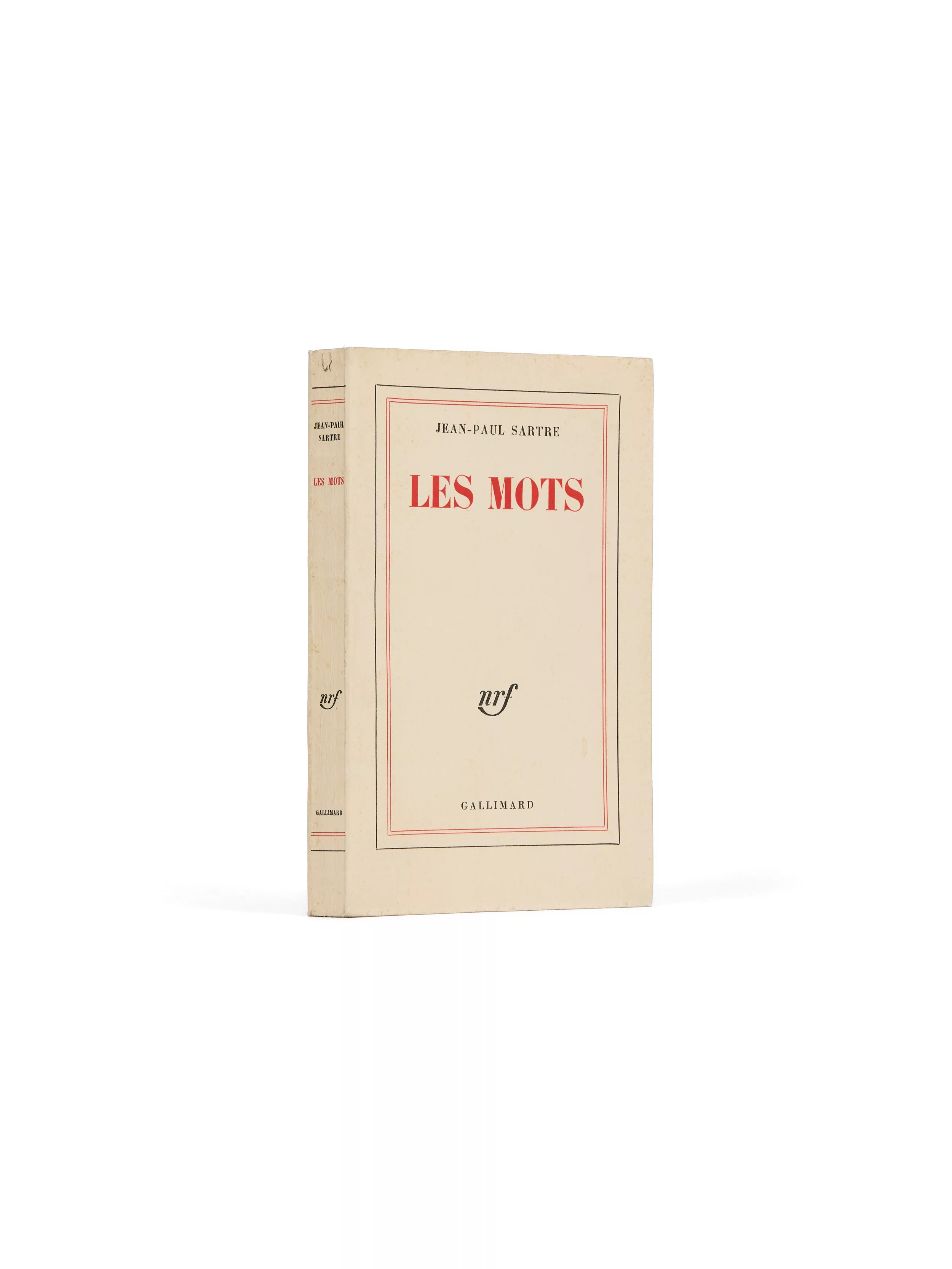
Les Mots
For Sartre, writing had long meant giving meaning, “wresting my life,” as he put it, “from chance.” Here he offers a definitive reckoning with his past illusions. The text first appeared in two installments of Les Temps modernes (October and November 1963), before being published by Gallimard in spring 1964.
The book is one of Sartre’s most personal: a childhood autobiography, but above all a settling of accounts with literary vocation, the prestige of the book, and the illusions of the writer. In the very year of its publication, Sartre declined the Nobel Prize in Literature (22 October 1964), true to his refusal to be turned into an institution.
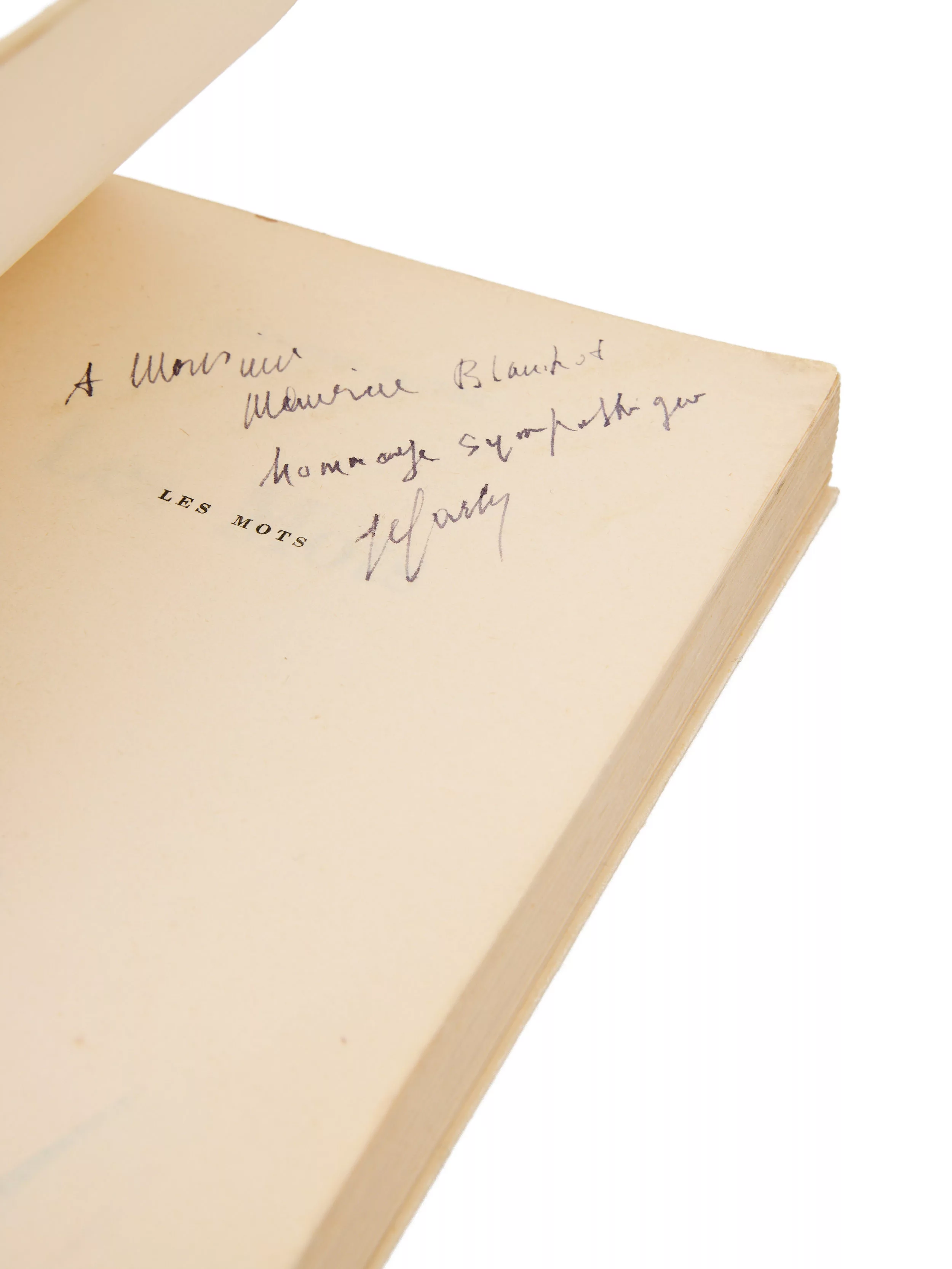
Less than a month later, he sent this copy to Maurice Blanchot. The sober “hommage sympathique” speaks less of personal intimacy than of intellectual recognition: that of two bodies of work separated by almost everything, yet united by the same question about what literature can — or cannot — do. The inscription is not a social gesture: Sartre addresses Les Mots to a reader who had followed, debated, admired and challenged him for a long time. Since the 1930s, Blanchot had read Sartre with constant attention, both admiring and critical. He praised La Nausée early on, and never ceased to think alongside — and often against — him about the relationship between writing and the world. Sartre, for his part, published several major texts by Blanchot in Les Temps modernes and, in October 1945, devoted a substantial study to him, entitled “Les Romans de Sartre,” praising in Sartre the rare union of philosopher and novelist.
Publisher’s wraparound band preserved.