

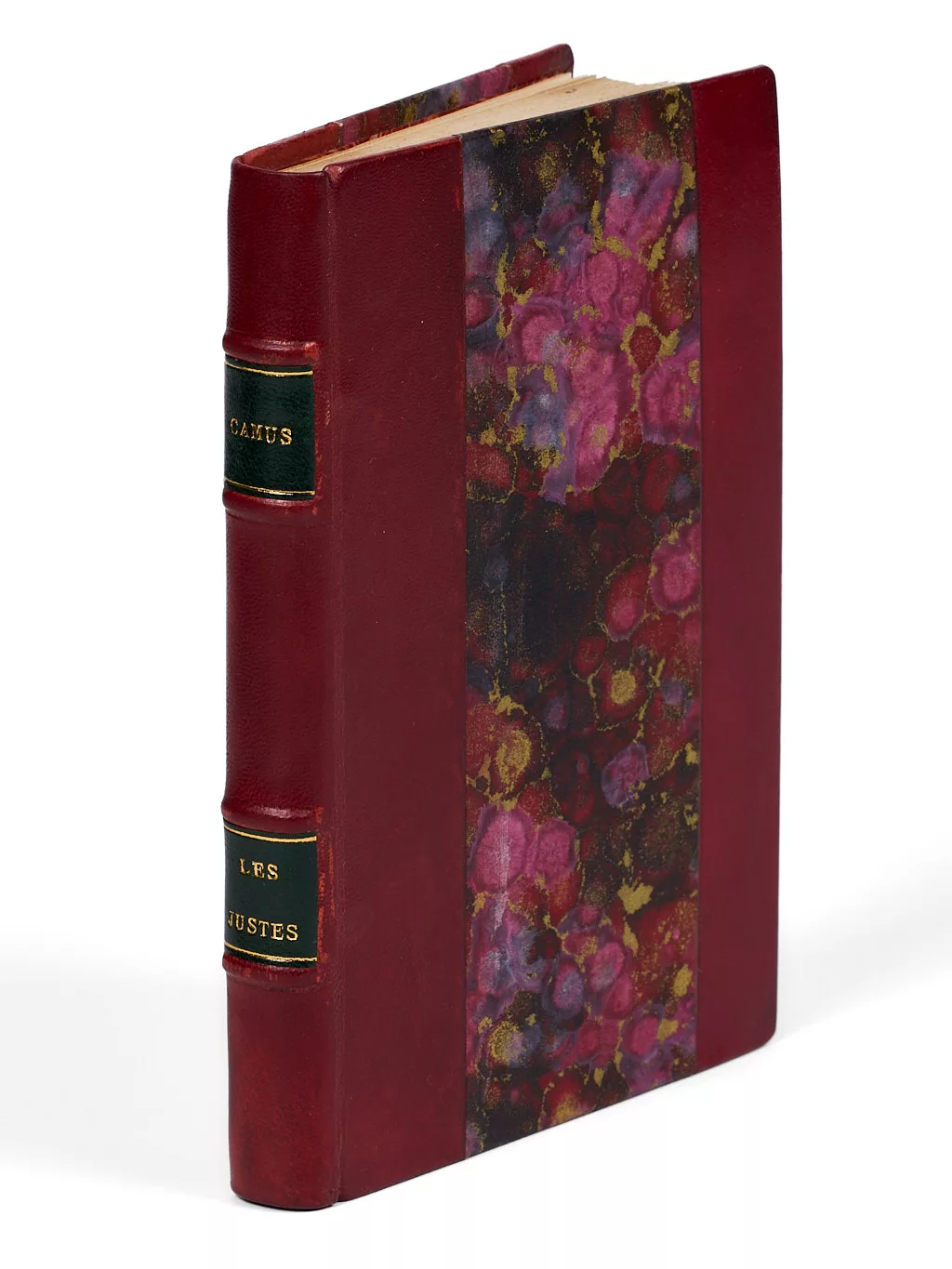
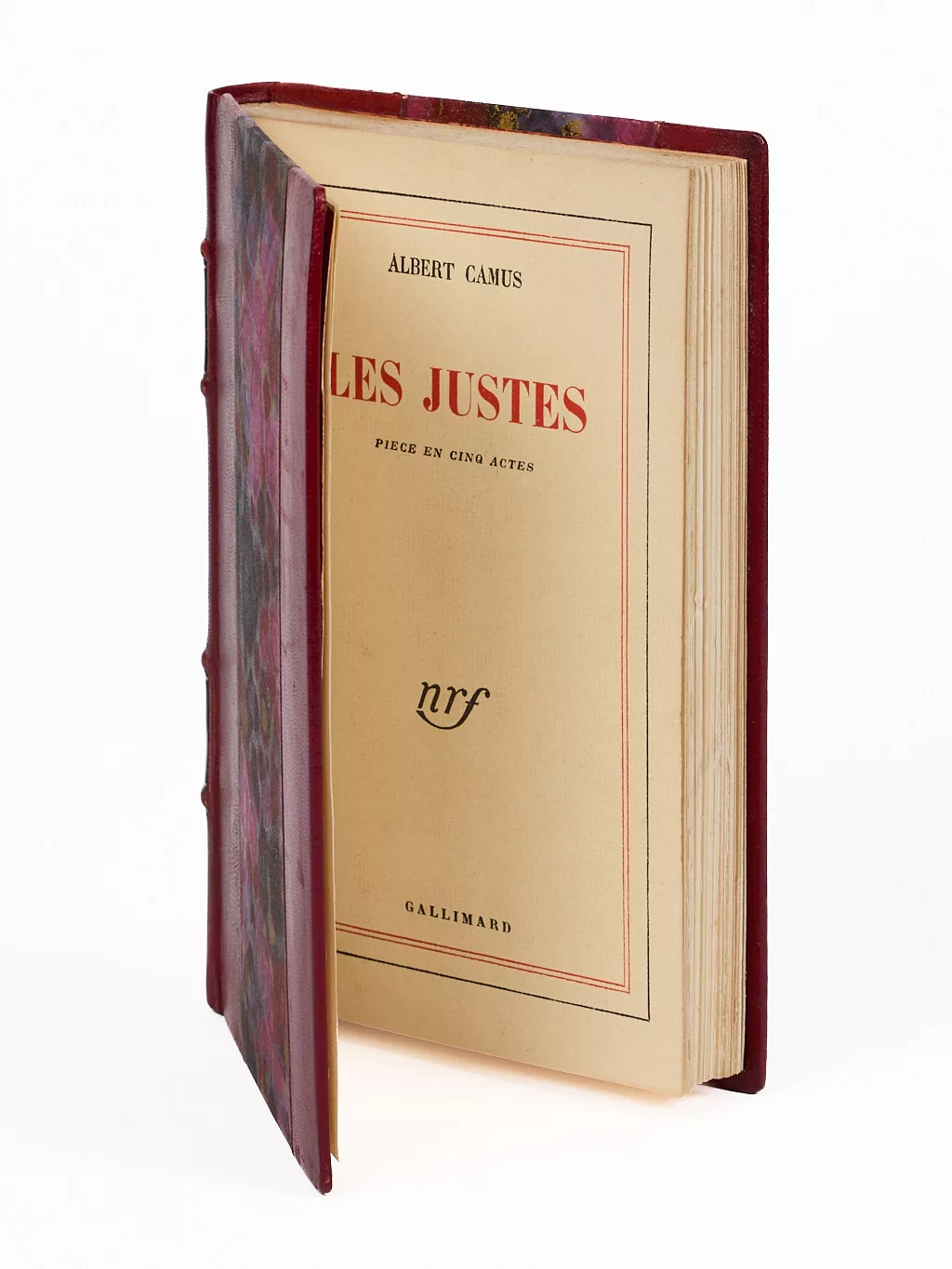
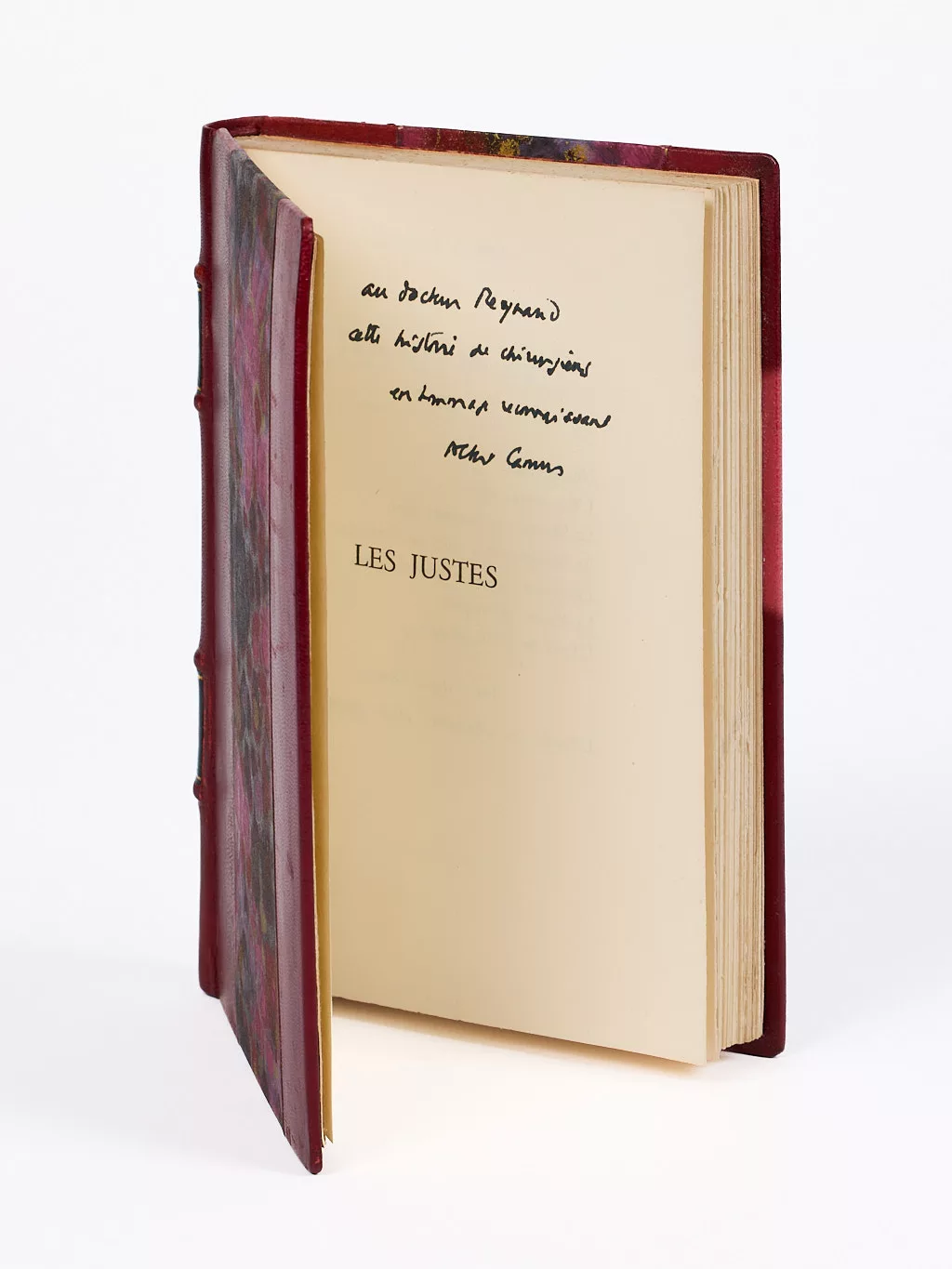
Inscribed and signed: “au docteur Reynaud, cette histoire de chirurgiens, en hommage reconnaissant, Albert Camus.”
Les Justes premiered on 15 December 1949 at the Théâtre Hébertot, directed by Paul Oettly, with Maria Casarès, Serge Reggiani and Michel Bouquet. The play was reasonably well received, though Camus wrote to a friend: “warmly welcomed by some… coldly executed by others. A draw, then.” He was particularly wounded by a review in the journal Caliban, edited by his friend Jean Daniel, to whom he wrote a reply later partly reproduced in Actuelles II.
For Camus, Les Justes was an occasion to debate terrorism and the death of the innocent, and to question justice and the legitimacy of the means employed in the service of an idea. Terrorism, whatever form it takes — revolutionary, patriotic or desperate — remains terrorism. Can the revolutionary kill? Whom? These are the questions around which Camus’s reflection and reading turned, as he worked simultaneously on L’Homme révolté and on this play.
Conceived as a tragedy in the Aristotelian tradition, it sets against one another “characters equal in strength and reason”: the “delicate murderers,” for whom tyrannicide is necessary but inexcusable because it violates a human life, and the assassin-avengers, who despise life and justify means by ends. As Camus explained in the publisher’s insert: “I wanted to show that action itself has limits. There is no good and just action other than one that recognizes these limits and, if it must cross them, at least accepts death. Our world today shows a repugnant face precisely because it is made by men who grant themselves the right to cross these limits — that of killing others without ever paying with their own person. Thus does today’s justice serve as an alibi for the assassins of all justice.”
A good copy in a modest but well-made binding, one of 220 copies on alfa mousse paper.
The deluxe issue preceding it comprises only 13 copies on vergé de Hollande and 70 on pur fil paper.