

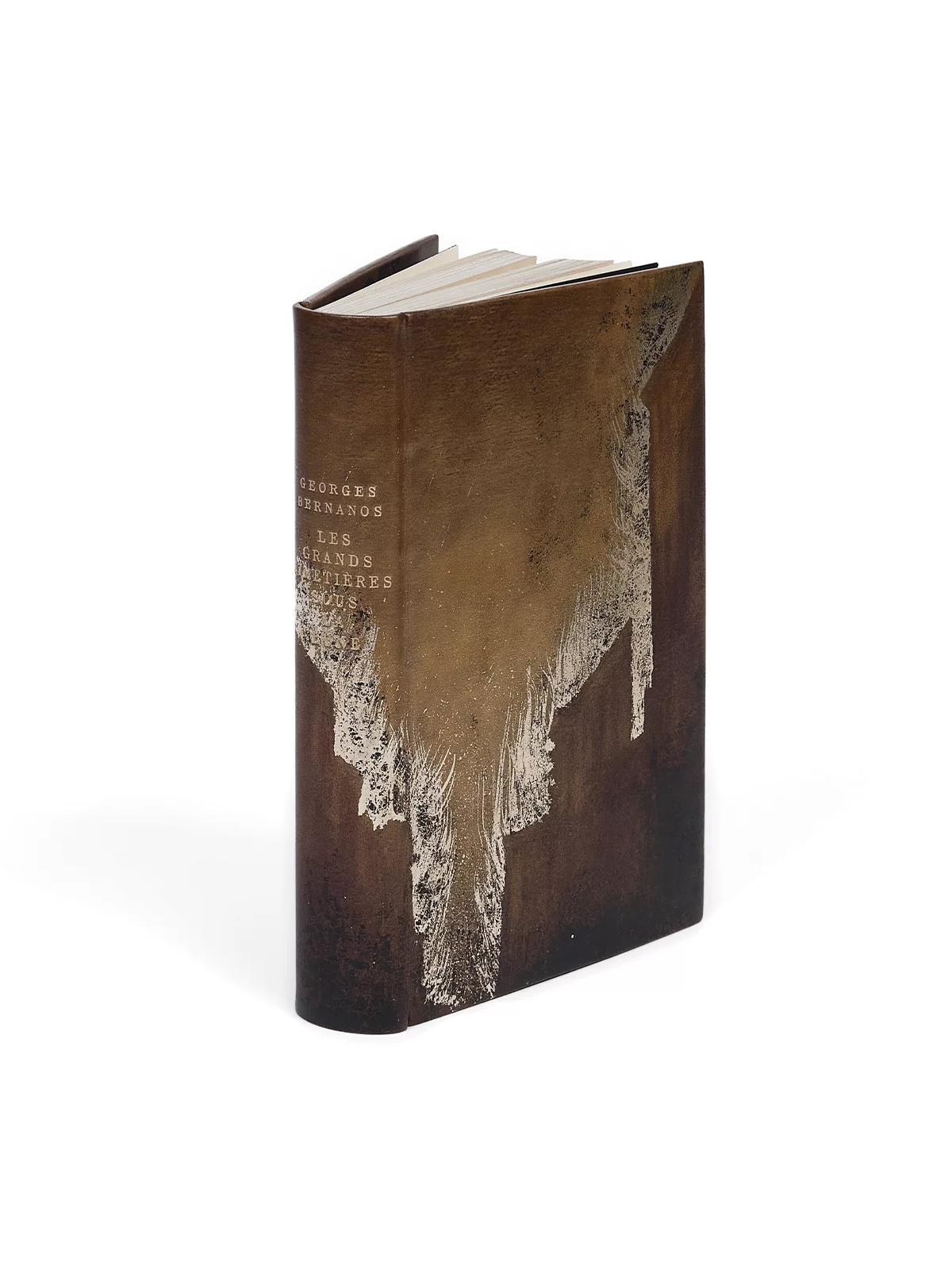
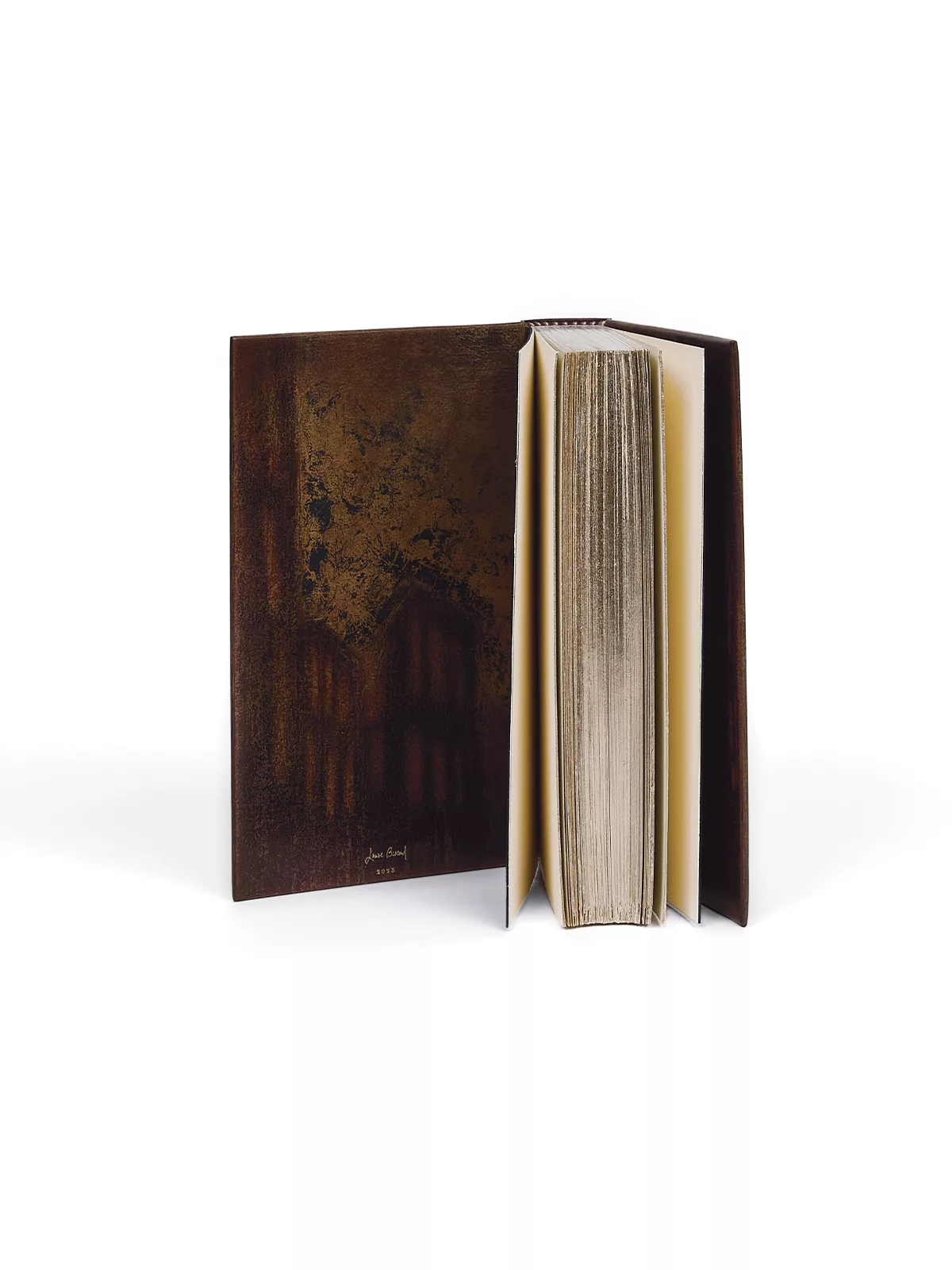
Les Grands Cimetières sous la lune
One of 22 copies from the deluxe issue on Japanese paper (no. 10).
Bernanos had been living in Palma de Majorca for two years when, on 17 July 1936, the Francoist coup attempted to overthrow the Frente Popular elected the previous February. His initial enthusiasm was short-lived. He quickly recoiled in horror from the advancing barbarity, supported by the Spanish clergy, and, as a witness to the convoys of condemned men, began writing his journal of the Spanish war, the first draft of Les Grands Cimetières sous la lune. Perhaps more than anyone, the philosopher Simone Weil understood this text, honoring Bernanos with this remark: “You are a royalist, a disciple of Drumont — what does that matter to me? You are incomparably closer to me than my comrades of the Aragon militias — comrades whom, nonetheless, I loved.”
The last article Bernanos contributed to the journal Sept, while still in Palma, reveals the premonitory character of the Grands Cimetières to come: “I fear for the world the ferocity of cowards. I feel it coming.” (18 January 1937). Almost certainly begun in Majorca between January and March 1937, the writing of Les Grands Cimetières continued in France, at Nogent-sur-Marne and then at Toulon from summer 1937 to spring 1938, when Bernanos completed it. His publisher, Plon, brought it out on 28 April 1938, three months before the writer’s exile. This “prophet’s book,” as Emmanuel Mounier called it, is a profoundly courageous text, written against those who had initially enjoyed its author’s sympathy. On 20 July 1938, Bernanos left Europe for Latin America: “True French thought must take shape outside France, because the atmosphere in which one lives there prevents it from blossoming” (letter to Father Bruckberger).
Bernanos’s “external resistance” took shape in the aftermath of the Munich Agreements. He would henceforth forbid himself from writing fiction.
The war writings were yet to come…