

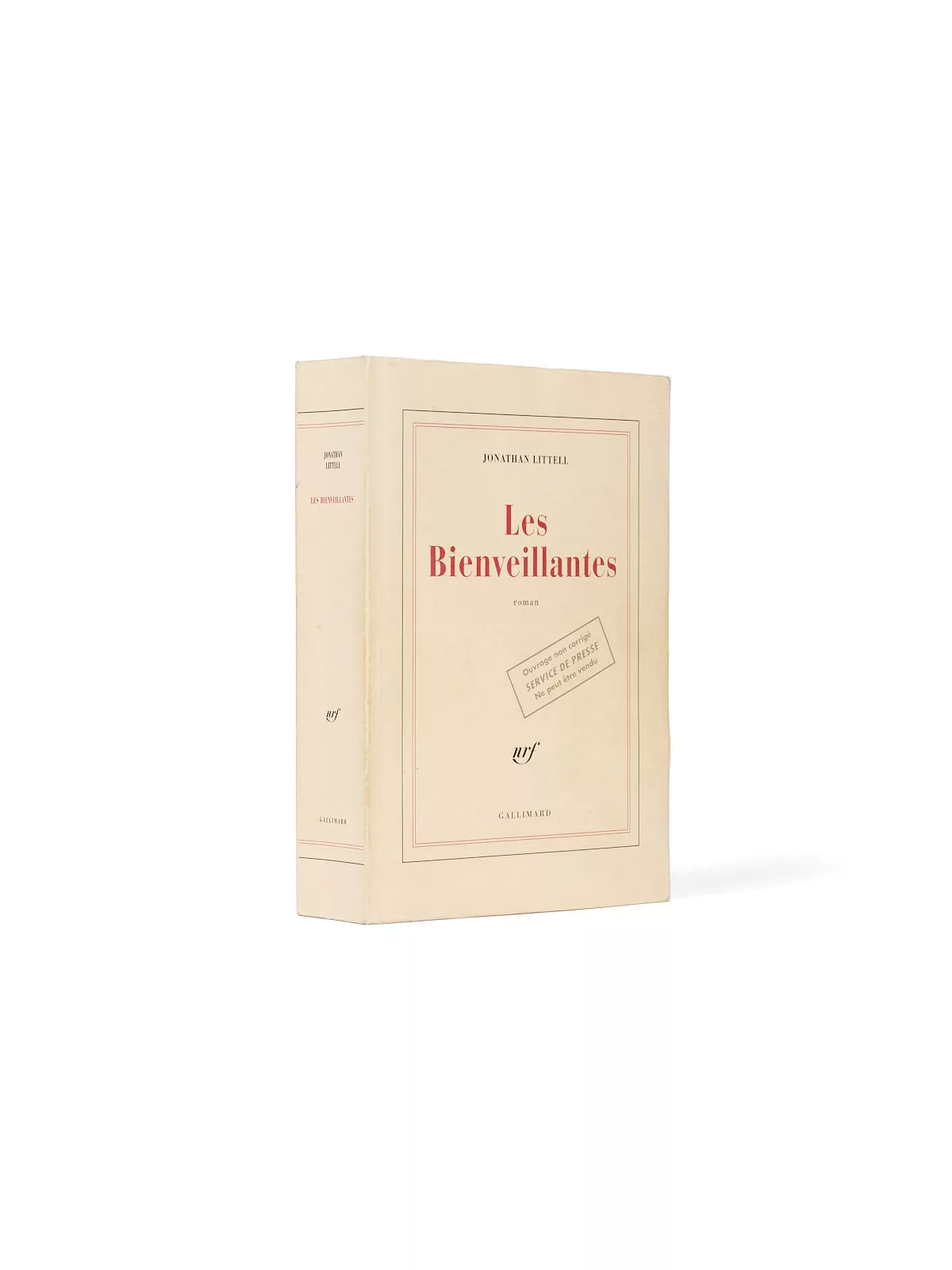
Les Bienveillantes
Proof copy stamped: “Ouvrage non corrigé - Service de Presse - Ne peut être vendu.”
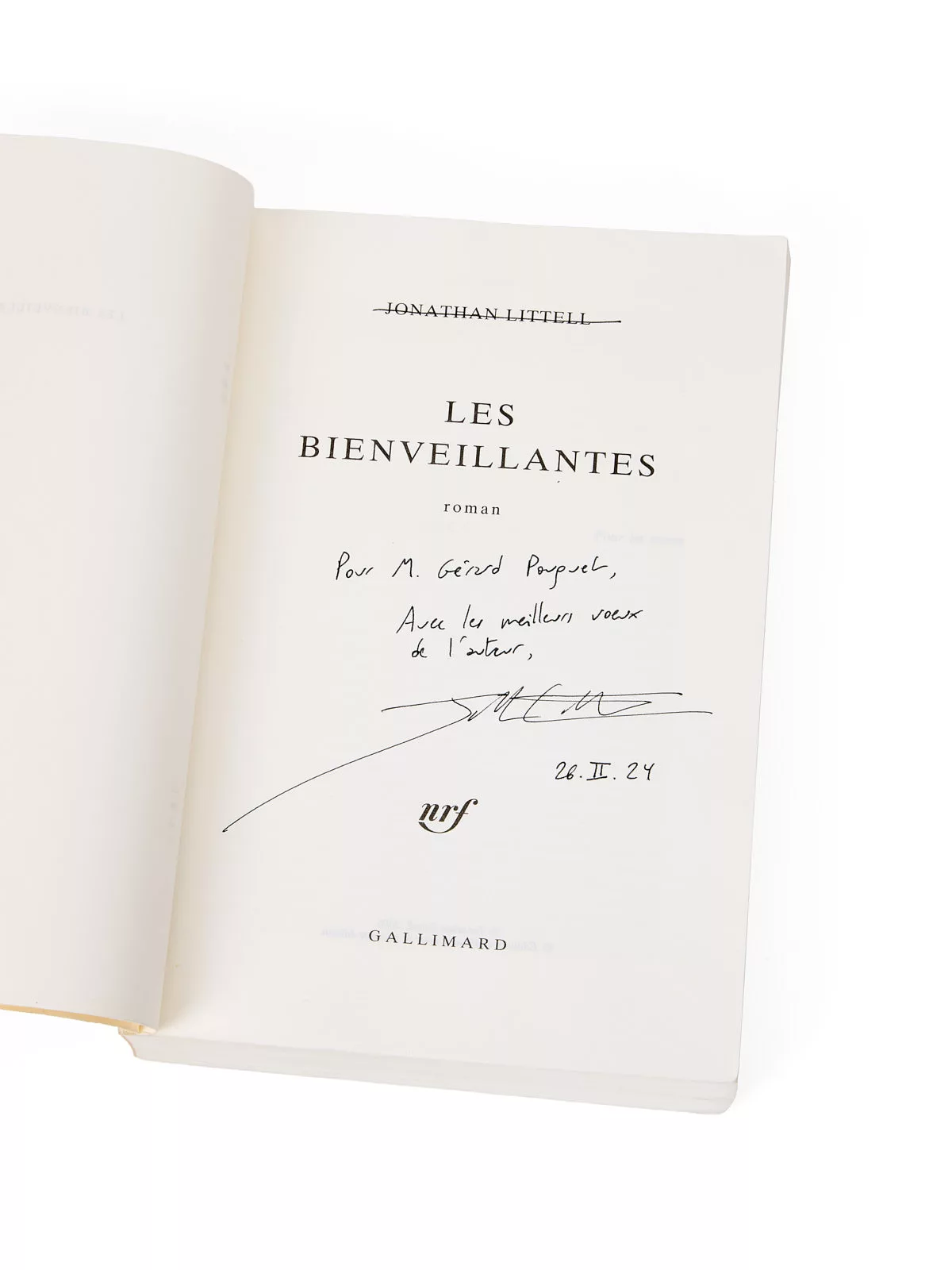
Signed presentation inscription: “Pour M. Gérard Pouguet avec les meilleurs vœux de l'auteur, Jonathan Littell, 26.II.24.”
Jonathan Littell undoubtedly upended the established order with Les Bienveillantes. On its back cover, Gallimard did not hold back, invoking Visconti’s Les Damnés (The Damned) and Grossman’s Vie et destin (Life and Fate), to which Georges Nivat added Dostoevsky’s The Brothers Karamazov and Demons: Les Bienveillantes “is not a revolution in writing, it is a revolution in fictional cargo: a vessel laden with so much history, night, blood and instinct that our ports had not received its like in a long time.” One might also have added Malaparte’s terrible Kaputt, and the quay would have been full to bursting.
“The more I read texts by executioners, the more I realized there was nothing there. I would never be able to proceed within the register of classic fictional recreation, with an omniscient author, Tolstoy-style, arbitrating between good and evil. The only way was to put myself in the executioner’s skin,” the better to let others speak, since Littell wanted a narrator who could be lucid, detached: “Readers focus a great deal on Max, but for me all the others, everyone Max describes, were just as important. Whether Eichmann, Rebatet, or the people I invented, I tried to show the whole range of Nazis that could exist, from the ordinary rank-and-file Nazi up to Himmler. And Max as a figure served that purpose for me. He could observe. I read an article by a French historian who put forward the very interesting idea that Max was lying. I had never thought of that. Is a Nazi who is not antisemitic, who does not read Rosenberg and who prefers Flaubert, credible? There is no reason to take that man at his word. Maybe he is lying, but maybe he was completely antisemitic, reading Rosenberg, Hitler, Streicher” (lecture at the Berliner Ensemble, Bertolt Brecht’s emblematic theater, March 30, 2008).
An extremely rare June printing, in uncorrected proofs, issued in a small number of copies.