

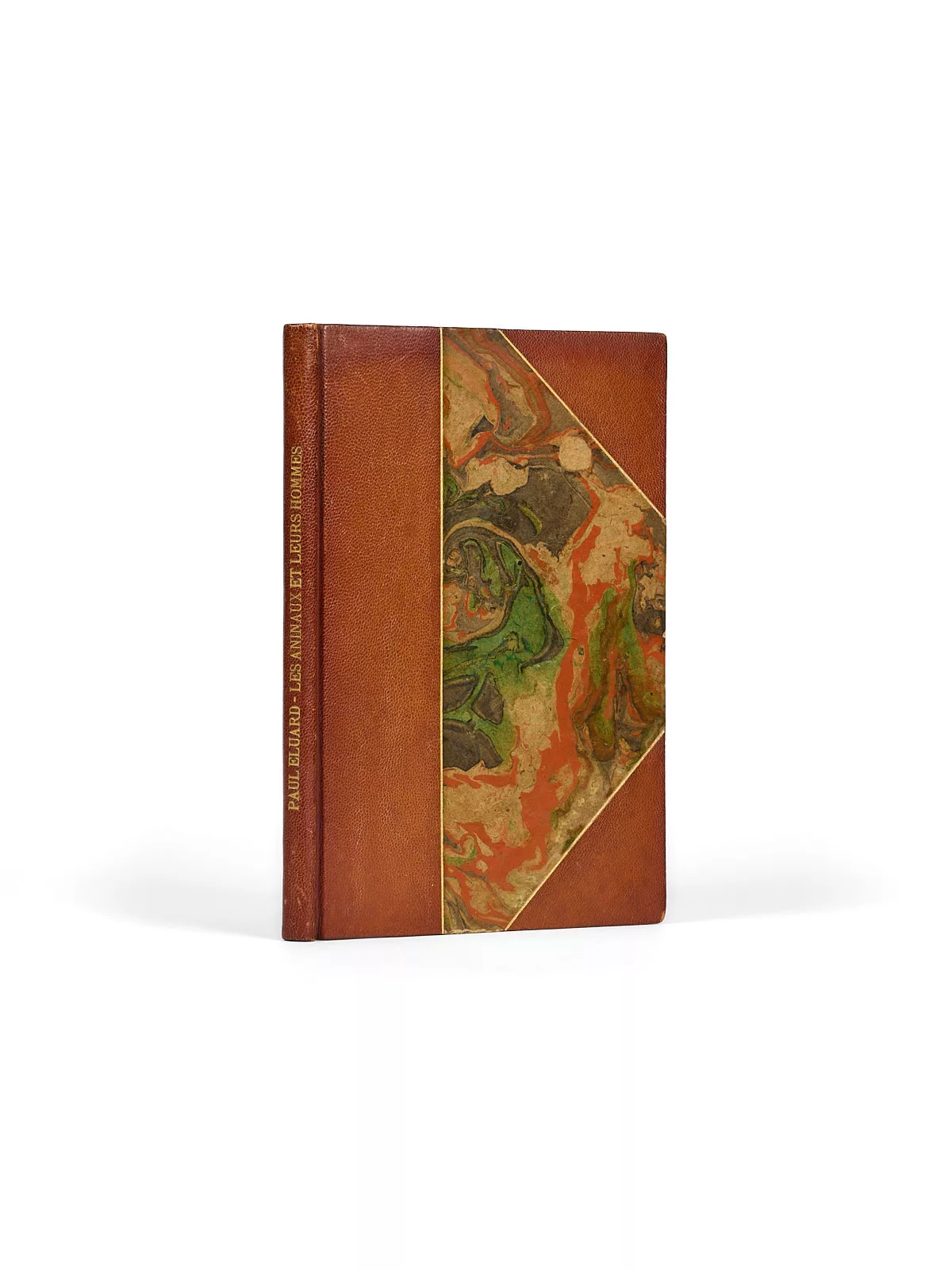
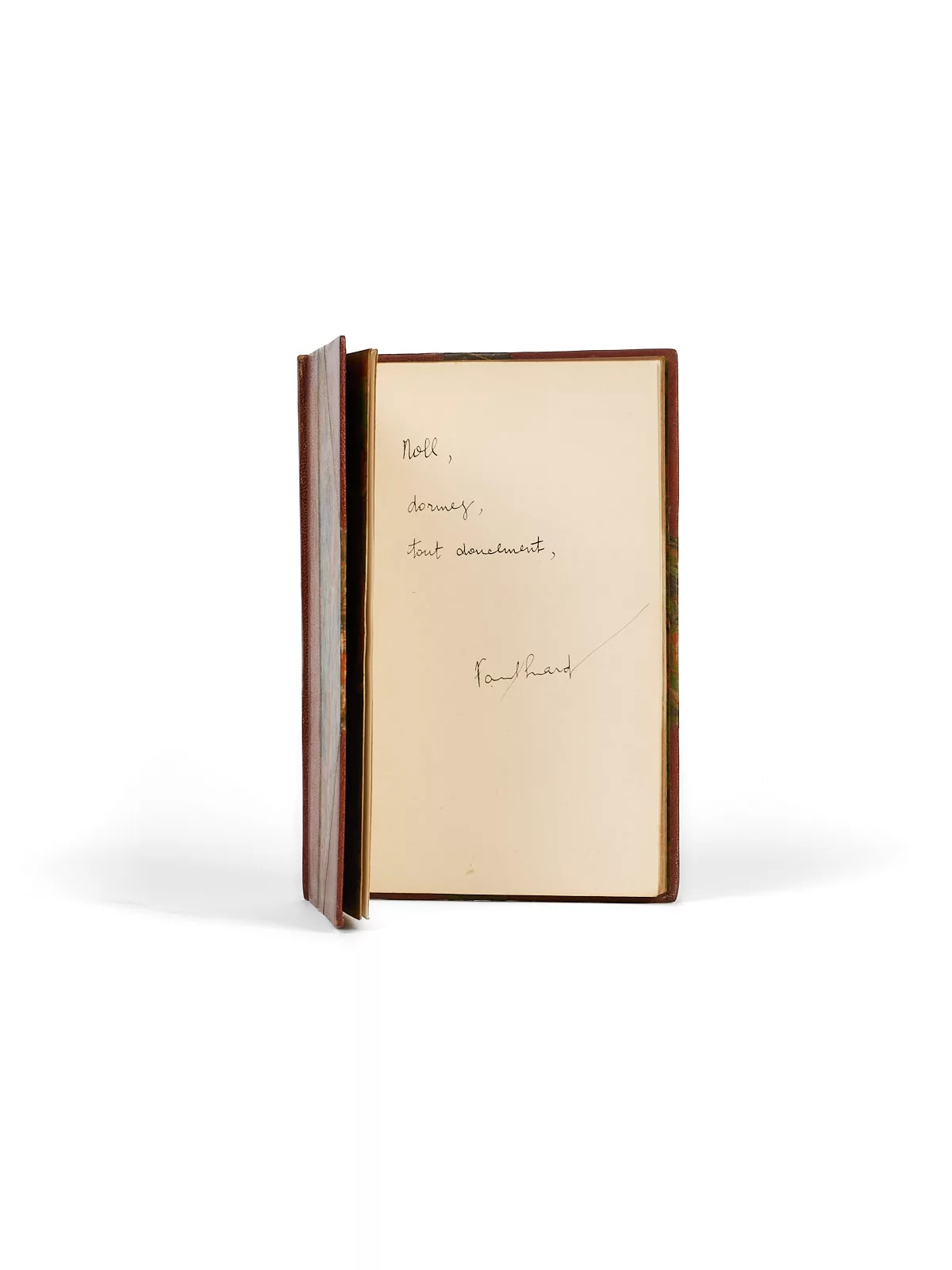
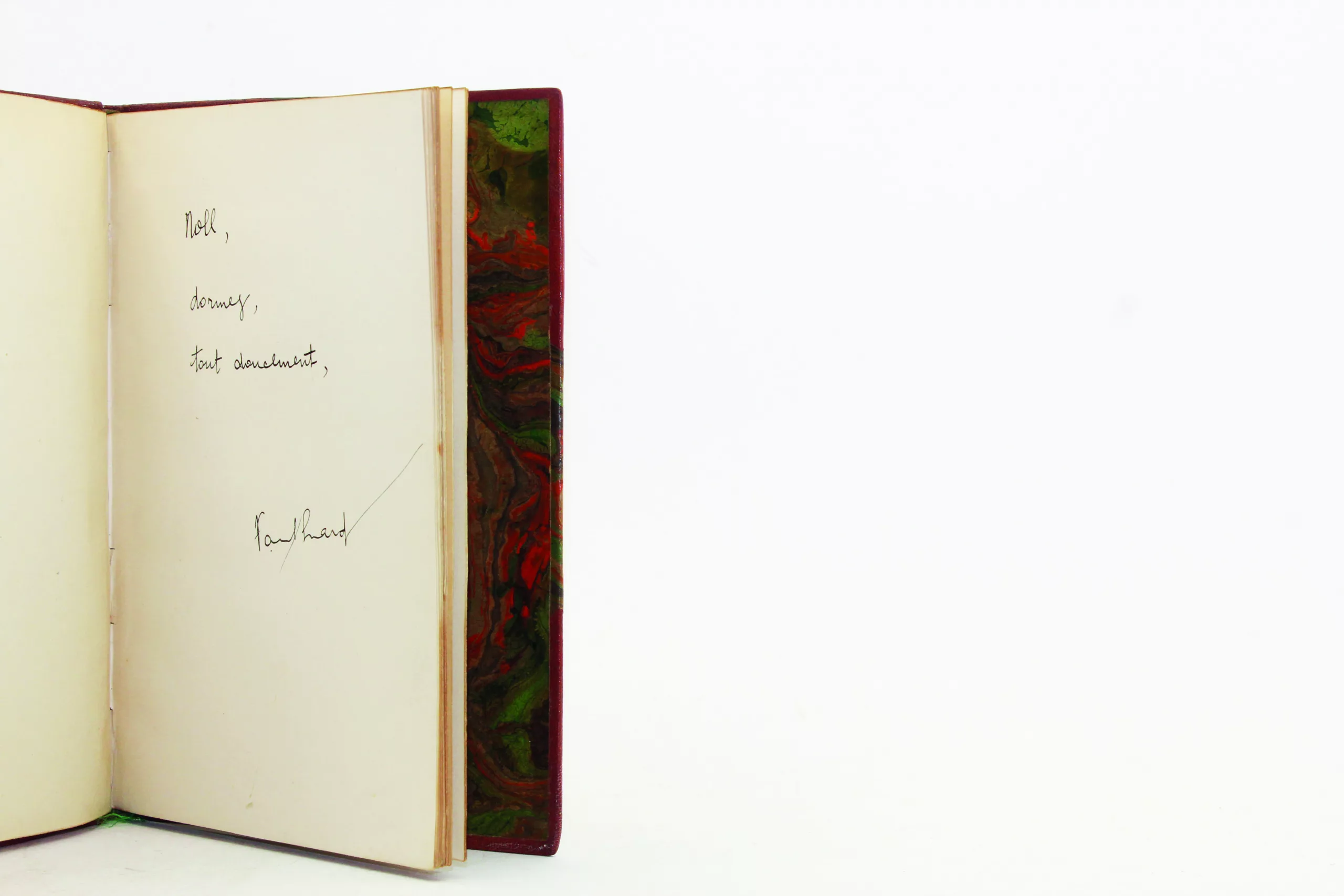
Signed presentation inscription: “Noll, dormez tout doucement, Paul Éluard.”
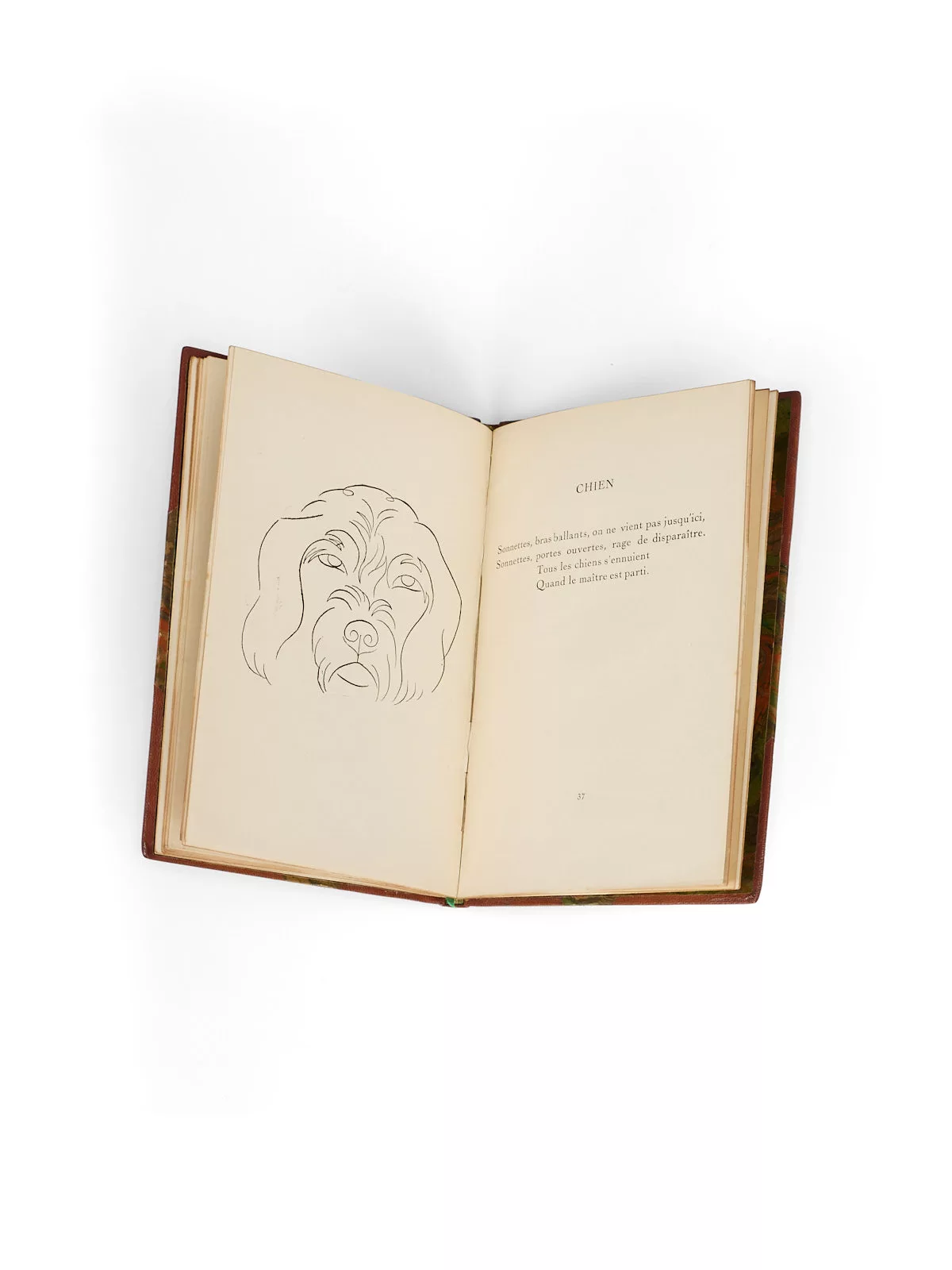
Les Animaux et leurs hommes is Paul Éluard’s first collection to show the influence of Dada. It marks his true entry into the Parisian Dada group and stands as his first literary manifesto, written a few months after he met André Breton, the future leader of the Surrealist movement.
This copy is inscribed to a fellow writer, Marcel Noll, to whom Éluard had already sent, three years earlier, Le Devoir et l’Inquiétude, with an already dreamlike inscription: “à Marcel Noll, pour que la phrase prédominante s’abaisse au silence.” Noll himself remains a somewhat mysterious figure: present everywhere in the early days of Surrealism, he contributed to the group’s magazines and later to L’Humanité. Together with Breton and Éluard, he was close to Denise Lévy — cousin of Simone Kahn, whom Breton married in August 1921 — with whom he was hopelessly in love.
From 1922 Noll was a regular presence in the circle of friends who gathered at Simone and André Breton’s studio, writing and traveling together. Marguerite Bonnet’s note for the Pléiade edition lists Noll’s contributions to La Révolution surréaliste (no. 1, December 1924, as well as the issues of 15 July 1925, 15 June and 1 December 1926) and his role as manager of the Galerie surréaliste in 1926. Ten years later, Noll “is said to have disappeared in Spain during the civil war” (Pléiade, pp. 1194–95). Aragon dedicated chapter III of Le Paysan de Paris (1926) to him; Breton dedicated the poem “L’Aigrette” in Clair de terre to him, and in Nadja (1928) Breton recalls visiting, one day in 1926, “avec Marcel Noll au ‘marché aux puces’ de Saint-Ouen…”
The entry in the Maîtron [Dictionnaire biographique du Mouvement ouvrier] states: “Noll came into contact at a young age with Breton and Éluard through Denise Lévy, née Kahn, an art lover who, like him, lived in Strasbourg (Haut-Rhin) and was a cousin of Simone Breton. Noll’s name appears in the table of contents of La Révolution surréaliste from its very first issue (1924). As a journalist, he wrote and sometimes signed (in 1925) the review of reviews in the columns of L’Humanité. Working as an art dealer, he held responsibilities at the Galerie surréaliste, opened in March 1926. He later worked for the German-language edition of L’Humanité de Metz. In a 1932 letter to Breton, he mentions reporting on Surrealist activity there. […] He died on 5 January 1937 on the Madrid front.”