

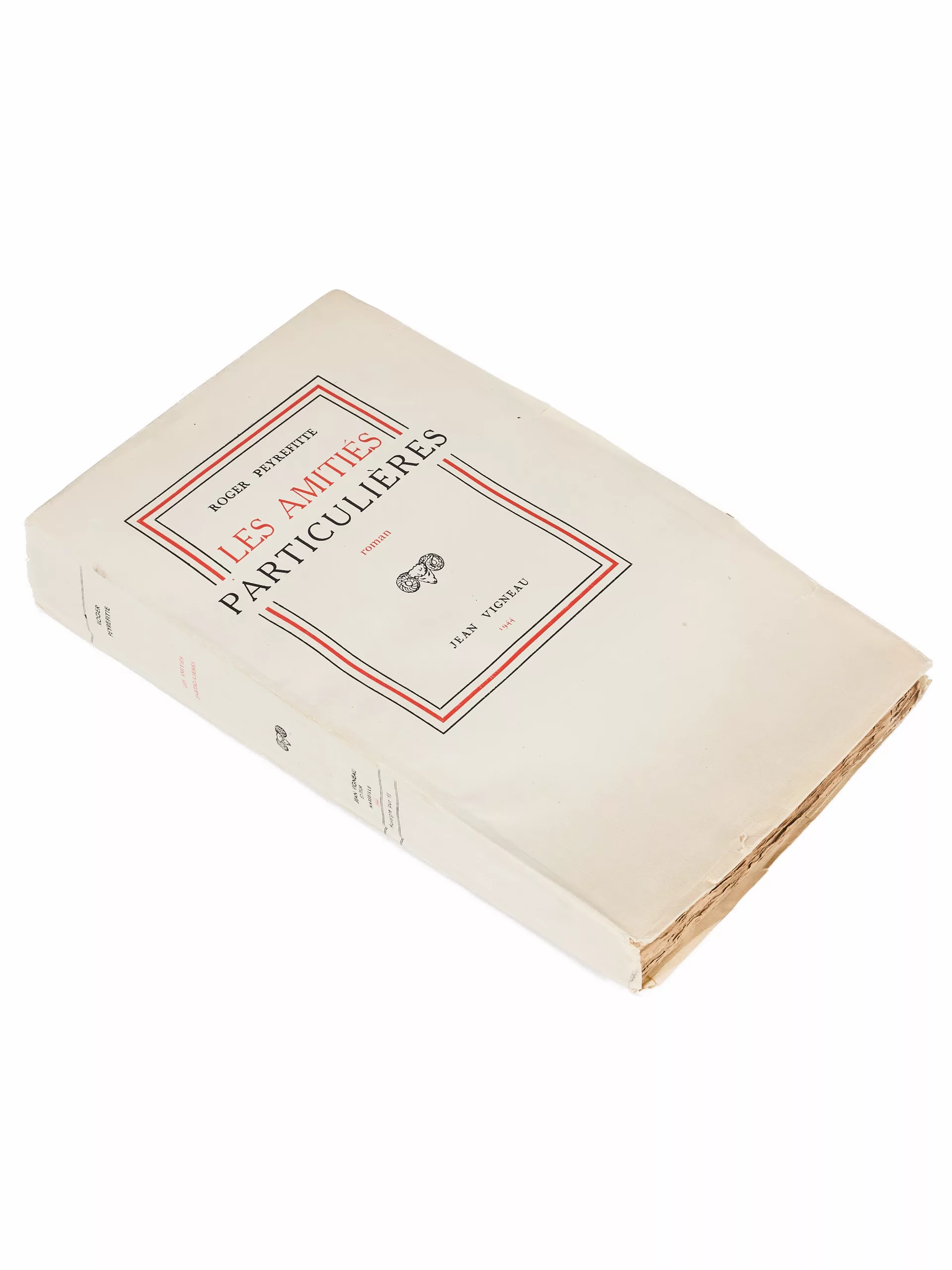
Les Amitiés particulières
The Prix Goncourt for 1943 had been awarded by correspondence, with votes cast remotely because of the war. In 1944, the Académie Goncourt therefore decided to wait for calmer times, especially since three members of the jury had been removed for collaboration (Ajalbert, Guitry and Benjamin). In 1945, two Goncourt prizes were consequently awarded: that of the current year (to Jean-Louis Bory, for Mon village à l’heure allemande) and that of the previous year. Two titles reached the final round: Les Amitiés particulières and Elsa Triolet’s Le Premier accroc coûte deux cents francs. The former was rejected for “reasons foreign to literature”: “Once agreement has been reached on talent, there are two ways of awarding a literary prize: either to discover, or to consecrate. This year the Académie Goncourt had the choice. It could discover an unknown author of great literary qualities, Mr. Roger Peyrefitte, and crown him for his first novel, Les Amitiés particulières, whose subject is specious and which already has readers; it preferred to consecrate the already established reputation of Mme Elsa Triolet (…). The Goncourt jury played it safe, and I, for one, will not blame them, having read the various writings of their laureate with great pleasure” (Émile Henriot, in Le Monde, 4 July 1945).
This crowning of Aragon’s wife earned a scathing comment from Paul Léautaud: “The Goncourt jury pulled off a triple coup: Madame Triolet is Russian, Jewish and Communist. It is a prize sewn with red thread.” But, as Pierre Assouline points out, “the Liberation-era Goncourt could not escape the spirit of the times, especially since Elsa Triolet was the first woman to win it.”
Peyrefitte, however, found consolation in the Prix Renaudot, awarded by the neighboring academy. A civil servant and diplomat, he had given up his position to devote himself to writing his novel, which caused a scandal: the portrait — though rather discreet and classical in form — of the budding love between two young boys within a religious institution shocked many readers. Twenty years later, the film adaptation would do the same.
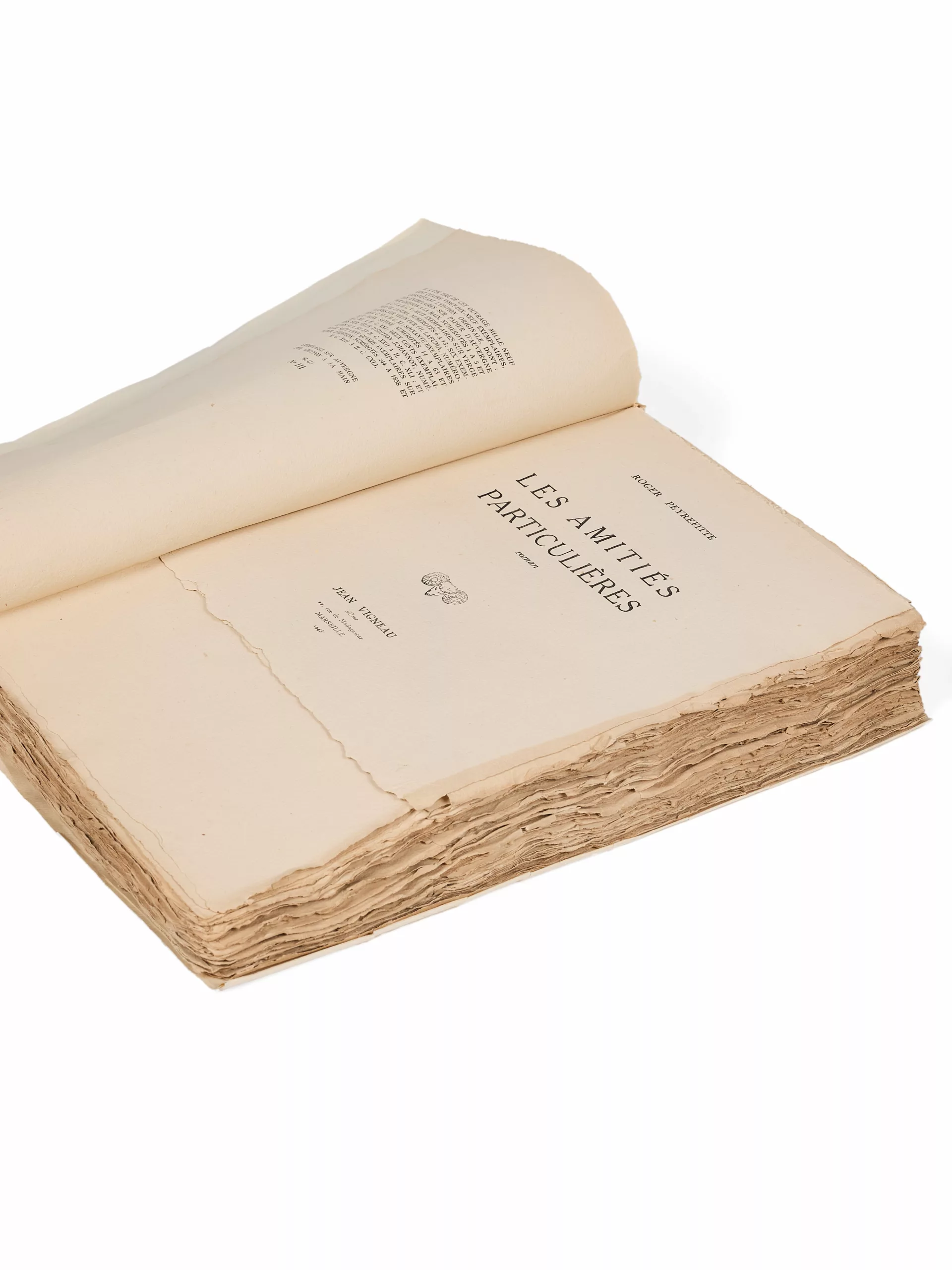
A spectacular copy that has retained its (enormous) deckle edges.
“À toutes marges” takes on its full meaning here!