

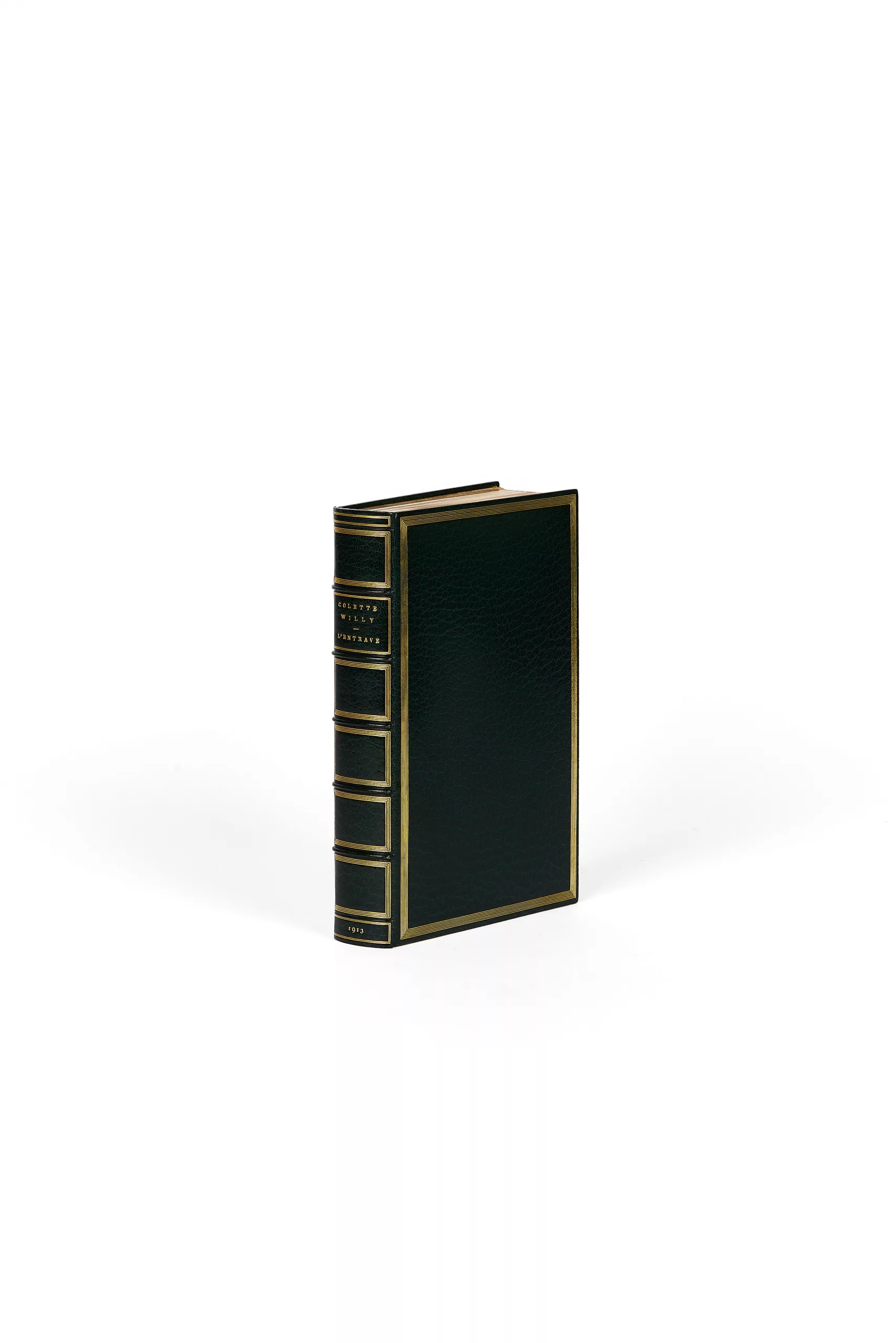
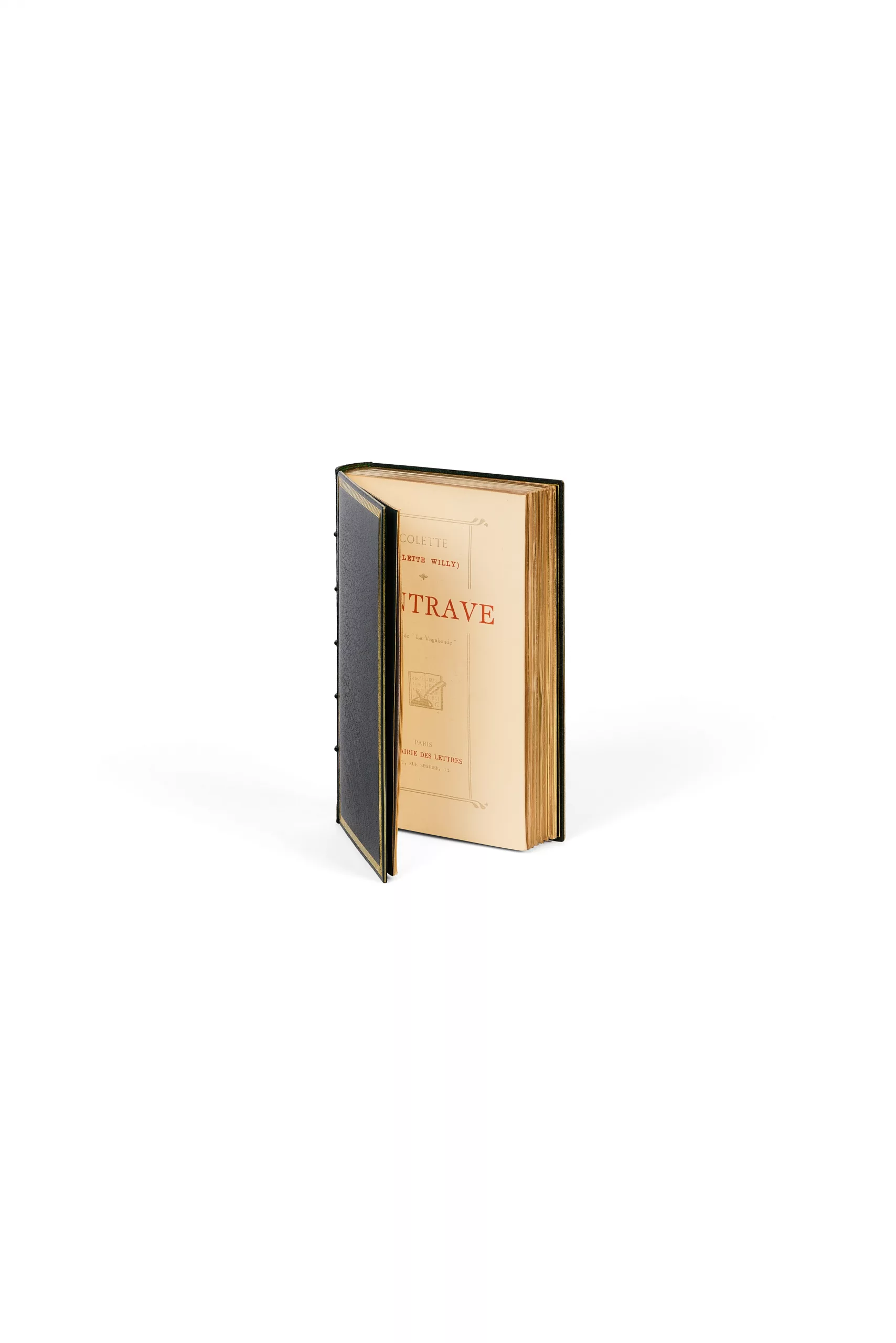
L’Entrave
One of 130 copies on tinted Hollande paper (no. 30), after 10 hors commerce réimposé copies.
L’Entrave, the sequel to La Vagabonde, first appeared in serial form in La Vie parisienne from 15 March to 25 October 1913, with an interruption between July and September due to the birth of Colette’s daughter, Gabrielle: “[…] the child and the novel were both racing toward me… the child made clear it would arrive first, and I capped my pen” (Colette, in L’Étoile Vesper).
Colette had married Henry de Jouvenel in 1912, and their daughter Sido was born in 1913. The life of the couple lies at the heart of the novel, which continues on from La Vagabonde, ending with the break with Maxime. The novel is notable for its many observations on the uncertainty of women living alone, followed by variations on the dynamics of a couple — the scenes between Jean and May, the confrontations between Jean and Renée, and the contradictions of the narrator, who once again feels the desire to escape the image imposed upon her. The reversal at the end is striking: the narrator reflects that many women first wander, as she did, before returning to their place, which lies short of man’s. The novel was highly praised: critics admired this feminine submission. Rachilde herself approved, writing: “We must first obey our inner laws, which are our instincts and which come from far beyond ourselves.”