

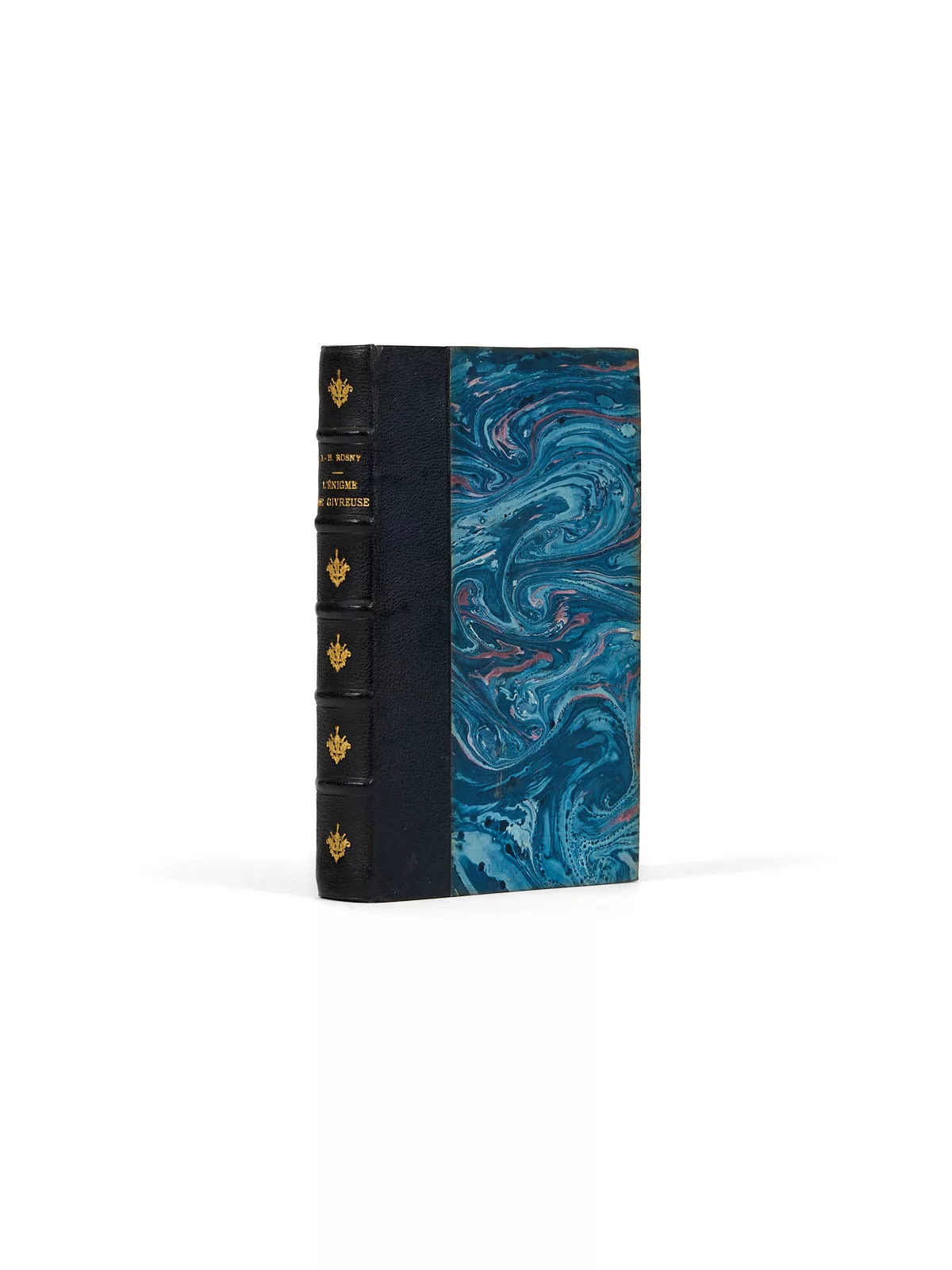
L’Énigme de Givreuse
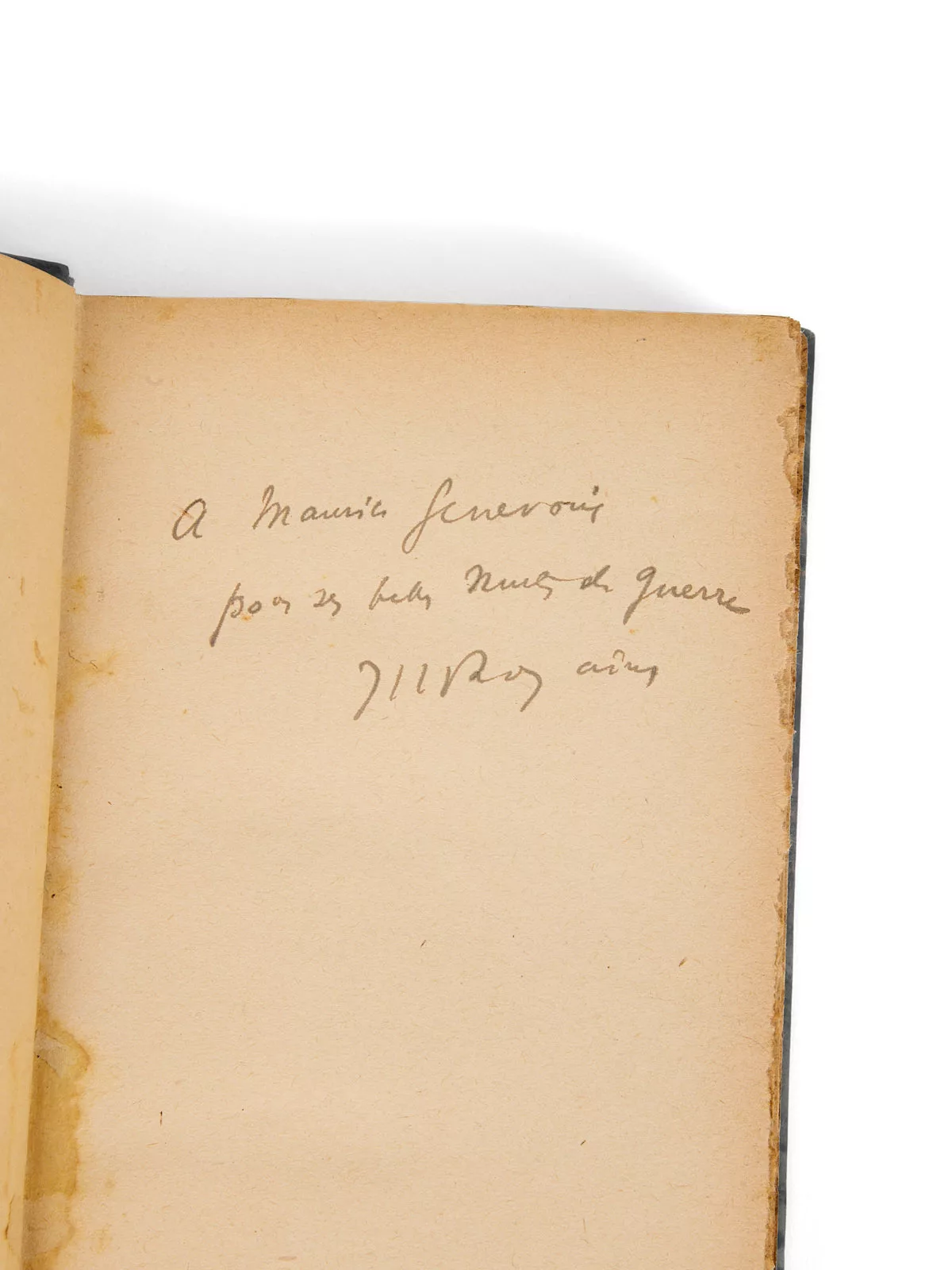
Signed presentation inscription: “à Maurice Genevoix pour ses belles Nuits de guerre, J.-H. Rosny aîné.”
An unexpected incursion of the war into the realm of science fiction: serialized from December 1916 in La Revue de Paris, L’Énigme de Givreuse recounts the singular fate of Pierre de Givreuse, a soldier wounded in the trenches who finds himself duplicated into two rigorously identical beings. The story imagines a molecular bipartition of the individual — a form of cloning avant la lettre — and stands as one of the earliest explorations of the genre set against a world conflict.
Unlike the interchanged characters of Pierre Lemaitre’s Au revoir là-haut, the two “Givreuse” are not doubles with opposing fates, but truly indistinguishable entities, questioning the very definition of identity. A rare novel, as fascinating as it is forgotten.
J.-H. Rosny Aîné (pseudonym of Joseph Henri Honoré Boex), best known for La Guerre du feu, co-written with his brother J.-H. Rosny Jeune, is one of the founding fathers of modern science fiction. He later parted ways with his brother and pursued alone an inventive body of work steeped in scientific speculation. As early as 1917, L’Énigme de Givreuse thus tackles questions of biological duplication, only a few years after the term “clone” was introduced into plant biology by the botanist H. J. Webber.