

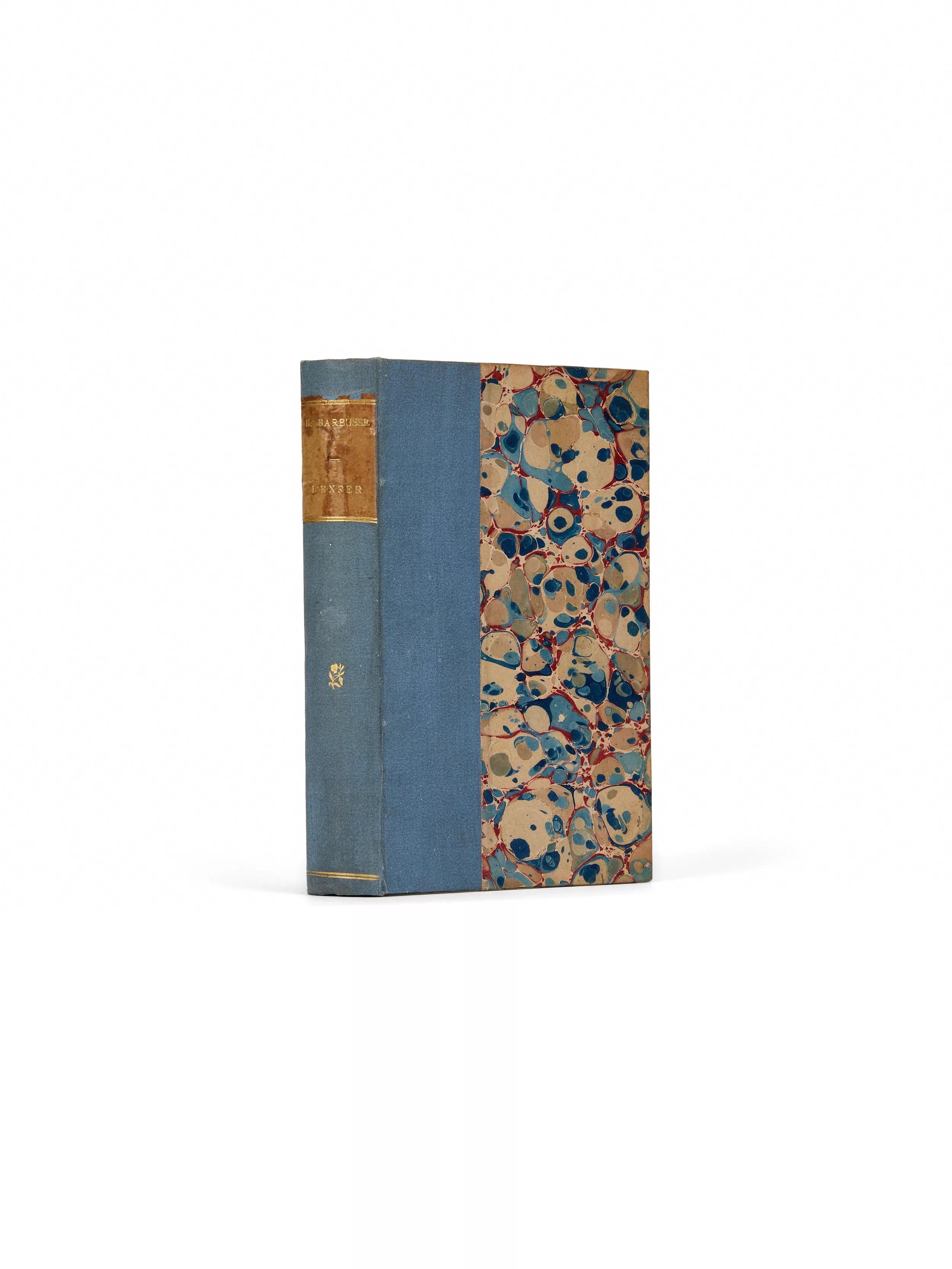
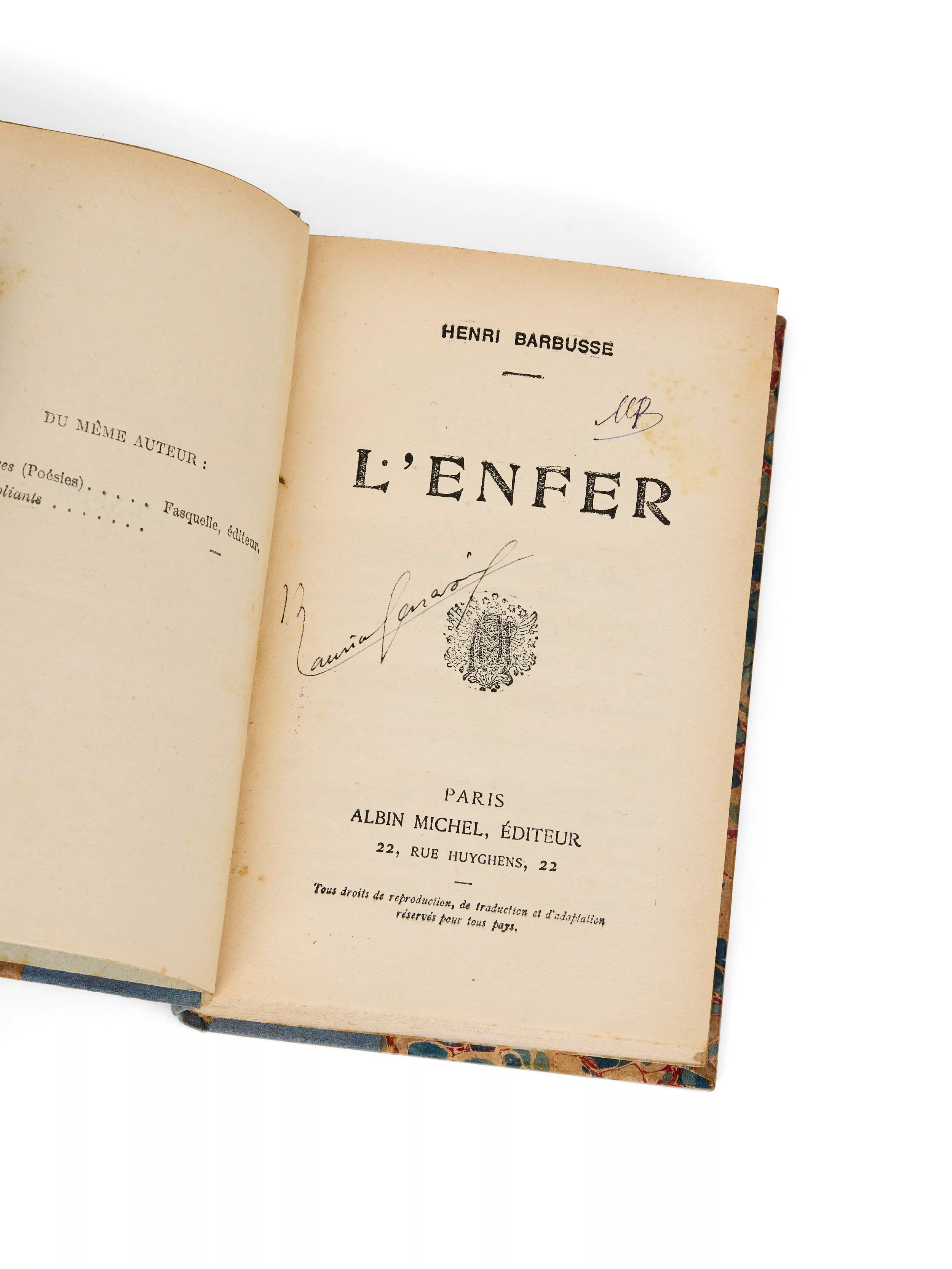
L’Enfer
L’Enfer was published in 1908: it was Henri Barbusse’s first novel, marked by naturalist and decadent influences. This attack on society and its institutions still provoked reactions a decade later: in late July 1917, Barbusse was attacked in the Chamber of Deputies, where Jules Delahaye, a Catholic and royalist deputy, accused the Radical-Socialists of supporting a writer who could spread “doctrines of treason and suicide” with impunity, supporting his argument by reading passages from L’Enfer, which, according to the deputy, contained “ideas more destructive than war itself” (cited by Lindner-Wirsching, in La réception du roman Le Feu de Barbusse en France et en Allemagne).
Seven months earlier, Barbusse had won the Prix Goncourt, a prize he had mentioned as early as October 1916, admitting he had hoped for it for his first novel, which had indeed caught the jury’s attention: “I admit that 5,000 francs is good to take — but it is a bit late to give it to me after having first refused it to Les Suppliants and especially to L’Enfer” (in Lettres de Henri Barbusse à sa femme, 1914–1917, Flammarion, 1937, p. 236). But that year the jury instead crowned Francis de Miomandre, after Octave Mirbeau opposed Barbusse’s candidacy, arguing that this candidate, of comfortable means, had no need of the prize’s 5,000 francs.
When L’Enfer appeared, Maurice Genevoix was at Sceaux, in the preparatory class at the Lycée Lakanal. He would enter the École Normale Supérieure in the autumn of 1911.
From the library of the Vernelles, with bookplate.