

L’Église
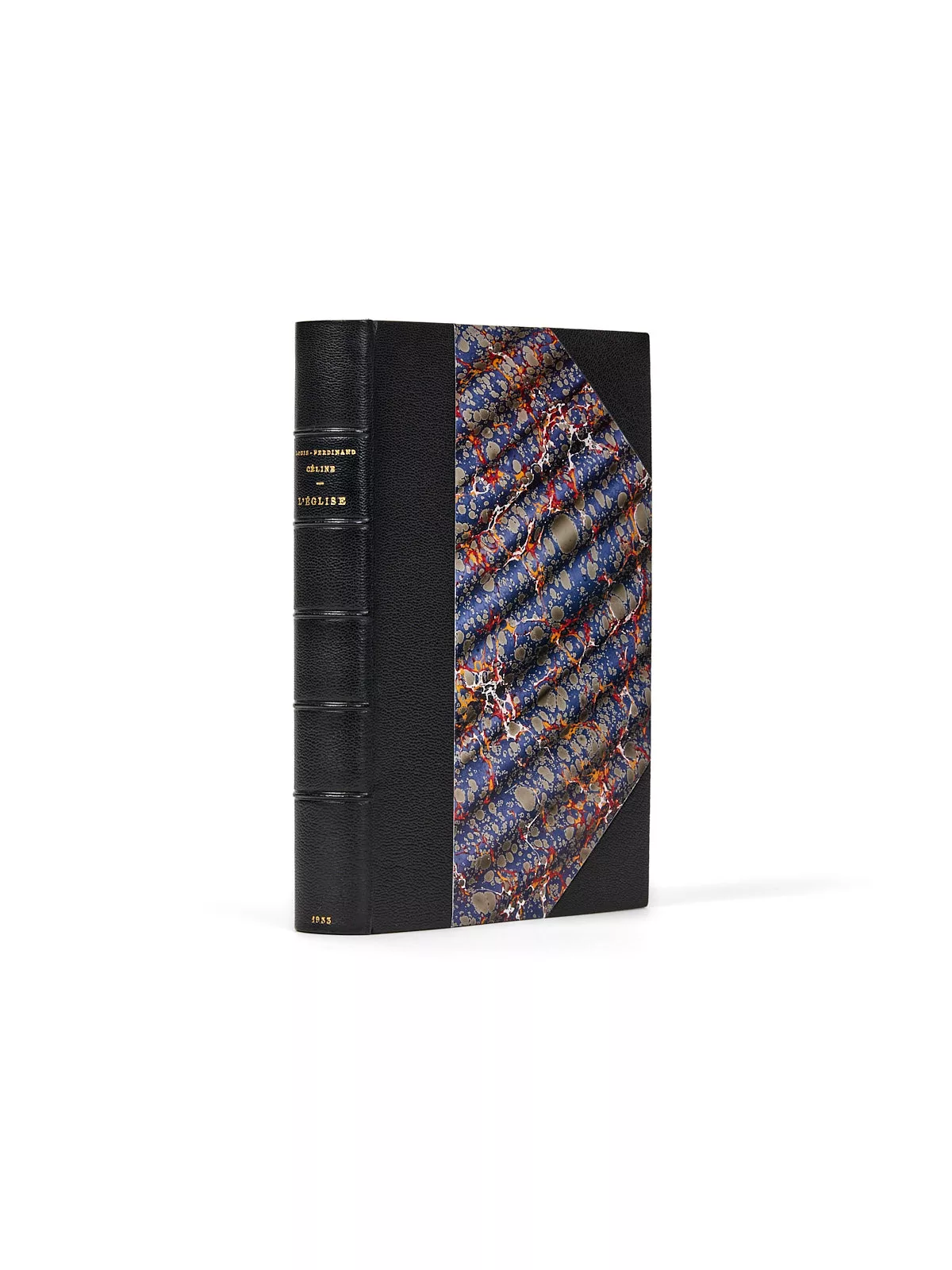
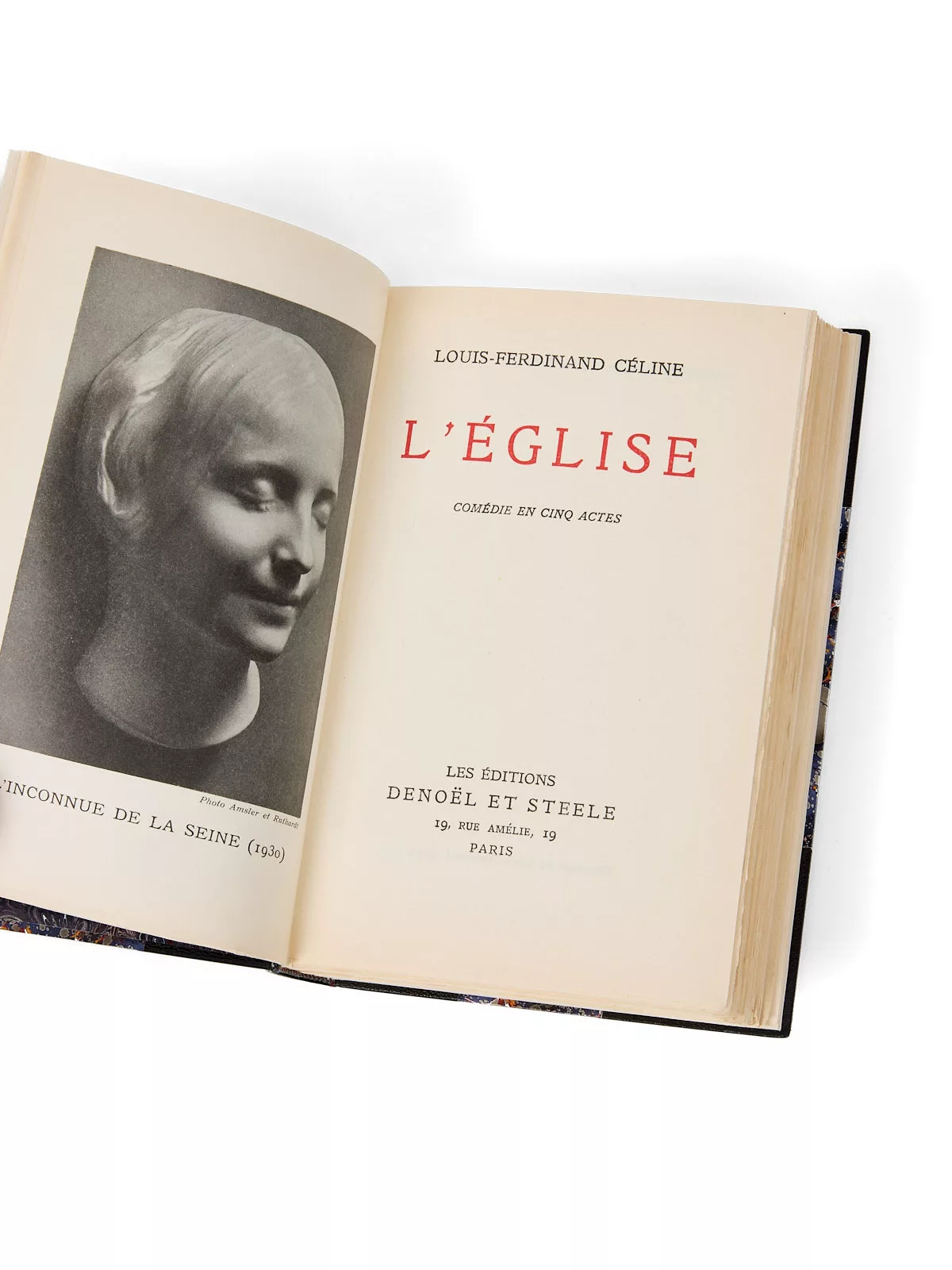
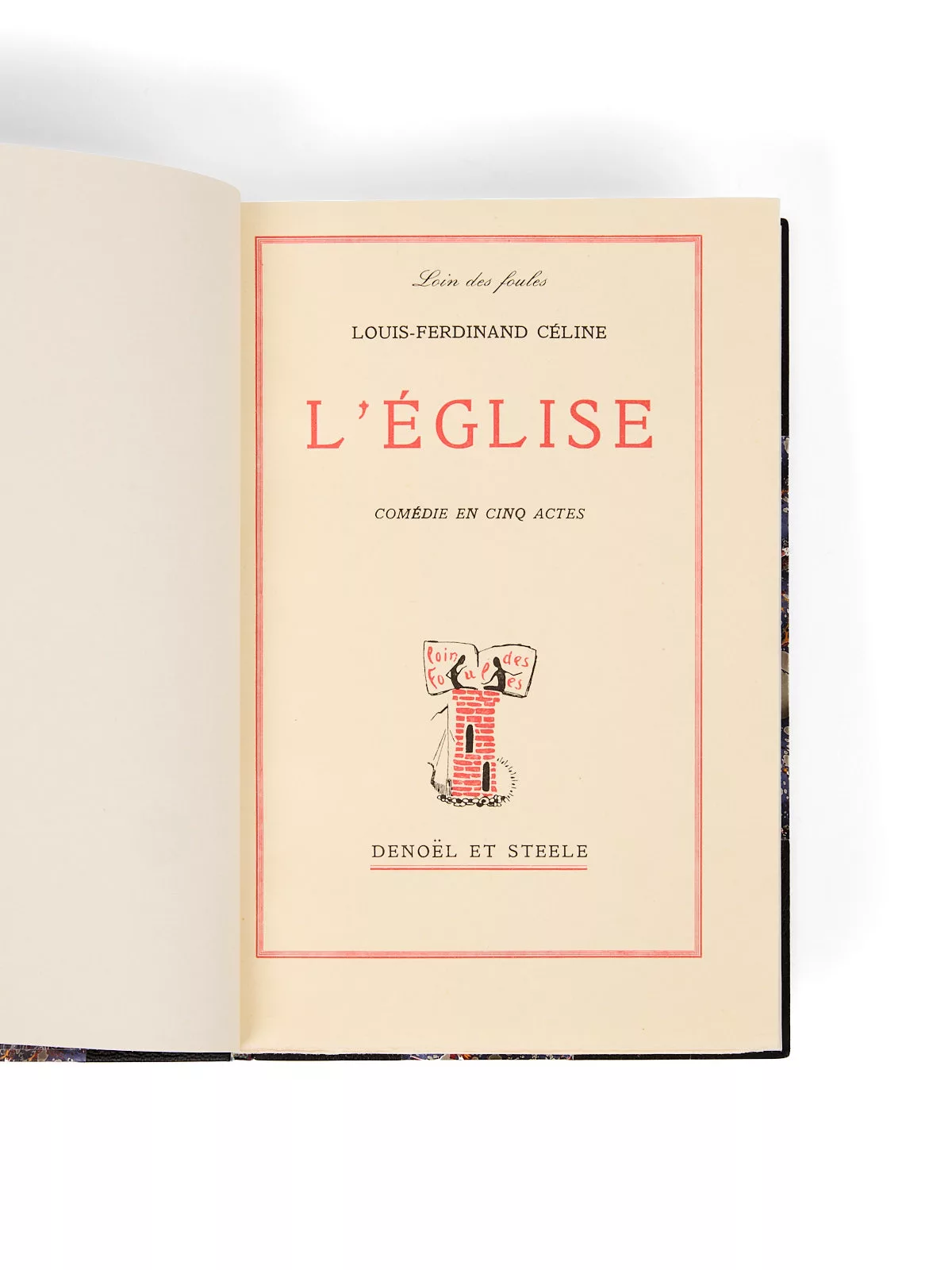
One of 20 copies on Hollande paper (no. 7) — after five copies on Japanese paper.
Céline’s only foray into theater, L’Église, written in 1926, already features Doctor Bardamu, later the hero of Voyage au bout de la nuit (Journey to the End of the Night, 1932). It contains all the great Célinian motifs: colonial Africa, America, Geneva and its League of Nations, the Parisian suburbs.
The text had a direct influence on the following generation: Jean-Paul Sartre used as the epigraph to La Nausée (Nausea, 1938) Yudenzsweck’s line about Bardamu: “C’est un garçon sans importance collective, c’est tout juste un individu.” Likewise, in the mouth of this director of the “Service des compromis” in Geneva can be read an ironic and striking portrait of Bardamu, opposing the individual to the collective: “Il m’intéressait assez jusqu’au moment où j’ai compris ça. Alors, j’ai cessé de l’écouter, par discipline. C’est du poison qu’ils parlent, les individus.” A formula that condenses the existentialist posture avant la lettre.
A fine copy, finely bound by Goy & Vilaine.