

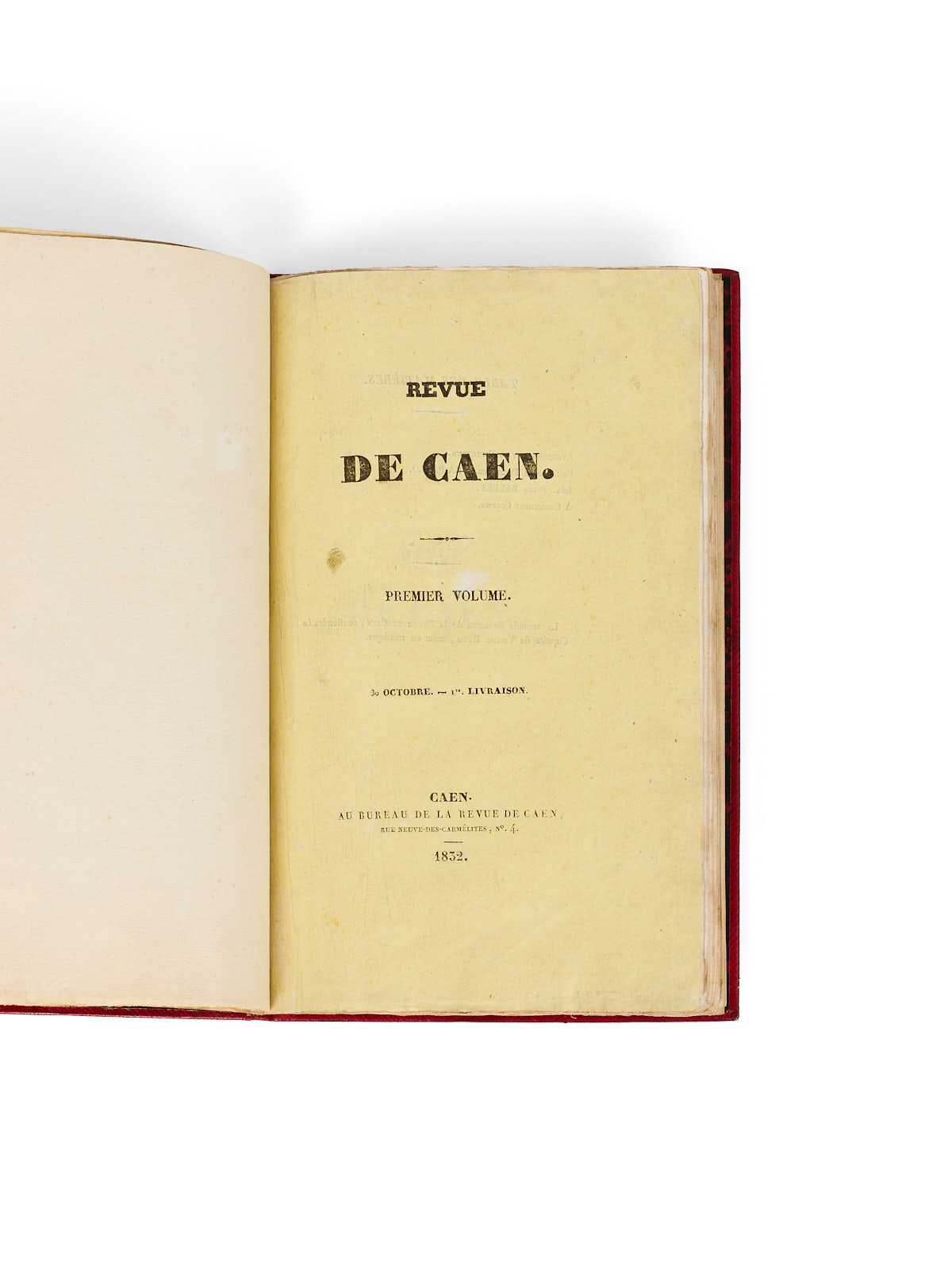
Léa would not be published separately until 1907, at the Société normande, in a small printing of 90 copies; the first public edition had to wait until 1919. La Revue de Caen, in which it first appeared, is equally rare, having produced only this single issue. Léa occupies pages 15–39.
In 1829, while studying law in Caen, Barbey d’Aurevilly met the bookseller Stanislas Trébutien. Together they decided to found a “republican publication,” as a counterpart to the royalist review his brother Léon Barbey d’Aurevilly had founded, Le Momus normand. From the beginning of 1832, with financial help from their cousin Edelestand du Méril, Barbey and Trébutien set to work. The review appeared in the autumn under the title Revue de Caen, accompanied by an unsigned eight-page prospectus (in fact written by Trébutien) announcing the next issue, which never appeared.
This edition is of exceptional rarity. Only eight other copies can be traced: besides the two held in public collections through legal deposit (Caen, Bibliothèque municipale, fonds normand; Paris, Bibliothèque nationale, Réserve des livres rares), the only recorded copies are: Piolenc (sale, 1913); E.D. (sale, 1917); Schück [later Lucien-Graux] (sales 1931, 1956); Villeboeuf; André Vasseur (Ader, 2023, no. 36); and one further copy, bound in contemporary half green basane, with the prospectus, which we ourselves handled long ago (Librairie Walden, cat. 6, 2005, no. 112).
This booklet, “of the greatest rarity” (Carteret, p. 100), is missing from Vicaire and Escoffier; it is the only work of importance absent from the Musée de Saint-Sauveur-le-Vicomte.
A precious copy belonging to Joël Dupont, curator of the said Musée Barbey d’Aurevilly, with his bookplate. He acquired it in 2006, intending to track down a further copy for the Museum, which he never found.
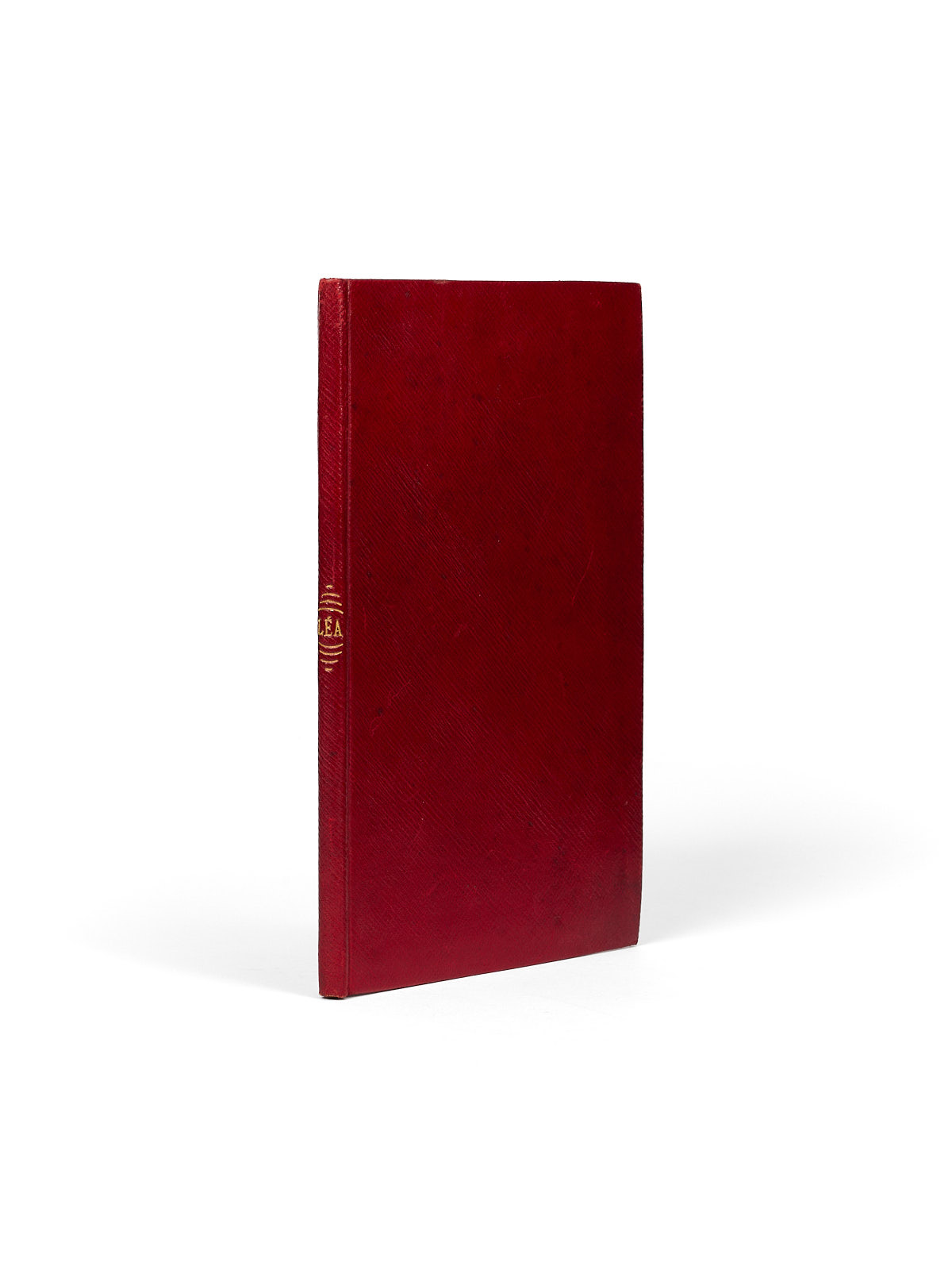
A very fine copy, remarkably fresh, with large margins, well bound, with both wrappers preserved.