

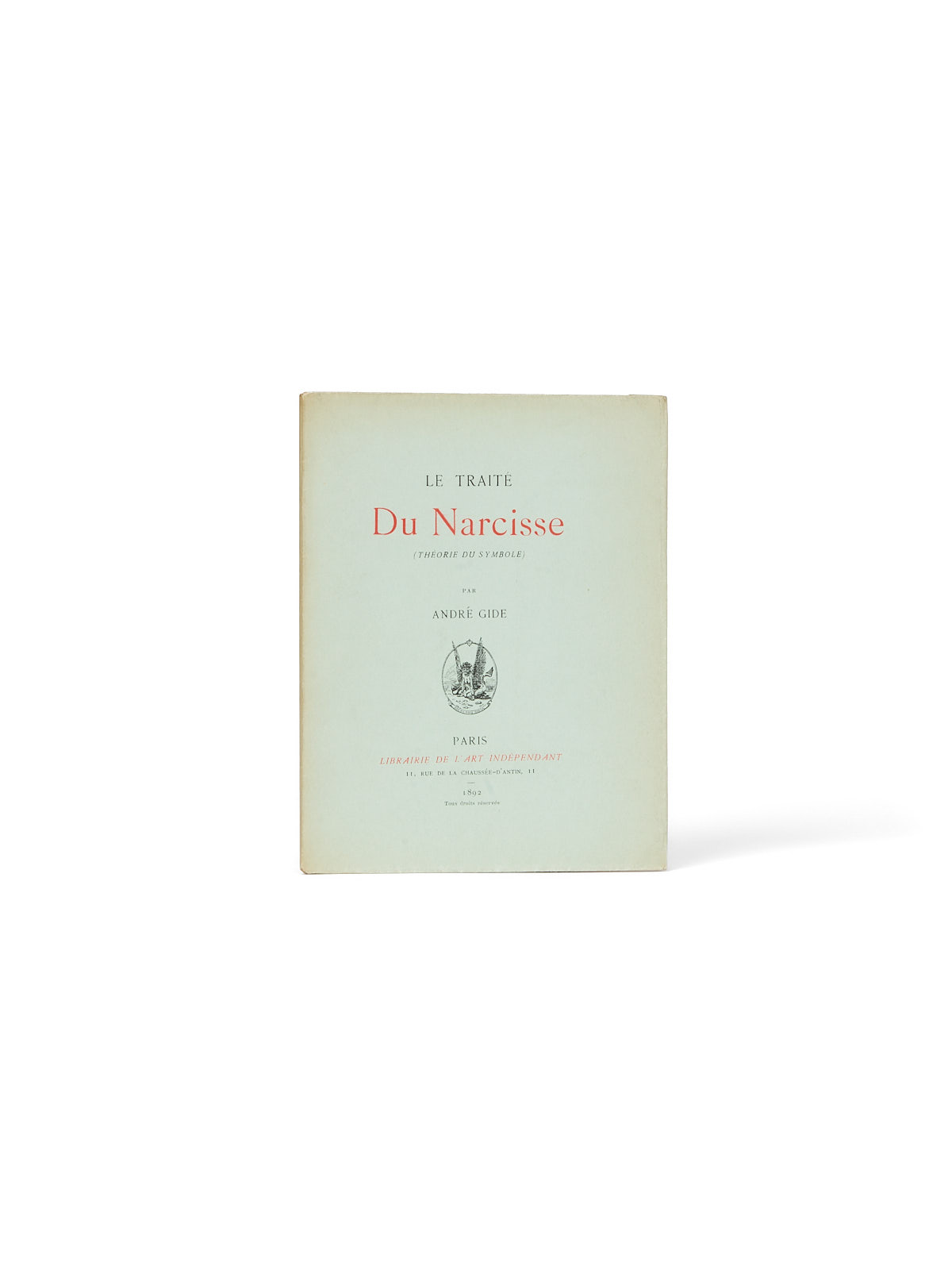
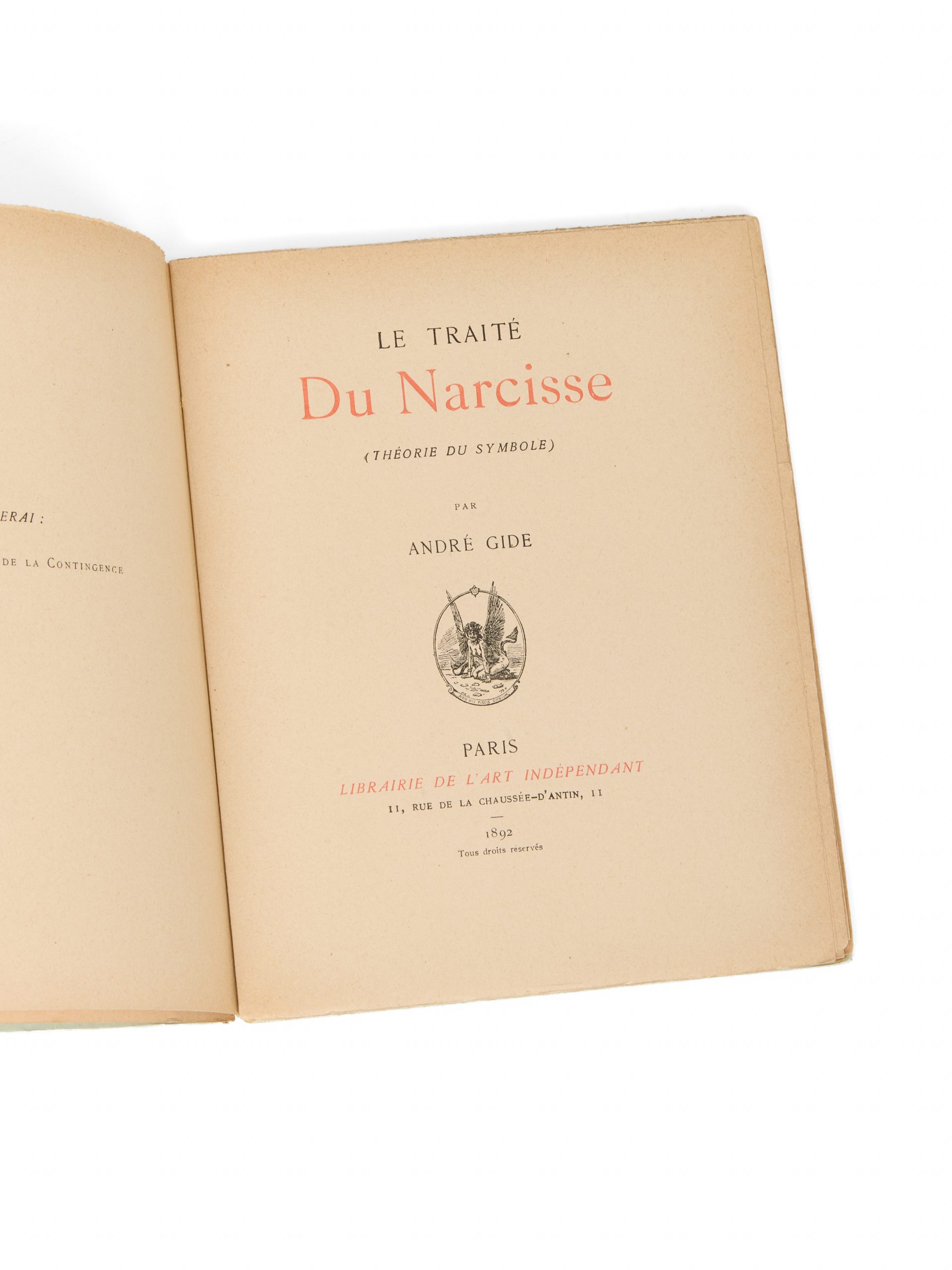
Le Traité du Narcisse
At their first meeting in Montpellier in December 1890, arranged by Pierre Louÿs, Paul Valéry and André Gide walked together in the botanical garden and paused before the tomb of Eliza Narcissa Young, daughter of the English poet, inscribed “Placandis Narcissae manibus.” The tomb had inspired Valéry’s sonnet “Narcisse parle” and would later inspire Gide’s Narcisse, regarded as one of the most important manifestos of French Symbolist doctrine. In this piece of poetic theory, Gide offers an ambitious definition, partly drawn from his admiring reading of Schopenhauer. His friend Camille Mauclair, one of the very few critics to discuss it, wrote that Le Traité du Narcisse “is one of the most complete symbolic theories to have appeared in ten years. These are words that Morice and Kahn could never have formulated. They reveal in Mr. André Gide a psychic organization of high value, and intense powers of philosophical understanding: a small work to read and reread […]” (Essais d’art libre, no. 5, June 1892).
This short treatise, dedicated to Paul Valéry and subtitled “Théorie du Symbole,” was first published on 1 January 1891 in the review Entretiens politiques et littéraires, before a hors commerce printing of 12 copies on large paper was produced later that year. This limited edition then followed at the Librairie de l’Art indépendant.
A fine copy; rare.
Naville, Bibliographie des écrits d’André Gide, no. 5.