

Le Temps du mépris
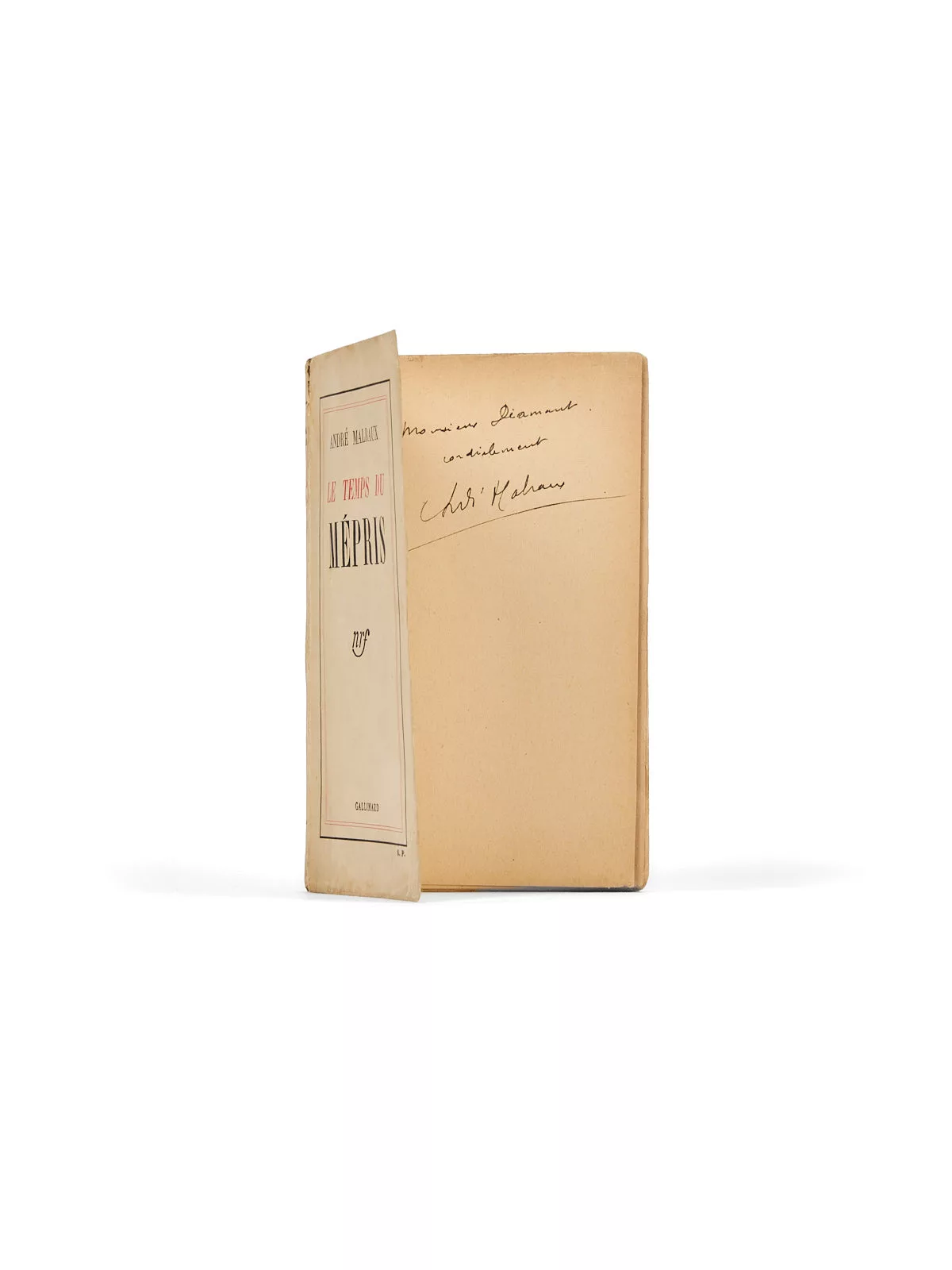
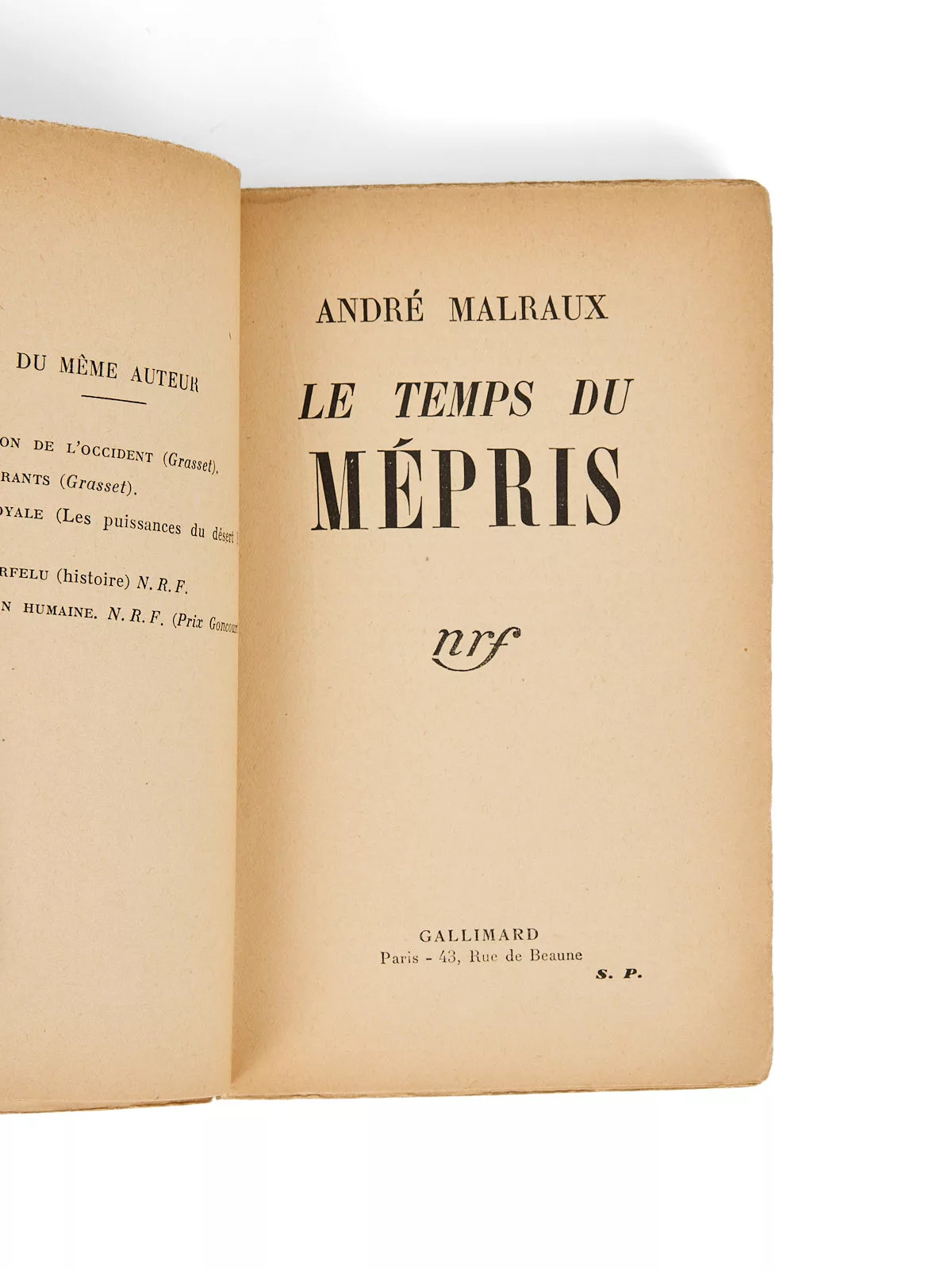
One of the printed review copies.
Signed presentation inscription: “À Monsieur Diamant, cordialement, André Malraux.”
A short novel written in the winter of 1934–1935 in the wake of the Reichstag fire trial, Le Temps du mépris depicts the pursuit and arrest of a German communist intellectual, Kassner, and ranks among the very first French works of fiction to portray the Nazi concentration-camp world and torture.
Serialized in three installments in the NRF (March, April and May 1935) before its publication in book form, the text is accompanied by a preface in which Malraux immediately situates his narrative within the field of political and moral confrontation — an essential milestone in his “engaged period” between La Condition humaine (1933) and L’Espoir (1937). Critical reception was immediate: Paul Nizan discussed it in L’Humanité, while Gide, present alongside Malraux at the International Congress of Writers for the Defense of Culture (June 1935), contributed to the intellectual debate in which the book circulated. Although it did not achieve the public success hoped for, the work nonetheless established itself as a key text of prewar literary anti-Nazism.