

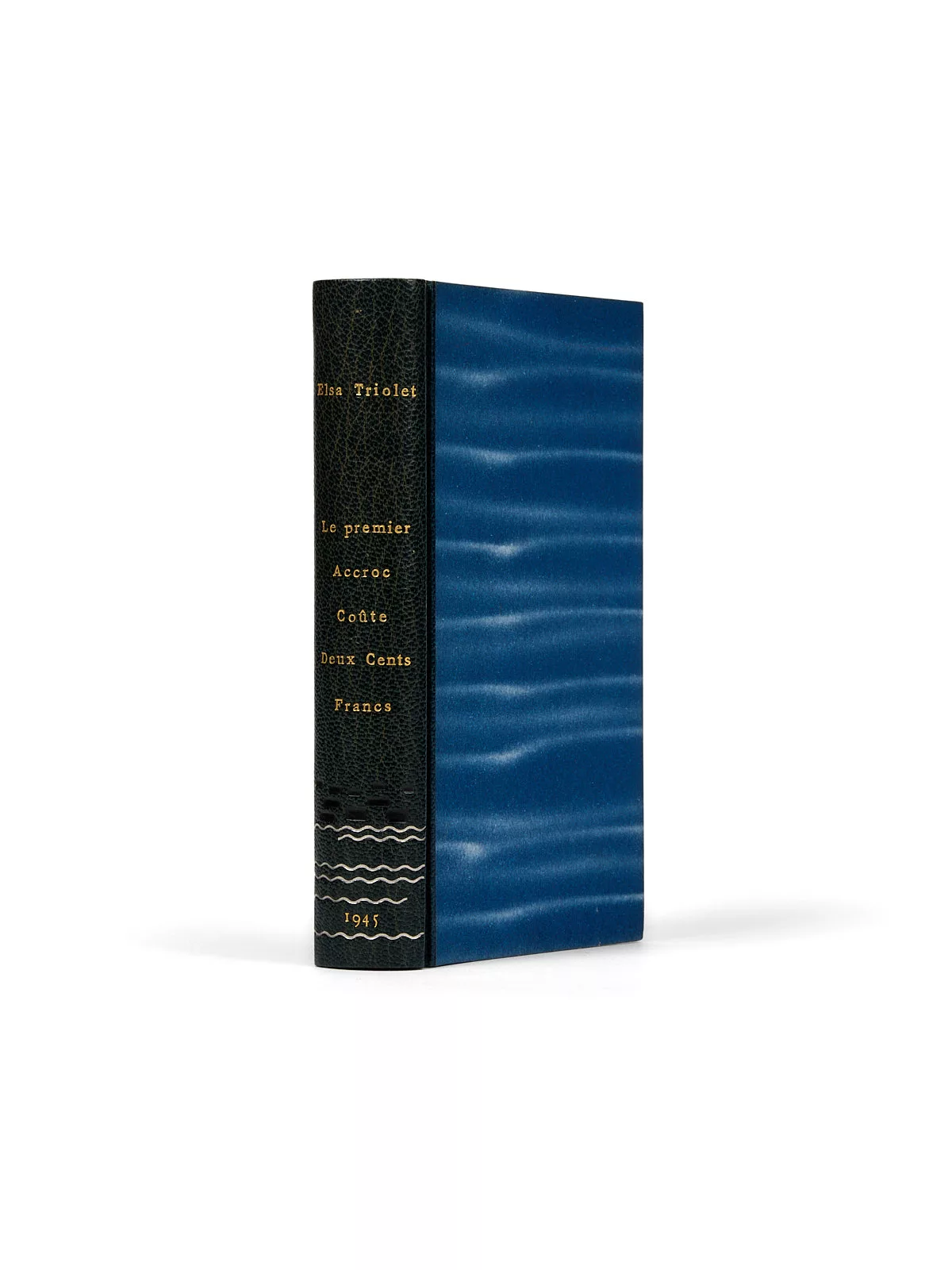
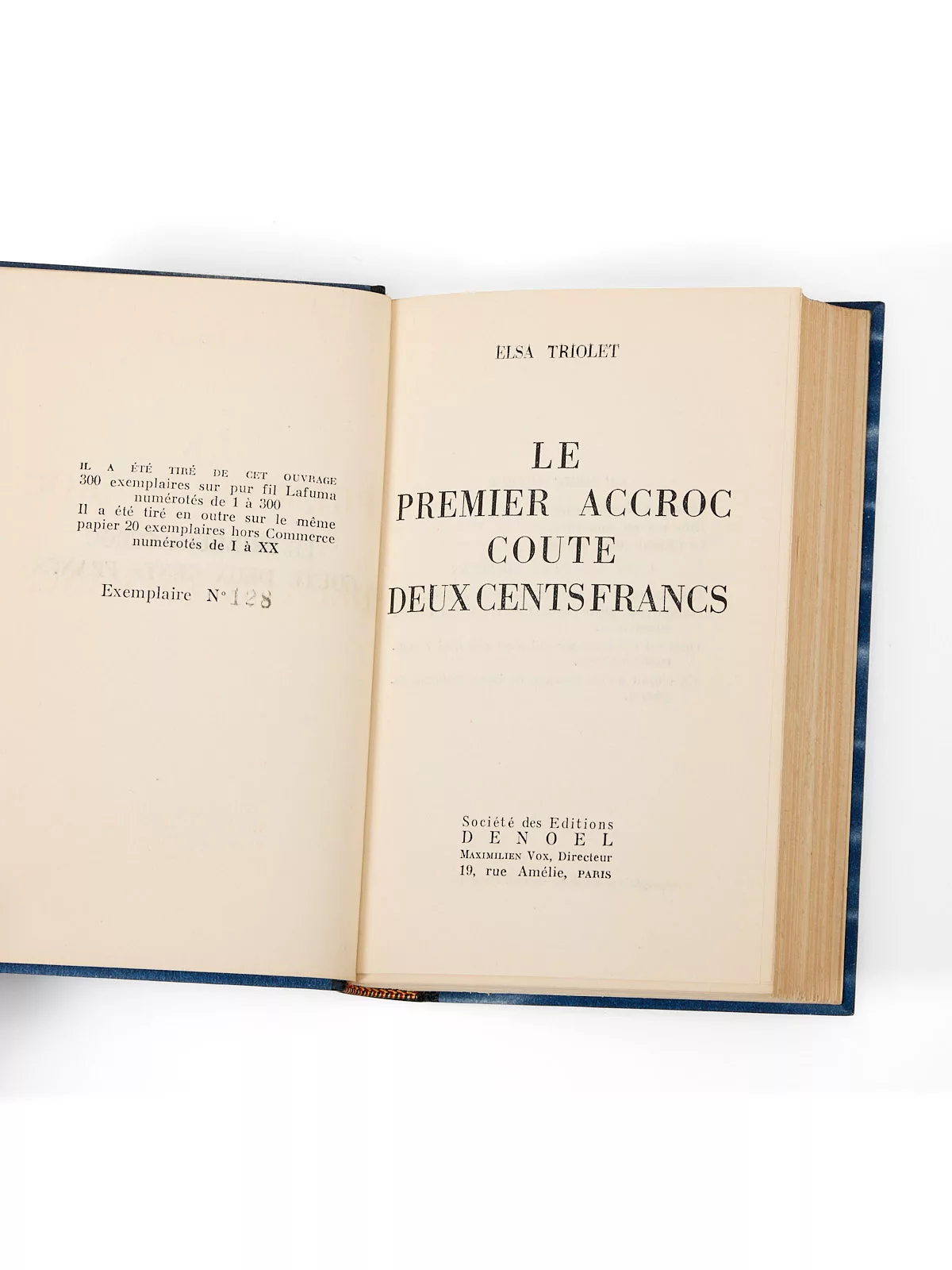
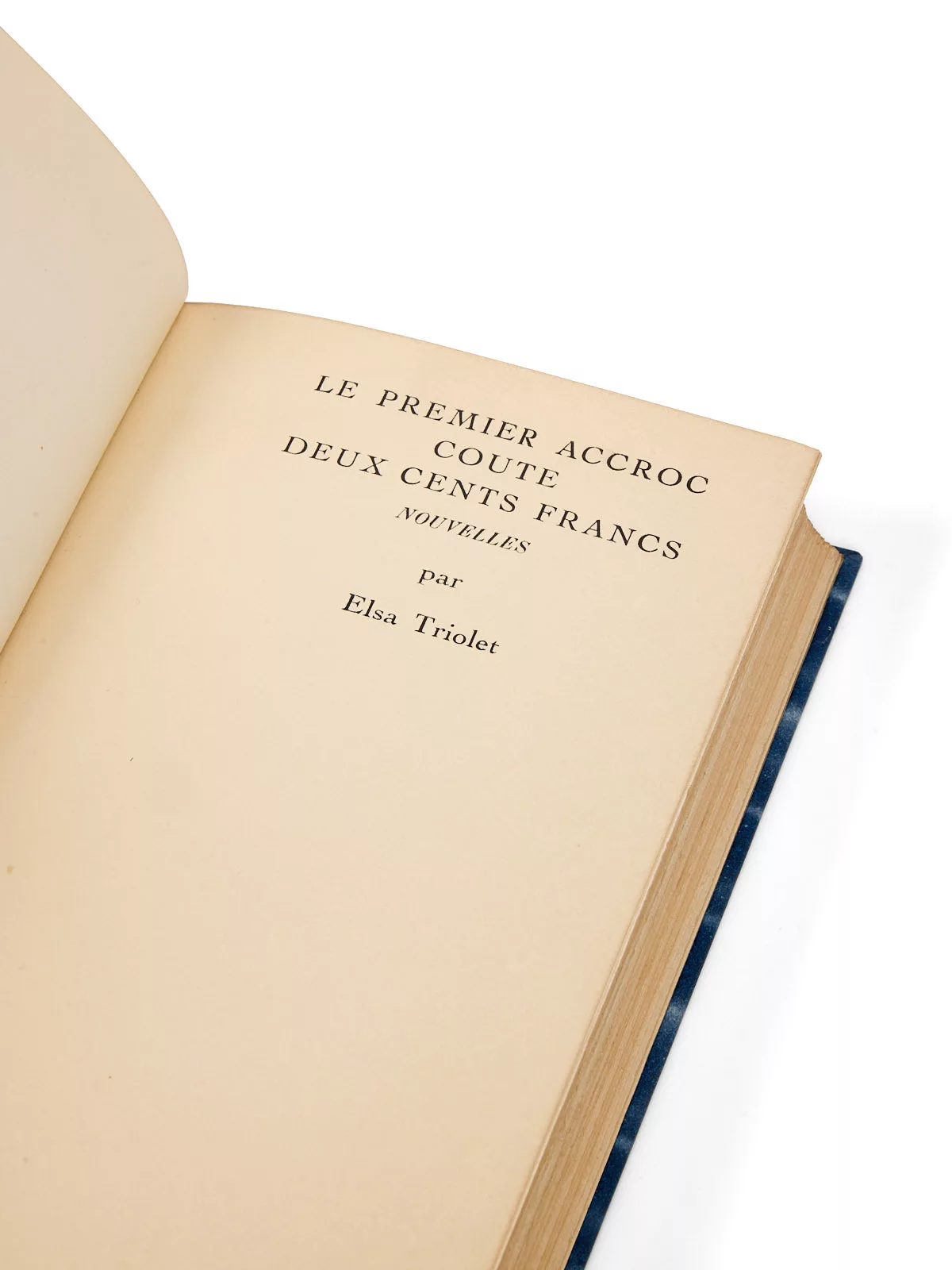
Le premier accroc coûte deux cents francs
One of 320 copies on pur fil, the sole deluxe paper (no. 128).
Prix Goncourt 1944 (awarded on 14 December 1945). Through four narratives, two of which deal with the Resistance (Les Amants d’Avignon and this Le premier accroc coûte deux cents francs), Elsa Triolet was the first woman to receive the Prix Goncourt. Some of the stories had already circulated clandestinely, published by Éditions de Minuit as early as 1943.
The vote, won on the second ballot by five votes (Carco, Dorgelès, Larguier, Colette, Rosny jeune) against two (Descaves and Billy, in favor of Roger Peyrefitte), took on political significance. In the postwar period, as the Académie sought to distance itself from the compromises of some of its members, the choice was seen as a way of “redeeming” itself. Léautaud commented: “The Goncourt jury has scored a triple: Madame Triolet is Russian, Jewish and Communist. It is a prize sewn with red thread!” Elsa Triolet, Aragon’s companion, kept her distance from these controversies, simply recalling that her Resistance texts had already moved discerning readers. Public recognition merely extended that impact.
The year 1945, marked by the introduction of women’s suffrage, also gave symbolic resonance to this first female Goncourt laureate. Women had obtained the right to vote in France through the ordinance of 21 April 1944, signed in Algiers by de Gaulle’s Provisional Government, and were able to vote for the first time in the municipal elections of 29 April 1945, then in the legislative elections of October 1945.
A fine copy, very well bound.