


Le Petit Prince
The legendary signed first edition of one of the most famous books in the world.
After the publication, on 20 February 1942, of Pilote de guerre (Flight to Arras), American readers were deeply moved by Saint-Exupéry’s account: the book topped bestseller lists in the United States for six months. It was published in France later that year in only 2,100 copies, and promptly banned by the Vichy authorities.
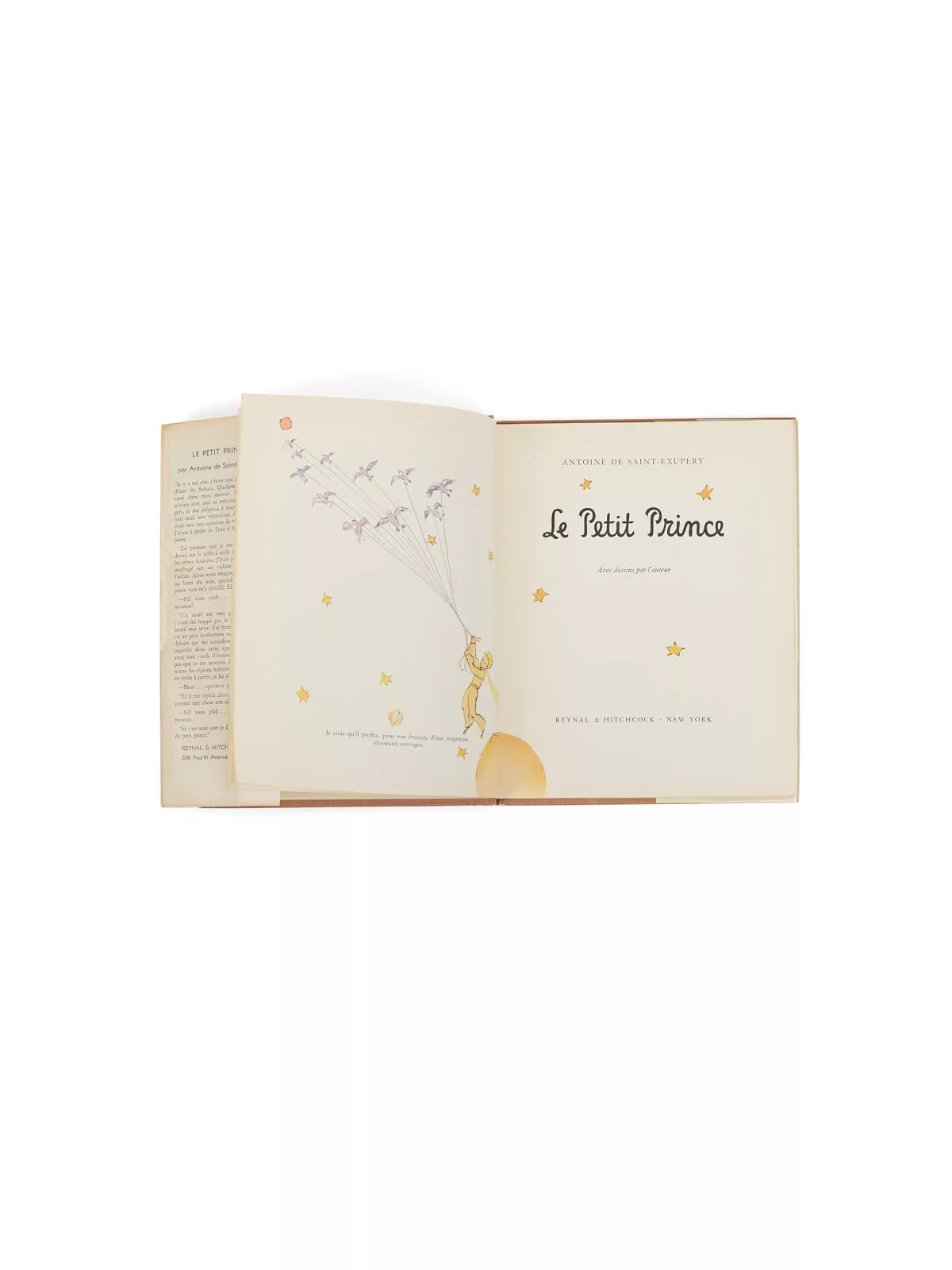
Because Saint-Exupéry often sketched a small figure in the margins of his manuscripts, his American publisher Curtice Hitchcock suggested he write a children’s tale. Saint-Exupéry decided to illustrate the story himself and set to work at once. He bought paper, colored pencils and watercolors, and secluded himself with his wife Consuelo at Bevin House, a manor in Northport, New York. Working in fits and starts, mostly at night, tired and by all accounts depressed, he experienced the writing of Le Petit Prince as a deeply personal ordeal — a melancholy literary journey back to the border between childhood and adult life. After a little more than six months of work, Le Petit Prince appeared in New York on 6 April 1943, first in French, then in English, published by Reynal & Hitchcock.
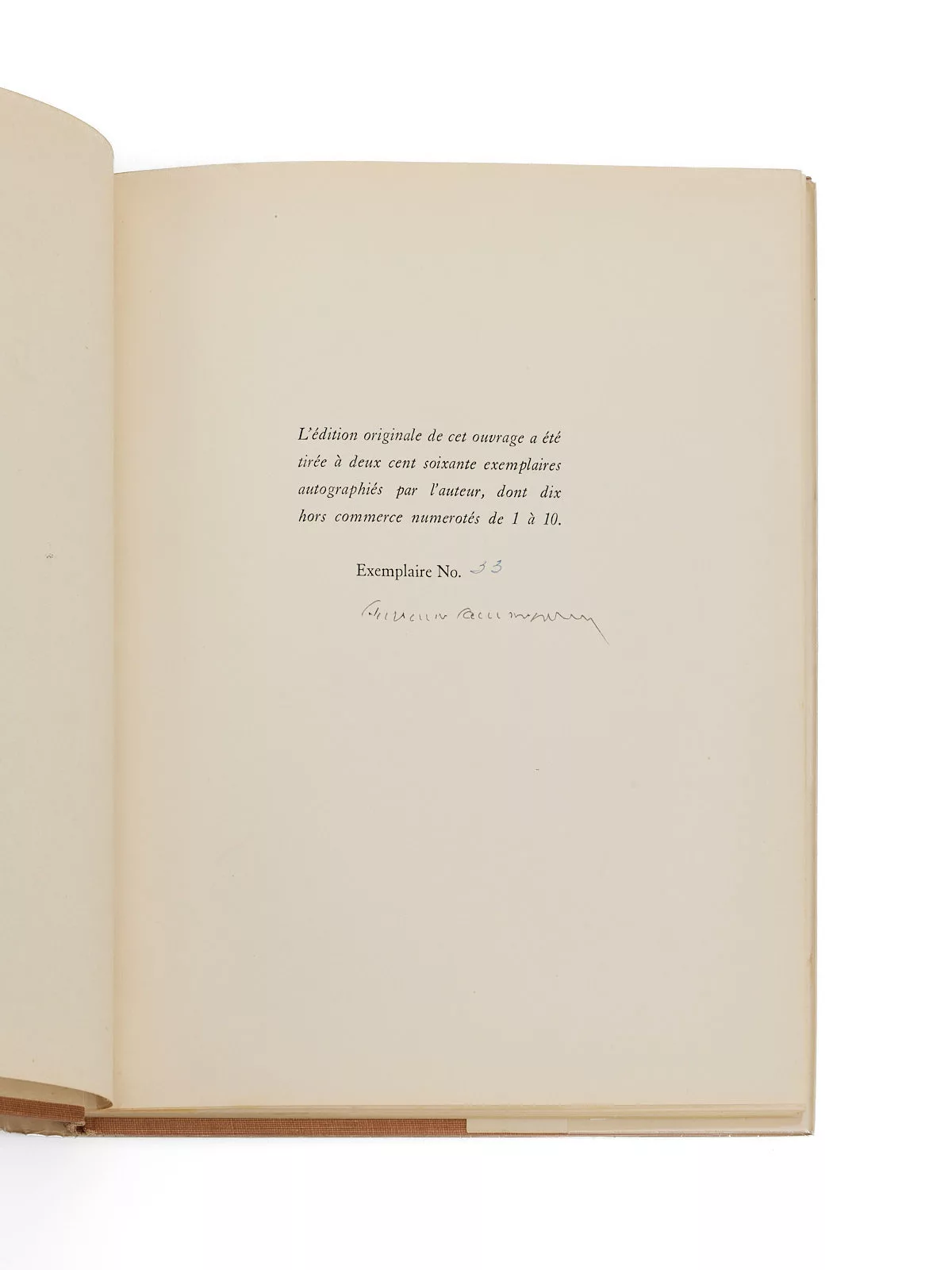
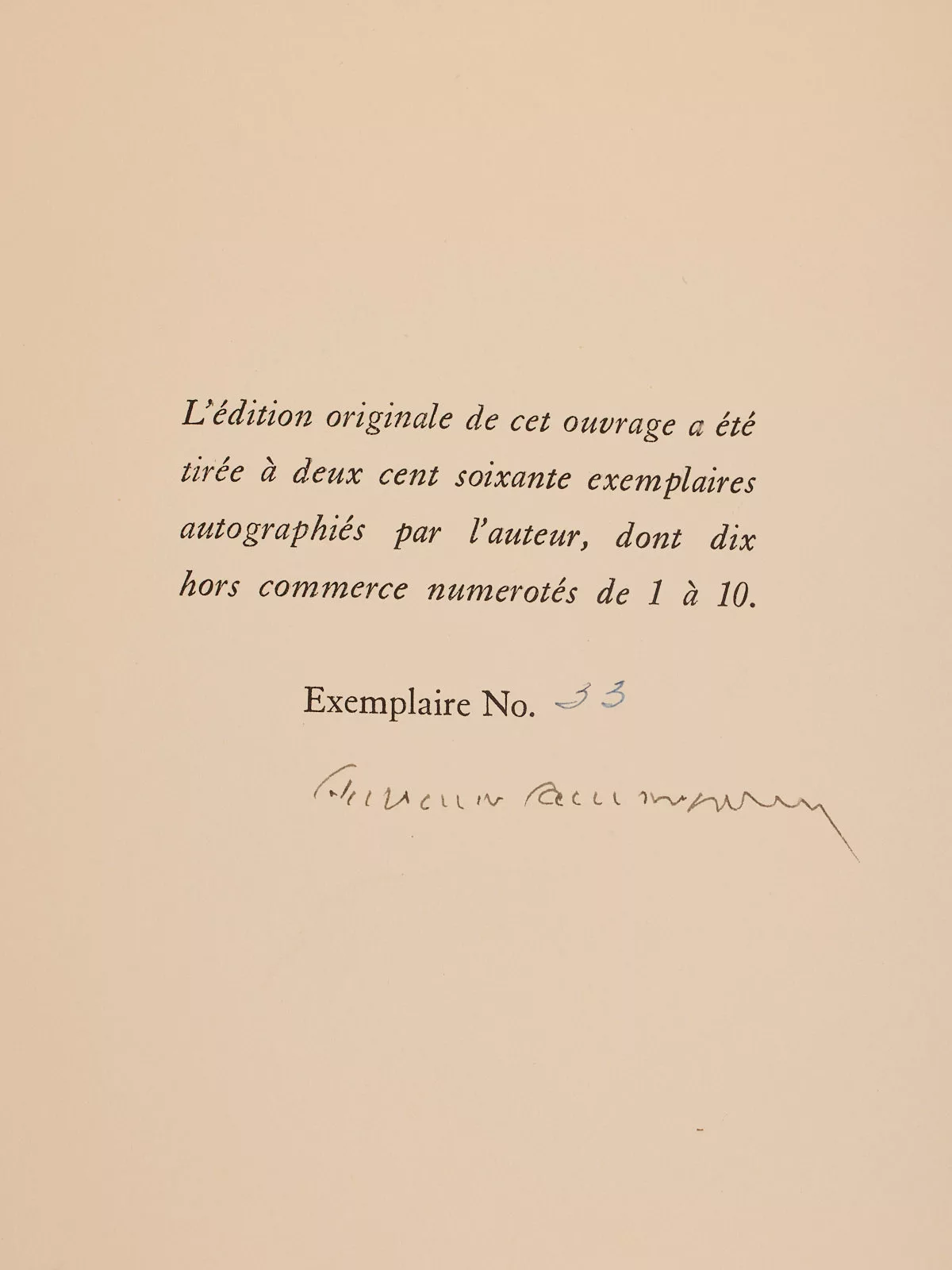
The French printing comprised 260 numbered copies (10 of them hors commerce); the English printing 525 copies (25 hors commerce). Both are rare, and especially difficult to find with their first-printing dust jackets.
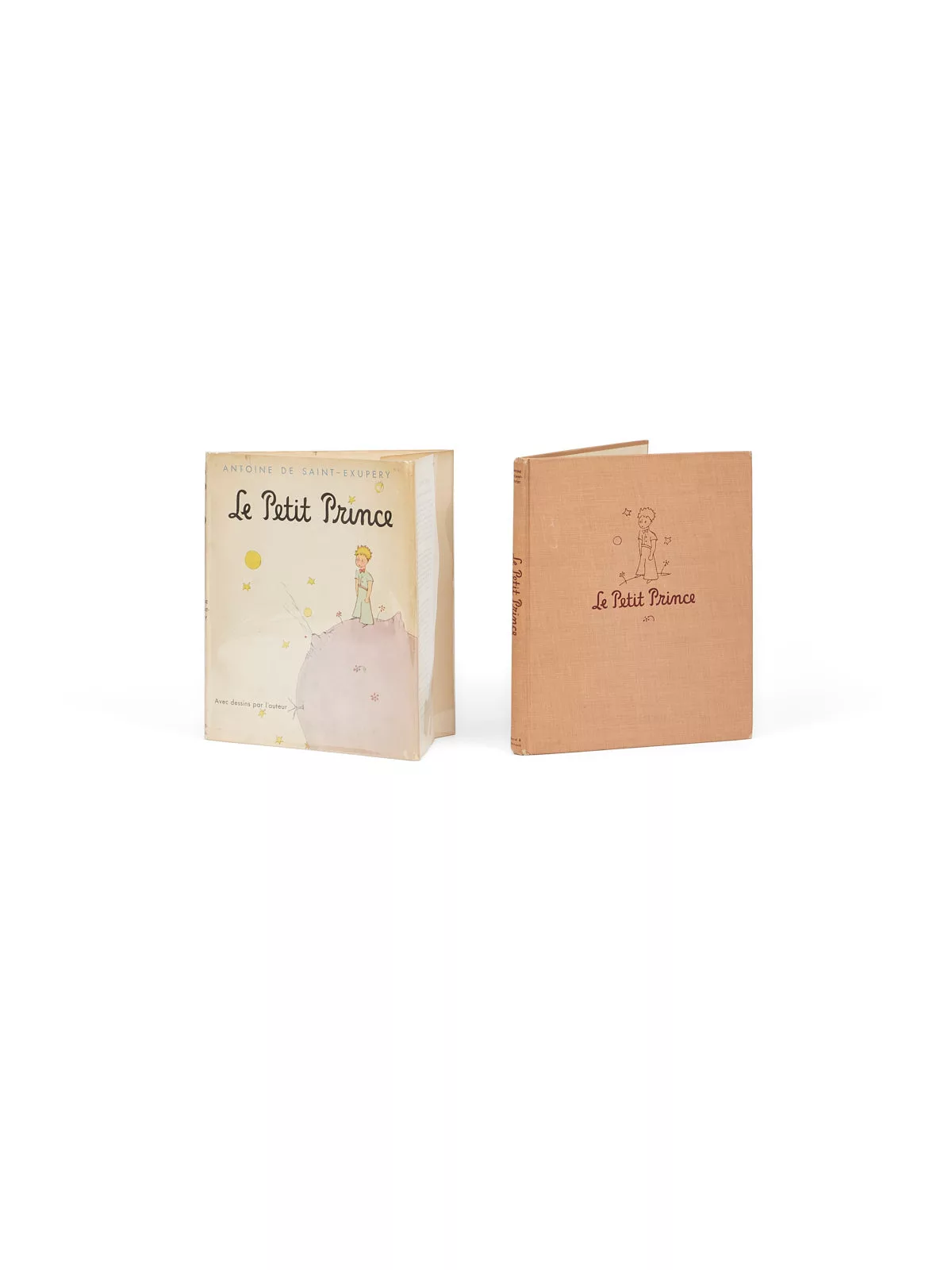
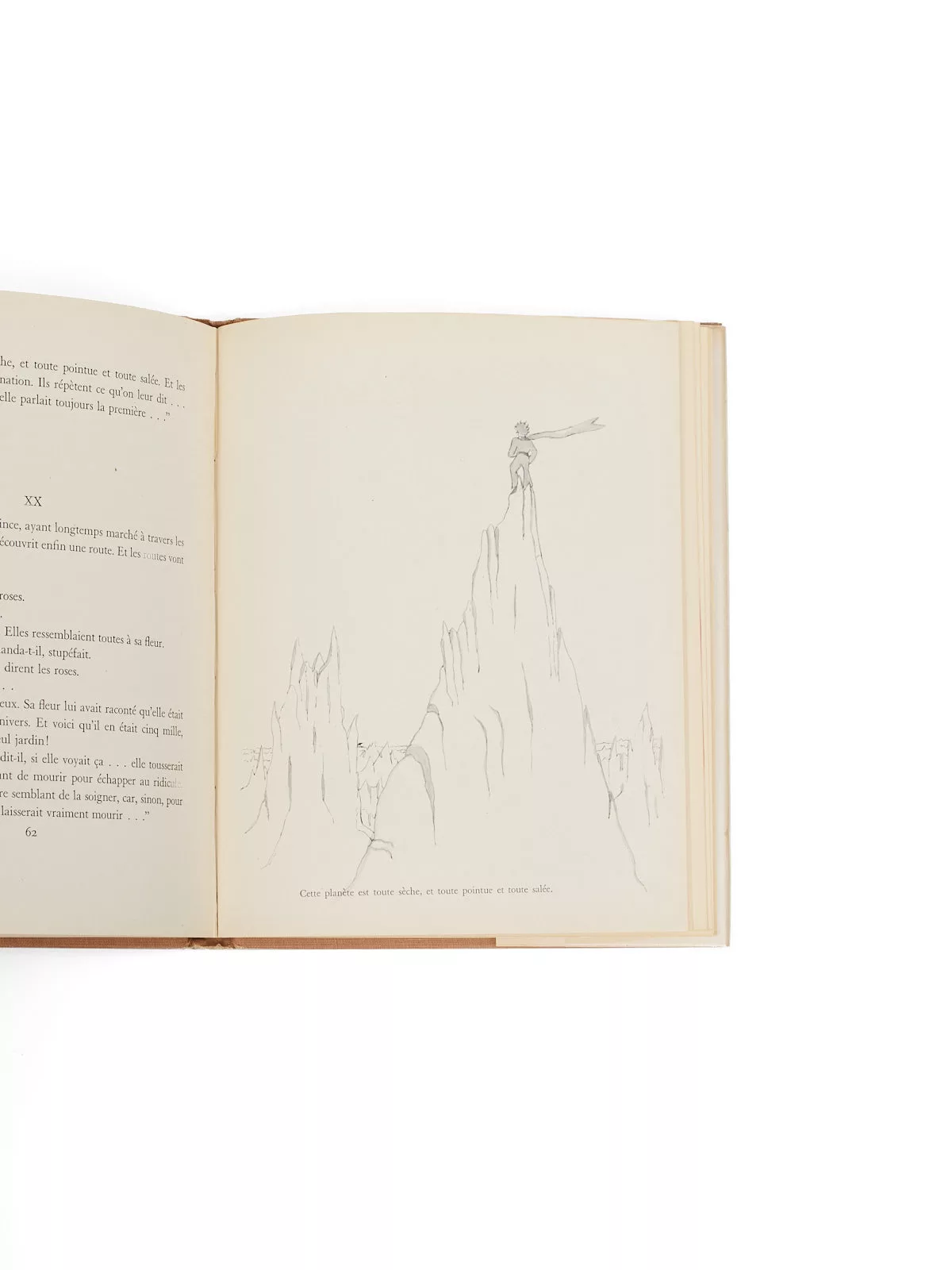
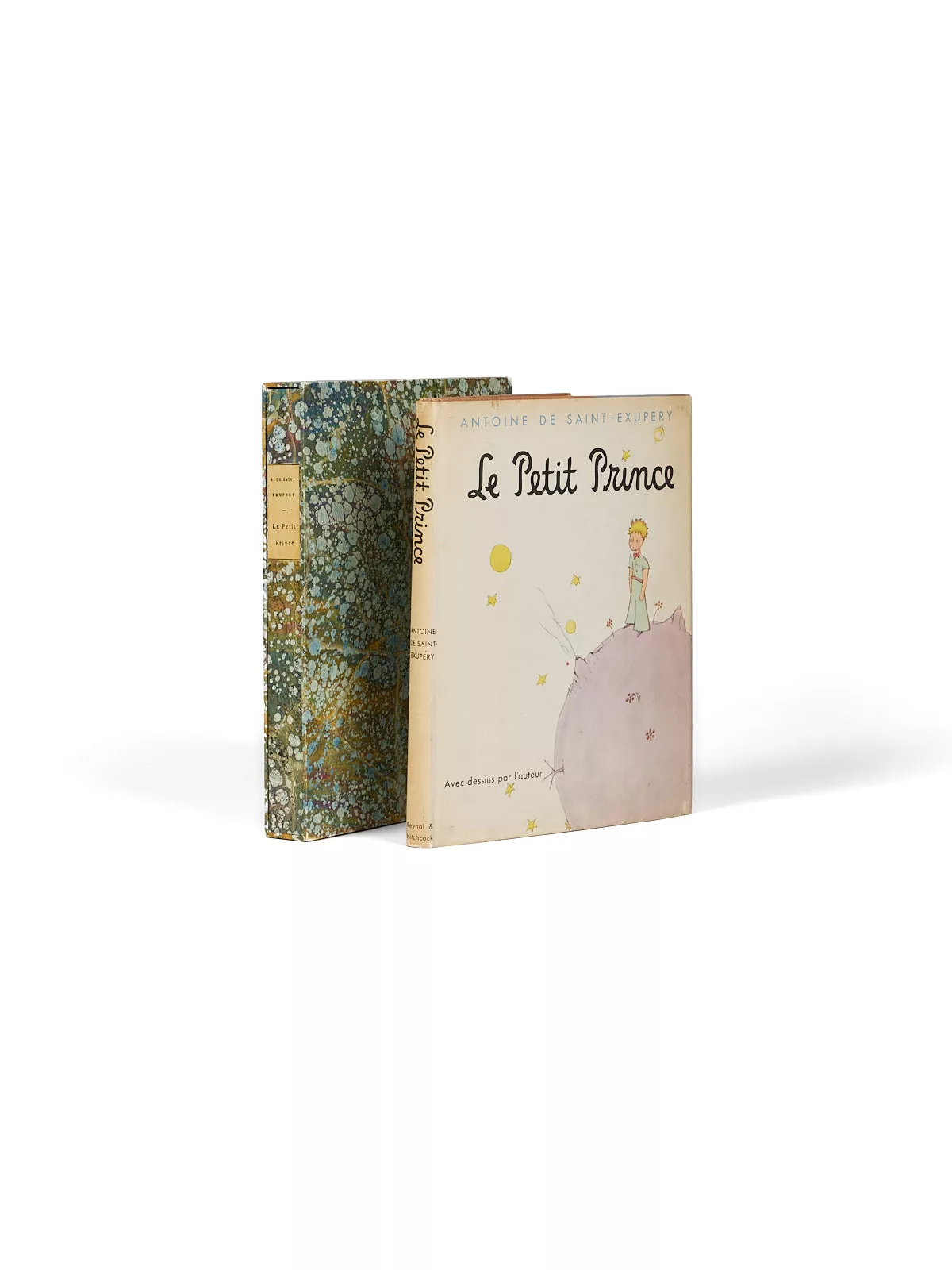
Both editions are bound in pink cloth stamped in red with a design of the Little Prince (taken from the full-page illustration in Chapter III, “The Little Prince on Asteroid B612”), reproduced in color for the dust-jacket illustration. The front flap of the jacket bears, at the foot, the publisher’s address (New York, 386 Fourth Avenue), a short blurb describing the tale, and the price of $2 — often trimmed away. Two bibliographical points distinguish the French-language edition from its English translation: the colophon and the so-called “crow mark.” The English edition carries a printer’s colophon on the last page, which the French edition lacks; on page 63, where the Little Prince is shown perched atop a mountain, a printing flaw appears on the mountain mass to his left, at the foot of the eastern peak, resembling the silhouette of a black bird standing between the peaks. This flaw, nicknamed the “crow mark,” is found only in the first five printings of the French-language edition.
For both April 1943 editions, a single point truly distinguishes them from the later printings that followed: the color of the boards. Only the first printing was pink, identical for both the French and English versions.
This is normally corroborated by the presence, in later printings, of a printing statement (second printing, third printing, etc.), which appears from the second through the sixth English edition and from the second through the seventh French edition.
Saint-Exupéry never enjoyed the book’s reception, since he left the United States on 4 April, going on to a training course at Laghouat before rejoining Group 2/33 at Oujda in Morocco, where he was promoted to major in June and flew his first mission on 21 July from La Marsa in Tunisia. He never returned to the United States, still less to literary affairs: on 31 July 1944, during a final reconnaissance mission, his plane crashed into the Mediterranean. It appears, in fact, that the author never saw a single copy of his book before leaving, since no copy inscribed from New York is known to exist.
The only three copies Saint-Exupéry is known to have inscribed were given in North Africa, and all belong to a later printing:
– the Lionel-Max Chassin copy (with a “second printing” statement), with drawings and inscriptions to his children Max and Pierre (“Doudou” and “Piou”);
– the Malou and Jean-Michel Sturm copy (with a “third printing” statement);
– the Nelly de Vogüé copy (with a “third printing” statement).
The first printing of March 1943 was released from April onward and printed in a few thousand copies: all signed copies belong to this first printing, bearing the “crow mark,” bound in pink cloth, with the Reynal & Hitchcock address at 386 Fourth Avenue.
The leaves bearing the number and signature were printed separately, then tipped in at the front of each of the 785 copies (260 + 525). The dust jackets intended for these copies were apparently treated the same way, with the same number added at the foot, apparently by the same hand that numbered the limitation leaf. In the absence of official archives or a standard bibliography, one cannot be entirely certain that all the jackets of the numbered copies were treated identically. This even seems unlikely, given the rarity of these numbered jackets (caution is warranted here: we have already encountered jackets numbered after the fact). A small number of copies still bear traces of this original numbering on the back, but all known examples are badly worn. It seems likely that many copies lost their original jackets, sometimes replaced by jackets in better condition. In such cases, it is essential to verify that the replacement jacket is indeed a first-state jacket (with the correct address and price).
An extremely rare and highly sought-after printing: this copy, remarkably pure both in the book and the jacket, is exceptional.