

Le Nœud de vipères
“Writing is a form of self-exposure,” François Mauriac once confided. Is his work a confession? His own words suggest as much: “I had a passion (…) for the conversations of grown-ups; nothing interested me more than to make myself forgotten in a corner and listen to what was being said; and I have kept a vivid memory of that whole small world (…) in which I lived, and from which a large part of my novelistic work emerged.” In Le Nœud de vipères, the confession is that of Louis: an old man writing a letter to his wife — and his children — filled with resentment. He loathes this “brood of vipers,” a pack united against him, hovering around his fortune. His sole pleasure lies in thwarting the family’s schemes and maneuvering to disinherit them: “And I, witness to this struggle which I alone knew to be useless and vain, felt like a god, ready to crush these frail insects in my powerful hand, to grind these tangled vipers beneath my heel, and I laughed.”
Mauriac was elected to the Académie française the following year and received the Nobel Prize in Literature twenty years later, in 1952.
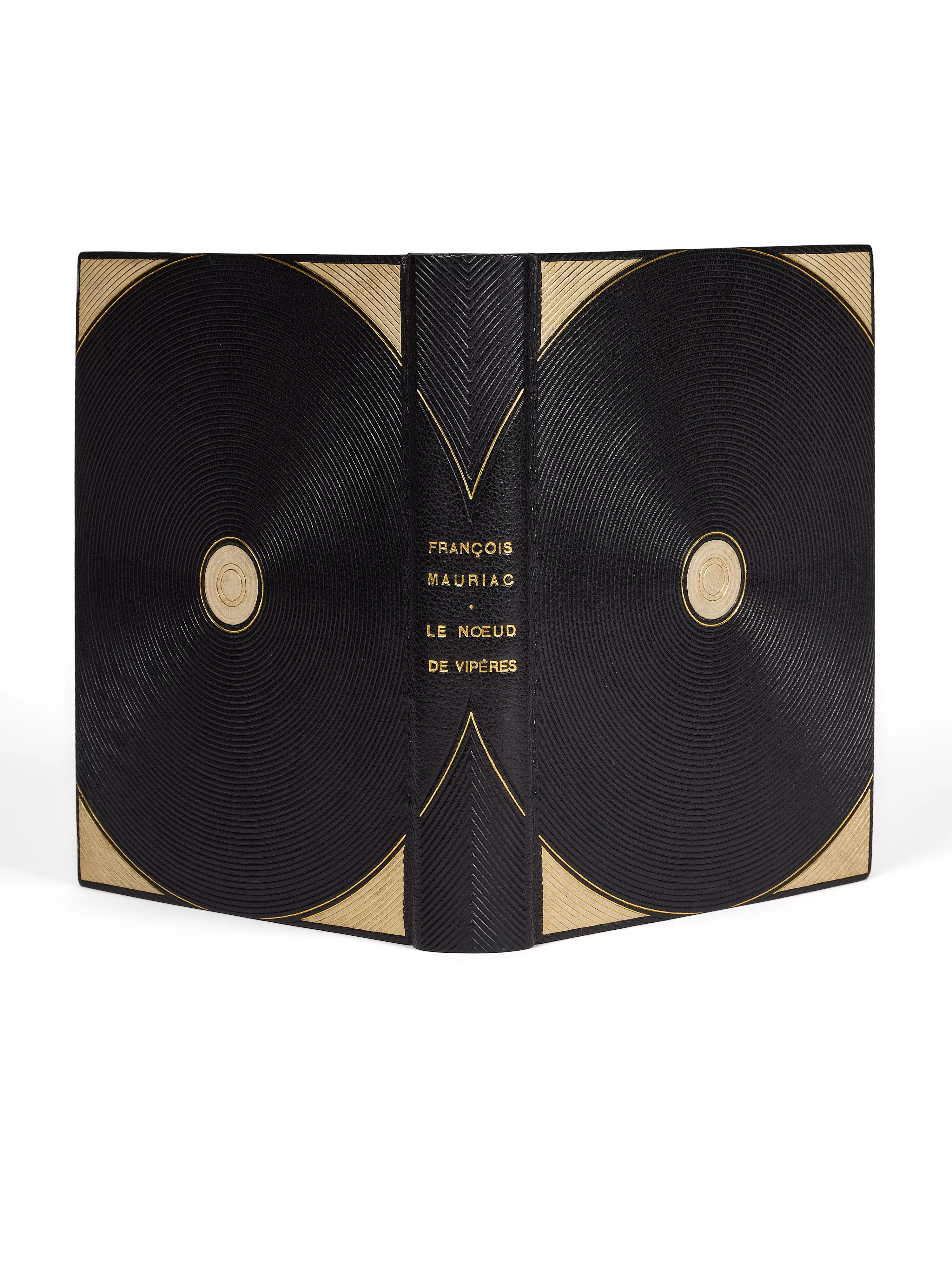
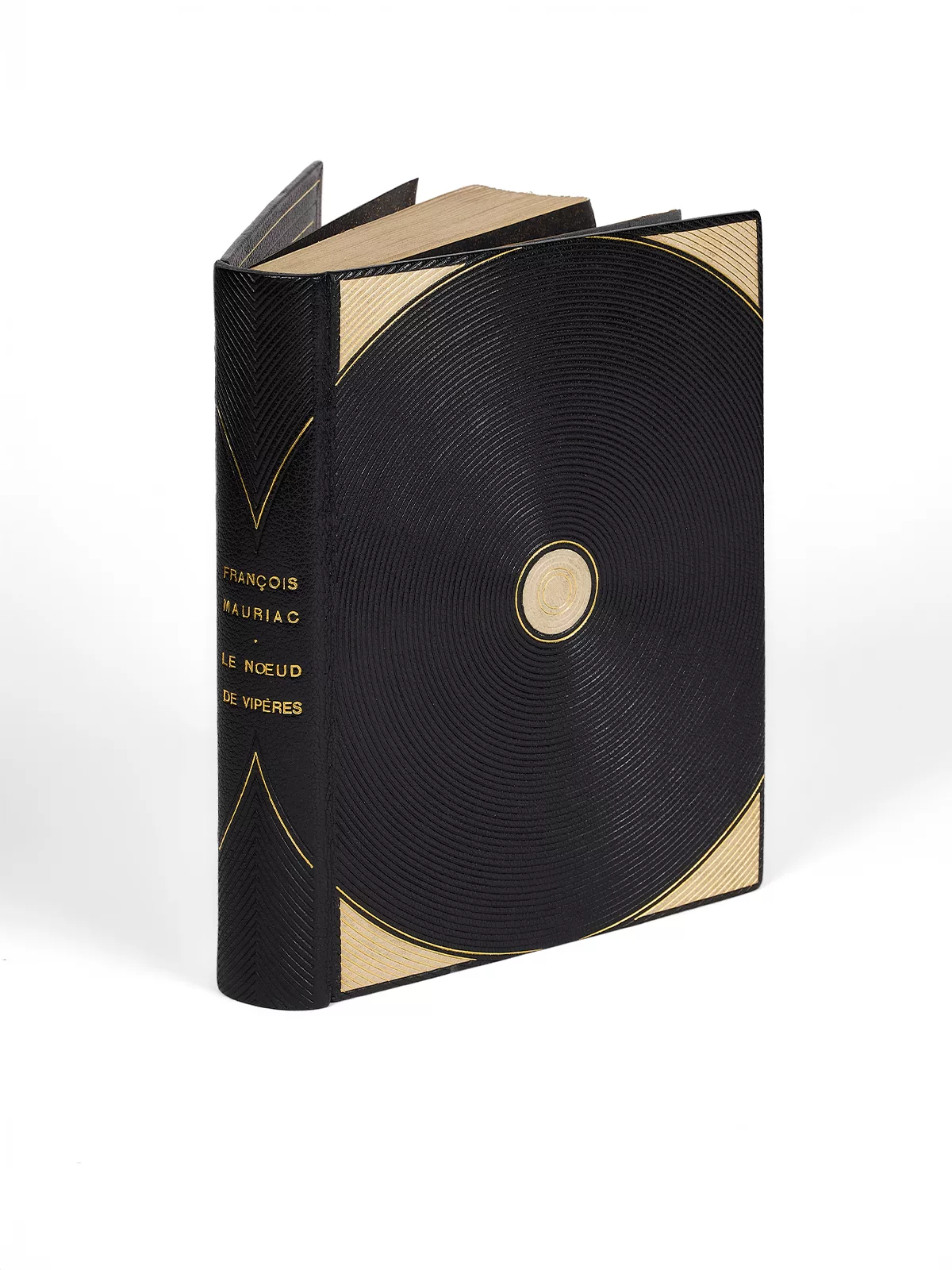
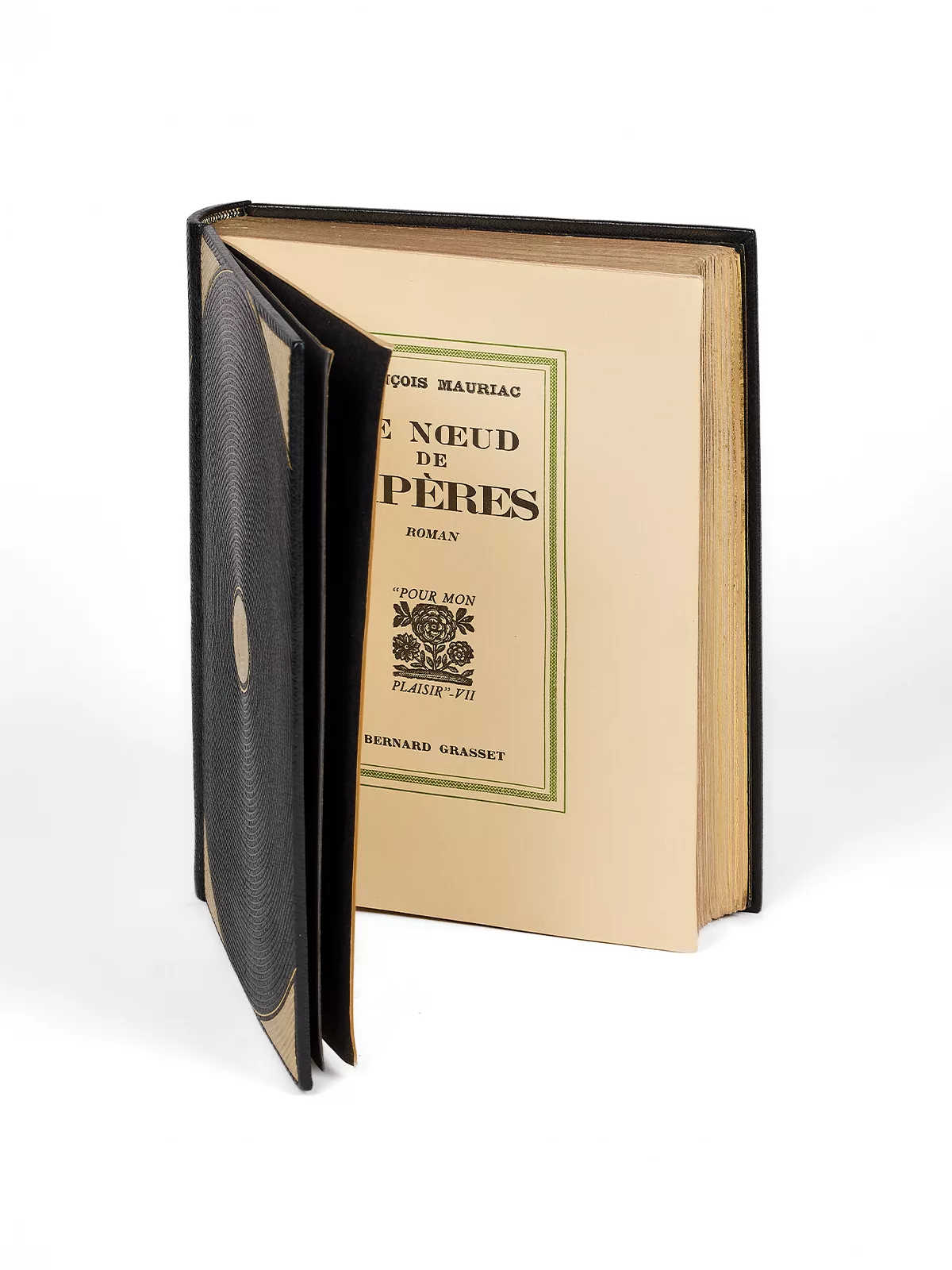
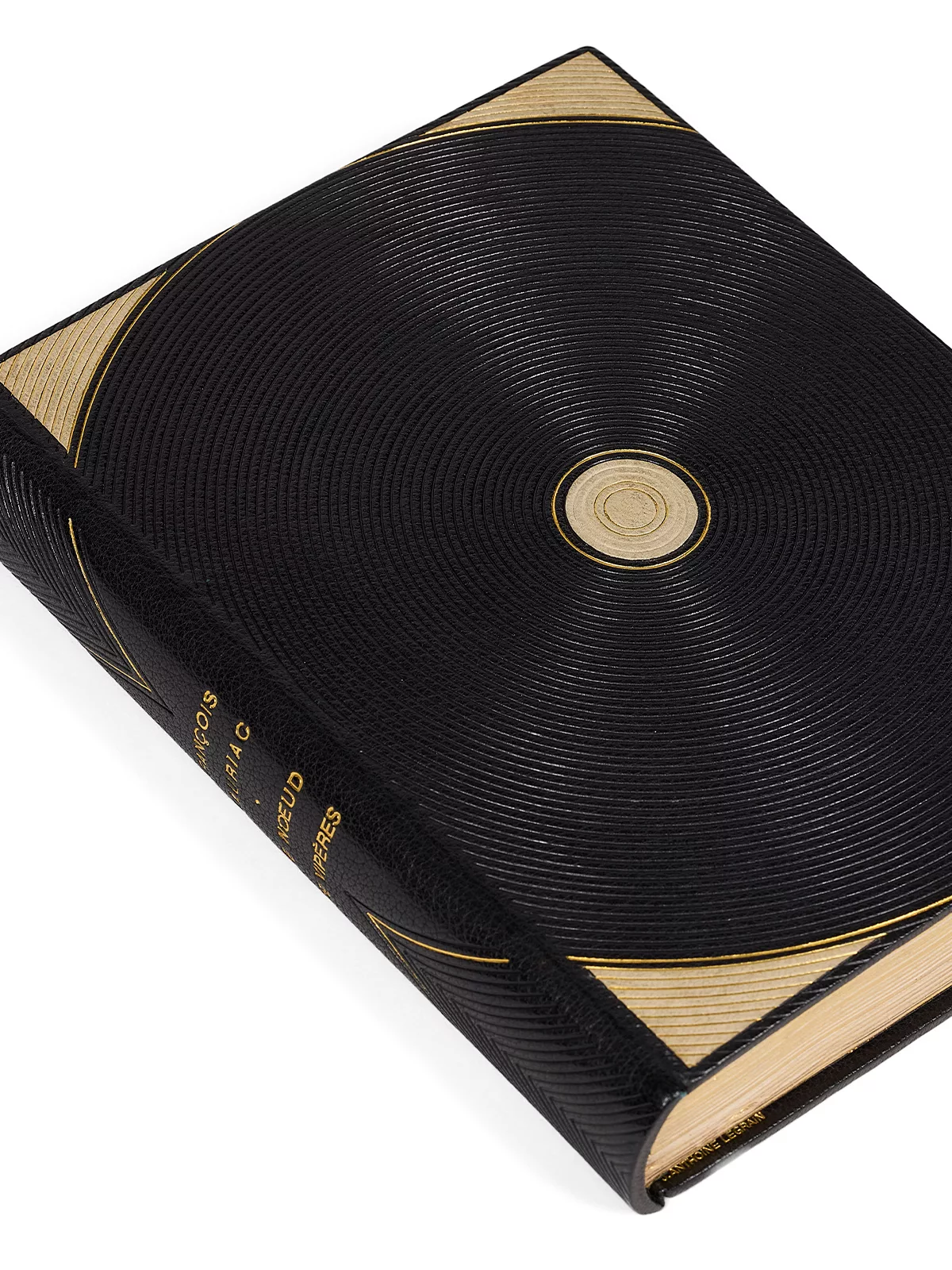
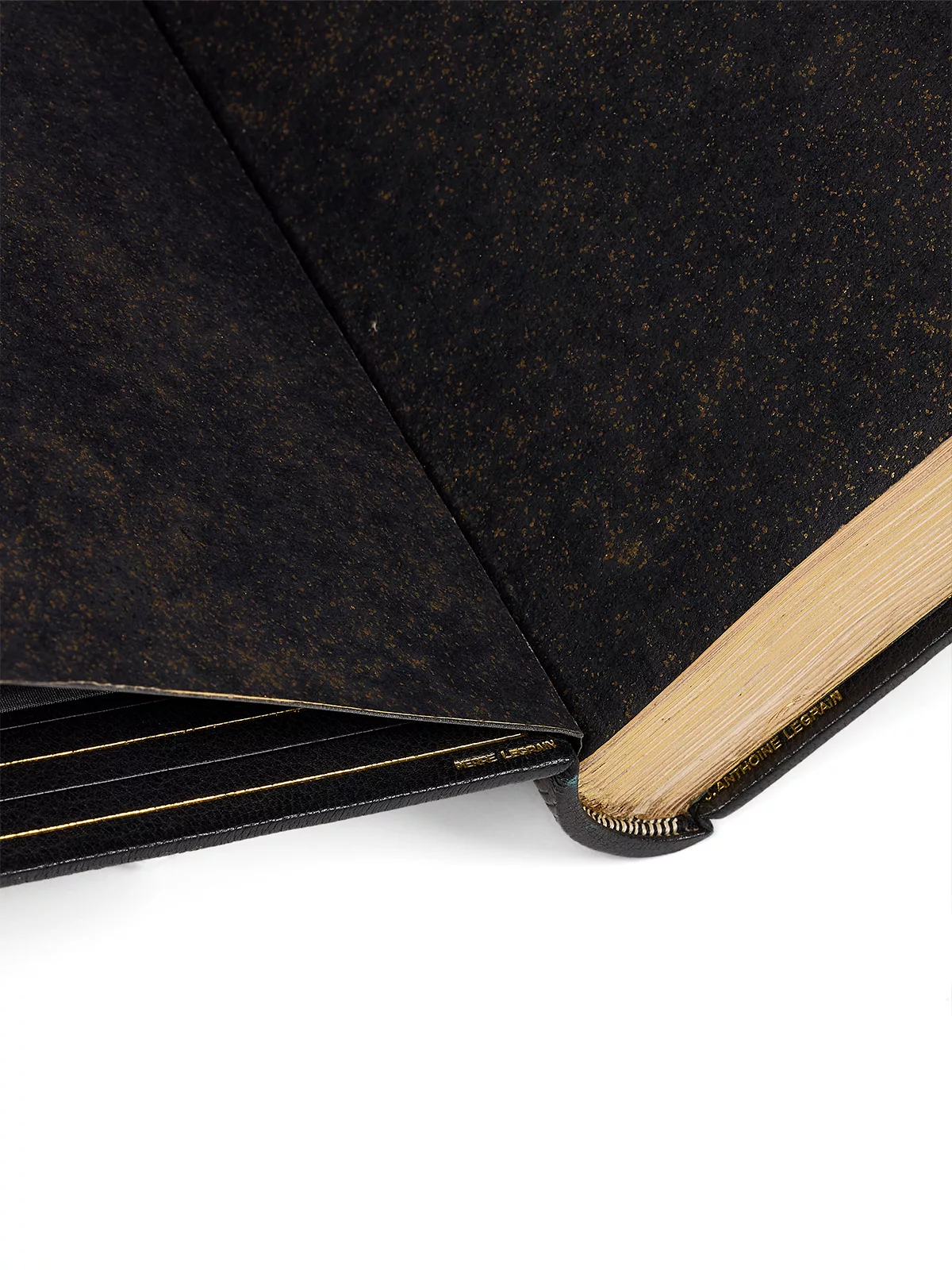
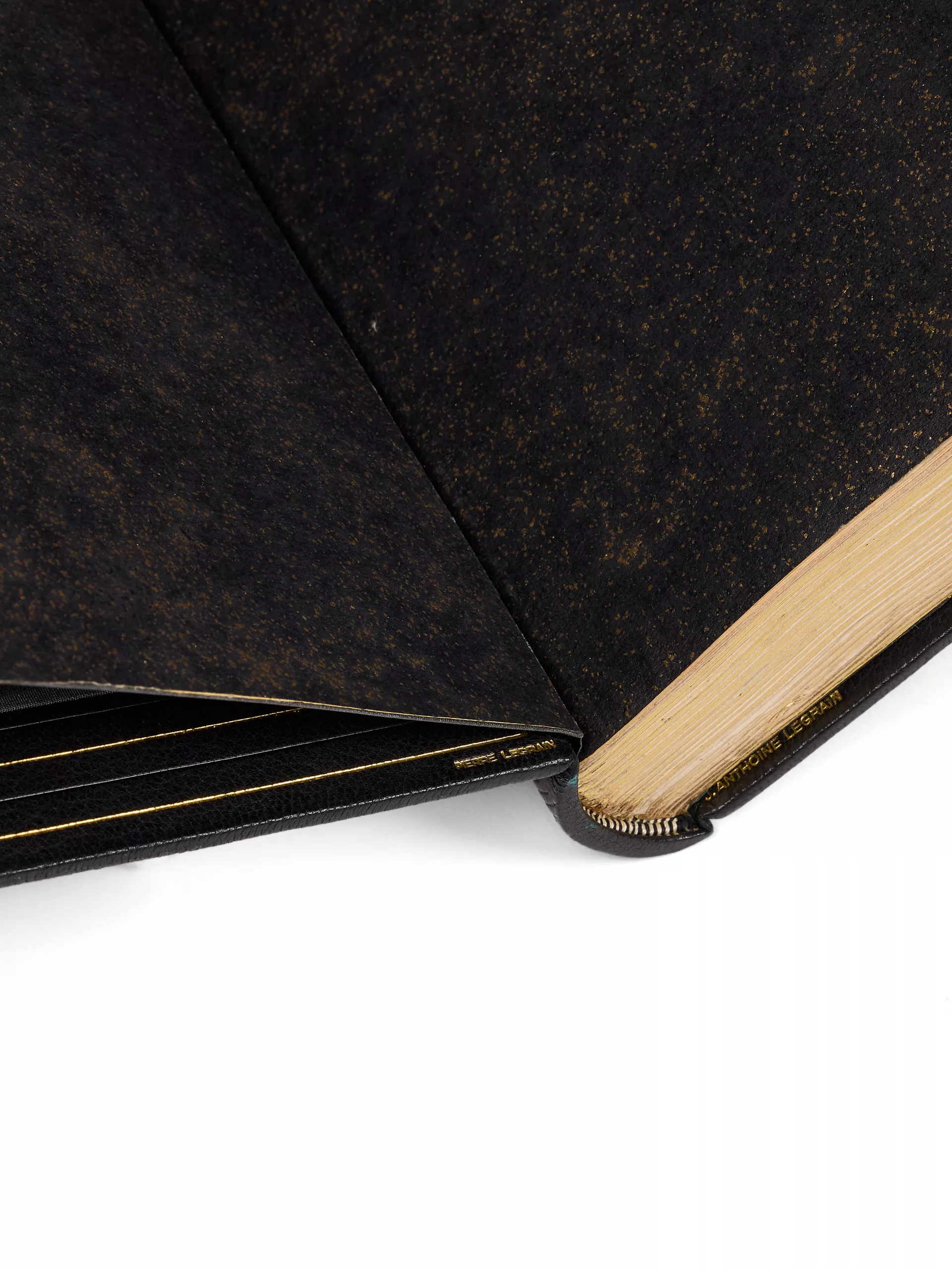
A rare printing of one of the great novels of the twentieth century, here in a remarkable binding designed by Pierre Legrain and executed by his stepson Jacques Anthoine-Legrain, who used this design — almost certainly an unrealized model by Legrain, who died suddenly of a heart attack in 1929 — for this altogether fitting copy of Le Nœud de vipères.
Jacques Anthoine-Legrain (1907–1970) began as a binder in 1929 and took over from his stepfather, continuing his tradition of linear designs and colored mosaics. By the late 1930s, his bindings had established themselves both for their style and their technical accomplishment.