

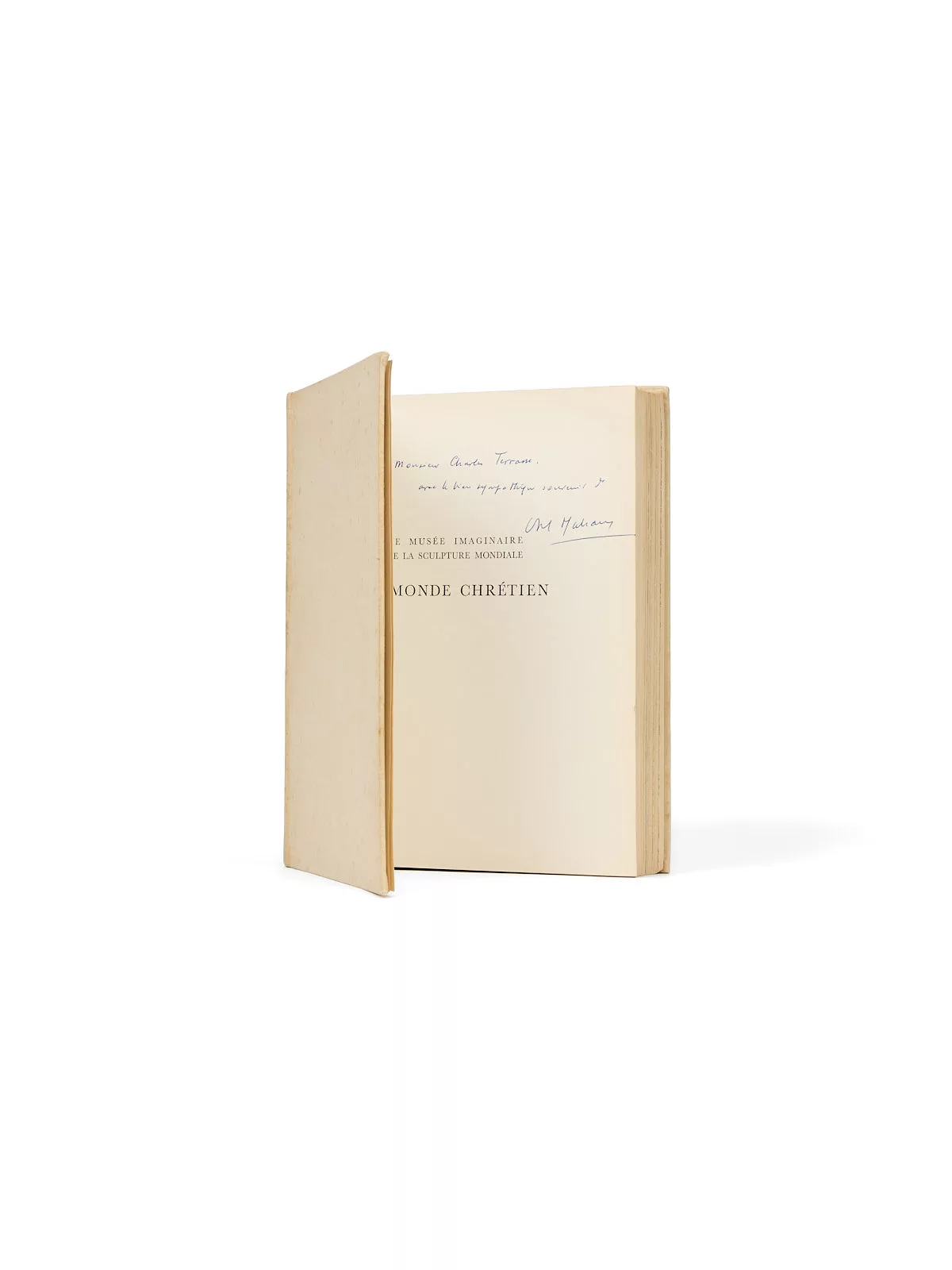
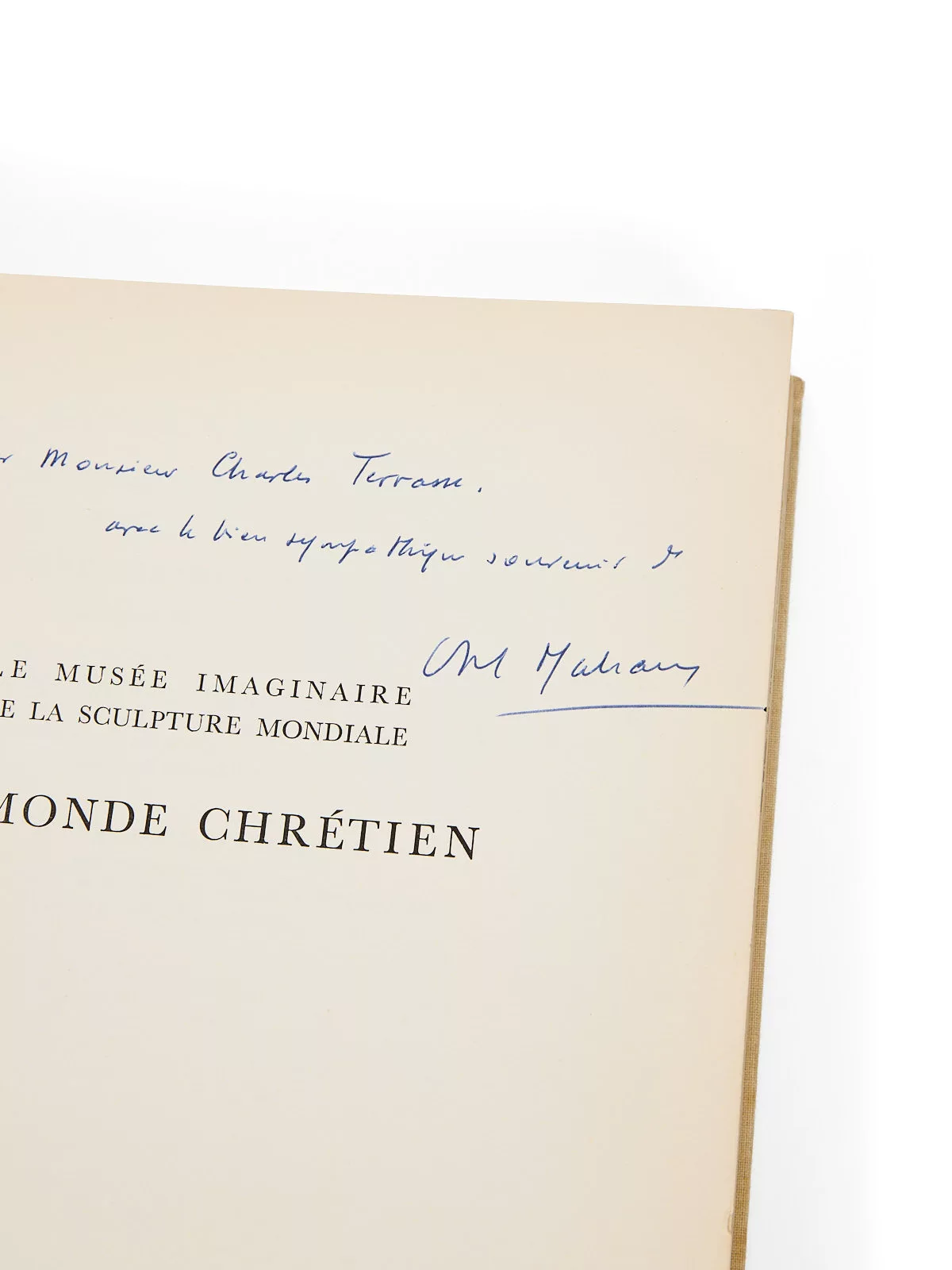
Signed presentation inscription: “Pour Monsieur Charles Terrasse, avec le bien sympathique souvenir. A. Malraux.”
This volume belongs to the vast undertaking of the Musée imaginaire, in which Malraux attempts nothing less than a spiritual history of art on the scale of civilizations. For him, sculpture becomes a universal language, the primitive trace of a dialogue between man and whatever he conceives as sacred, divine or supernatural. In this reflection, Christian art occupies a decisive place, and Malraux dwells with particular insistence on the great styles of the Middle Ages — Byzantine, Romanesque, Gothic — not to describe them as a scholar, but to attempt to grasp the imaginative worlds they made visible.
Son of the composer Claude Terrasse and nephew of Pierre Bonnard, Charles Terrasse (1893–1982) was not merely a figure of the art world: a palaeographer-archivist, art historian, specialist in the Renaissance and future chief curator of the Château de Fontainebleau, he was the author of numerous studies on architecture, sculpture and the great forms of French art. Such a recipient suits this volume perfectly.