

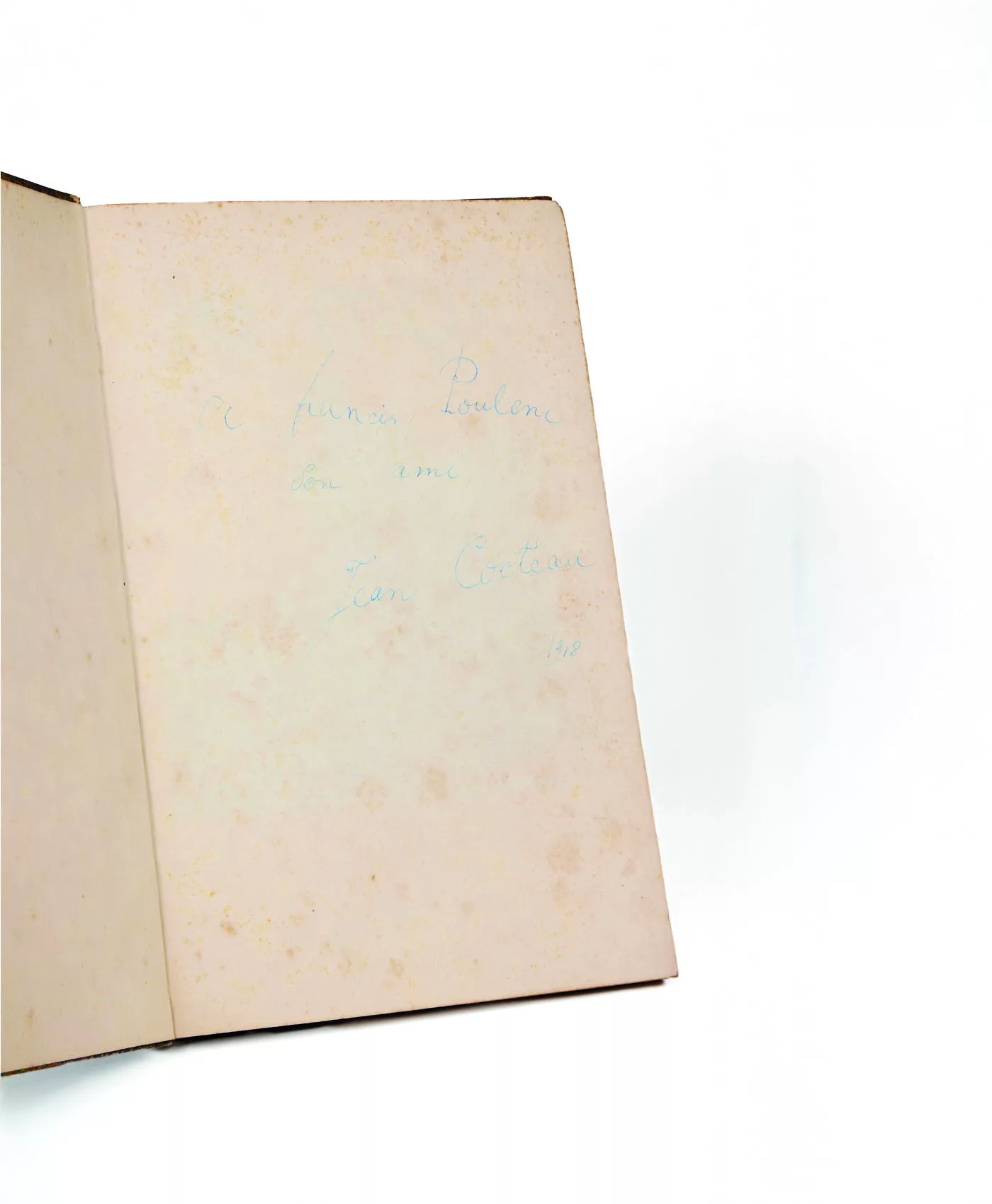
Signed presentation inscription: “à Francis Poulenc, son ami Jean Cocteau, 1918.”
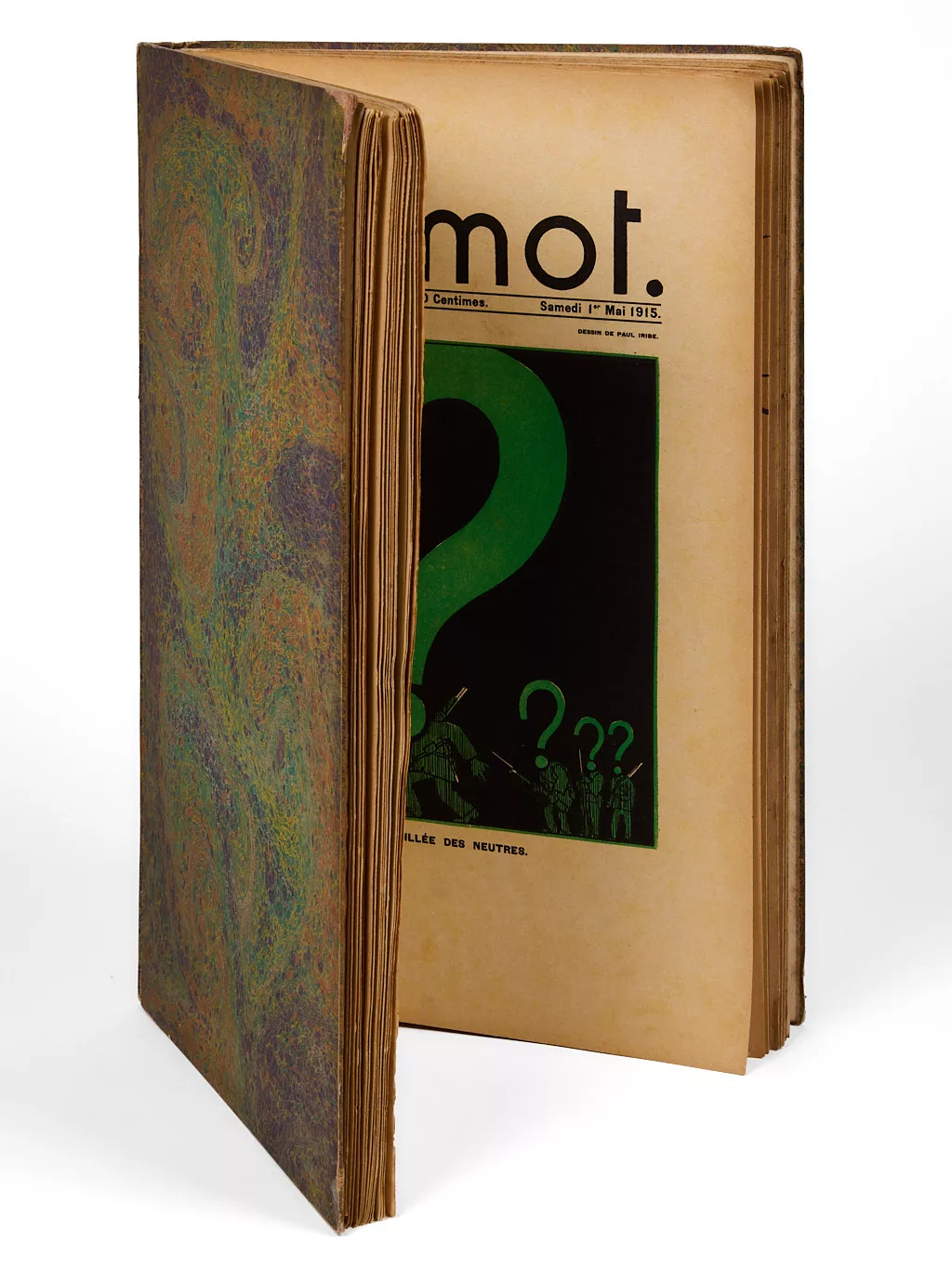
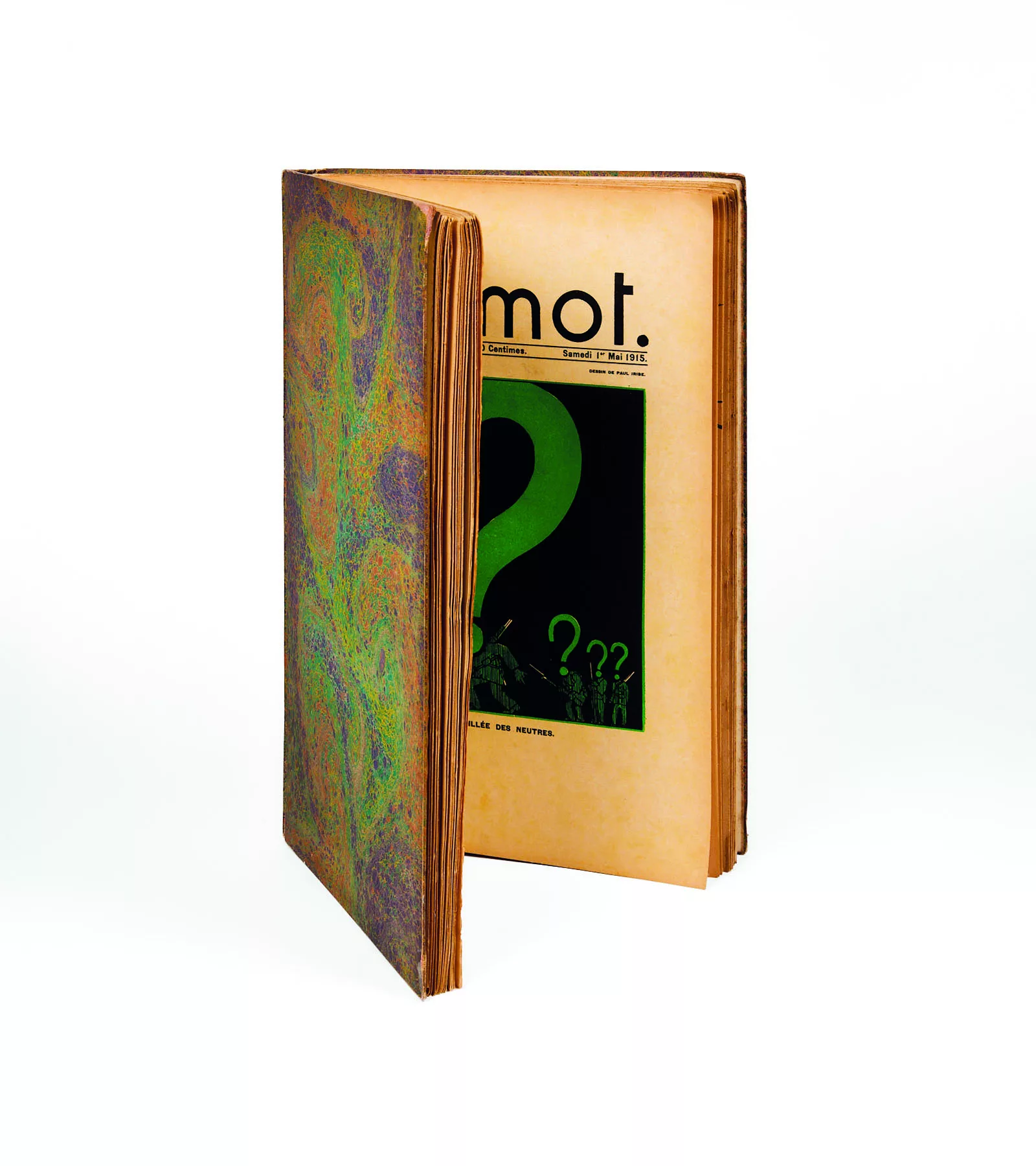
Founded by Jean Cocteau and Paul Iribe at the height of the war, Le Mot captures the violence of the conflict even in its imagery: the offensive patriotism of the early issues soon gave way to a rapid opening onto graphic modernity — woodcuts by Raoul Dufy, contributions from Albert Gleizes, Léon Bakst and André Lhote. Cocteau himself contributed drawings and caricatures under the pseudonym “Jim,” borrowed from his dog. Exempted from military service but active with the Red Cross, present at the evacuation of the wounded after the bombing of Reims, Cocteau brought to the review a sharp sense of current events and visual propaganda, which soon ran afoul of censorship.
The set is presented as a complete collection, in boards commissioned by Francis Poulenc: it brings together all 20 issues, including the double state of the cover of no. 8.
A provenance of the first order: Francis Poulenc (1899–1963) would go on to join the group of “Les Six,” founded by Cocteau following his manifesto Le Coq et l’Arlequin (1918); the inscription dates precisely from this moment of friendship and creative companionship. Poulenc set Cocteau’s Cocardes (1919) to music, took part in the collective ballet Les Mariés de la tour Eiffel (1921, scenario by Cocteau) and returned to Cocteau’s world in La Voix humaine (1959).
Contents: No. 1 — 28 November 1914; No. 2 — 7 December 1914; No. 3 — 19 November 1914; No. 4 — 2 January 1915; No. 5 — 9 January 1915; No. 6 — 16 January 1915; No. 7 — 23 January 1915; No. 8 — 30 January 1915 — 2 covers, the first censored; No. 9 — 6 February 1915; No. 10 — 13 February 1915 — with the double page for Dufy’s engraving; No. 11 — 20 February 1915; No. 12 — 27 February 1915; No. 14 — 13 March 1915, with the announcement leaf for the issue of Saturday 20 March, banned by the censor; No. 15 — 27 March 1915; No. 16 — 3 April 1915 (dampstains on the leaves of this issue); No. 17 — 1 May 1915; No. 18 — 1 June 1915; No. 19 — 15 June 1915; No. 20 — 1 July 1915.