

Le Marteau sans maître
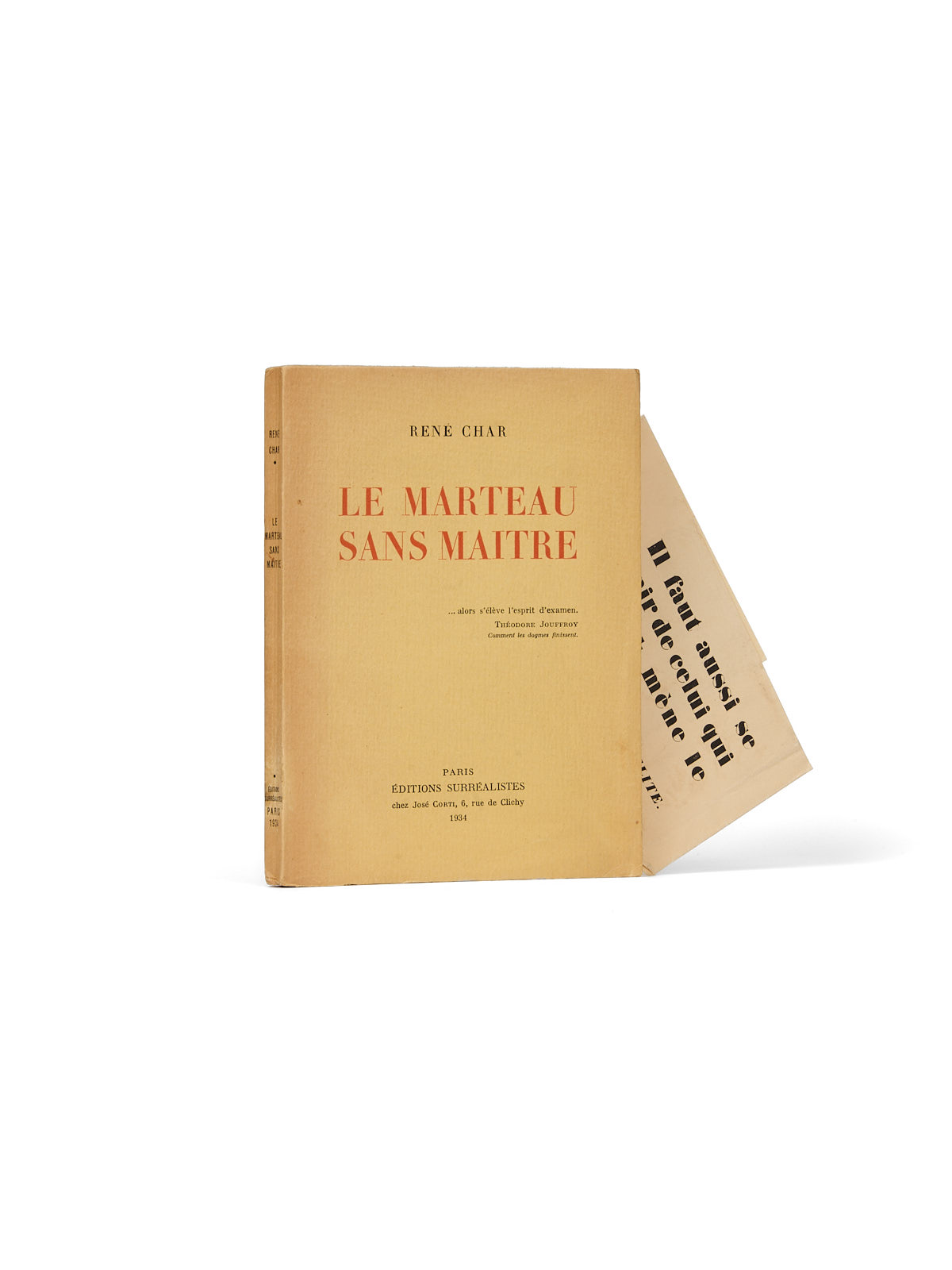
One of 500 copies of the ordinary printing, after 20 copies on Arches paper with an original etching by Kandinsky.
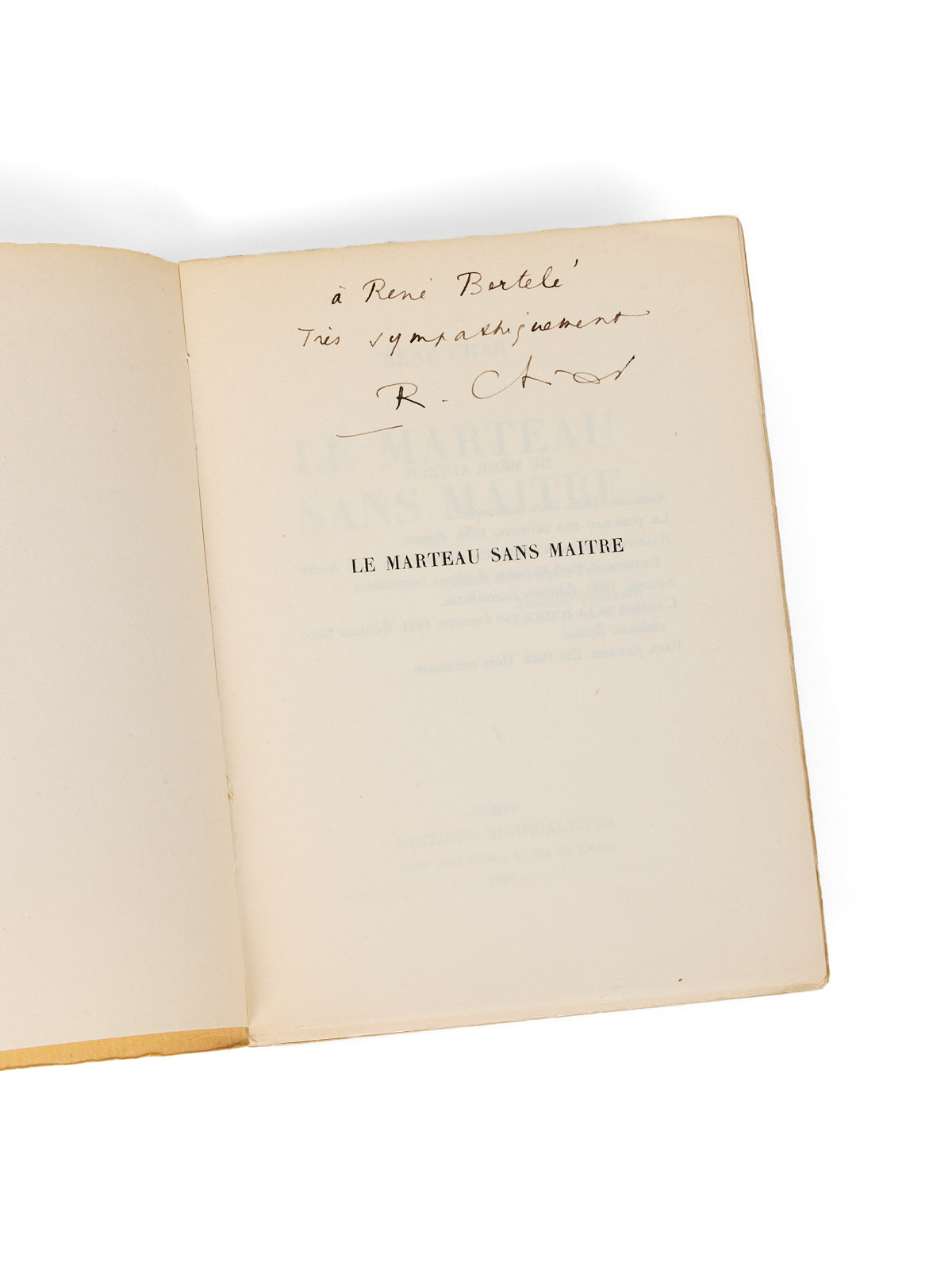
Inscribed and signed by Char to René Bertelé: “à René Bertelé, très sympathiquement, R. Char.”
Long regarded as a founding text of René Char’s Surrealist period, Le Marteau sans maître in fact occupies a more complex position: Char always denied truly belonging to the movement, describing himself as merely a “passenger lodger” within it. Yet this book, published in the mid-1930s, marks a genuine turning point in interwar French poetry, combining flashes of brilliance with an almost ascetic rigor. “It was a revolt I lived through alone, without communicating it,” he later told Paul Veyne.
The title was chosen as early as 1933, when Char submitted his manuscript to Gaston Gallimard, who declined to publish it. The poet then turned to José Corti, already active in publishing Surrealist texts. Corti agreed to print it under the imprint “Éditions surréalistes,” in a partly first-edition collective volume bringing together Arsenal, Artine, L’Action de la justice est éteinte and, for the first time, the Poèmes militants.
For the publisher’s insert, Char approached first Paul Éluard and then André Breton, before finally choosing the text written by Tristan Tzara, whom he thanked in these terms:
“Je suis enchanté, avec toute la gravité, l’émerveillement que ce mot renferme, de vos lignes à l’infini. (…) Je ne vois d’aussi claire ceinture pour m’entourer nulle part, il ne faut pas mêler les diamants. Ainsi donc vous seul. Et j’en suis ravi et pour mon livre et pour le lecteur.”
The publisher’s insert is present, as is the original publisher’s wraparound band.