

Le Linot
Rabier illustrated Florian's work in 1936 for Éditions Garnier.
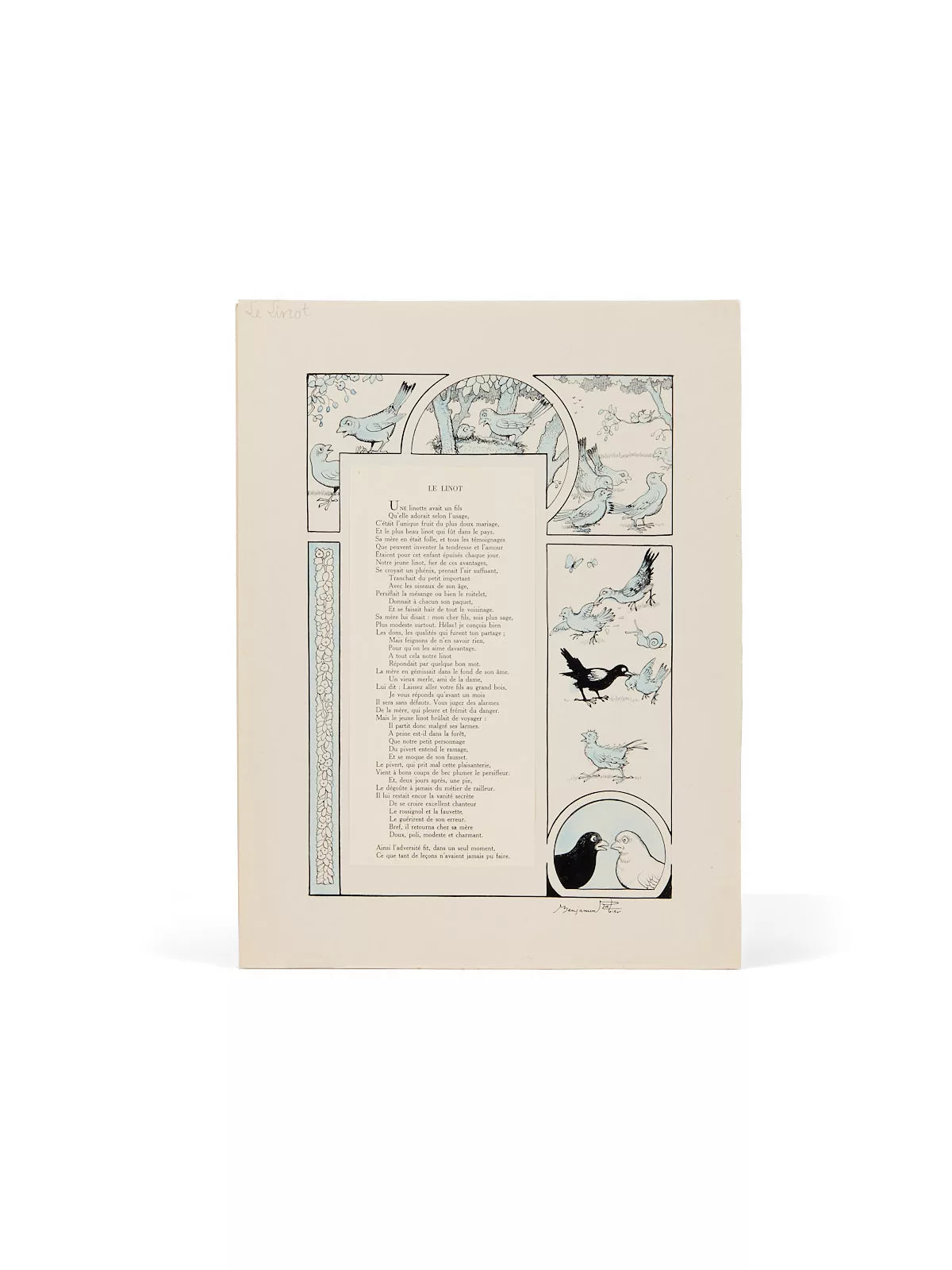
This plate, composed in this manner, is the one used for the edition.
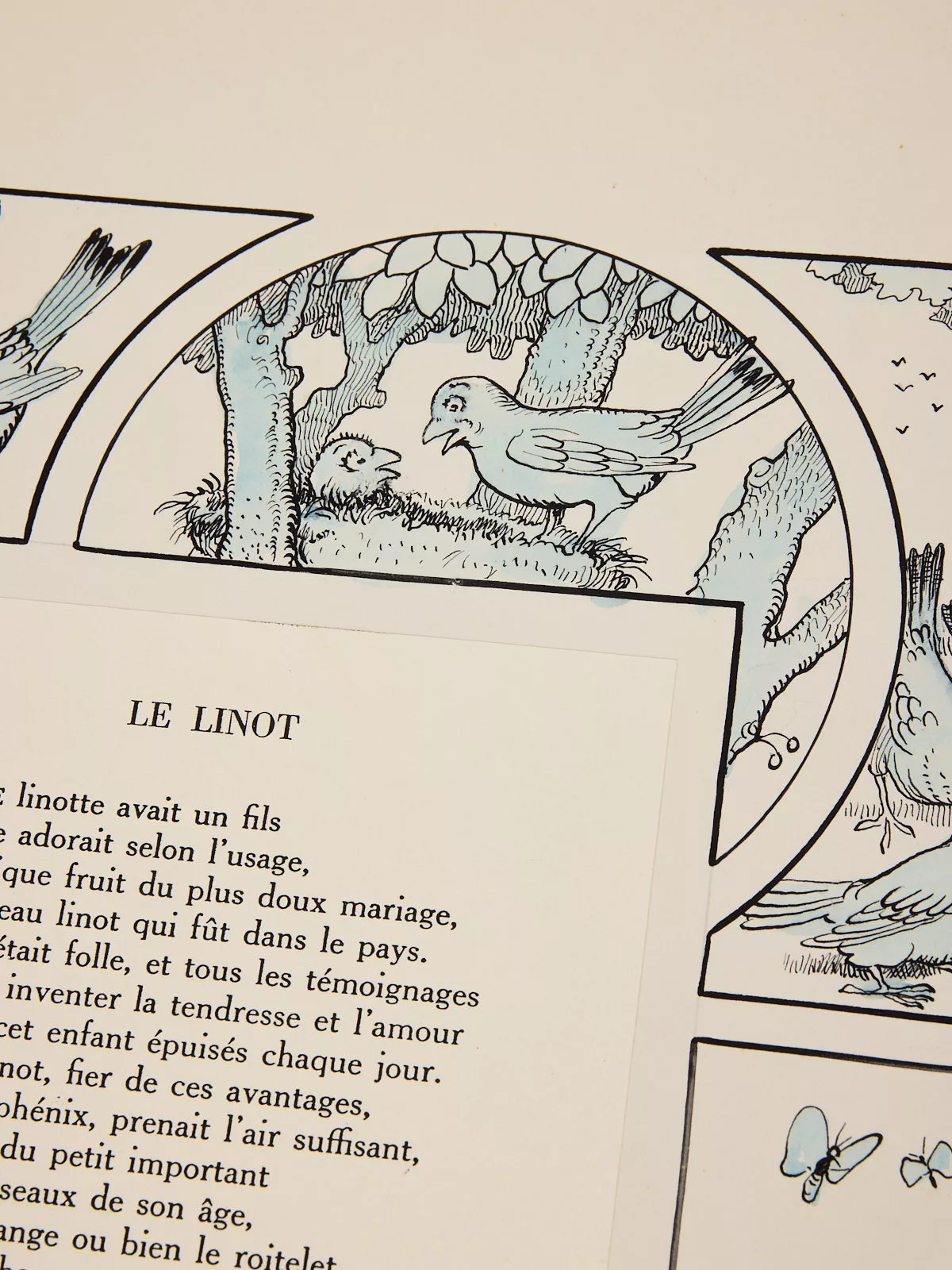
The text is printed and mounted at the center of the plate; the drawing illustrates the fable “Le Linot.”
In 1792, Florian published a collection of one hundred fables arranged in five books (to which twelve further fables were added posthumously). This became his principal claim to fame and the reason for his lasting literary reputation, his fables being generally regarded as the finest after those of Jean de La Fontaine. For his subjects, although he invented a few himself, Jean-Pierre Claris de Florian drew mainly on the common stock of fables found in Aesop and the German fabulists, taking care to avoid subjects already treated by La Fontaine.
The morals of several of his fables remain in common use today, such as “Chacun son métier, les vaches seront bien gardées” (Le Vacher et le Garde-chasse), “L’asile le plus sûr est le sein d’une mère” (La Mère, l’Enfant et les Sarigues), “éclairer sa lanterne” (Le Singe qui montre la lanterne magique), “rira bien qui rira le dernier” (Les Deux Paysans et le Nuage), “Pour vivre heureux, vivons caché” (Le Grillon), as well as expressions such as “larmes de crocodile,” “réveiller le chat qui dort” and even “aller se faire tondre,” all of which have passed into everyday French.
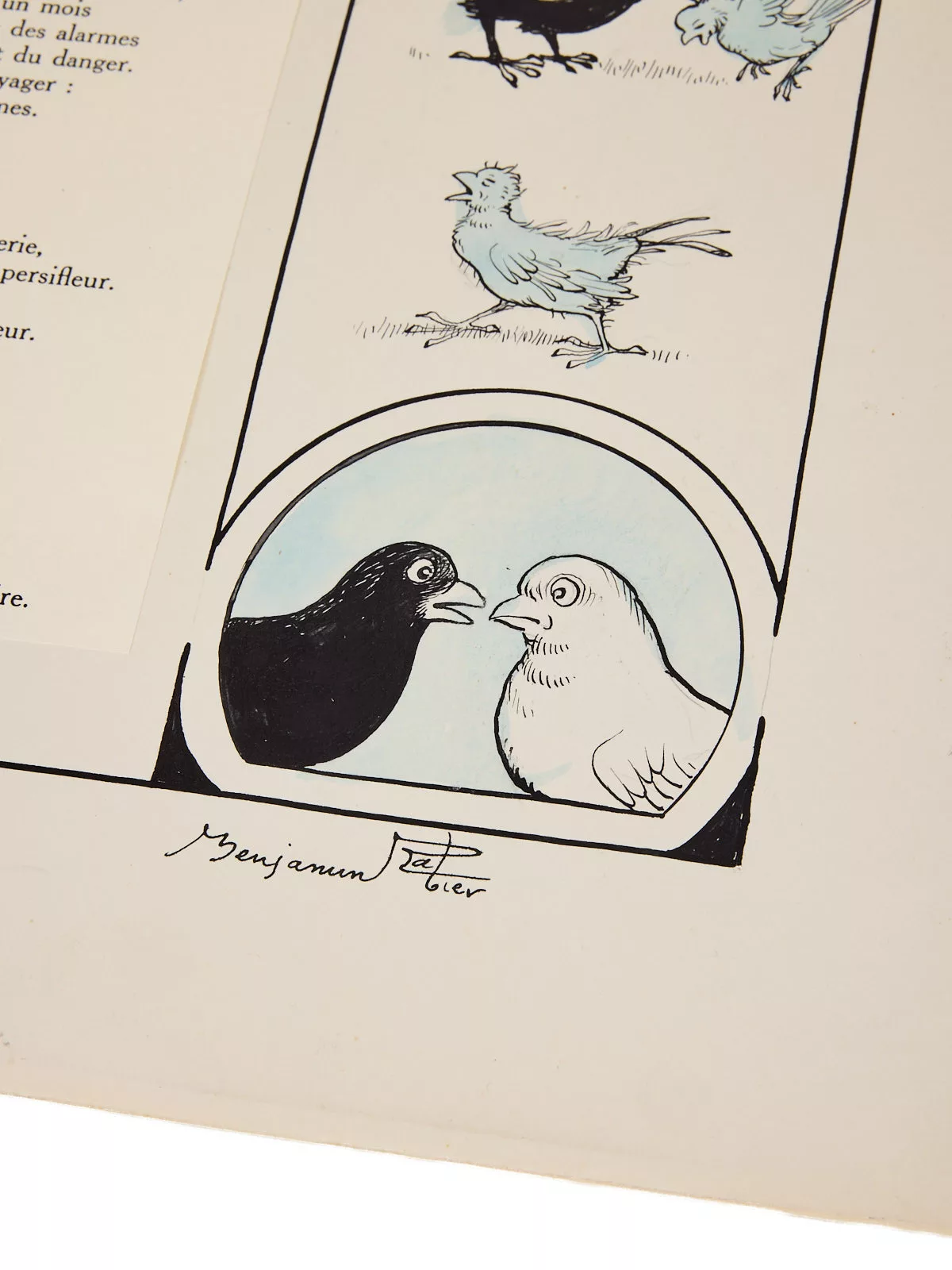
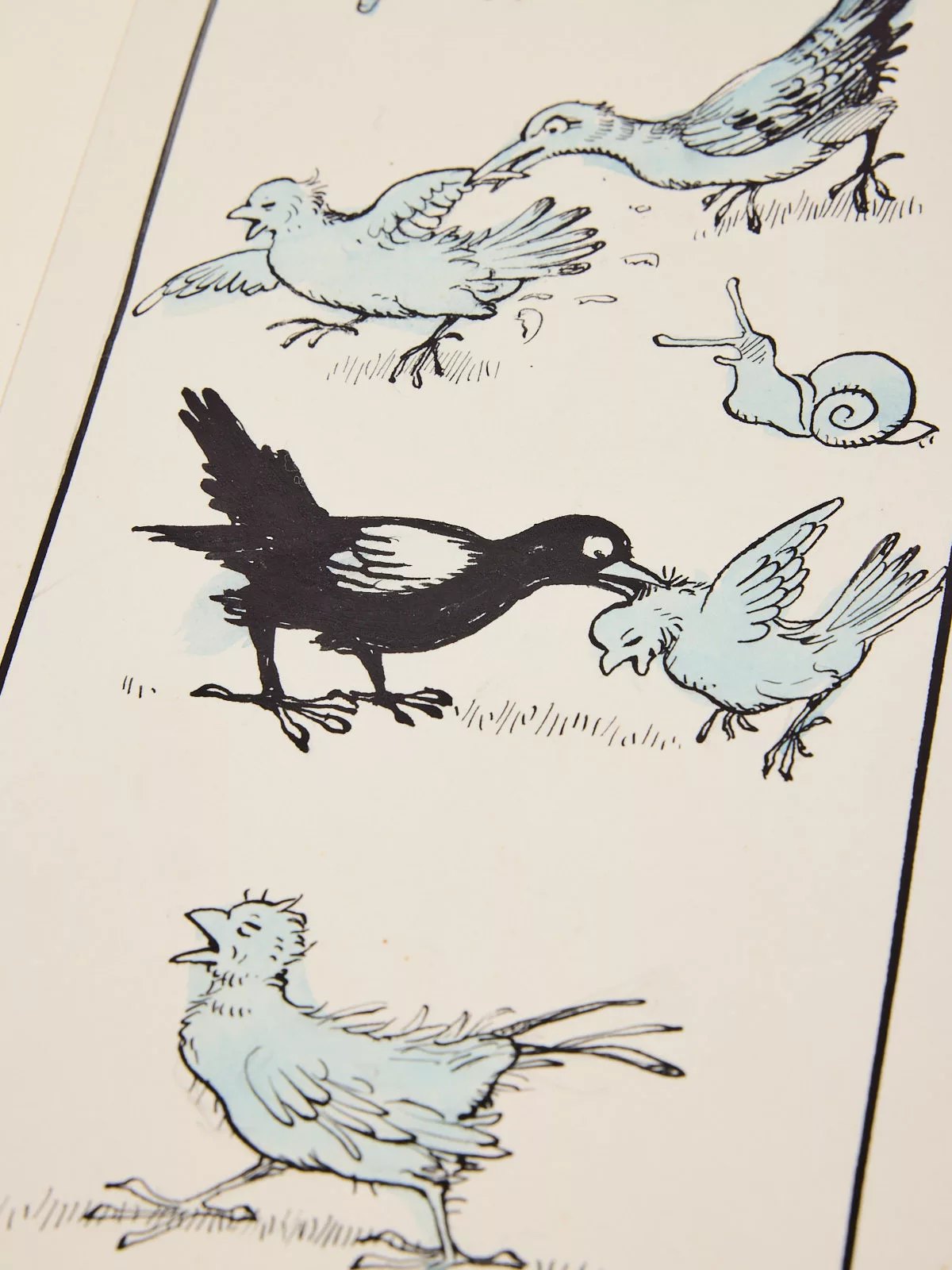
Unlike his earlier illustrations, Rabier’s drawings for these fables are not narrative scenes but illuminations, built from close-ups and visual shorthand.
A perfect copy.