

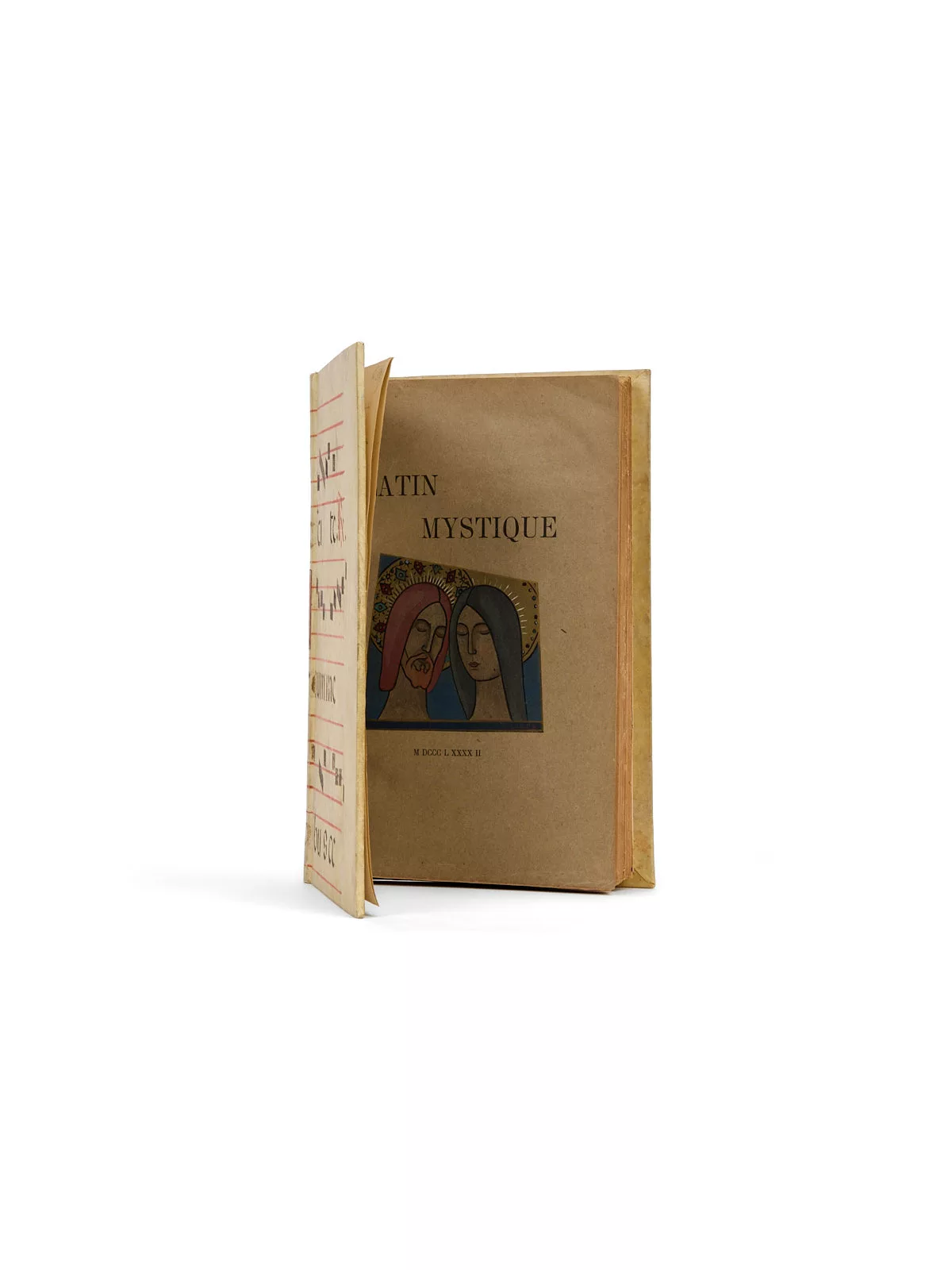
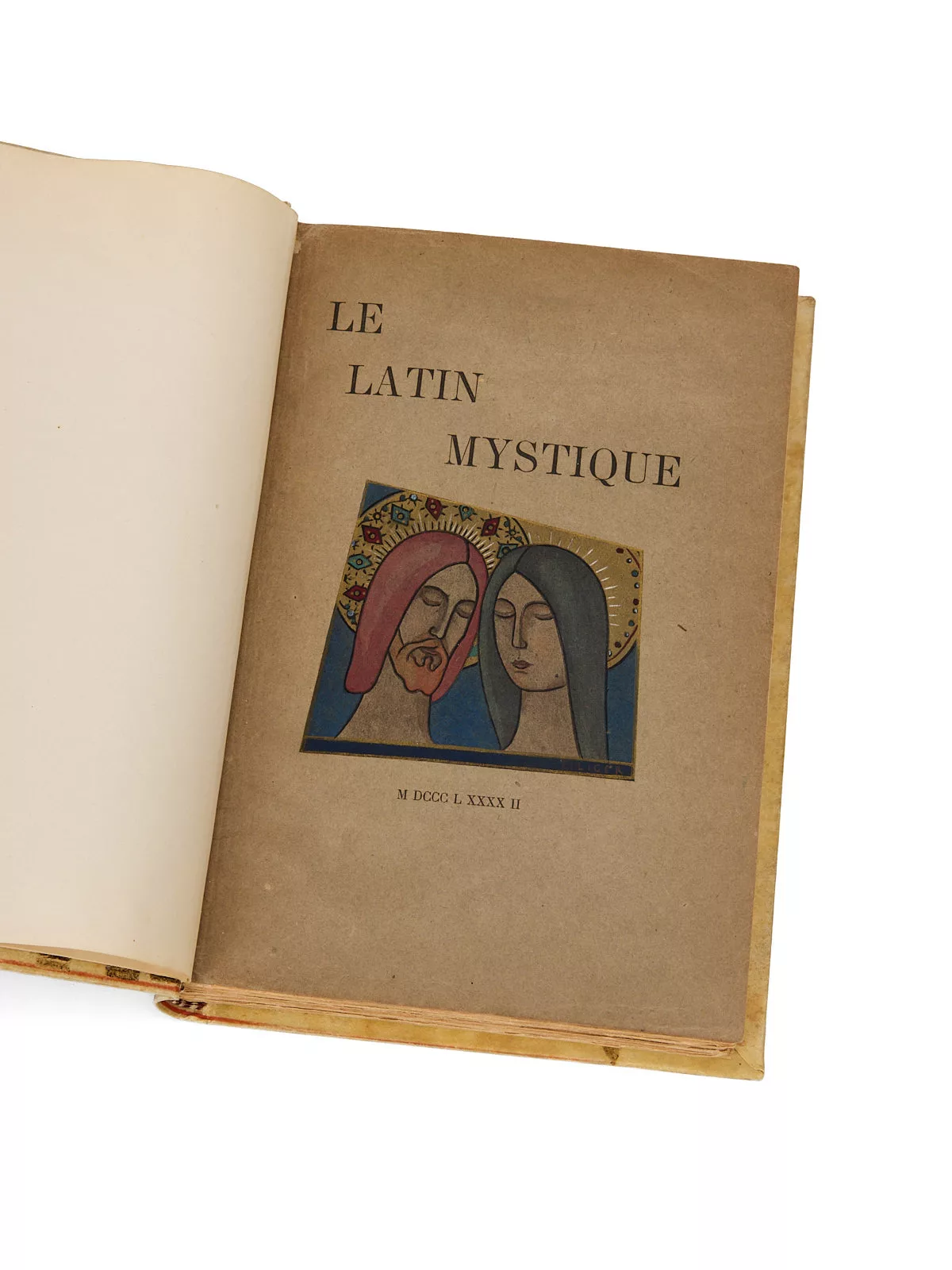
Preface by J.-K. Huysmans. Miniature by Charles Filiger on the cover, the mystic painter whom the author and Alfred Jarry called upon for their Ymagier.
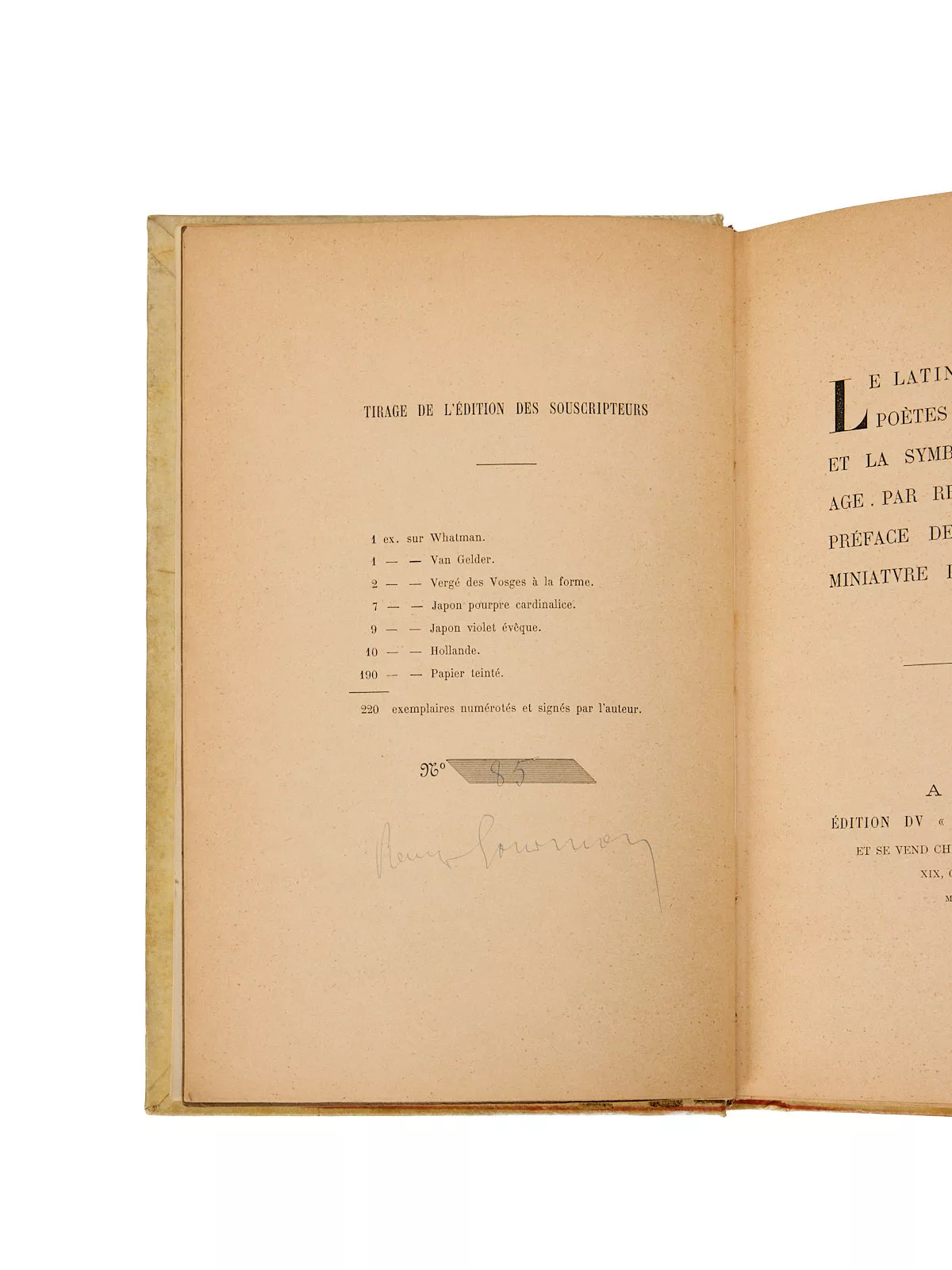
One of 190 copies on tinted paper, numbered and signed by the author (no. 85).
Le Latin mystique is one of Remy de Gourmont’s major books, and one of the most singular monuments of Symbolist and Decadent sensibility.
The book appeared in 1892 from Mercure de France, with a preface by J.-K. Huysmans, paying homage to the chapter of À rebours (1884) in which the classical language of Virgil and Cicero is sharply devalued in favor of authors then considered minor figures of late Latinity. Noël Arnaud aptly summarized it: Le Latin mystique is “eight hundred years of neglected Latin poetry,” which Gourmont rescued from ignorance and dogmatic contempt. Beyond Virgil and Cicero, he reveals another continuity: that of a language fertilized by faith, fervor and ecstasy. Hymns, antiphons, sequences, the Stabat Mater, and the texts of Saint Bernard, Hildegard and Jacopone all become manifestations of an intensely alive spiritual poetry, which under his pen becomes a paradoxical mirror of the fin de siècle.
Le Latin mystique was a revelation to Léon Bloy and Blaise Cendrars. The physical production of the book itself partakes of its aesthetic: the print run was conceived as an almost liturgical object of bibliophilia, with papers bearing deliciously ecclesiastical names — Japon pourpre cardinalice, Japon violet-évêque — terms with which Gourmont amused himself in a letter to Émile Barbé, explaining that he had had a paper made “the color of a bishop’s stockings,” and already contemplating a papyrus in the “shade of cardinals’ garters.”
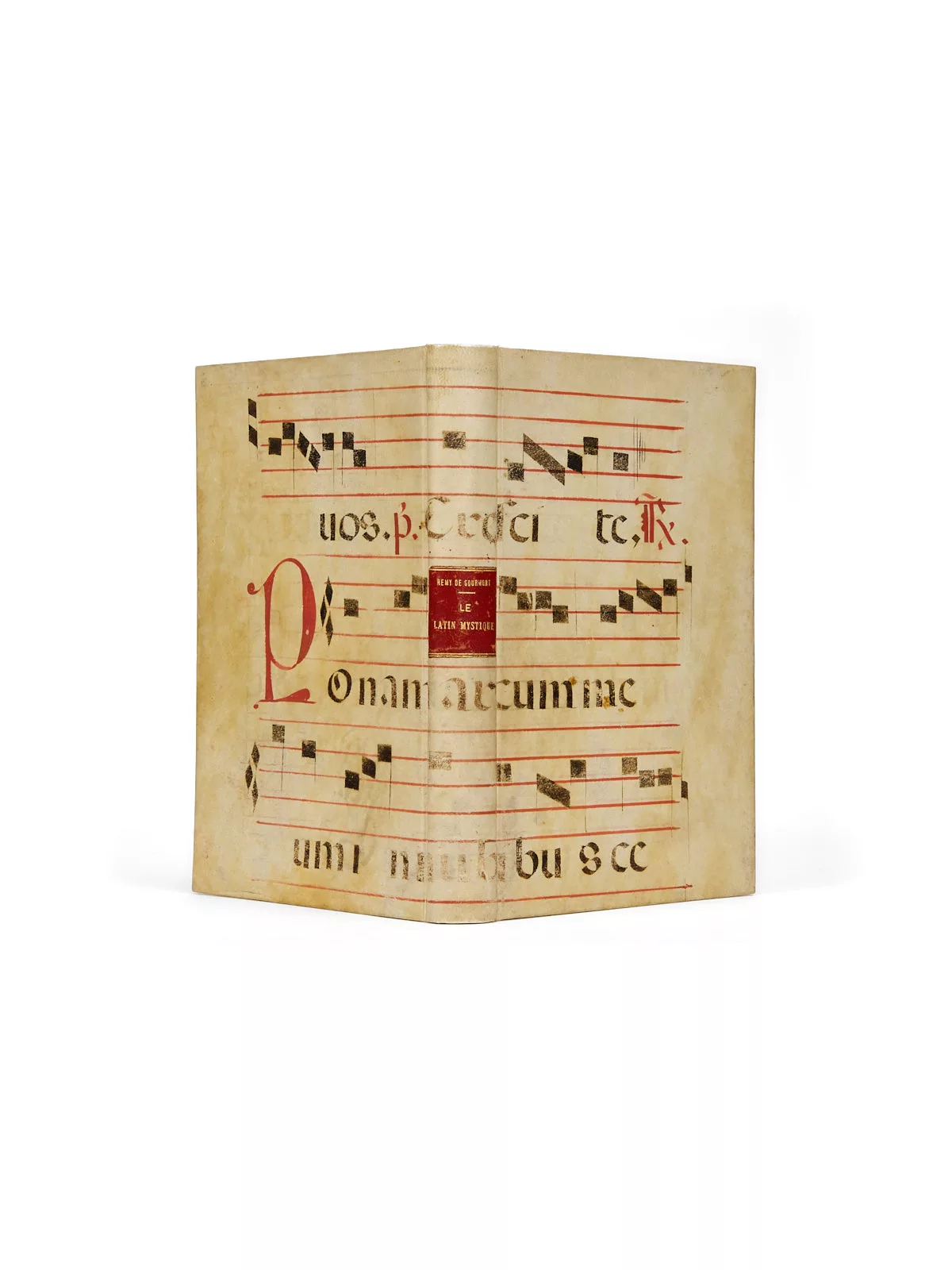
This copy is magnificently served by its contemporary vellum binding decorated with Gregorian chant notation, extending the idea and spirit of a monastic object.
A rare title in first edition. The 1913 reissue appeared without the preface, following a falling-out between the two writers.
A choice copy.