

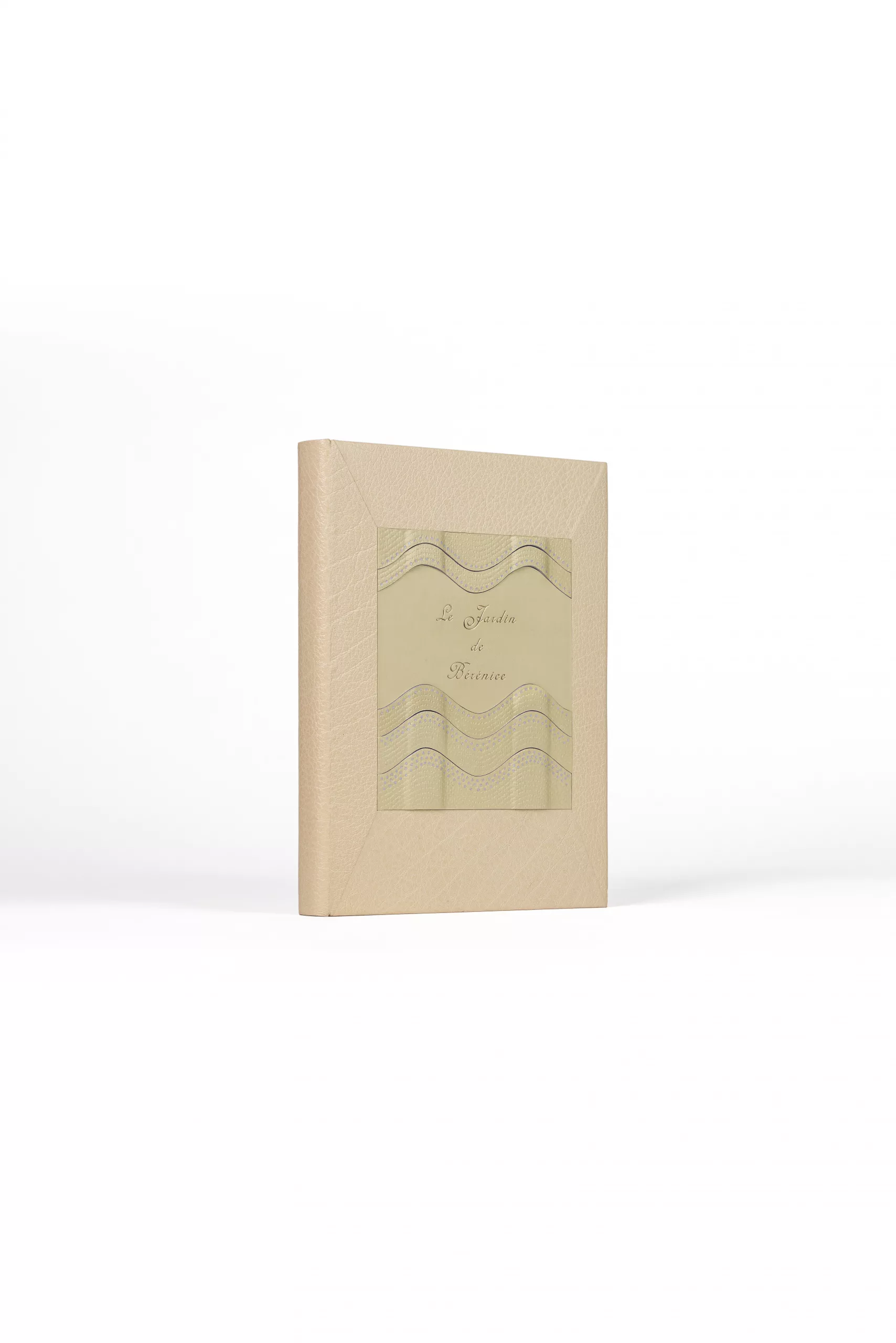
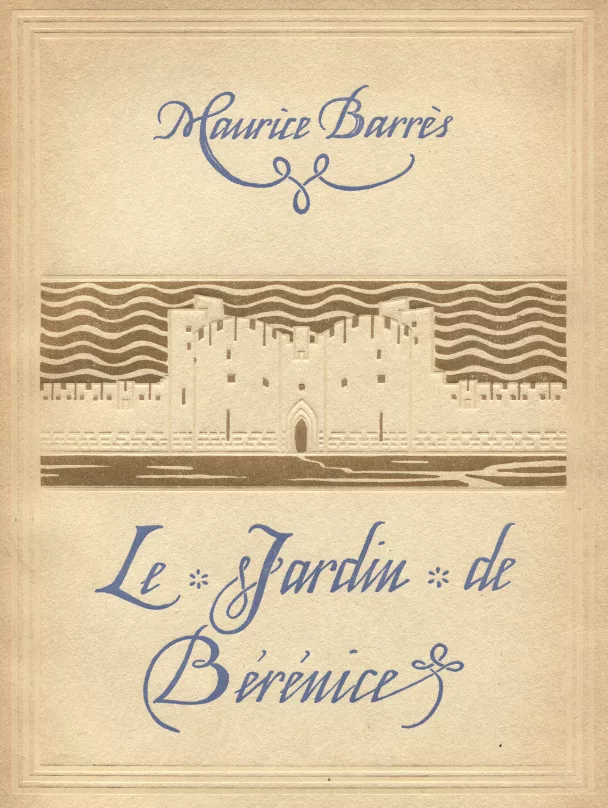
Le Jardin de Bérénice
Limited to 130 copies (no. 107).
The 13 pages of the preface are also illustrated with a botanical ornamentation framing the text, the work of Malo Renault.
Born in Saint-Malo on 5 October 1870, Malo Renault first specialized in etching, then soft-ground etching, before turning to drypoint on the occasion of this edition commissioned by the Cent Bibliophiles, for whom he also engraved the menu print in woodcut, using four blocks for the four colors.
Le Jardin de Bérénice, the third part of the novelistic trilogy Barrès entitled Le Culte du moi, was published in 1896. This allegorical fable celebrates contemplation and the imagination that allows one to understand matters of the heart: it tells the story of a young intellectual, Philippe, who has just joined General Boulanger’s movement — the year is 1889 — and who sets off full of enthusiasm for Provence to organize an electoral campaign, seeking a parliamentary seat at Arles. But it is at Aigues-Mortes that he finds Bérénice again, a former acquaintance whom he cannot stop contemplating, “so beautiful in her garden”: he discovers for the first time the harmony of life and believes he has found, within the setting of this garden and through his love for this woman, the secret meaning of the universe. This romance — which takes a tragic turn — is beautifully rendered through Malo Renault’s color drypoints (pseudonym of Émile Auguste Renault).
1922 marked a turning point in his work, which thereafter turned toward the representation of feminine grace and the playfulness and naivety of children. Influenced by the work of Henri de Toulouse-Lautrec and Japanese art, the richness of his tones and his highly decorative compositions are those of a colorist of the first order.