

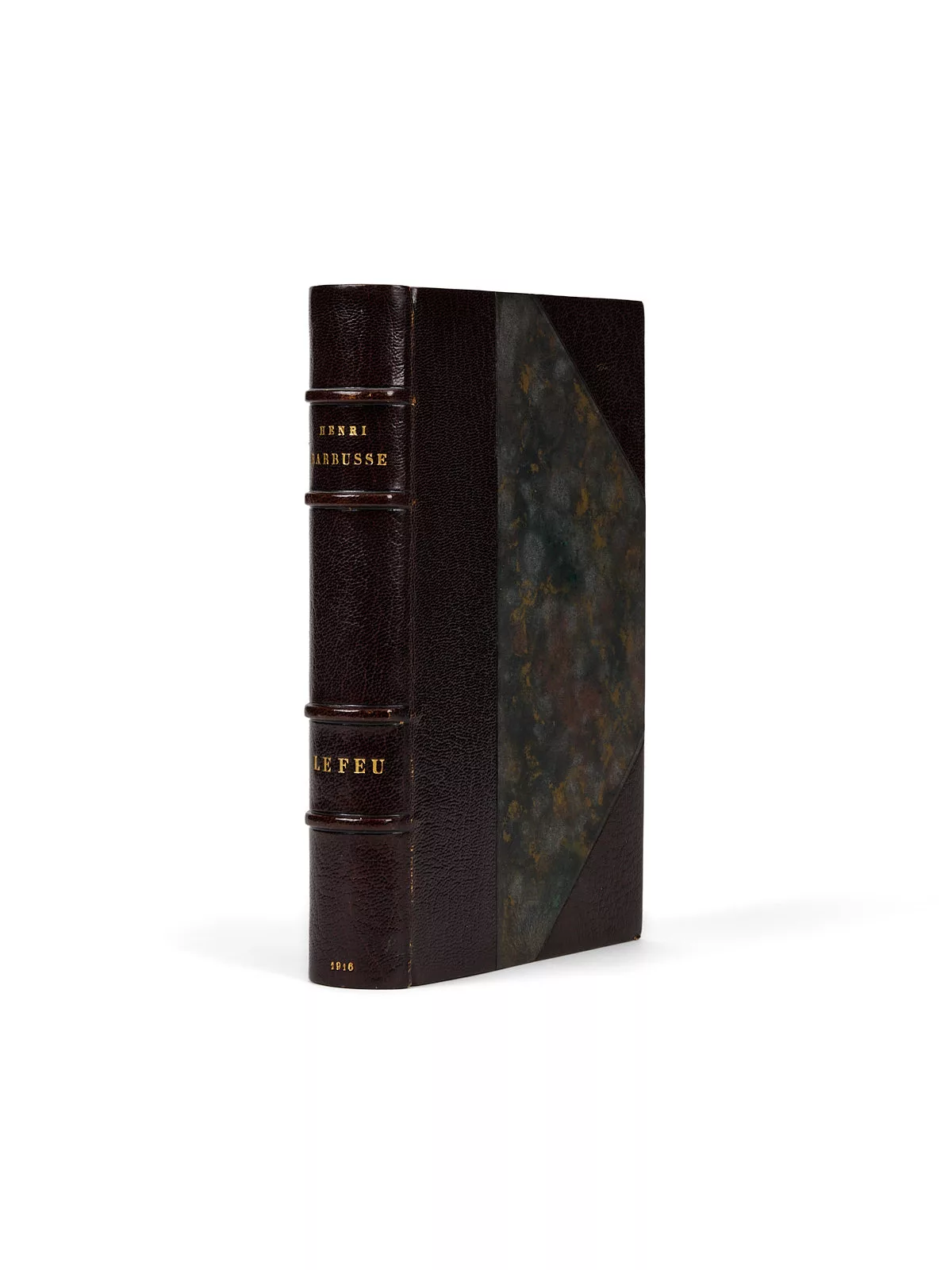
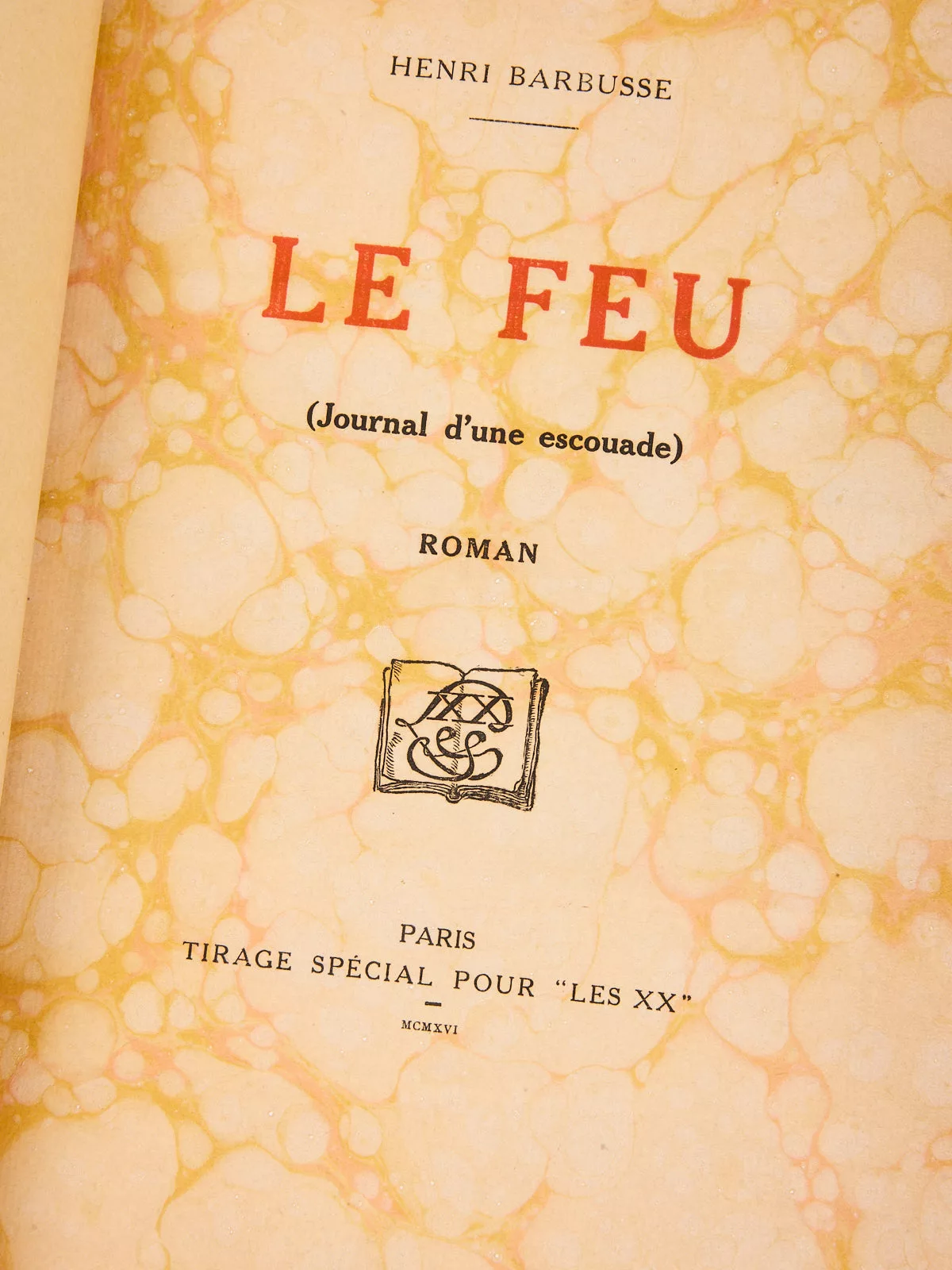
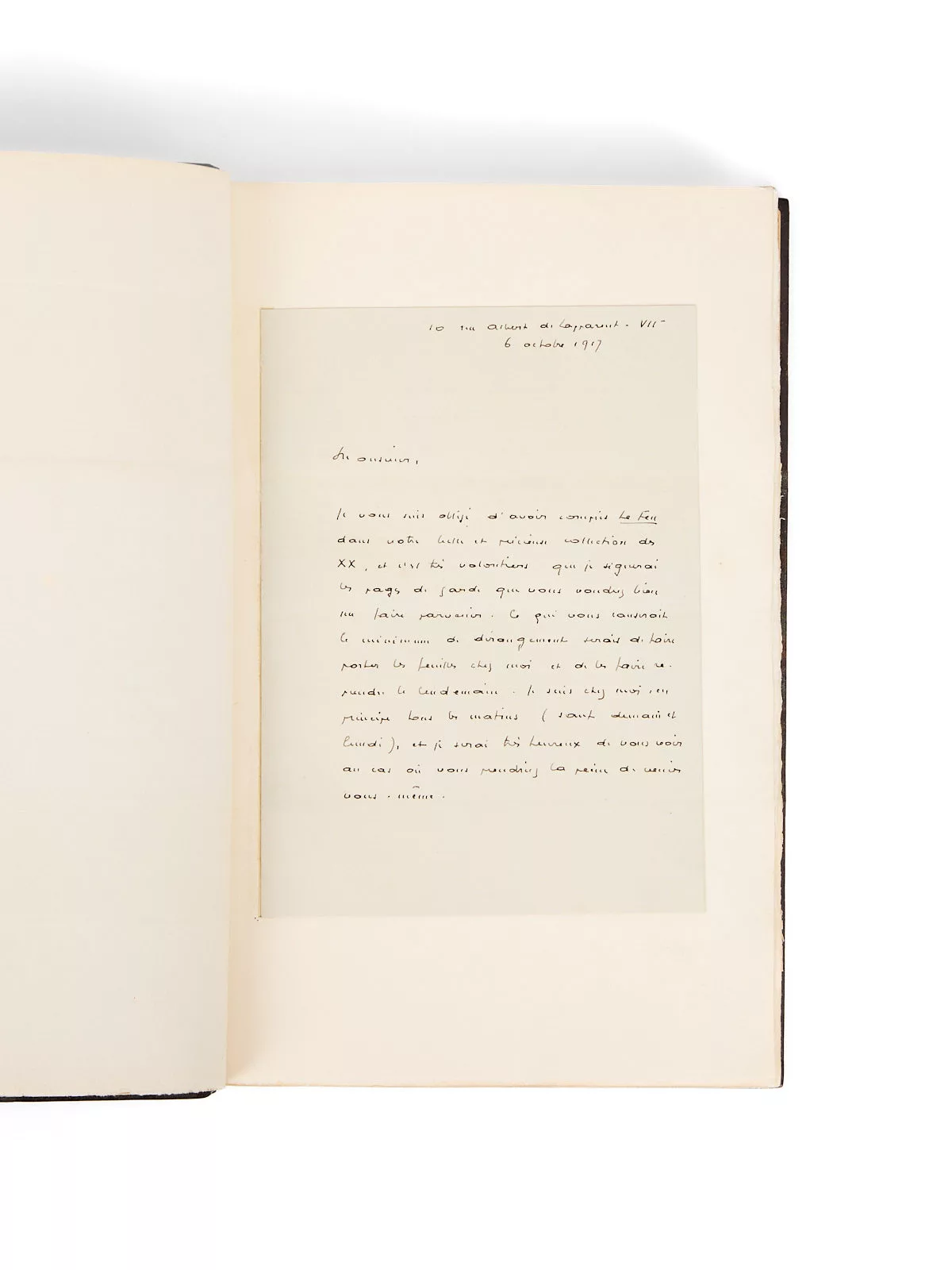
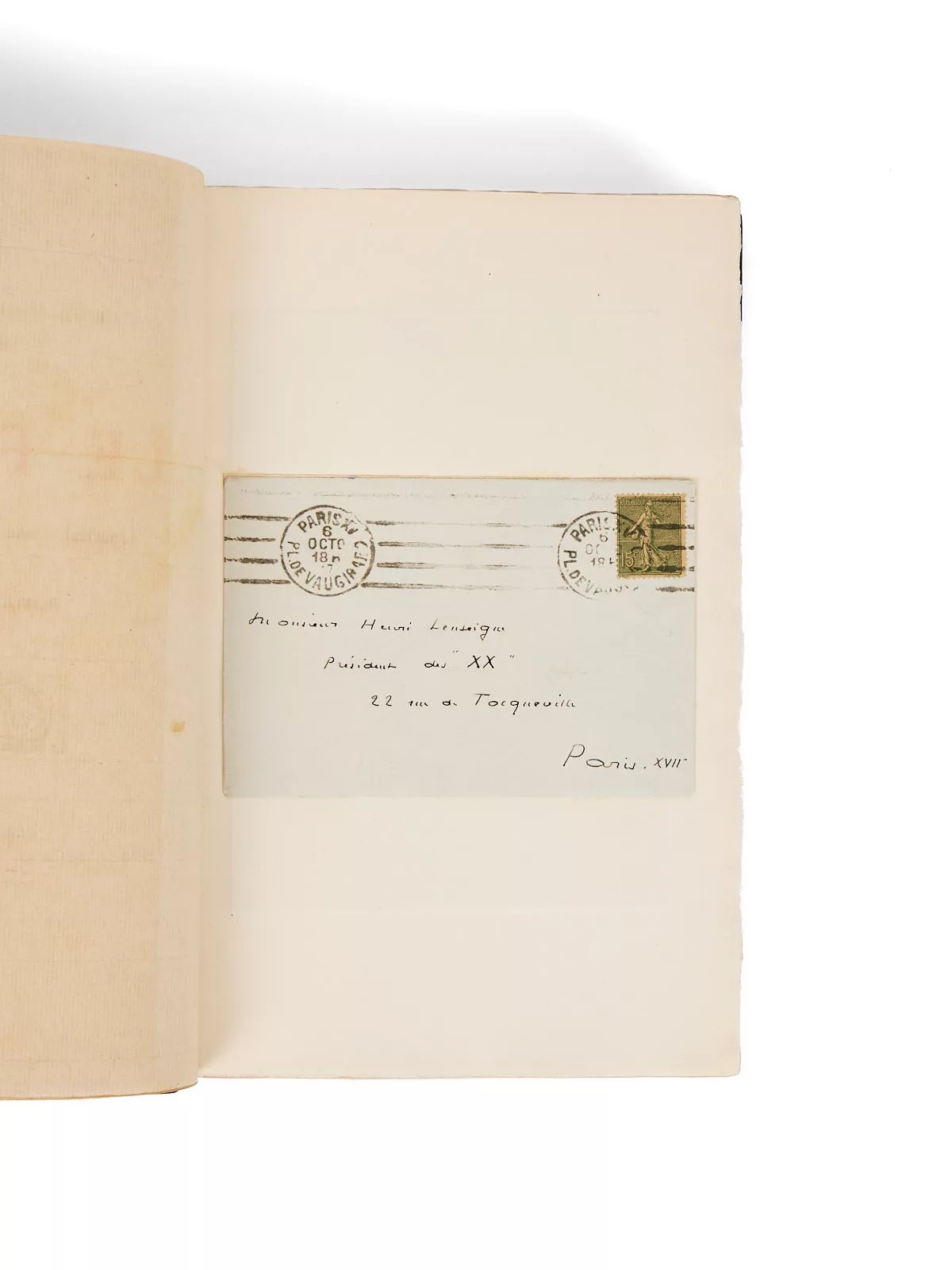
Bound in at front: autograph letter signed, addressed to the president of the Société des XX, dated 6 October 1917: “[…] je vous suis très obligé d'avoir compris Le Feu dans votre belle et précieuse collection des XX, et c'est très volontiers que je signerai les pages de gardes que vous voudrez bien me faire parvenir…”
Henri Barbusse experienced the fire of the trenches from 1915, first as a soldier and then as a stretcher-bearer. Writing largely from hospitals, and in twenty-four chapters, Barbusse gave an account of daily life at the front and the “appalling, unearthly exhaustion, the water up to one’s belly, the mud, the stench and the vile filth floating on the voracious earth,” drawing on a war notebook in which he had recorded his own experience.
The novel was finished by the very end of summer, and the idea of the Goncourt was already in the minds of his publishers even before the contract was signed. The first chapters began appearing as a serial in the daily L’Œuvre on 3 August: the Fischer brothers, literary directors at Flammarion, sensed the opportunity and approached the author to buy the rights to Le Feu. On 26 October, on the eve of a preparatory meeting of the Académie, they wrote to him:
“We have spoken of the possibility we foresee regarding the Goncourt. Certain conversations we have had these past days, notably with Paul Margueritte, lead us to believe we were not entirely mistaken. But we would need to move remarkably fast.”
Barbusse hesitated, being bound to other publishers, but the prospect of the Goncourt decided him. A week later the contract was signed — six days before the serial publication ended (93 instalments). On 15 November the text went to press and appeared, just in time, from Flammarion in early December, in an initial printing of 1,000 copies.
Barbusse won the Goncourt on the first ballot, on 15 December, with eight votes, without those of Léon Daudet or Elémir Bourges, exactly as he had anticipated.
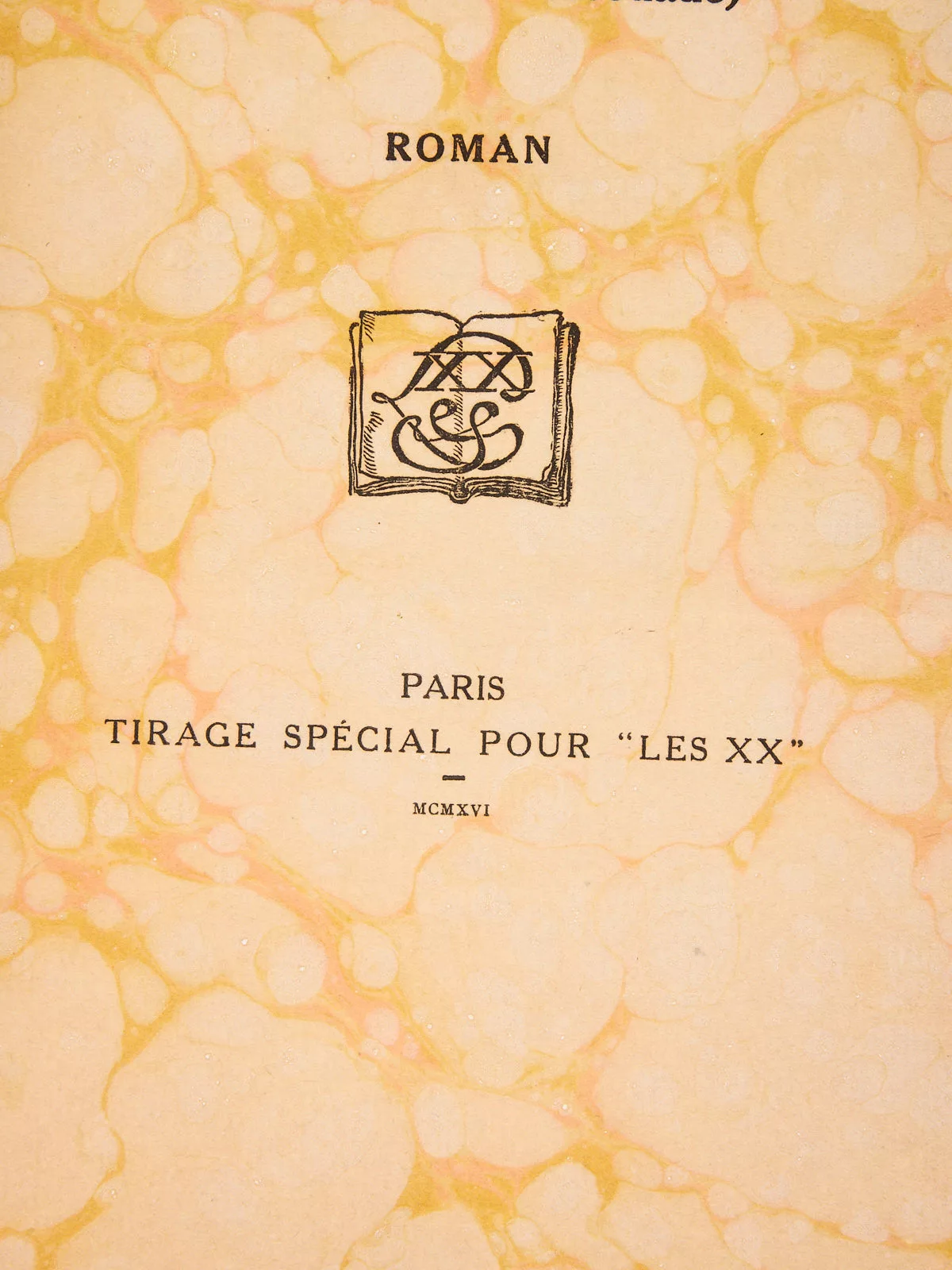
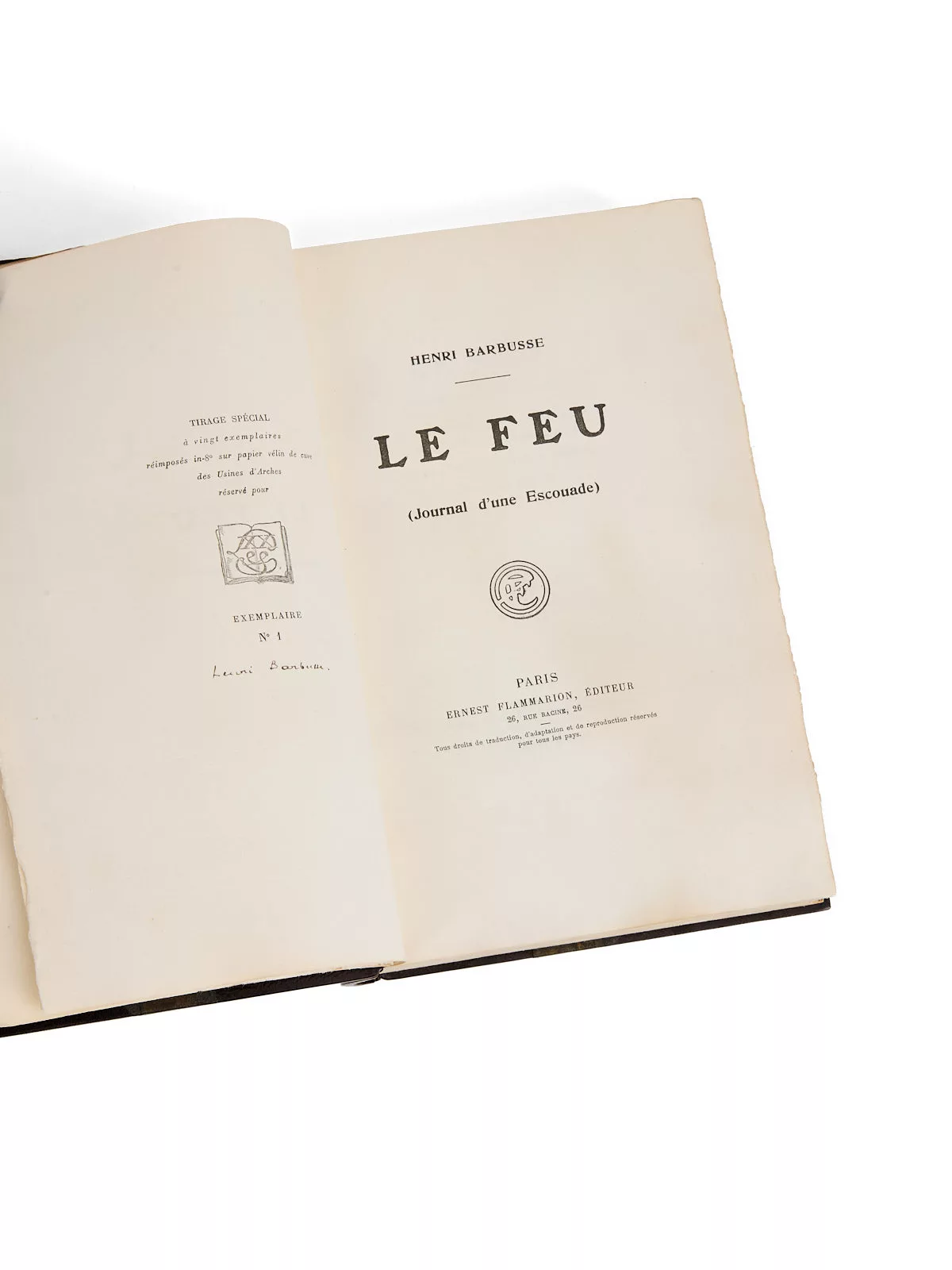
The present copy belongs to the rare “Les XX” printing, limited to 20 hors commerce copies, all signed by the author. It is copy no. 1, reserved for Henri Lenseigne, president of the Société des XX. An autograph letter bound in at front, signed by Barbusse, precisely documents the publication: this printing postdates the first edition, and it was only in October 1917 that Barbusse agreed to sign the limitation leaves. The surviving mailing envelope, postmarked accordingly, confirms this.
A very fine copy.
From the libraries of Henri Lenseigne (autograph letter), Jules Exbrayat and José Fabbiani Ruiz (bookplates).
Jean Norton Cru, Témoins, pp. 555–565; Talvart, I, 239 (does not record this printing).