

Le Dernier des Justes
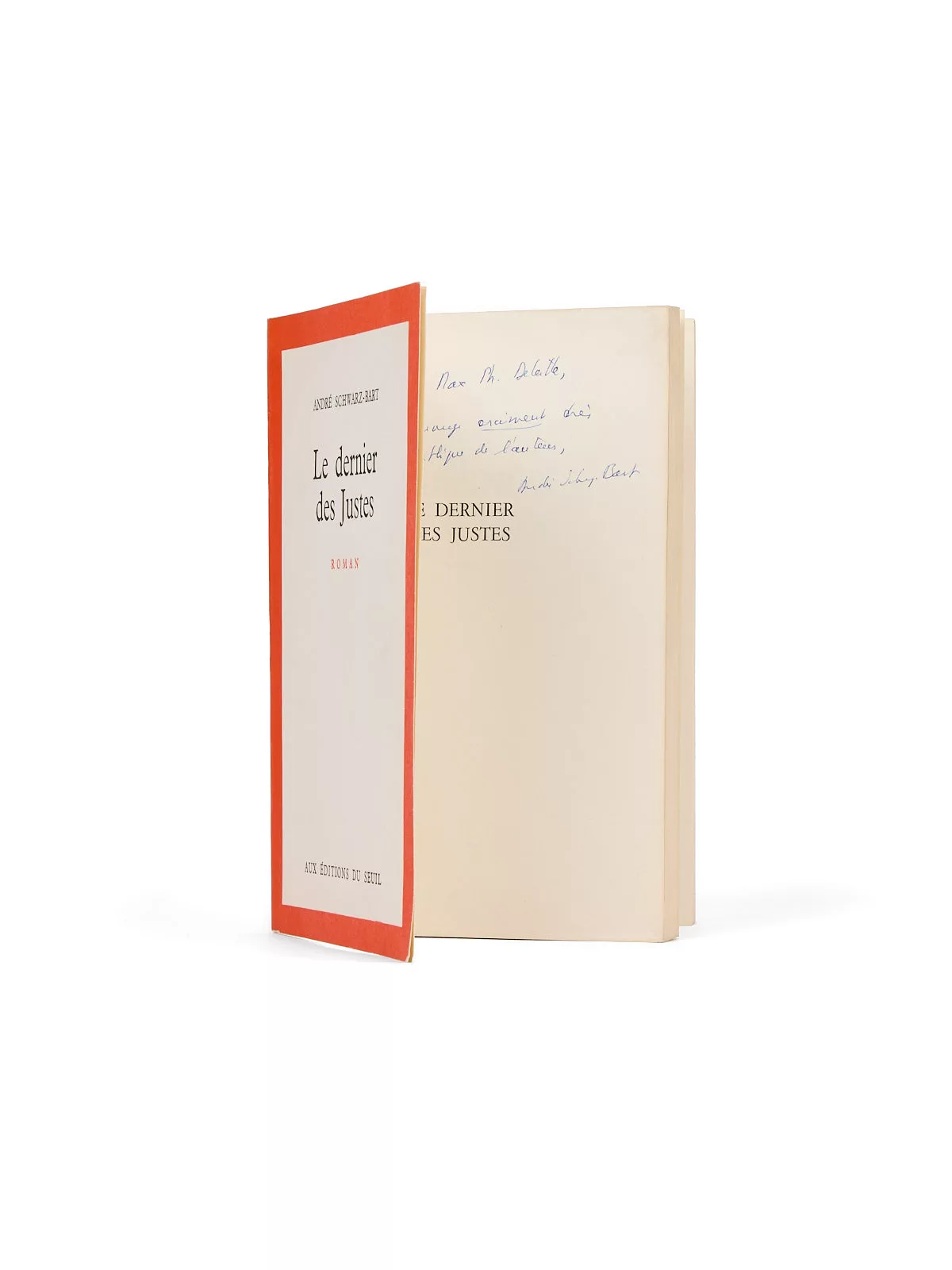
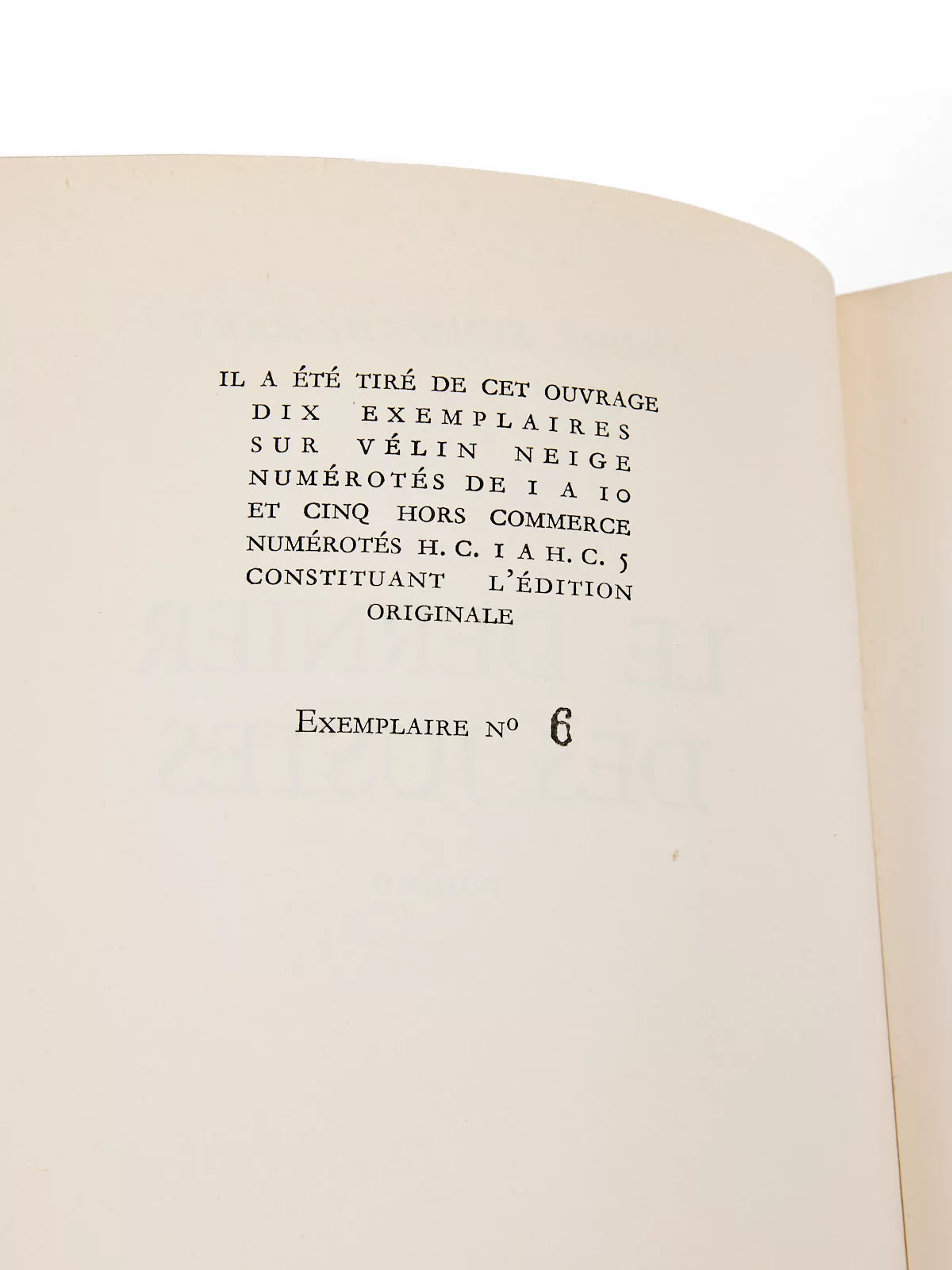
One of 15 copies on vélin neige (no. 6).
Signed presentation inscription: “À Monsieur Max Ph. Delatte, en hommage vraiment très sympathique de l'auteur, André Schwarz-Bart.”
Prix Goncourt, 1959. A monumental narrative, Le Dernier des Justes retraces eight centuries of persecution and Jewish memory, from the medieval pogroms to Auschwitz. The book opens with the legend of the thirty-six Just Men, mystical figures who, according to Jewish tradition, bear the weight of the world. Across generations, Schwarz-Bart follows the Lévy family line down to Ernie, a child martyr of the Shoah and the last link in a tragic history.
In honoring this book, the Académie Goncourt acknowledged the place of the Shoah in world literature less than fifteen years after the end of the war. The choice was all the more striking as this was the first major French literary text on the extermination of the Jews. The novel achieved immediate international acclaim, was translated into more than fifteen languages, and brought its author sudden and dazzling fame.
But this success was accompanied by fierce controversy. Like Roger Ikor a few years earlier, Schwarz-Bart was criticized in parts of the Jewish press for his portrayal of Jewish memory and identity. The journal Targoum and other voices accused him of instrumentalizing suffering, or even of oversimplifying history. Wounded, the writer gradually withdrew from French literary life, choosing silent exile over public dispute.
The book stands at the crossroads of history and memory. Schwarz-Bart blends mystical and religious heritage with historical reconstruction, in a language both limpid and incantatory. Through the figure of the “last of the Just,” he situates the child of Auschwitz within a centuries-long continuity, linking the memory of the Shoah to that of all Jewish persecutions. The Goncourt Prizes of 1955 and 1959 thus form a paradoxical diptych: consecrated by the literary establishment, their authors were both contested within the very community whose voice they sought to carry. Yet by crowning the themes of assimilation (Ikor) and extermination (Schwarz-Bart), the Académie brought two of the twentieth century’s most urgent questions of memory into the heart of the French novel.
A precious deluxe copy on vélin neige, one of only 15 printed, inscribed to Max-Philippe Delatte. This eminent bookseller, long established on the rue de la Pompe in Paris, was also a bibliophile. His collection was dispersed at Drouot on 14 and 15 November 1989.