

Le Chien de coeur
The manuscript occupies 18 leaves, 14 of them numbered, and comprises a half-title, a title, the opening text “Dans la nuit…,” the poems “Crible,” “Outrage,” “Encart,” “Les Apparitions dédaignées,” “Même si…,” “Le Baiser,” the text “En cette fin des Temps…,” and finally a leaf bearing the date and the inscription.
Bound in afterward are the final corrected proofs and the bon à tirer, that is 20 printed leaves, signed and dated by the author: “Épreuves. Bon à tirer. R.C. Nov. 69.” Char made a few typographical corrections there, along with two variants to the poems “Les Apparitions” and “Même si…” Above all, on the last page, he struck out these two lines originally intended to close the book:
“Maintenant que nous sommes délivrés de l'espérance et que la veillée fraîchit.”
This autograph manuscript is the only known copy of the text in this complete, fair-copy form. A substantial working dossier for Le Chien de cœur is also known (Artcurial, March 2014, no. 333), a composite ensemble combining autograph manuscripts, leaves in another hand and typescripts. There, Char, still bedridden in early summer, drafted the first poems of the collection, composed for the most part between June and August 1968; only “Outrage” gathers fragments written between 1944 and 1967.
The present manuscript is clearly the fair copy that emerged from this preparatory work, intended for the establishment of the text to be printed. It nonetheless preserves significant variants from the edition that would be published by Guy Lévis Mano.
Le Chien de cœur arises directly from an experience of death. On the night of 3–4 May 1968, as the events of May were beginning in Paris, Char suffered a severe cardiac episode at Les Busclats, the first of a long series of cardiovascular attacks. He made it the subject of the opening text:
“Dans la nuit du 3 au 4 mai 1968, la foudre que j’avais si souvent regardée avec envie dans le ciel éclata dans ma tête, m’offrant sur un fond de ténèbres propres à moi le visage aérien de l’éclair emprunté à l’orage le plus matériel qui fut. Je crus que la mort venait, mais une mort où, comblé par une compréhension sans exemple, j’aurais encore un pas à faire avant de m’endormir, d’être rendu éparpillé à l’univers pour toujours. Le chien de cœur n’avait pas geint.”
The six poems that follow were written for the most part during the summer at Les Busclats, during Char’s months of convalescence, shortly before the visit of Martin Heidegger, whom the poet received at the end of August.
The recipient of the manuscript belongs precisely to this life at Les Busclats. Anne Reinbold met René Char in 1965 and shortly afterward became his companion; she would share his life for some twenty years. An art historian and researcher at the CNRS, she devoted much of her scholarship to Georges de La Tour, on whom she wrote a major monograph.
Comparing the manuscript with the proofs allows the text to be traced to its final state before publication. The final deletion is especially significant. Char in fact gave up the lines:
“Maintenant que nous sommes délivrés de l’espérance et que la veillée fraîchit.”
He did not abandon them for good, however. Nearly twenty years later, he took them up again and developed them in his last collection, Les Voisinages de Van Gogh (1985):
“Maintenant que nous sommes délivrés de l’espérance et que la veillée fraîchit, nul champ sanglant derrière nous, tel celui que laisserait un chirurgien peu scrupuleux, au final de son ouvrage.”
The edition of Le Chien de cœur was printed, for copies without a print, in 790 copies on offset Robertsau paper. The issue accompanied by an original color lithograph by Joan Miró, signed, comprises 95 copies on vélin d’Arches and 6 on gray vellum, numbered I to VI; to these are added 15 hors commerce copies on colored papers: 7 on pink laid paper, marked A to G, and 8 on green vellum, marked H to O.
An exceptional ensemble bringing together the complete autograph manuscript given by Char to Anne Reinbold and the corrected proofs with the bon à tirer: two successive states of Le Chien de cœur, from the fair copy of the manuscript to the final decisions preceding printing.
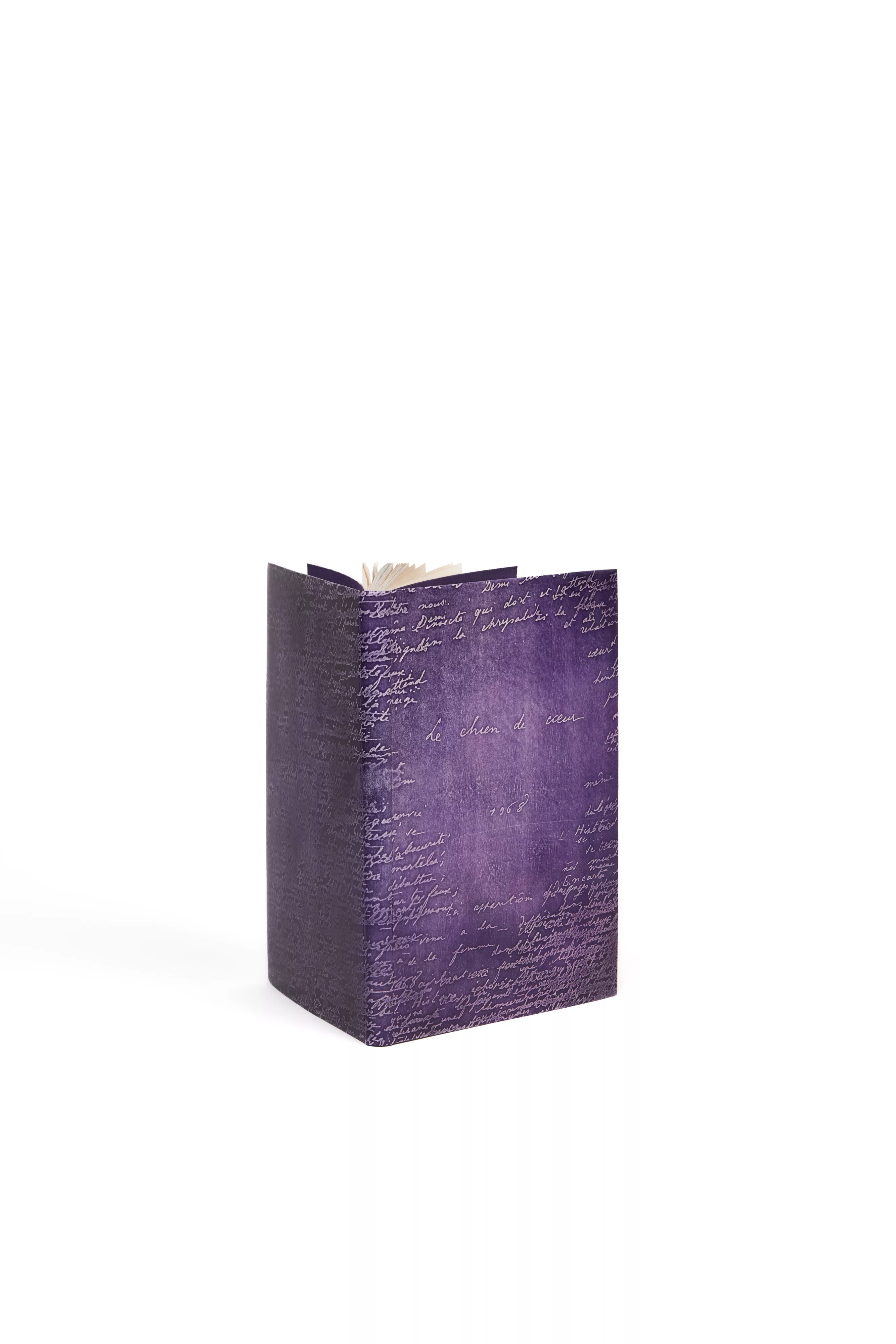
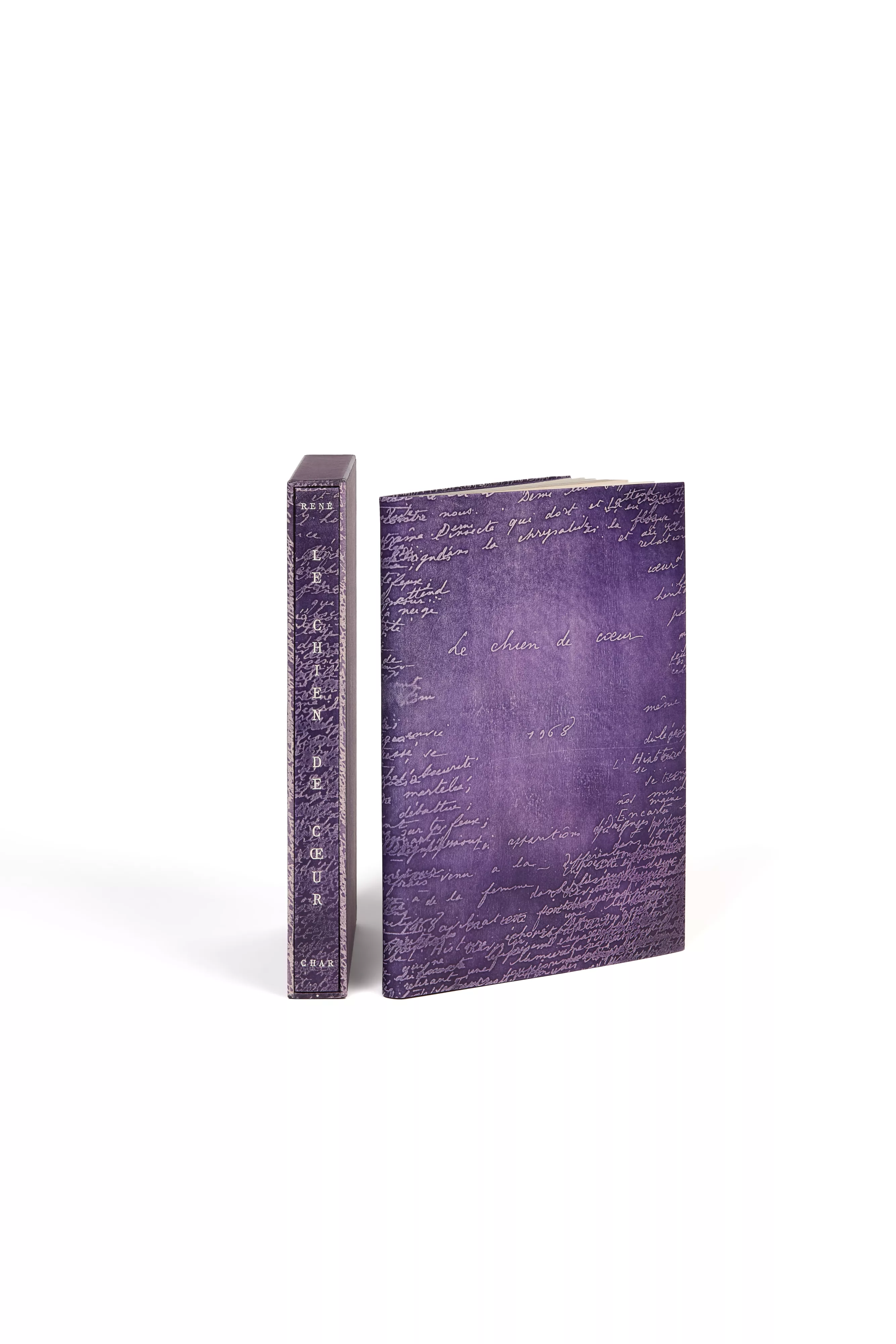
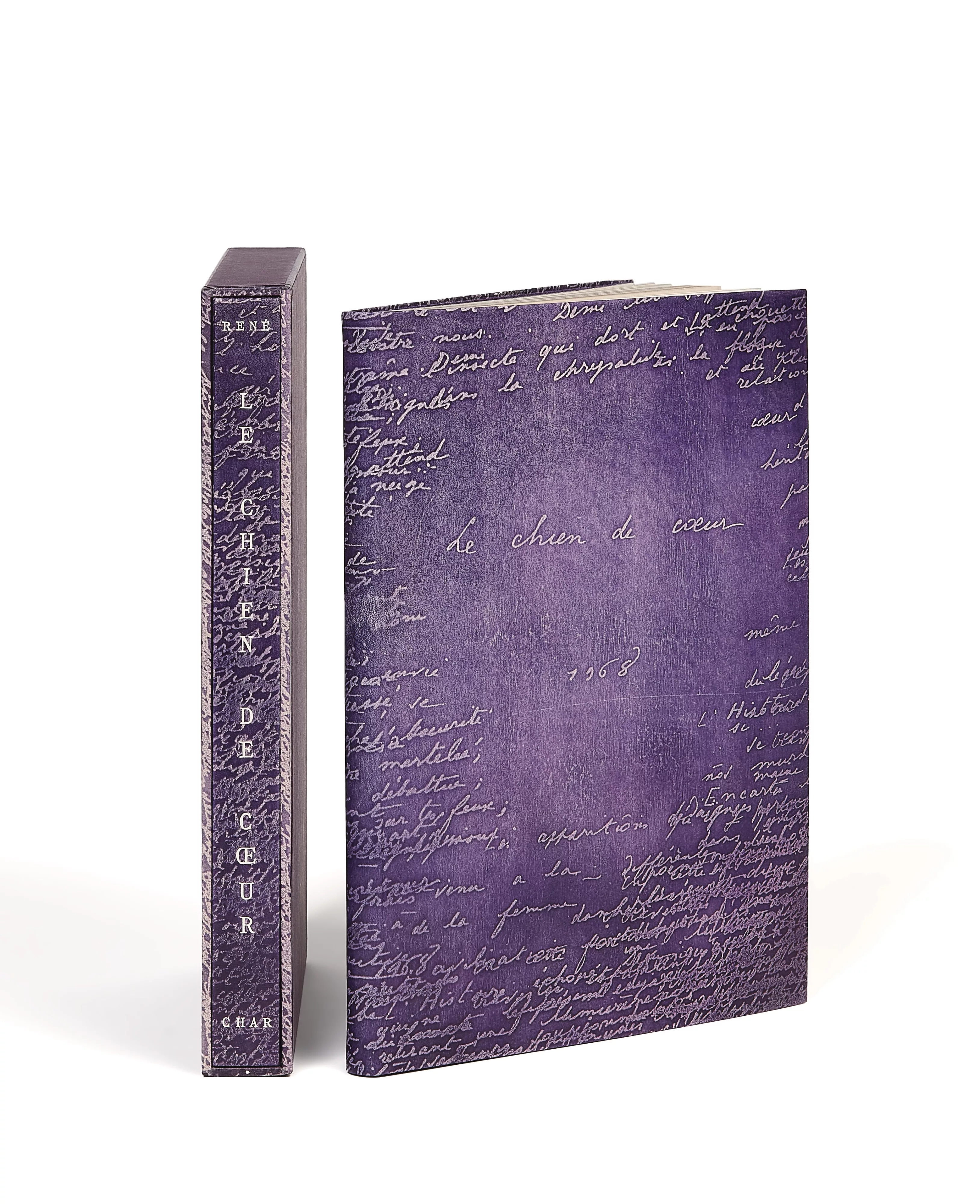
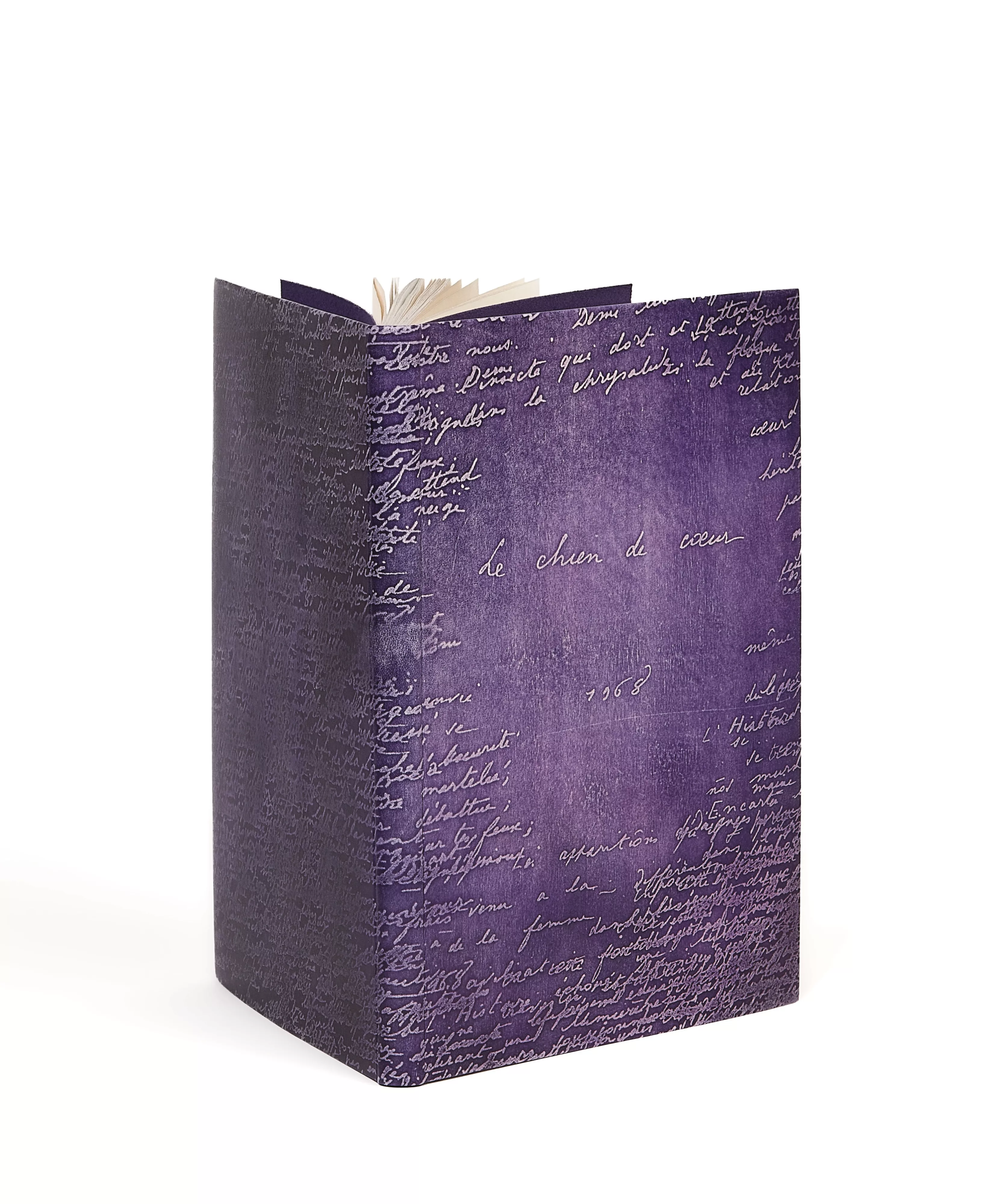
A magnificent manuscript preserved in a binding by Louise Bescond, in tinted and stamped calf after the poet’s autographs.