

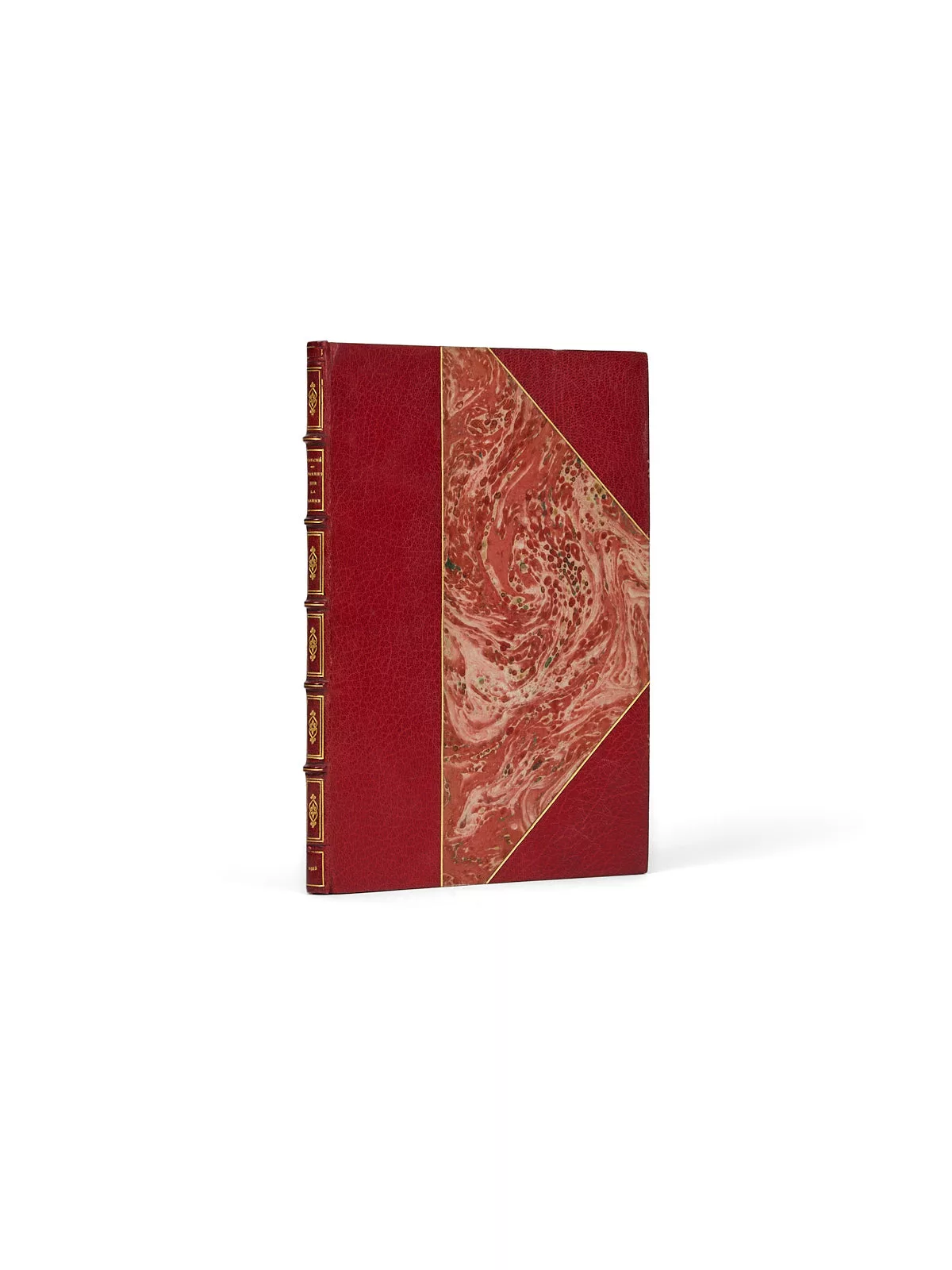
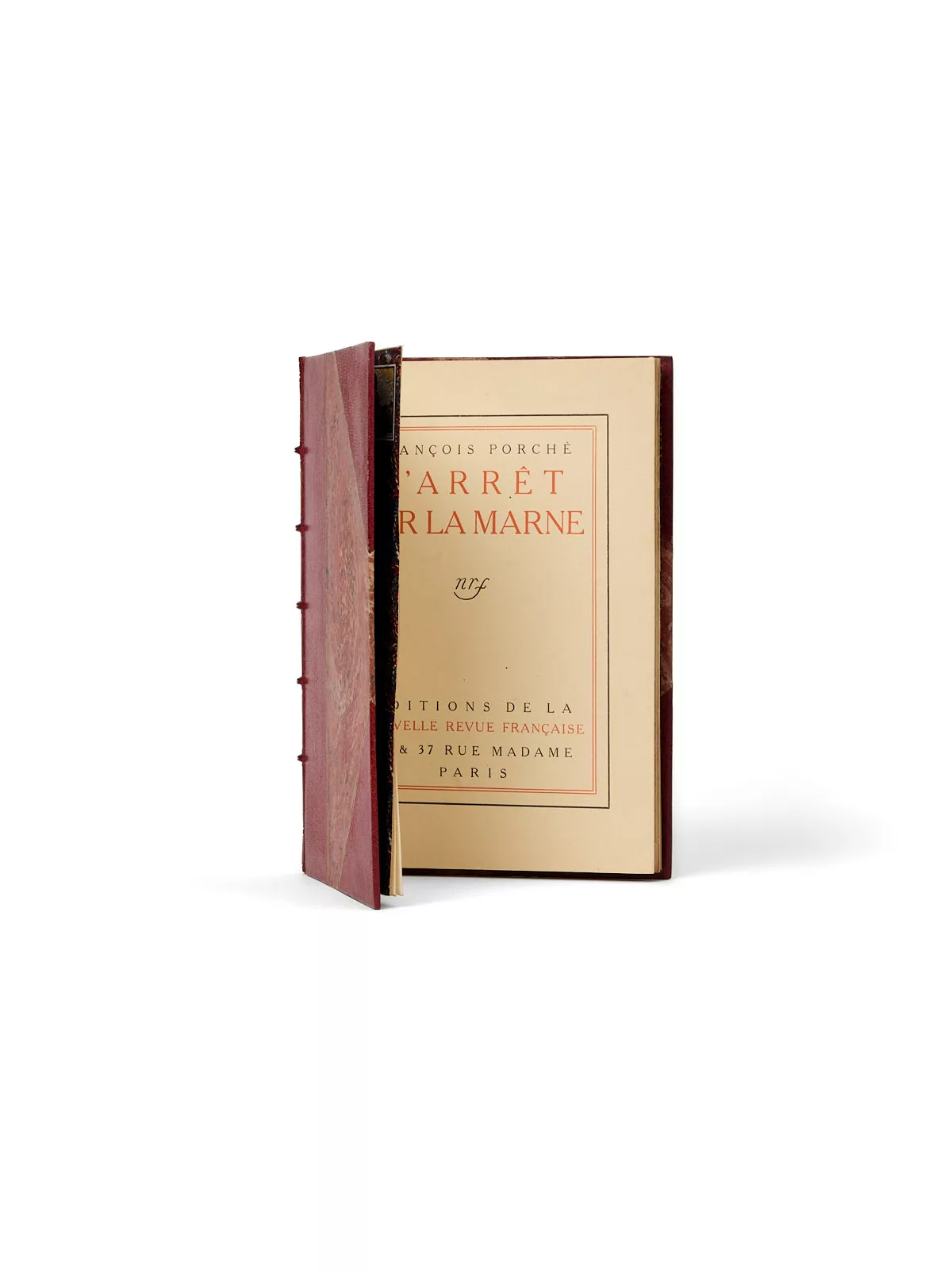
L’Arrêt sur la Marne
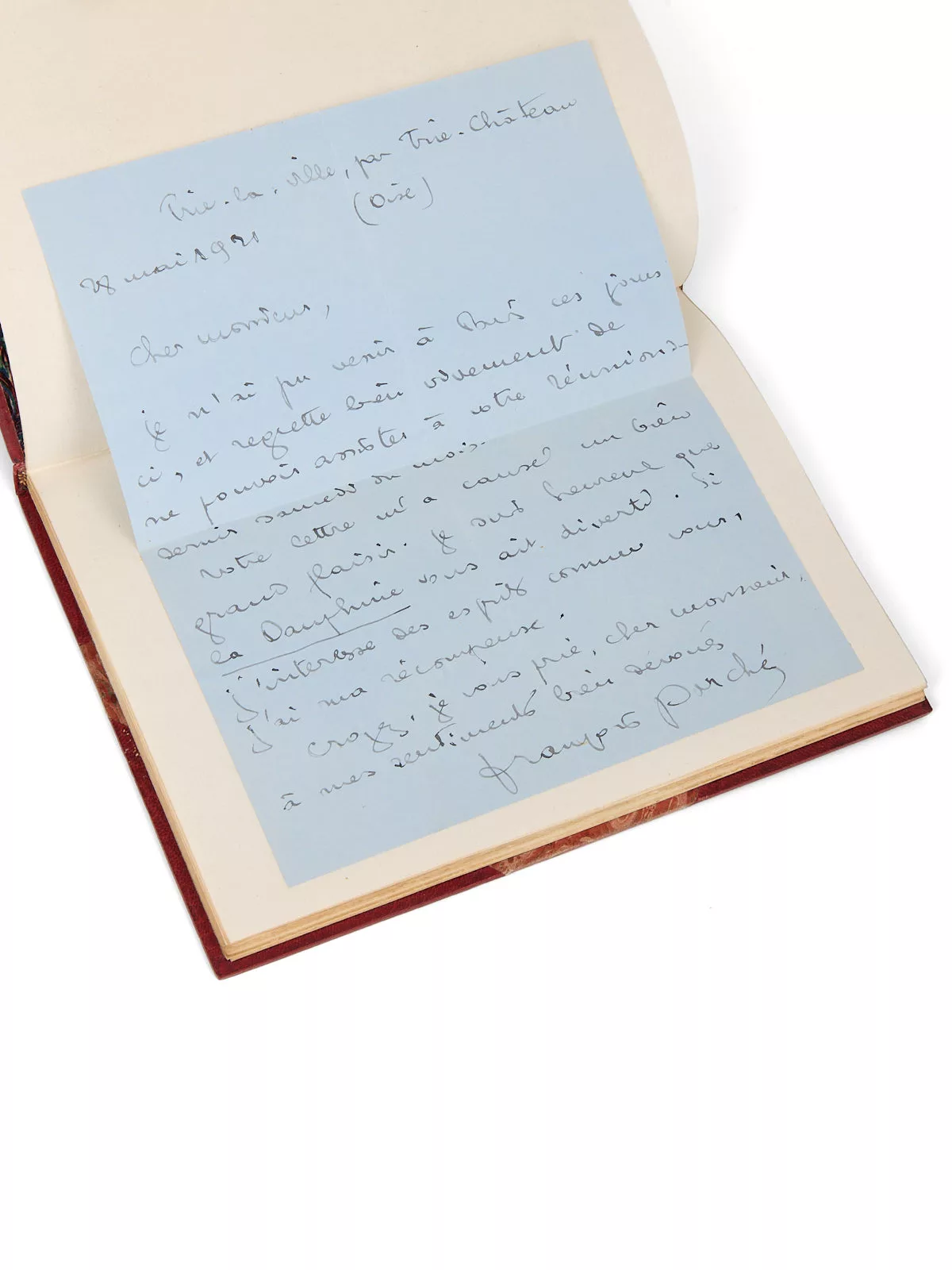
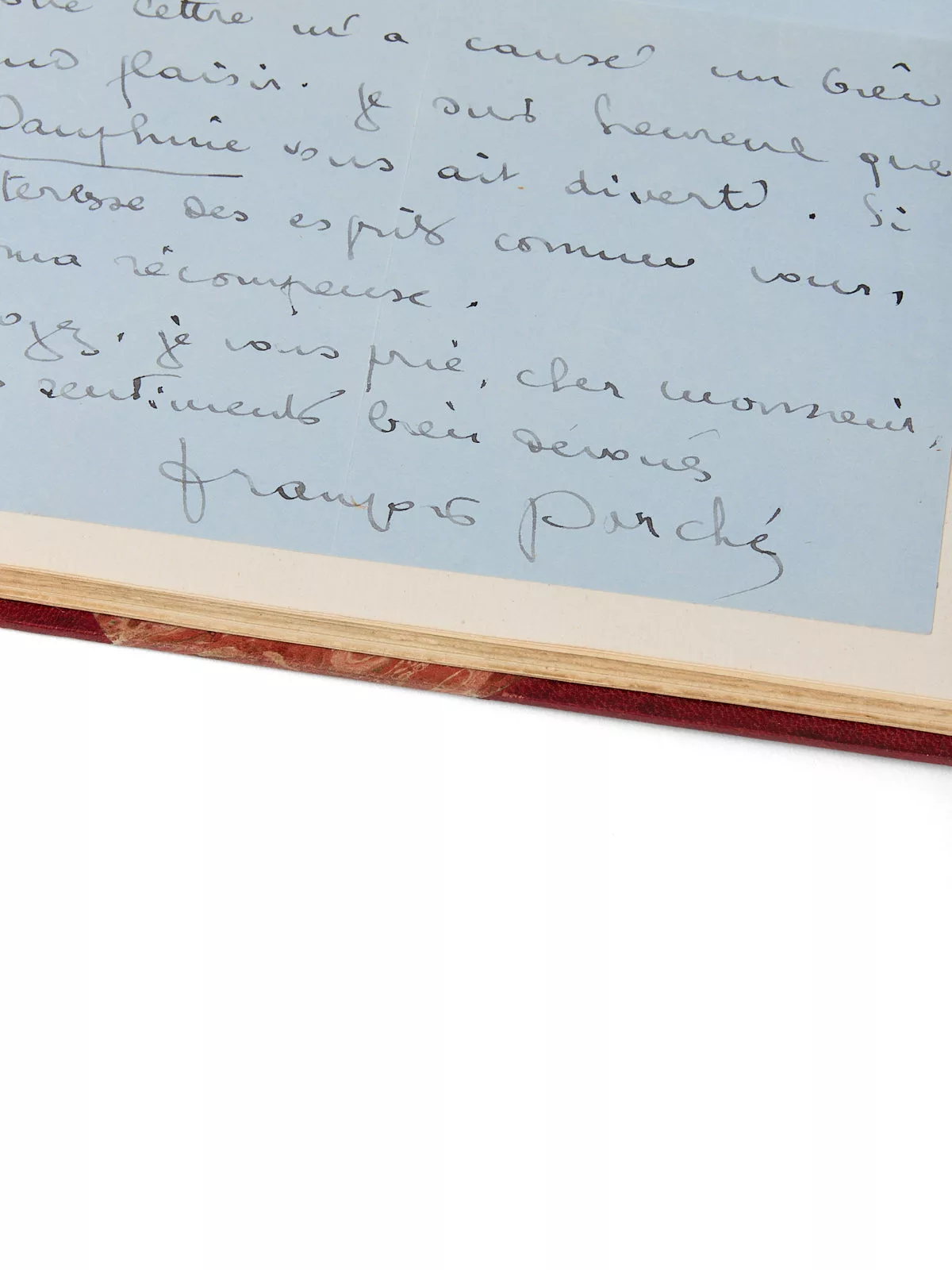
Autograph letter signed mounted at front (1 p., 170 x 205 mm), black ink on blue paper, dated May 28, 1921.
A long dramatic poem written at the height of the Great War and published in the Nouvelle Revue Française while fighting was still raging, L’Arrêt sur la Marne offers a solemn, lyrical portrait of the eponymous battle, poised between patriotic fervor and funereal meditation. The text is dedicated to Charles Péguy, who had died in combat the day before on that same battlefield, and who in 1904 had welcomed François Porché’s very first book (À chaque jour) into his Cahiers de la Quinzaine.
The work belongs — early on — to the current of literary works seeking to give moral shape to the horror of the war, alongside the texts that Barbusse, Dorgelès, Duhamel and Genevoix would later publish. Because of its poetic form, it is not listed by Jean Norton Cru in Témoins.
François Porché belonged to the inner circle of the future author of Le Grand Meaulnes, contributing from 1902 to Charles Péguy’s Cahiers de la Quinzaine. In 1913, Alain-Fournier fell in love with the actress Pauline Benda (“Madame Simone”), wife of Claude Casimir-Périer, who became his final muse. The deaths of Fournier at the front (missing since 22 September 1914) and of Casimir-Périer (killed on the Crouy front in January 1915) sealed a shared memory: Simone and Porché, drawn together by mourning and the wounds of war, married in 1923.
A fine copy enriched with an autograph letter and from the library of Auguste Garnier (bookplate).
Vignes, Bibliographie des Éditions de la Nouvelle Revue Française, 79.