

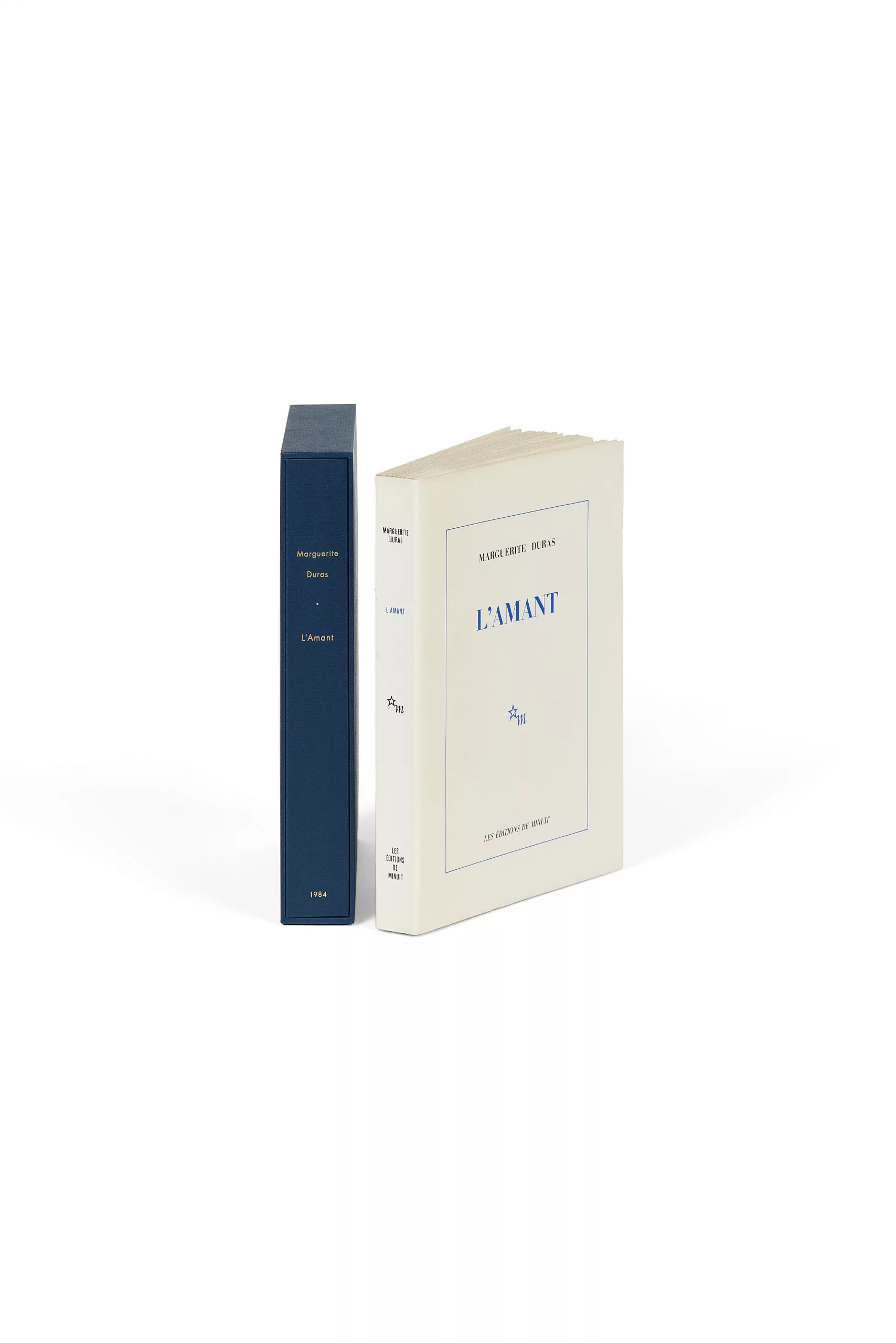
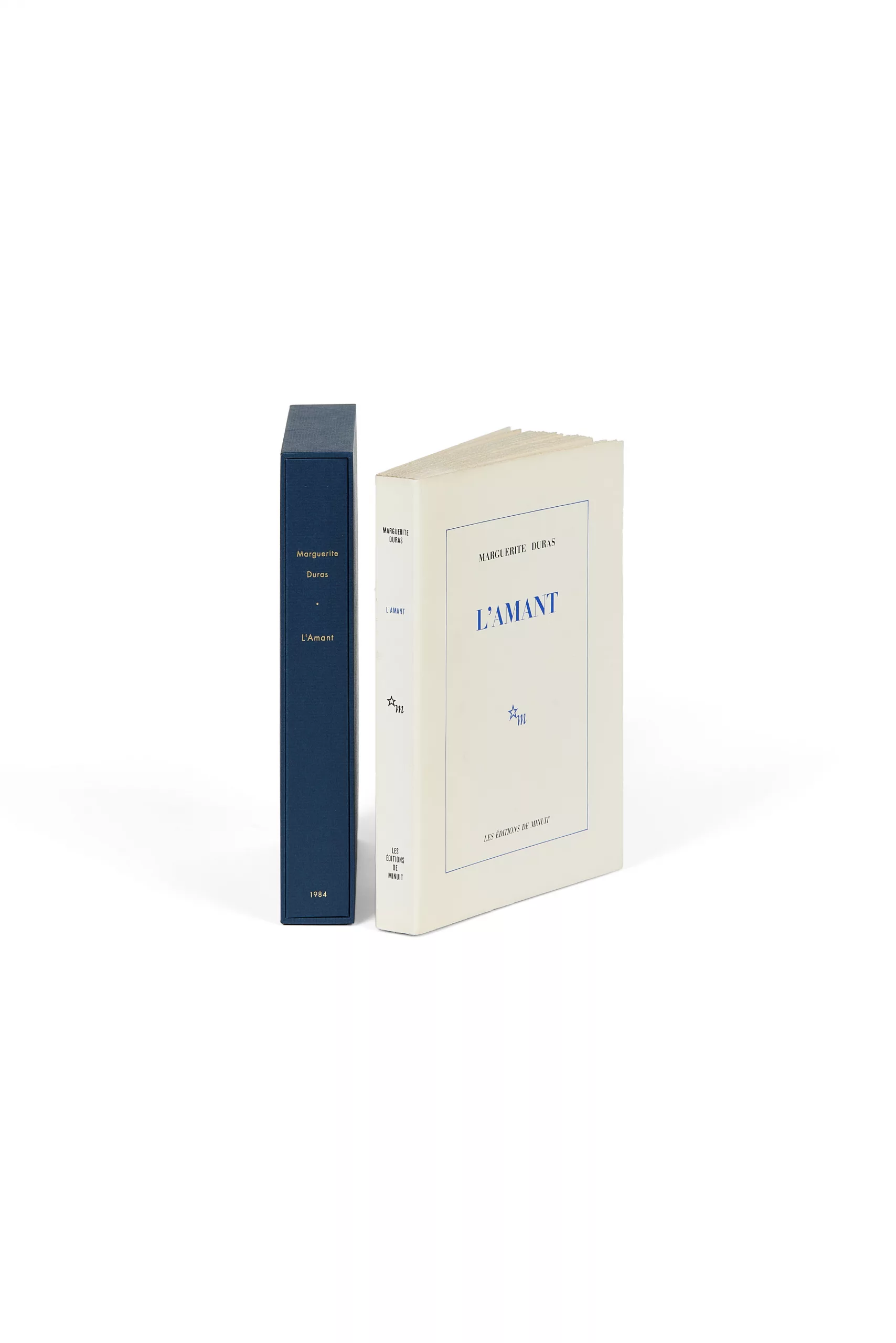
L’Amant
Winner of the Prix Goncourt in 1984, on the third ballot, with six votes against three for Bertrand Poirot-Delpech’s L’Été 36 and one for Bernard-Henri Lévy’s Le Diable en tête.
Traveling down the great, slow, powerful Mekong River, following the meanders of its delta through the humidity of the rice fields: such were Duras’s journeys as a child, and they provide the settings for this novel. In writing this book, she returned to her origins, to her Asian youth, to a story whose truth she would always refuse to separate from fiction: around 1930, on a ferry crossing an arm of the river, an extremely wealthy Chinese man approaches a young white girl.
As some have suggested, the best way to read L’Amant is aloud. The voice-over of Jean-Jacques Annaud’s film does exactly that. Reading it this way brings one further into the intimate rhythm of this unique prose, which brought Duras worldwide renown.
“From the very first lines of the narrative,” wrote François Nourissier, “Duras’s art and skill burst forth, her freedoms, her challenges, the achievements of thirty years spent striving to write this language — light, neutral, swift and haunting all at once, capable of capturing every nuance, of moving at the exact speed of thought and images.”