

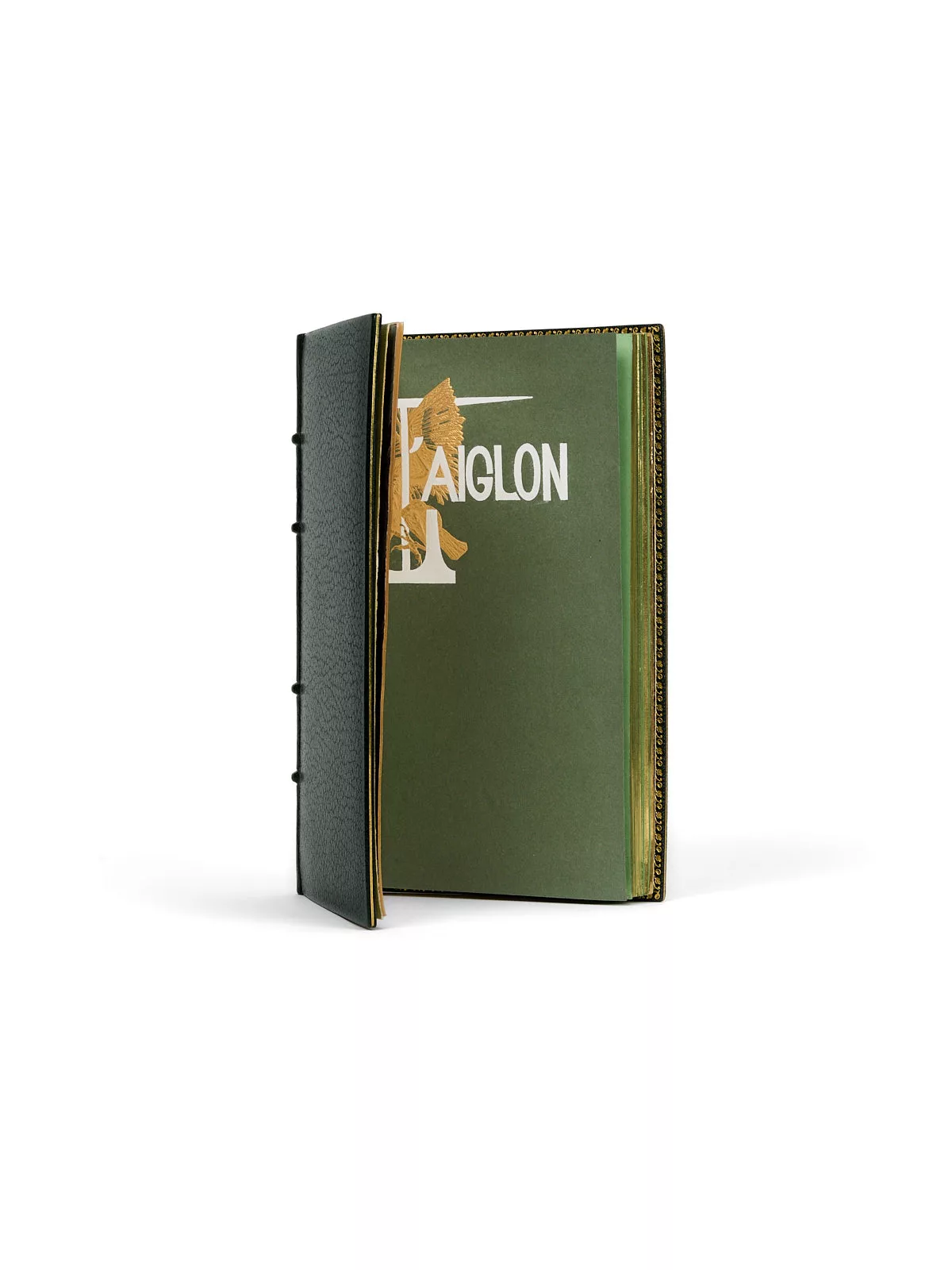
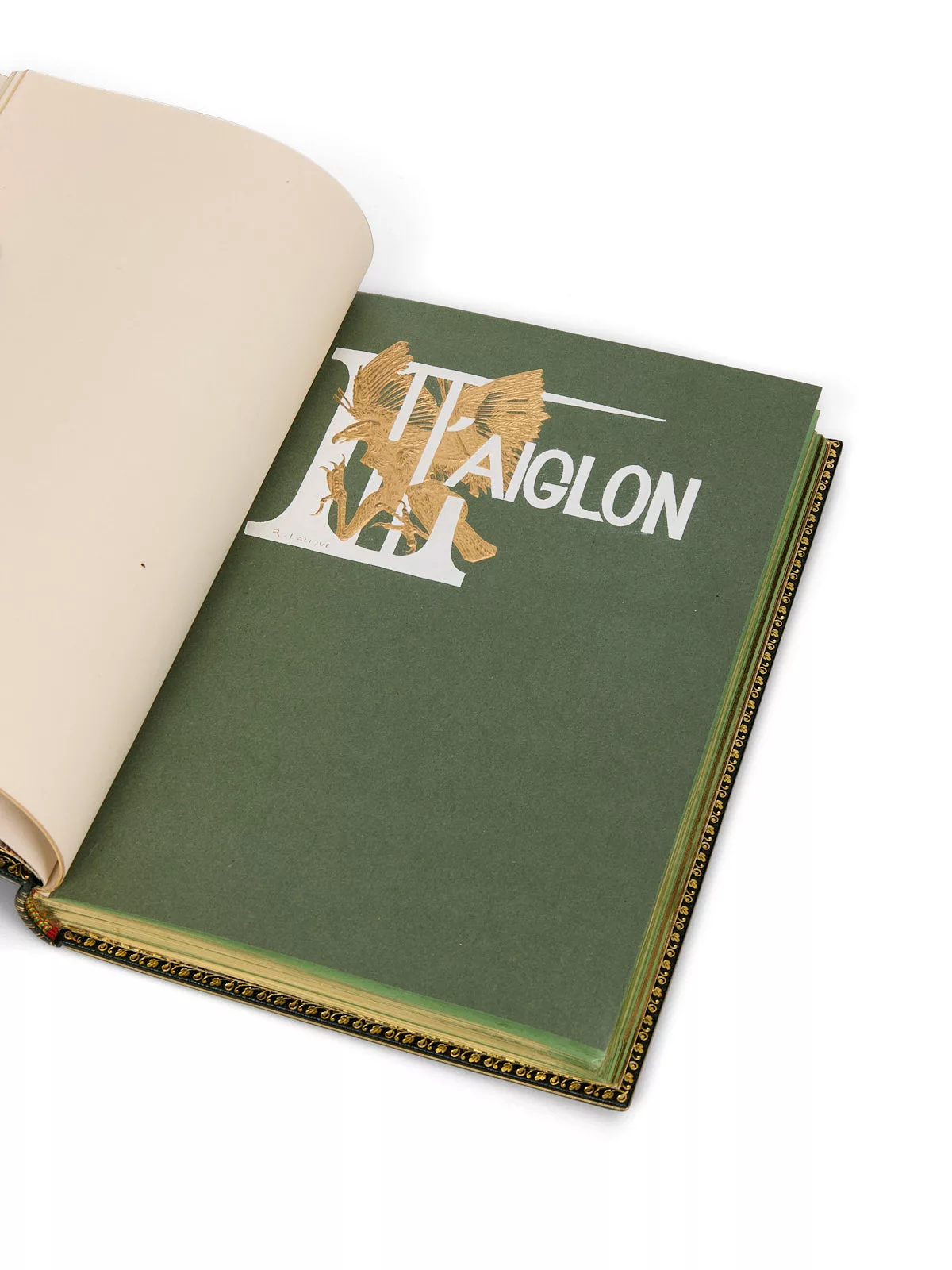
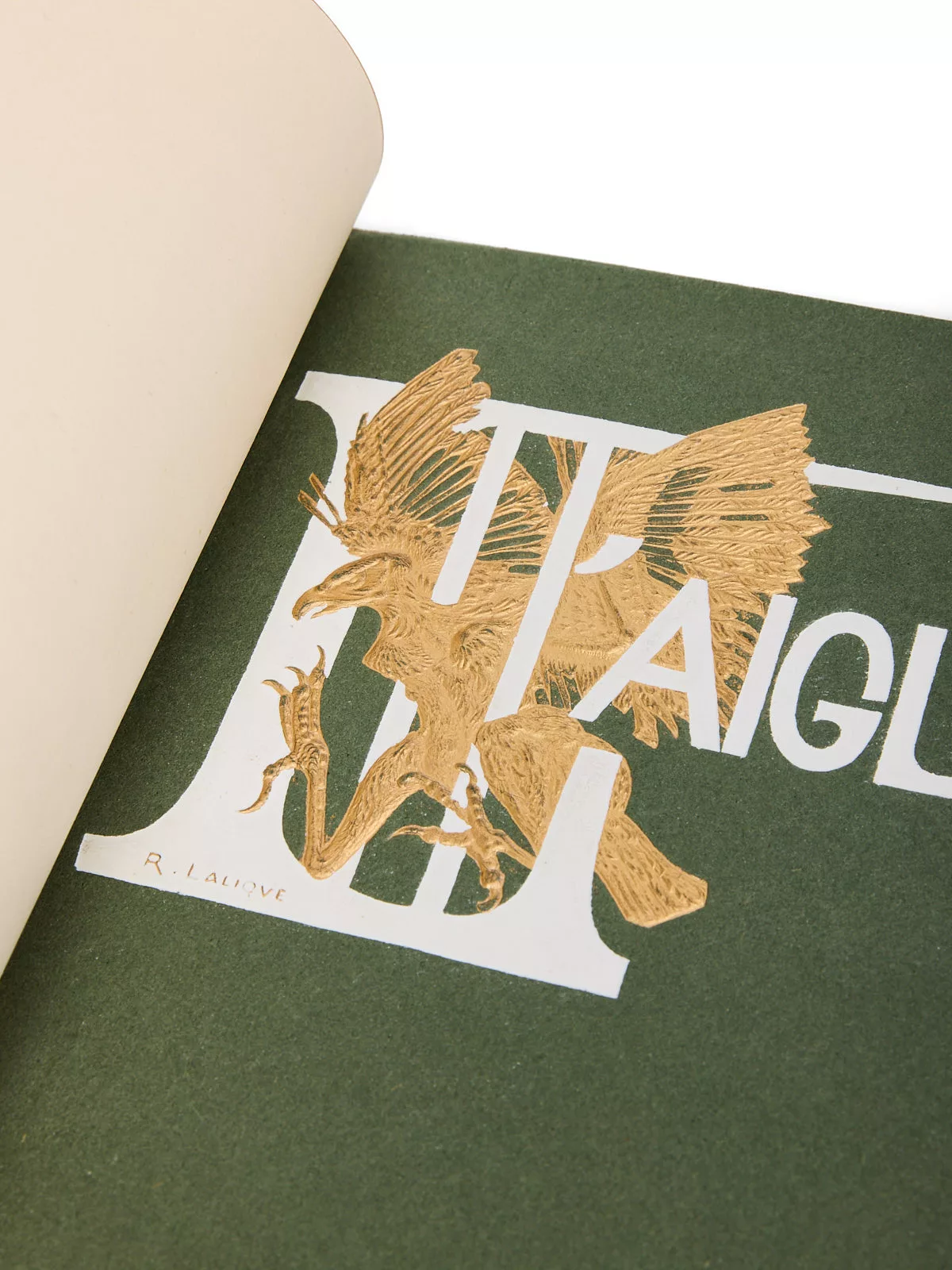
L’Aiglon
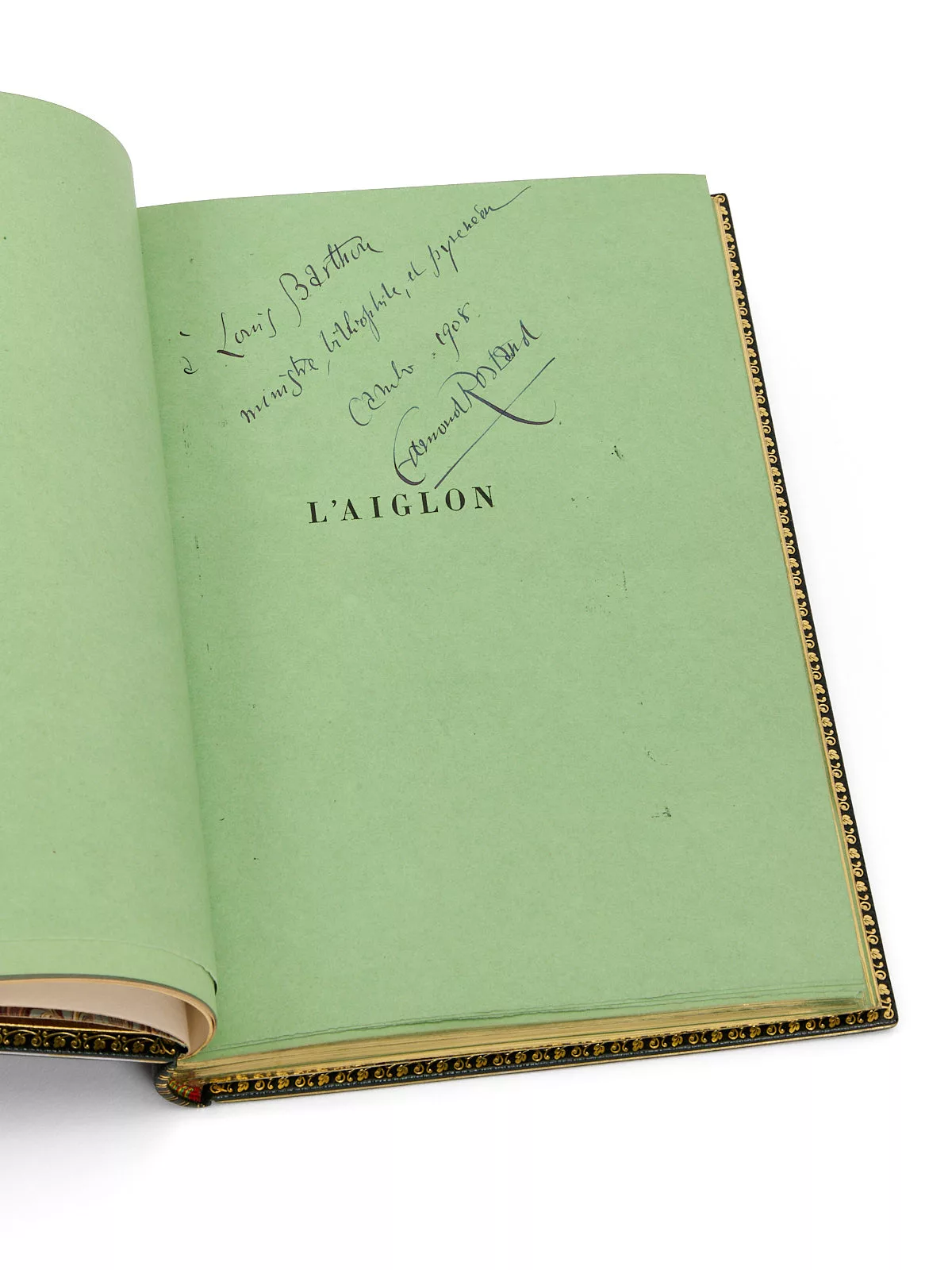
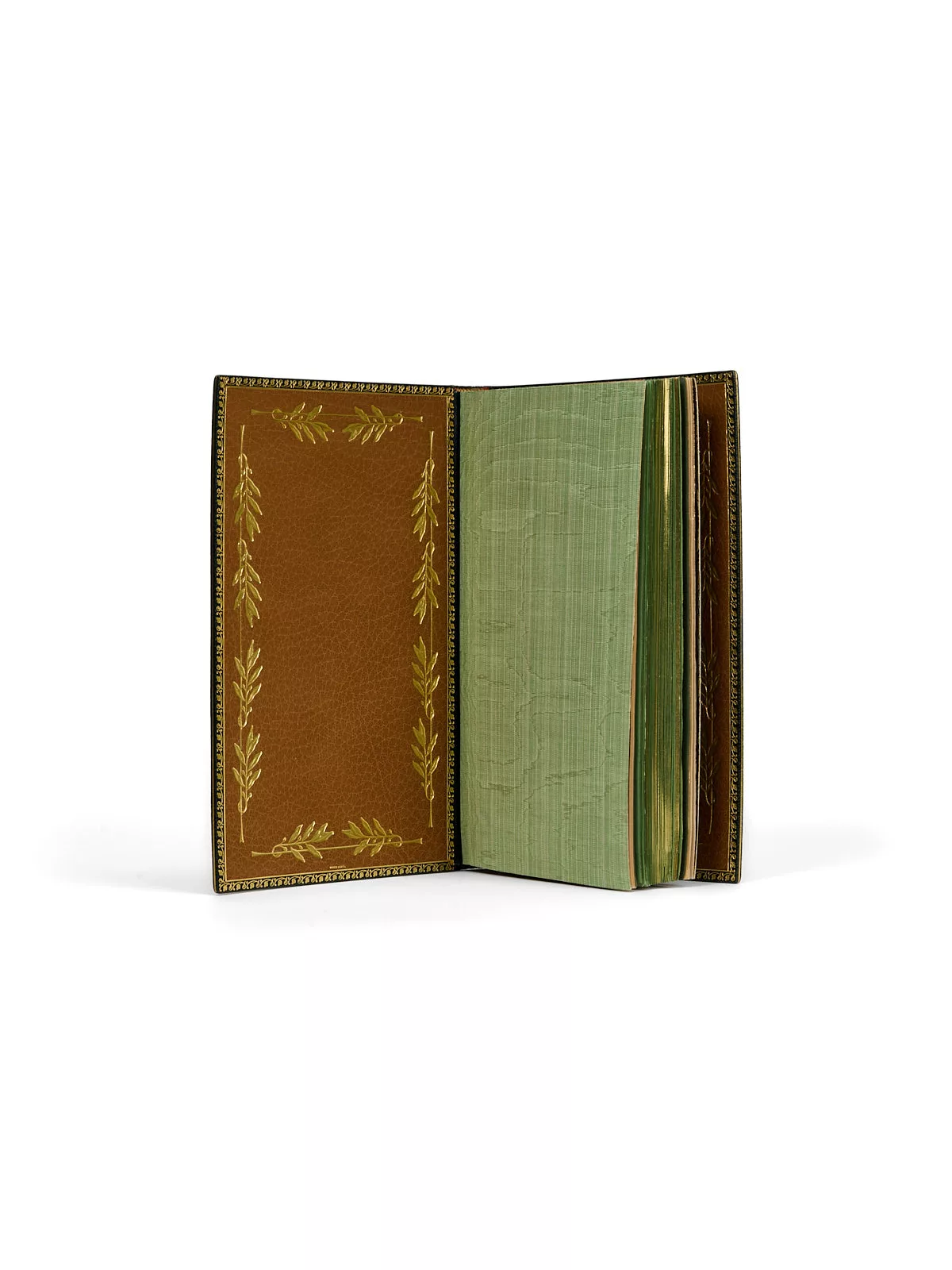
Signed presentation inscription: “À Louis Barthou, ministre, bibliophile et Pyrénéen. Cambo 1908. Edmond Rostand.”
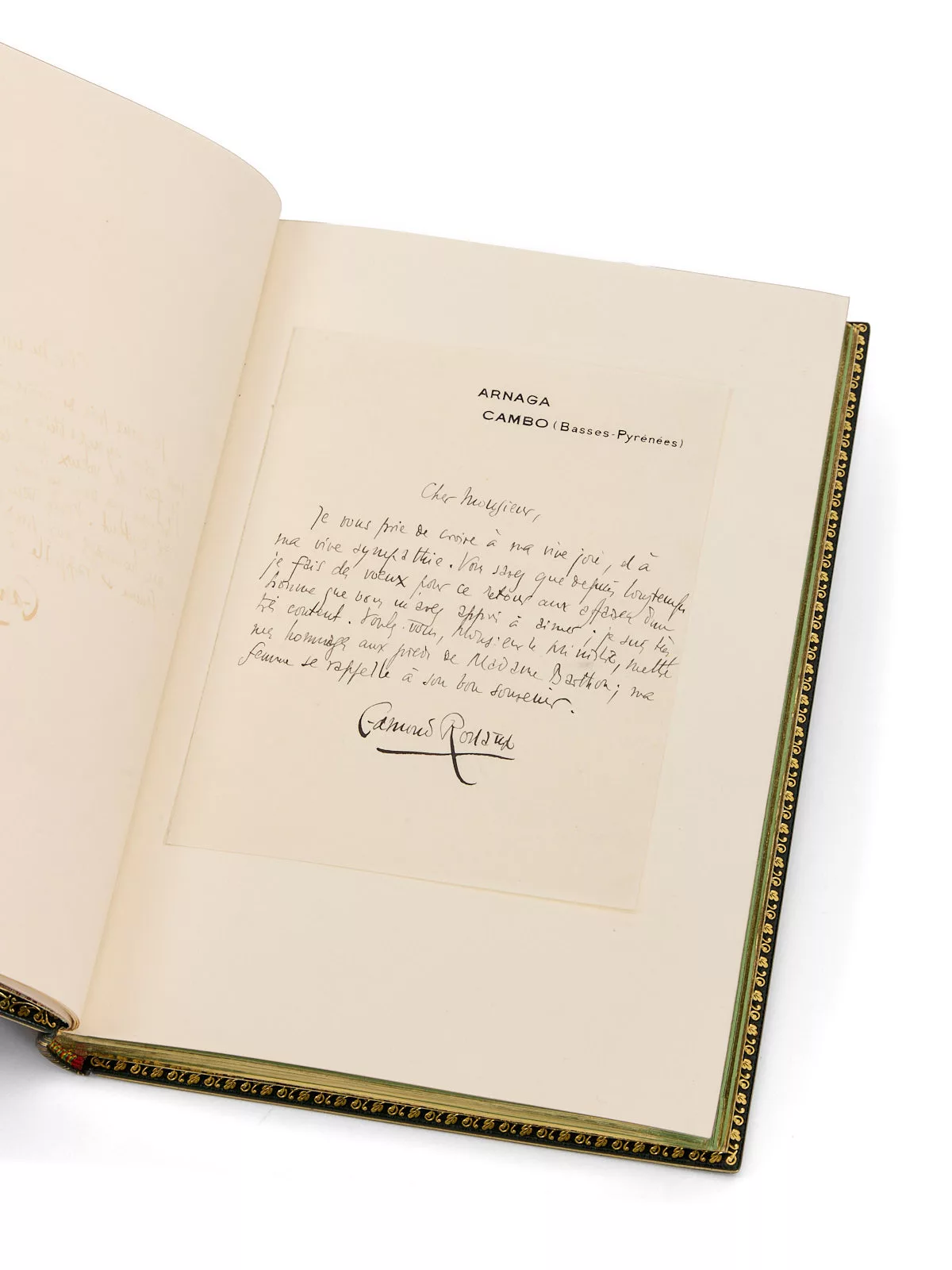
Bound in at front: autograph letter signed to the same recipient, on villa Arnaga letterhead.
L’Aiglon was born at the Tuileries on 20 March 1811, when one hundred and one cannon shots announced to Parisians the long-awaited birth of the Emperor’s son. Constitutionally granted the title of “prince impérial,” he also received that of “King of Rome”: his baptism was celebrated on 9 June at Notre-Dame Cathedral in Paris. The defeat at Waterloo forced Napoleon I to abdicate in his favor, but Fouché’s provisional government acted as though nothing had happened, and the chambers refused to proclaim the child, who from 1814 lived in exile at the Austrian court. History would remember him as the sovereign who reigned only from 22 June to 7 July 1815. In Vienna, he received a thorough religious, philosophical and military education, under the affectionate care of his grandfather, Emperor Francis II (the loser of Austerlitz and Wagram), who, to seal the peace at the Treaty of Schönbrunn, had given Napoleon his eldest daughter, Marie-Louise of Austria, who became Napoleon’s second wife. After Napoleon’s abdication in 1815, Francis II gave him the title of Duke of Reichstadt. He was raised by his mother and his aunt, Archduchess Sophie, under the guardianship of Count Dietrichstein.
The prince impérial died on 22 July 1832, only twenty-one years old, at the Schönbrunn Palace. The diagnosis was of a fulminant tuberculosis, but the theory of poisoning has never been ruled out. The death of the Aiglon, without marriage or descendants, in any case put an end to the fascination and fears of the great courts of Europe regarding a possible return to power of Napoleon I’s only legitimate descendant.
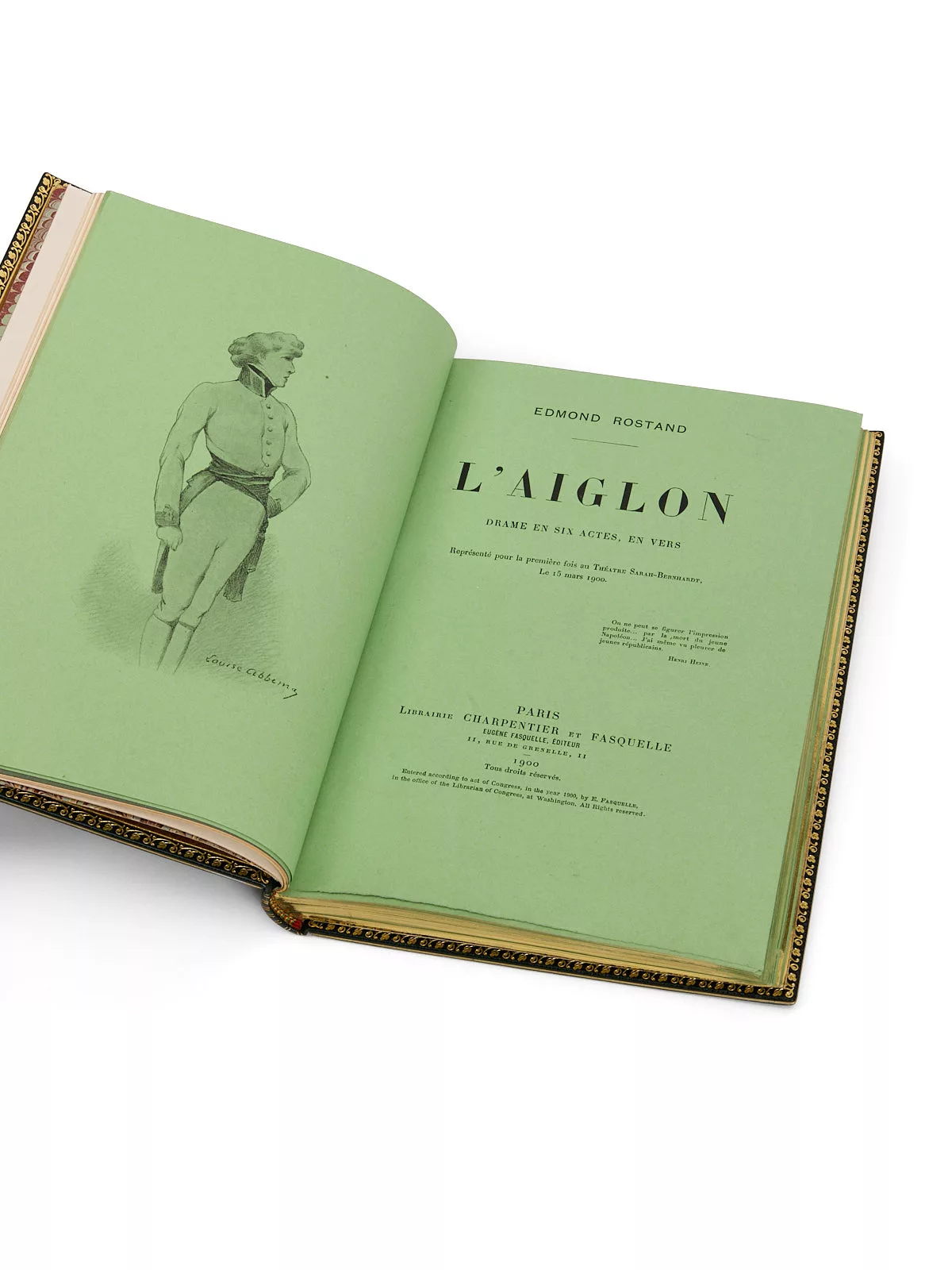
Edmond Rostand’s play premiered on 15 March 1900, with an actress costumed as a man in the role of the Aiglon: Sarah Bernhardt. The success was immense — Paul Morand, in his 1900, evokes the feverish excitement of all Paris on that opening night, citing the presence of Barthou alongside the Pozzis, Mendès, Murat and other figures such as Casimir Périer. “Edmond Rostand had caught cold during rehearsals, in the drafts backstage, and no doubt also, for two years, torn between his work of composition and the obligations created by his fame, he had led too exhausting a life. It was feared that his pleurisy might develop into a lung affection; he was advised to leave Paris. Nevertheless, he wanted to oversee the fate of his work to the very end; from his sickbed, Jules Claretie tells us, he corrected the proofs of the text about to be published by Fasquelle, adding stage directions; he attached all the more importance to this since the text, too long for performance, had had to be considerably shortened” (Ripert, Edmond Rostand, 1968, p. 319 ff.)
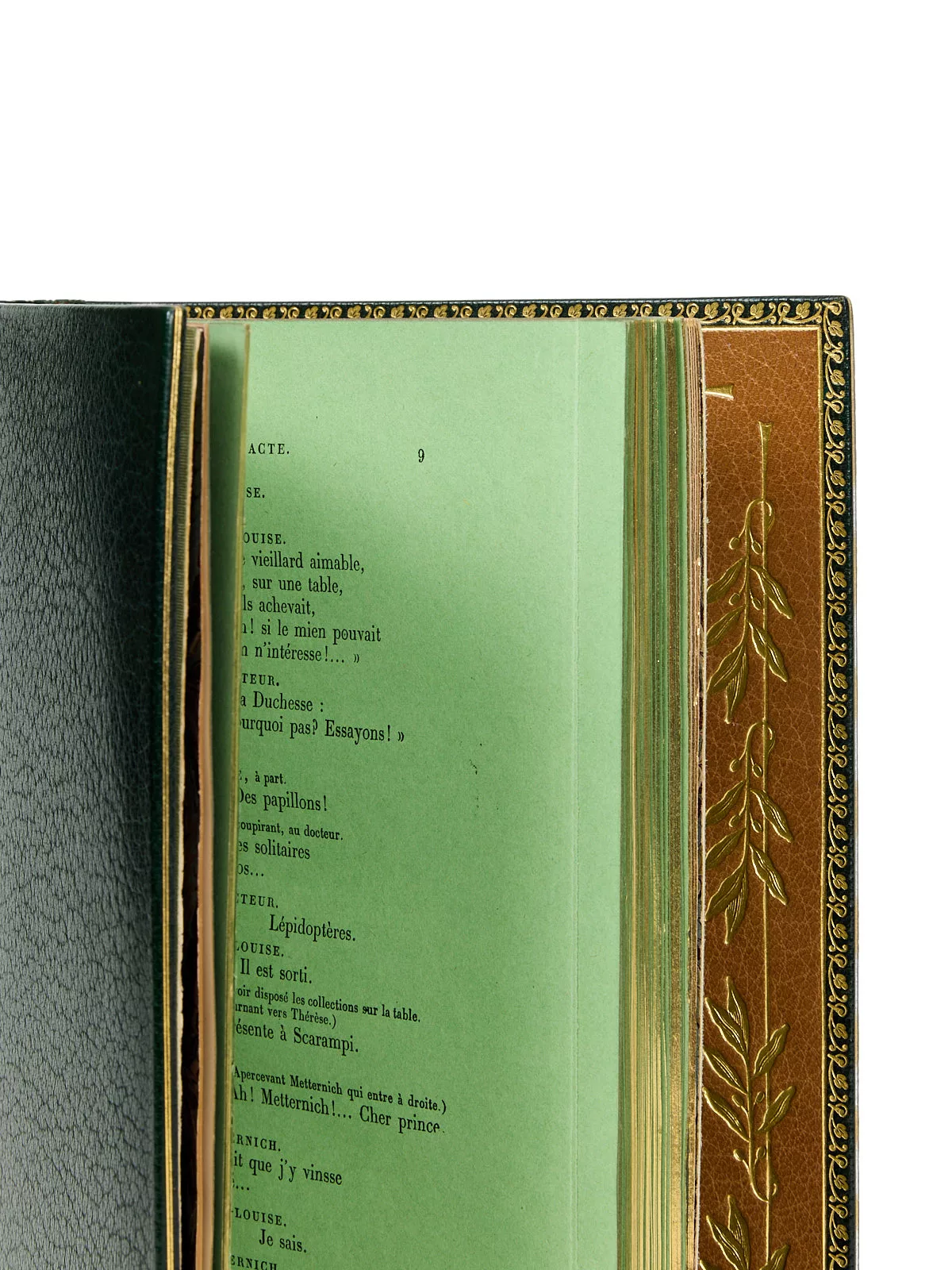
The play produced several immortal and famous tirades, including that of Séraphin Flambeau, the legendary veteran of the Grande Armée who makes his way into Schönbrunn to see the Aiglon: “Nous, les petits, les obscurs, les sans-grades” (Act II, scene 9), a role taken on by Lucien Guitry and then by Coquelin aîné.
Banned under the Occupation, the play was performed for two consecutive years at the Théâtre du Châtelet before full houses starting in August 1945.
From the libraries of Louis Barthou, Pierre Guérin and Emmanuel d’Andrée, with bookplates.