

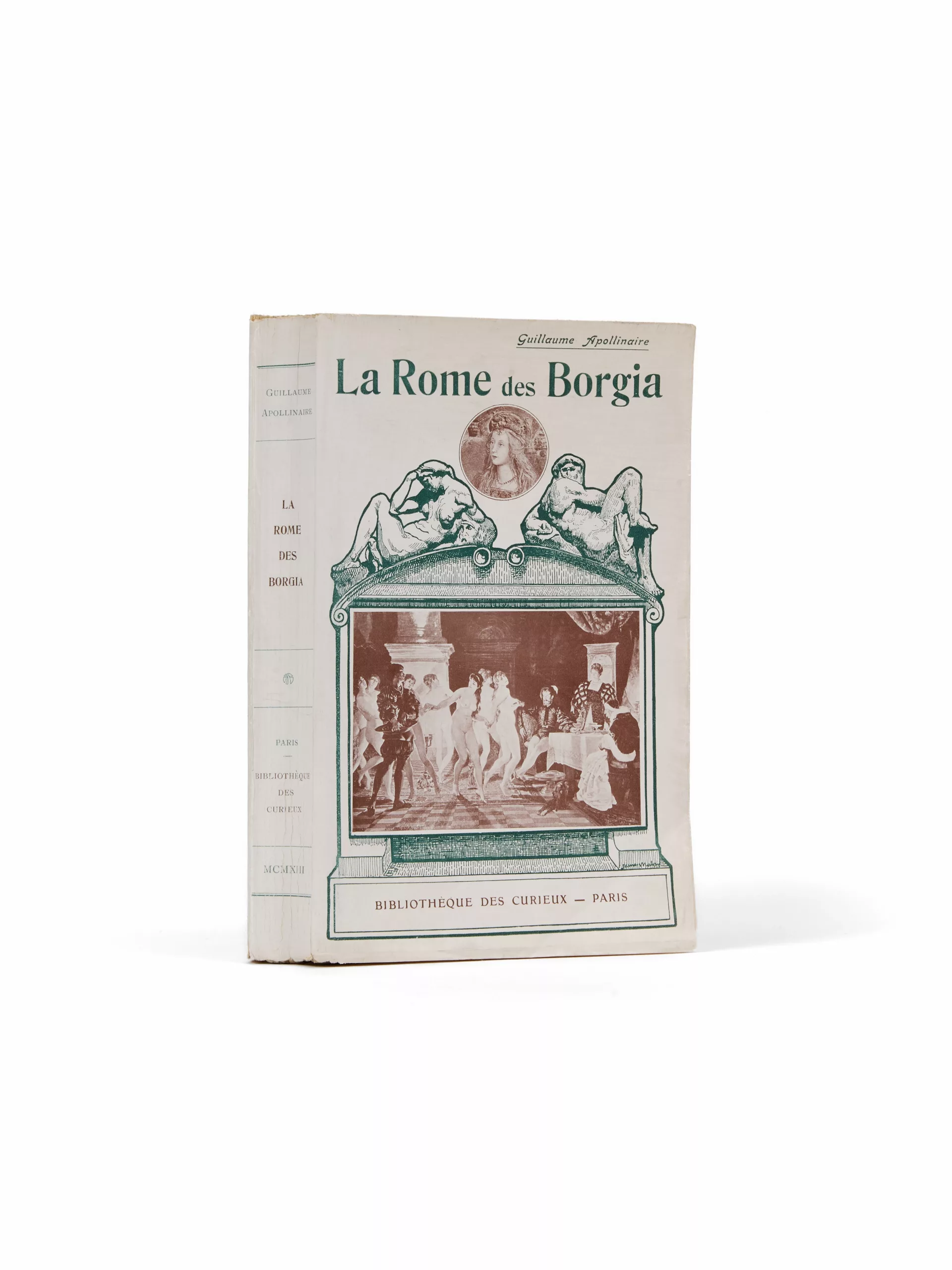
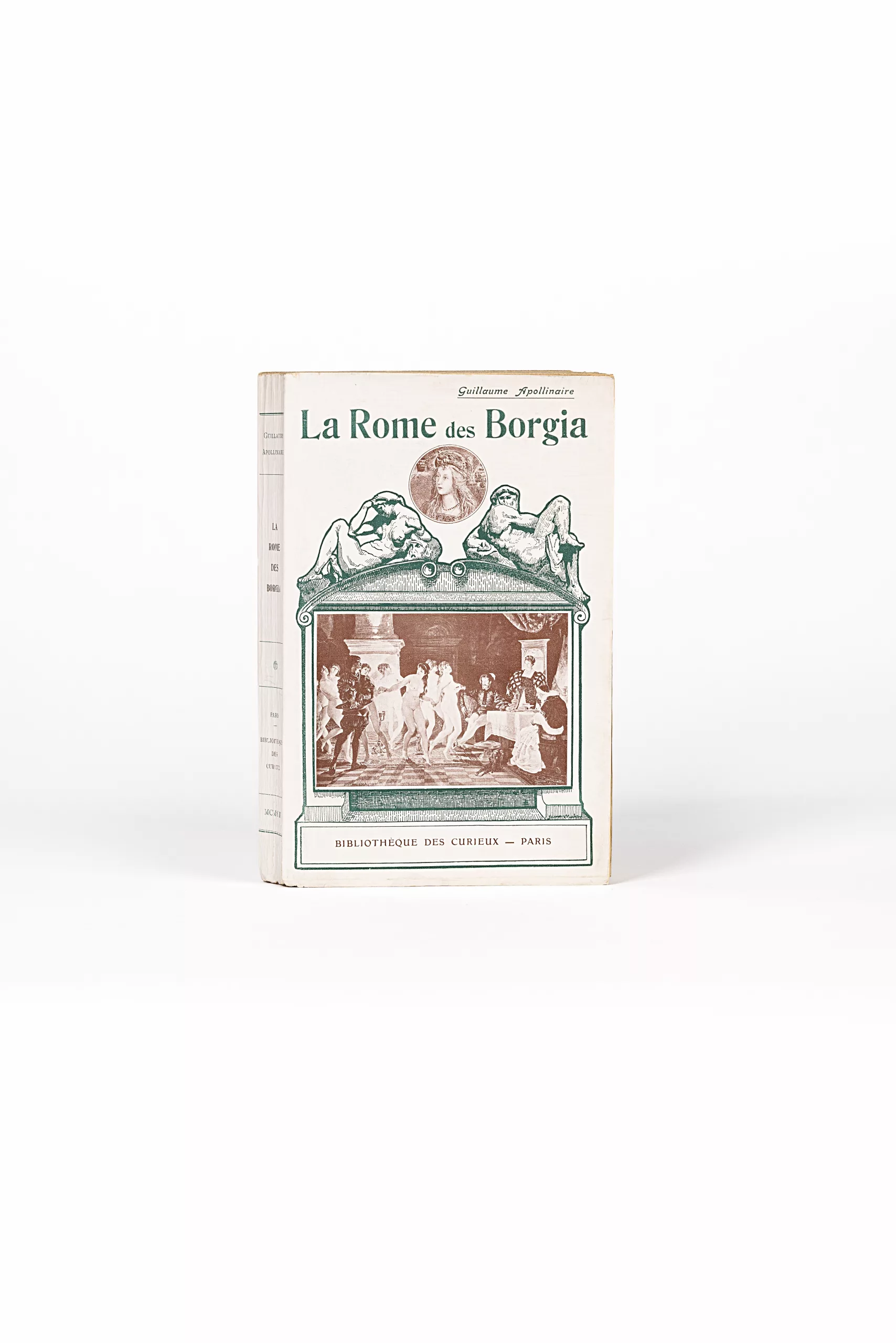
La Rome des Borgia
The edition was co-written with René Dalize, a poet of Creole origin born in Paris in 1879, who co-founded with Apollinaire the review Les Soirées de Paris. The two poets explore the possibilities of evil through the moral decomposition characteristic of absolute power — that of the Prince — which alone suffices to suggest dread.
“The manuscript of La Rome des Borgia, which is romanticized History, was given to us by the widow of an illustrious historian […]. We have added a number of documents that can only increase the historical interest of a book that is in no way directed against religion or its ministers, but simply relates customs very different from our own,” Apollinaire warns. He transports us to the capital of the Renaissance during the reign of Alexander VI, the most violent and most refined moment of the period. This historical novel, in which Sade complements Dumas, evokes — without quite describing — the depravities, crimes and abuses of a world enclosed by power, that of the Borgias, their orgies, incests, and their immoderate use of the famous poison they had invented, cantarella, combined with arsenic. A catalogue of horrors that anticipates the theater of cruelty, of which Antonin Artaud would also locate an example in Renaissance Italy.
Dalize, to whom Calligrammes would be dedicated, died in 1917 “in the desolate obscurity of a December engagement,” killed by a shell on the Plateau de Californie, the eastern part of the Chemin des Dames overlooking the village of Craonne: “I lose, besides a delightful companion, my oldest and best friend. He cannot be replaced, and he was of a unique quality” (letter of 21 May 1917 to Georgette Catelain). Dalize had met Apollinaire in 1892, at the Catholic Collège Saint-Charles in Monaco. This period is evoked in the poem “Zone” from Alcools, and Dalize is also mentioned in Le Poète assassiné and in the poem “La Colombe poignardée par la paix.”
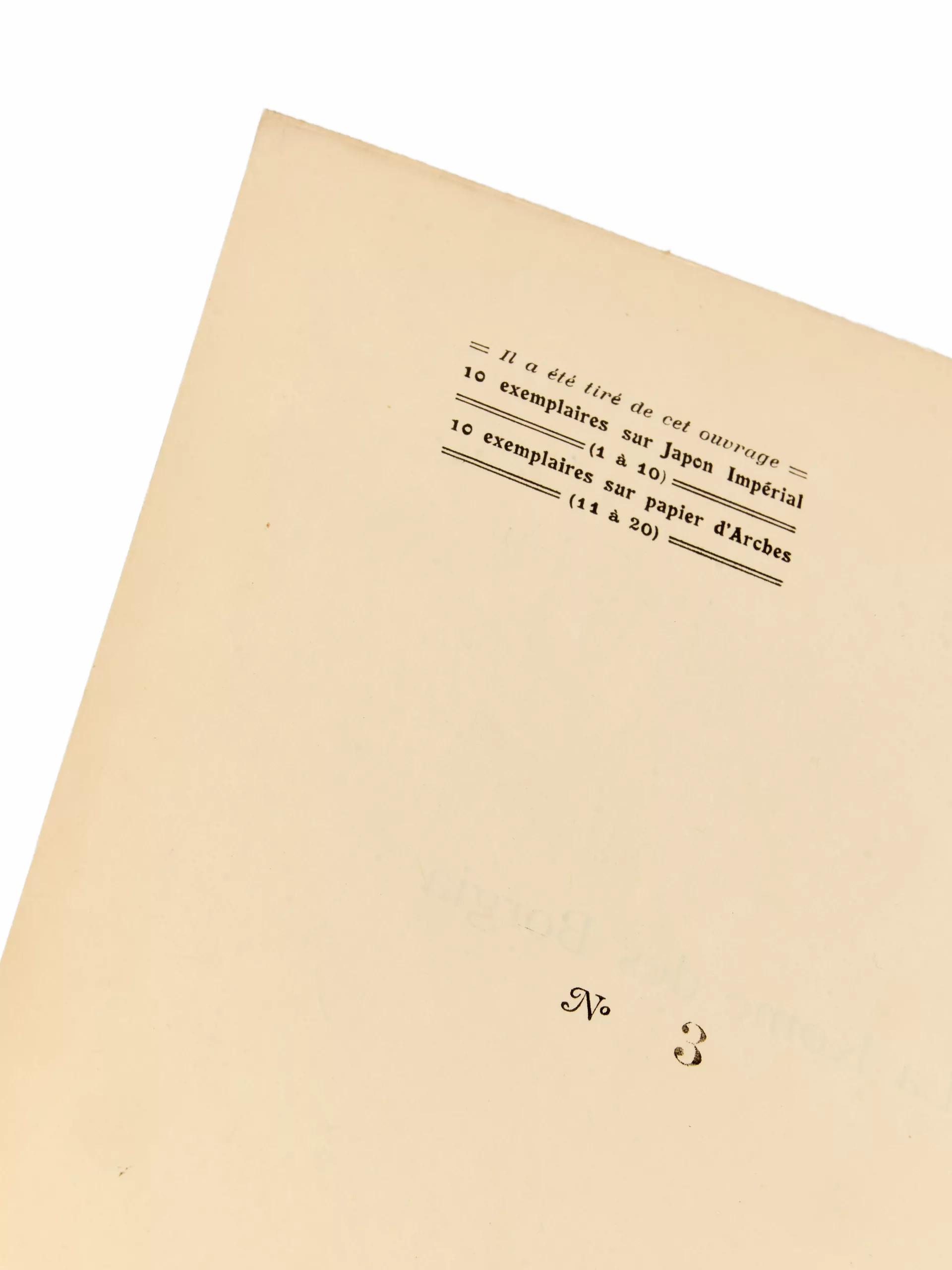
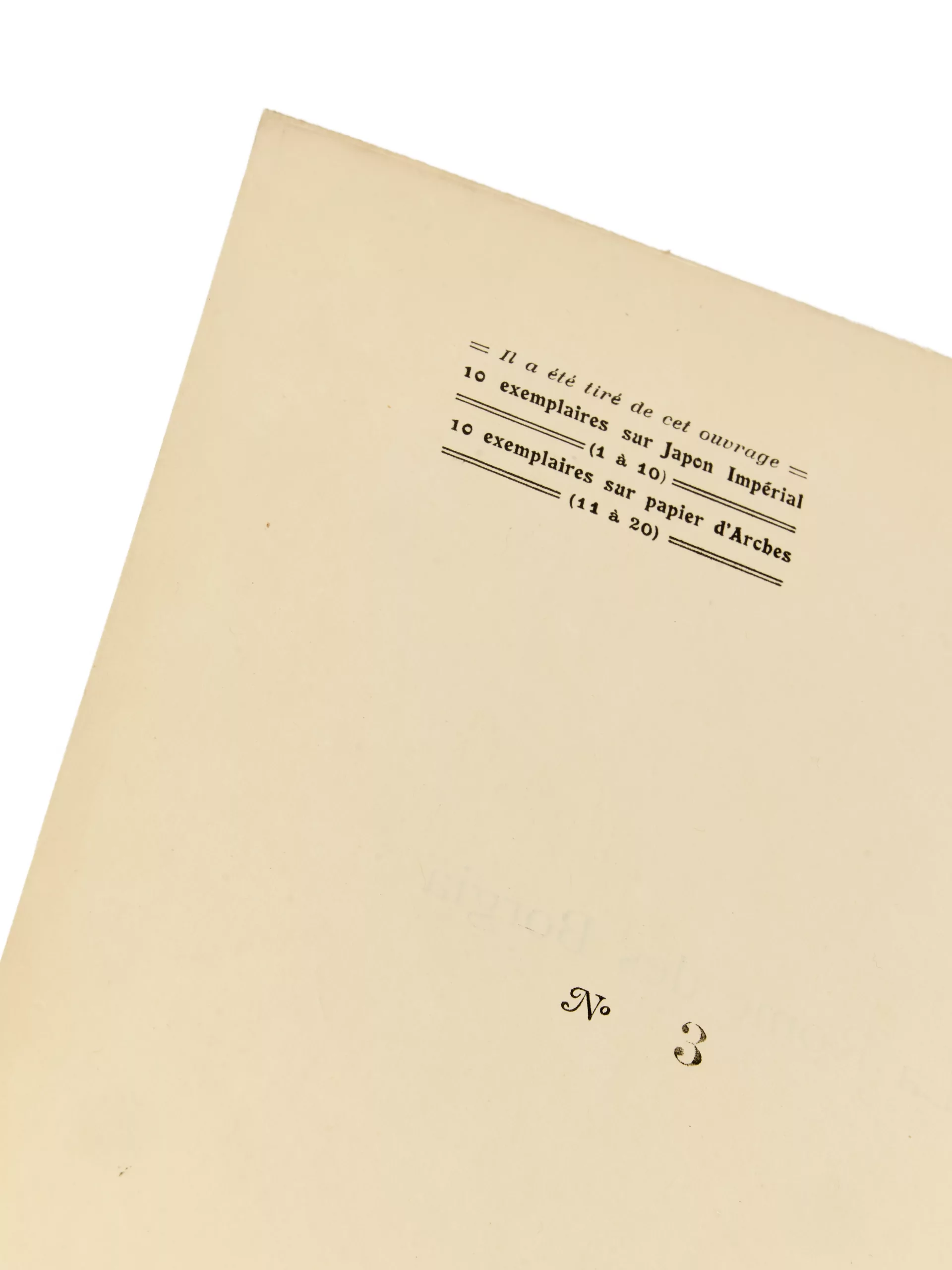
The edition exists in two printings: the first, dated 1913 and stating “ten full-page illustrations,” apparently printed in a small number of copies, and a second, dated 1914, stating “eight full-page illustrations,” which is the one more commonly encountered. The deluxe-paper copies (10 on Japanese paper and 10 on Arches laid paper) all belong to the first printing, with these two additional illustrations.