

La Porte étroite
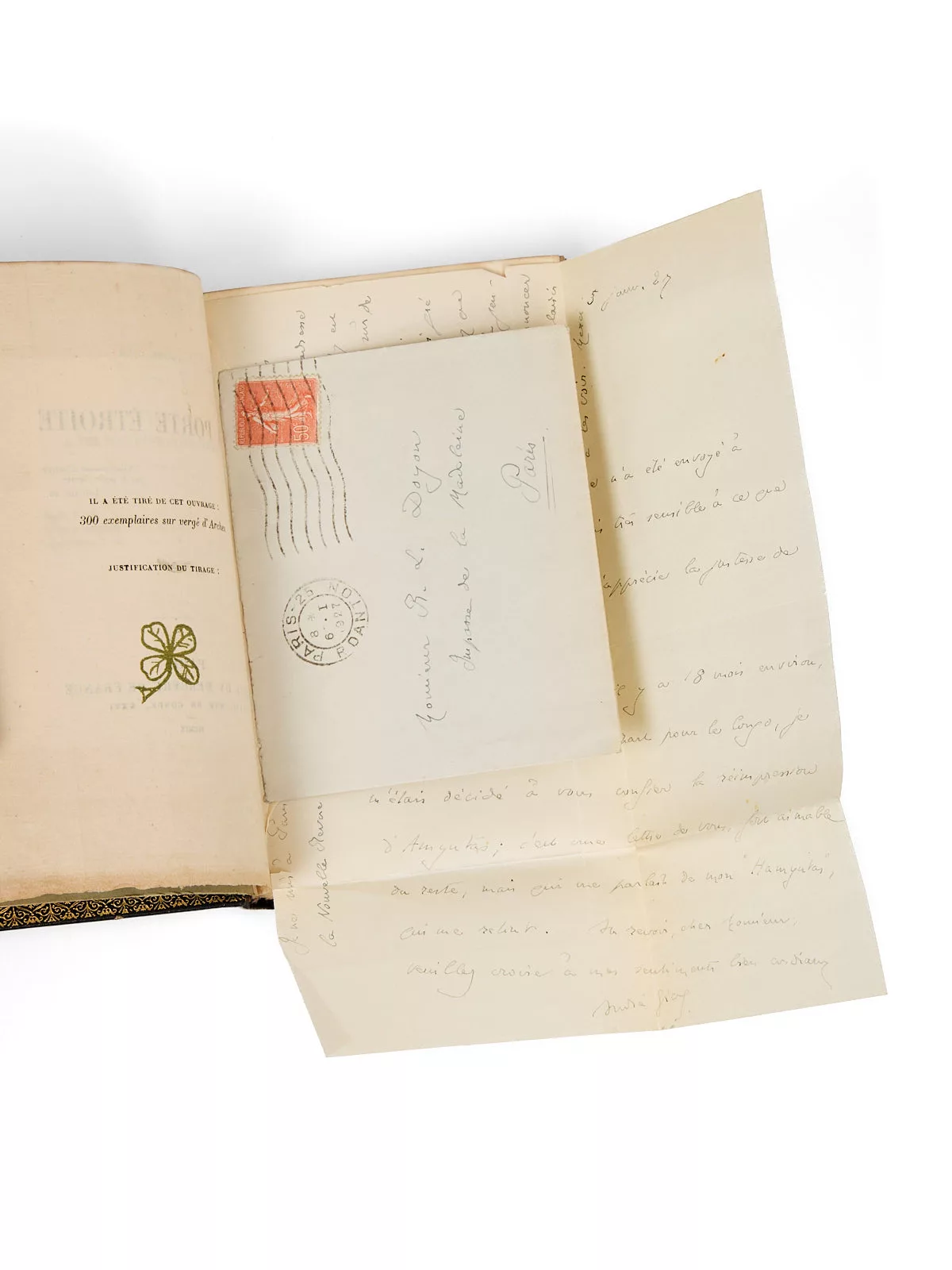
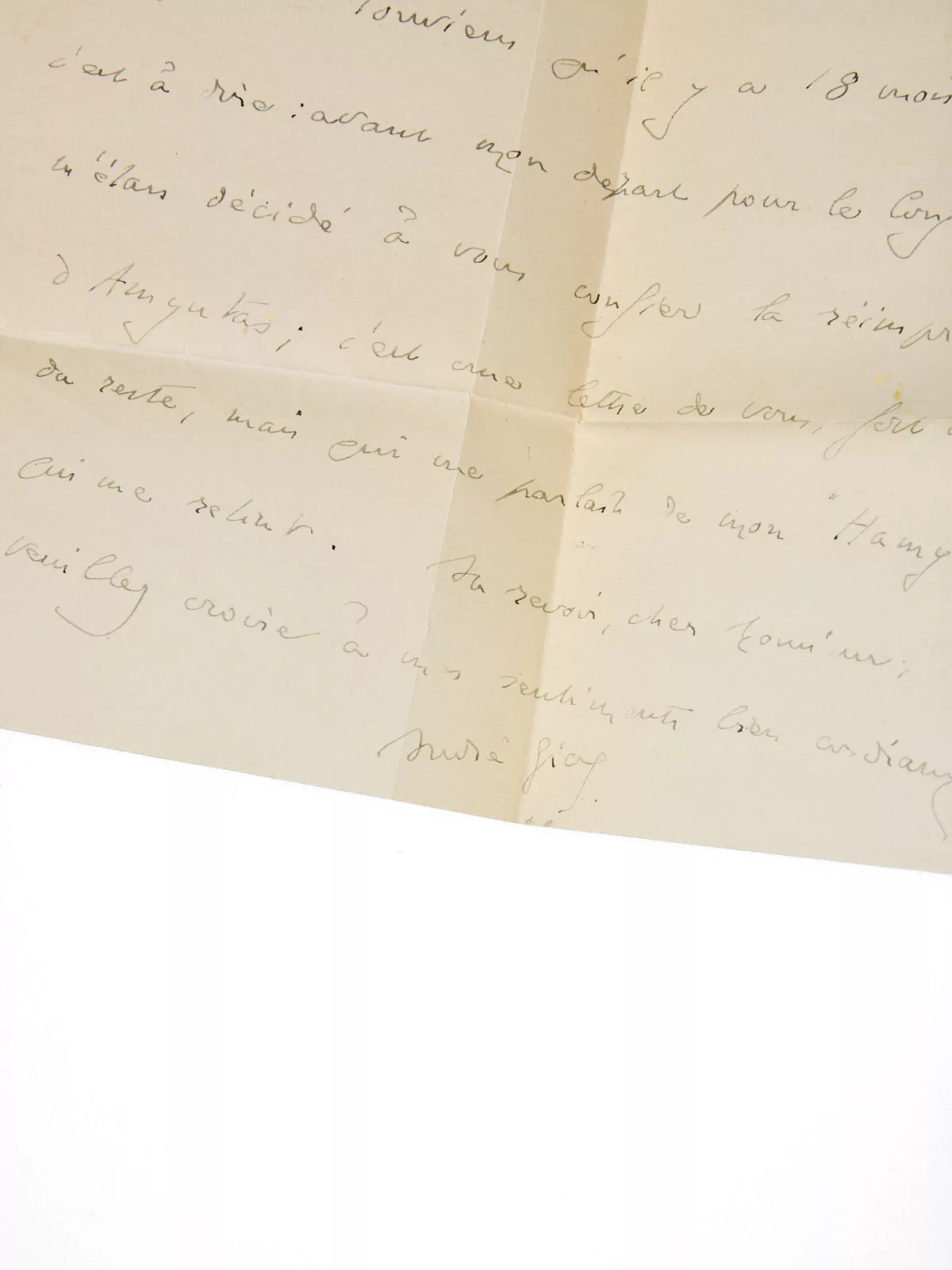
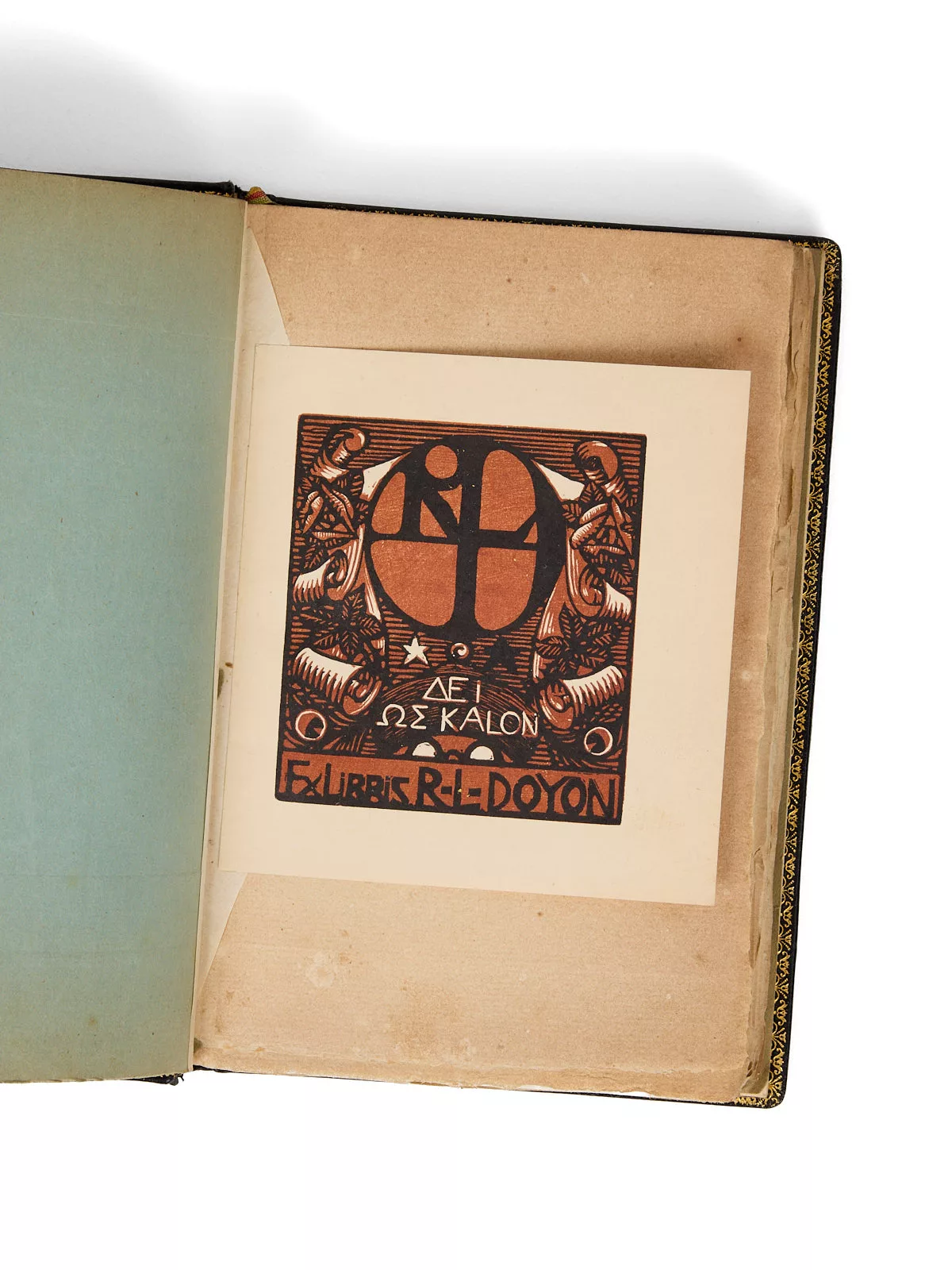
Mounted at front: autograph letter signed, addressed to R. L. Doyon.
On 13 June 1905, Gide noted in his Journal: “Each day I have been able to advance my Porte étroite by a few lines. This diligence in work is now preferable to me over the finest inspiration in the world,” even though he would also complain of the slowness of his progress on the text: “I spend hours on a group of sentences that I will overturn the next day. The scene in Geneviève’s room […] gave me extreme trouble. But I now admire everything I managed not to say, to hold back.”
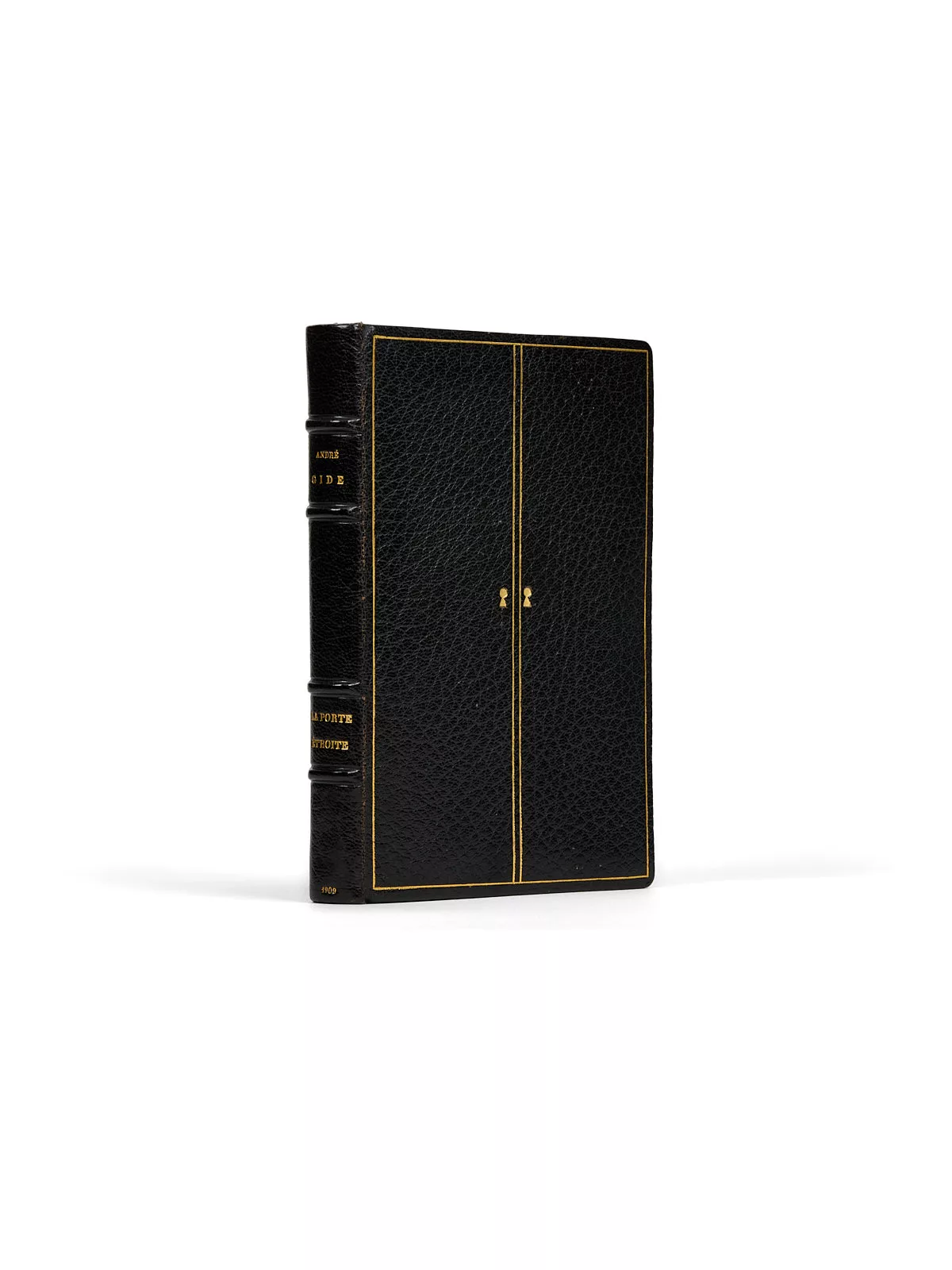
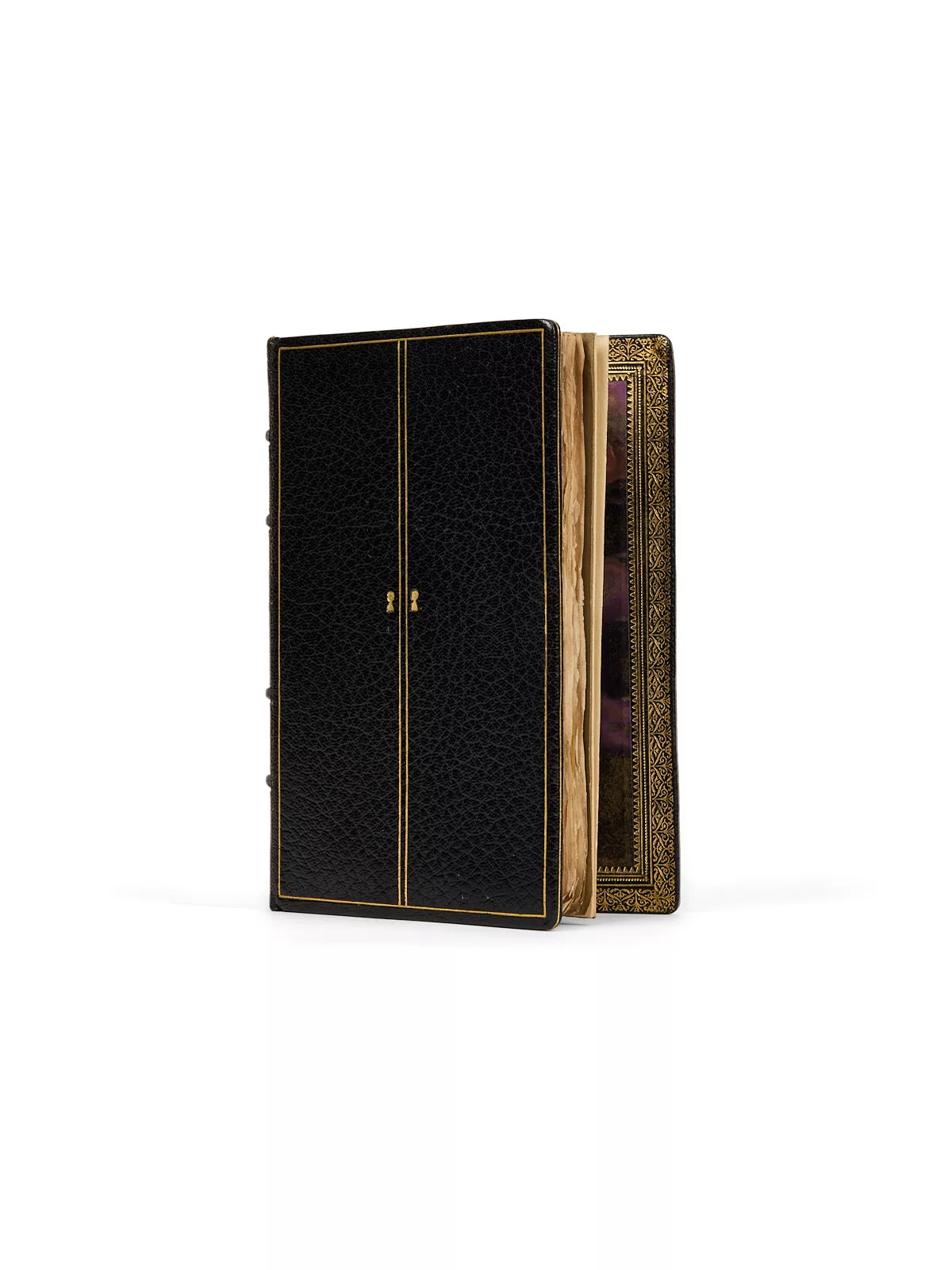
A fine copy in a contemporary binding signed by Jules-Karl Van West. This Belgian-born binder settled in 1925 in Saint-Brice-la-Forêt, where he had his workshop built. His wife Jeanne worked alongside him, handling the marbling for the fine half-bindings that were sought after by Parisian bibliophiles in the 1920s and 1930s.
In March 1934, his reputation spread beyond France’s borders through the sale of the Pierre Marteau library (Drouot, March 1934, Georges Andrieux, expert), which included a great many of his bindings. His renown grew further, and Queen Elisabeth of Belgium offered him the position of master binder at the École Supérieure des Arts Décoratifs in Brussels; he returned to Belgium in December 1939. After the war, he became a teacher of bookbinding at La Cambre, training, among others, August Kulche. Van West was one of the finest practitioners of his time, mastering binding, gilding and edge-gilding alike — three skills rarely found combined in a single craftsman. He was also the official binder to the Château de Beloeil, belonging to the Princes de Ligne, later becoming its curator; in 1950 he published his Mémoires d’un relieur.
The binding was probably commissioned by the man who affixed his bookplate to this copy: René-Louis Doyon. Bookseller, publisher and writer, Doyon began his career in 1913 with Figuière: his recollections of that house, its director, and its literary director Alexandre Mercereau, are among the most vivid pages he left on prewar publishing life. In 1917, he opened his own bookshop, which the following year became a publishing house devoted to a living bibliophilia of small, carefully printed editions, all under the imprint La Connaissance; he placed at the head of his editions a device bearing the motto “On se lasse de tout excepté de connaître.” He also wrote attentive biographies of Isabelle Eberhardt, Joséphin Péladan and Jehan Rictus. Despite the quality of his work, his business declined after 1933. Doyon then joined Denoël, who bought out his firm’s holdings in 1937.
From the library of R. L. Doyon (bookplate), with presentation inscription.
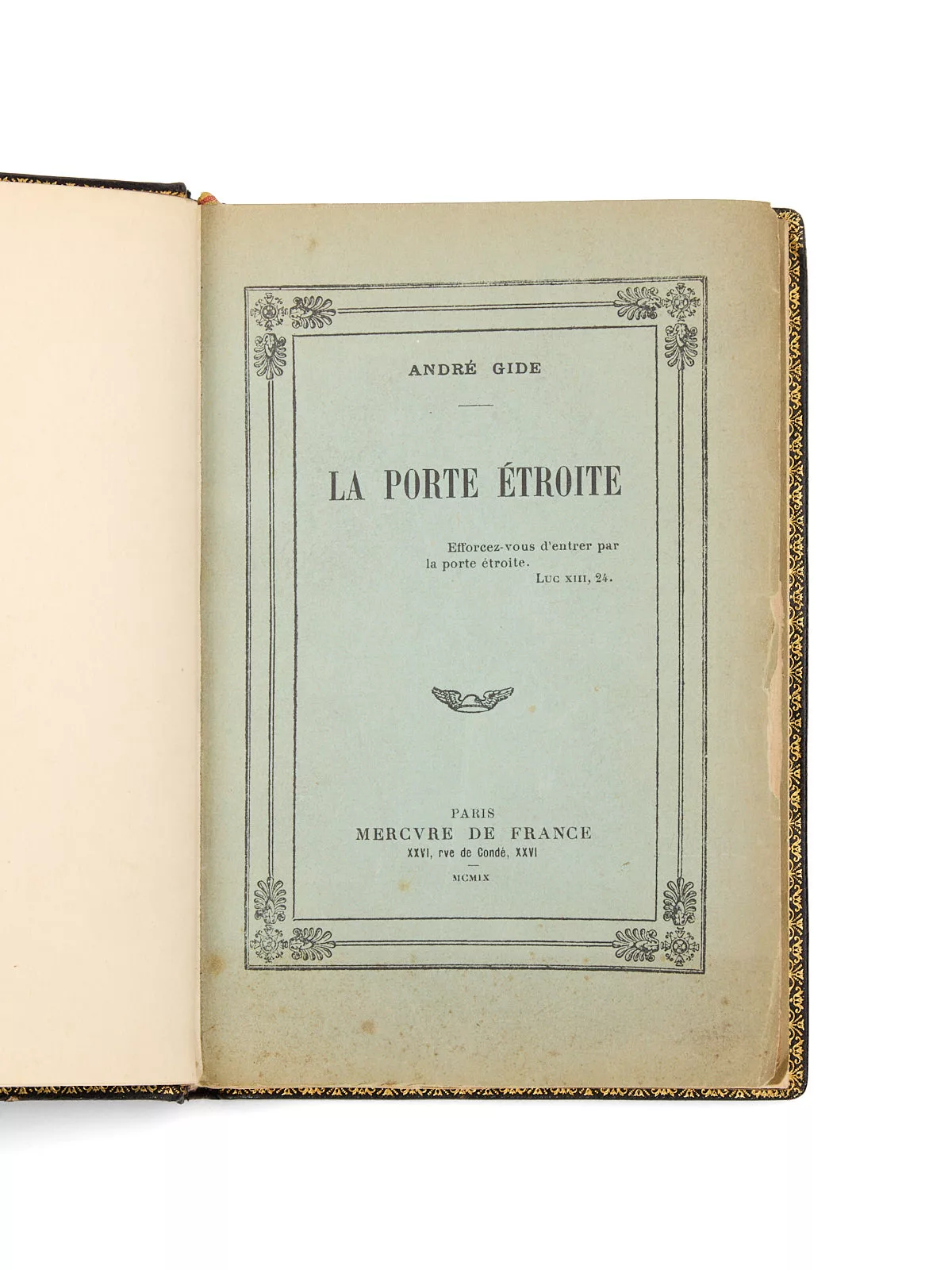
Naville, 46, XXVIII.